


Brazilian football teams protest online sports betting ban

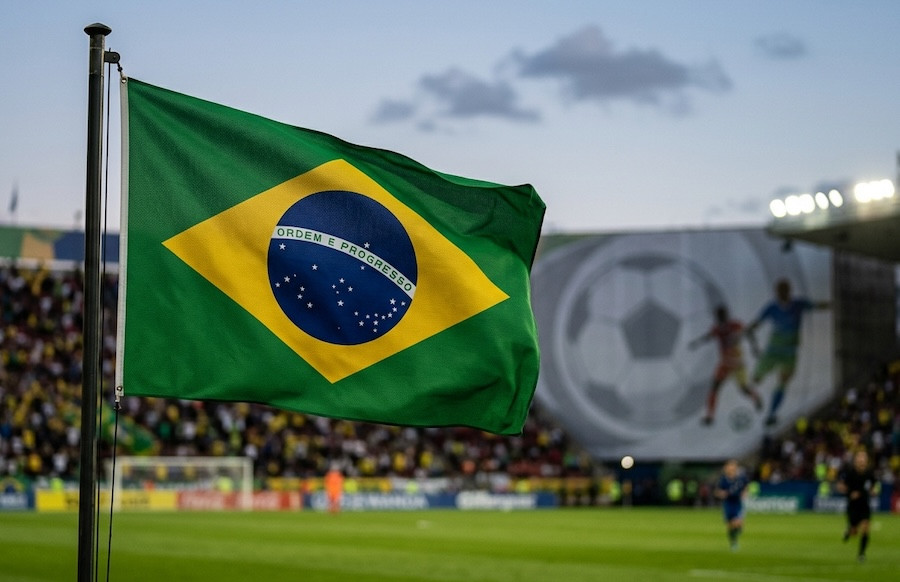
Brazilian football teams are siding with the gaming industry, following a nationwide ban on online sports betting, arguing that the ban would strip clubs of millions of dollars in sponsorships.
The nation’s president announced the ban last week, with operators forced to shut down all platforms and apps by 6 October.

The announcement came ahead of Brazil’s presidential election first-round vote on 4 October, with Luiz Inácio Lula da Silva (more commonly known as Lula) currently running a tight campaign against Senator Flávio Bolsonaro, son of former president Jair Bolsonaro. While Lula has been adamantly against igaming, Bolsonaro has only pushed for banning online casinos, while still supporting sports betting.
According to Reuters, Brazilian soccer federations – including those in São Paulo and Rio de Janeiro – have signed a letter expressing concern over the ban, calling it a “fatal blow to Brazilian soccer” that could drive clubs to insolvency. Analysts and club representatives argued that it would also be hard for clubs to recover from the “financial blow” in the short term.
“Fans cannot foot this bill. If the regulated market ends, betting doesn’t end. Soccer is what ends,” the letter indicates, as cited by the outlet.

Speaking on Monday, Lula said that clubs would have to “figure out” the ban, adding that the best moments in Brazilian soccer were those that did not involve betting sites.
A meeting between the government and clubs was scheduled for Tuesday but was postponed with no clear date set. A source told Reuters that the meeting would discuss possible support measures for teams, including a potential subsidized credit line.
Clubs in Brazil’s top soccer league, Serie A, generated BRL1 billion (US$193 million)1 BRL = 0.1929 USD
2026-10-01Powered by CMG CurrenShift in direct advertising revenue from sports betting companies in 2025, a 67% yearly increase, according to figures published by consultancy firm Convocados and sports investment firm Outfield.

Economist Cesar Grafietti commented on the figure, explaining that it accounted for nearly 10% of clubs’ total recurring revenue. He added that clubs could face major losses, noting that stadium advertising and broadcast rights were also financed by betting revenues. He did note that the clubs could recover financially in the medium term.
“A chain reaction begins: you are forced to sell players and prices start to fall, players with contracts up for renewal may stay on lower salaries, and signings tend not to happen at the values we have been seeing,” Grafietti said.
Charlotte Capewell brings her passion for storytelling and expertise in writing, researching, and the gambling industry to every article she writes. Her specialties include the US gambling industry, regulator legislation, igaming, and more.

Dig Deeper
Related stories
 2026/09/24: Brazil: Lula and Bolsonaro call for online betting ban ahead of presidential election
 2025/10/24: Auckland cricket clubs fear funding loss under New Zealand’s proposed online gambling bill
 2026/03/10: Brazilian President proposes online casino ban to combat addiction
 2026/09/27: Brazil bans all sports betting and online casino gaming
2026/09/24: Brazil: Lula and Bolsonaro call for online betting ban ahead of presidential election
2025/10/24: Auckland cricket clubs fear funding loss under New Zealand’s proposed online gambling bill
2026/03/10: Brazilian President proposes online casino ban to combat addiction
2026/09/27: Brazil bans all sports betting and online casino gaming
The Backstory
Election pressure turned regulation into prohibition
Brazil’s fight over online betting moved from regulatory debate to economic shock in a matter of weeks, as President Luiz Inácio Lula da Silva turned public concern about gambling harm into a nationwide prohibition that now threatens one of football’s fastest-growing revenue sources.
The current backlash from Brazilian clubs follows a sharp reversal for a market that had only recently been brought under federal oversight. Brazil’s regulated fixed-odds betting system became fully operational Jan. 1, 2025, after legislation approved in 2023 created licensing rules, tax obligations and consumer-protection requirements under the Finance Ministry. Operators paid fees, built sponsorship portfolios and embedded themselves in sports media and club finances.
That framework was upended when Lula signed a provisional measure banning sports betting and online casino games nationwide. The measure, detailed in Brazil’s nationwide ban on sports betting and online casino gaming, prohibits the operation, offering, intermediation and advertising of fixed-odds betting through physical and online channels. It also blocks financial institutions and payment providers from processing betting transactions, except those needed to return customer balances.
The timing intensified the political stakes. Lula is seeking to hold off Senator Flávio Bolsonaro, son of former President Jair Bolsonaro, in a presidential race that has put gambling policy before voters. A Bloomberg-commissioned AtlasIntel poll cited in earlier reporting found broad voter support for a ban, giving both campaigns incentives to distance themselves from the sector. What began as pressure over online casino-style games quickly expanded into a wider fight over sports betting, advertising and the role of gambling money in Brazilian life.
Football’s exposure grew with the legal market
Brazilian football did not become dependent on betting overnight. The regulated market gave clubs, leagues and broadcasters a legal sponsor category with high spending capacity, just as teams were searching for recurring revenue beyond ticket sales, transfers and traditional corporate partners.
By 2025, betting sponsorships had become a core commercial pillar. Clubs in Brazil’s Serie A generated BRL1 billion in direct advertising revenue from sports betting companies, according to figures from Convocados and Outfield cited in the current dispute. That represented a 67% annual increase and close to 10% of total recurring revenue for clubs, according to economist Cesar Grafietti.
The exposure extends beyond shirt fronts. Stadium advertising, broadcast inventory, digital campaigns and match-day activations were also supported by betting money. When clubs warn of insolvency risk, they are not only describing lost sponsorship checks. They are pointing to a commercial chain that includes media contracts, player wages, transfer planning and youth development spending.
That is why the clubs’ response has been more urgent than a routine lobbying campaign. A sudden halt to legal betting removes a sponsor class that had already been priced into budgets. For clubs with weaker balance sheets, the short-term options are limited: cut payroll, sell players earlier than planned, reduce signings or ask fans to absorb higher costs. Those measures could weaken squads and reduce the appeal of the domestic league, creating a feedback loop that lowers future commercial value.
The casino debate widened into a full-sector ban
The government’s first signals suggested a narrower intervention. Lula initially framed the issue around online casino products, arguing that mobile gambling had created social and financial harm for families. In his proposal to ban online casino platforms, he said addiction was draining household money needed for food, rent, school and children.
That focus was consistent with concerns in other regulated markets: casino-style games are continuous, highly accessible and often more profitable for operators than sports wagering. Brazilian officials had also been considering broader agendas for 2026 and 2027, including more transparency over sector data, reviews of financial blocking for offshore operators and rules for technology providers.
Reports then indicated that the administration was preparing an executive order aimed at online casinos while leaving sports betting intact. The distinction mattered because football clubs and competitions had built sponsorship agreements around sports wagering. Earlier coverage of Brazil’s planned online casino restrictions noted that the proposal was expected to exclude sports betting and club sponsorships, even though many licensed operators held joint licenses covering both products.
That separation did not survive the final political turn. The provisional measure swept in both sports betting and online games. For operators, that meant the end of authorized activity across their main product lines. For football, it meant a sudden threat to sponsorship income that many clubs had believed would be preserved even if casino games were banned.
Both campaigns found advantage in opposing betting
The hardening stance also reflects electoral calculation. Lula and Bolsonaro both moved to claim anti-gambling ground before the Oct. 4 vote, though with different emphases. Lula positioned himself as opposing the broader social damage of betting. Bolsonaro backed a ban on online casinos while arguing that sports betting tied to real events had more oversight.
In the run-up to the measure, both candidates called for restrictions on online gambling. The political opening was clear: 25 million Brazilians placed wagers in 2025, according to Finance Ministry figures cited in prior coverage, while polling showed many voters blamed Lula for the spread of online gambling and a significant share blamed Jair Bolsonaro, under whose political movement earlier liberalization gained momentum.
The result was a race to show toughness. Lula escalated from criticizing betting at rallies and international forums to signing a measure with immediate legal effect. Bolsonaro attacked Lula for failing to control the market while keeping space for sports betting, a position that aligned more closely with football’s commercial interests. Once the government broadened the ban, however, the issue became not only moral and political but financial for the country’s most visible sport.
The provisional measure still needs congressional approval to remain in force. That gives clubs, operators and state-level interests a narrow window to press lawmakers for changes or transitional relief. But the measure’s immediate effect has already shifted leverage to the government: operators must wind down, advertising must be removed and apps must be inaccessible from Brazil.
The illegal-market risk complicates enforcement
One of the central arguments against prohibition is that demand will not disappear. Industry groups warned before the measure that banning licensed operators would push bettors toward offshore platforms outside Brazil’s tax, monitoring and consumer-protection systems. The Brazilian Association of Games and Lotteries said the ban could drive more than 30 million bettors to illegal operators.
Brazil was already struggling with unlicensed gambling before the current crackdown. Authorities blocked tens of thousands of domains linked to unauthorized betting platforms, while industry monitors continued to identify illegal sites active in the country. The provisional measure creates an interinstitutional committee to coordinate enforcement against illegal fixed-odds betting operations and advertising, but blocking domains and payment channels has historically been a recurring rather than final solution.
That enforcement challenge matters for football. If betting activity continues through illegal channels, clubs lose regulated sponsorship income while unlicensed operators may still reach consumers through informal advertising, influencers or offshore digital channels. The sport would bear the financial cost of prohibition without necessarily seeing the social harms eliminated.
Operators are also preparing legal challenges, particularly over the refusal to refund authorization fees or compensate investments made under the regulated model. Those claims could extend the conflict beyond the election and into the courts, leaving clubs uncertain about future sponsorship revenue and lawmakers under pressure to reconcile public-health concerns with the economic consequences for sport, media and tax collection.
A funding fight with global echoes
Brazil’s dispute mirrors a broader tension in gambling policy: governments often rely on gambling revenue or community contributions while trying to reduce harm from the same activity. In New Zealand, for example, Auckland cricket clubs have warned that proposed online casino legislation could undermine community sport if digital operators are not required to return profits through grants. Their concerns, outlined in coverage of Auckland cricket clubs’ fears over gambling-funded community sport, show how changes to betting law can quickly become funding disputes for local clubs.
Brazil’s case is larger and more immediate because football is a national industry as well as a cultural institution. Lula’s government is responding to real public anxiety over addiction, household finances and aggressive betting promotion. But by closing the legal market abruptly, it has forced clubs to defend a revenue stream they now say is essential to their operations.
The next phase will turn on whether Congress sustains the ban, modifies it or creates relief for affected teams. Until then, Brazilian football faces an uncomfortable reality: a sector many clubs treated as a commercial engine has become a political liability at the center of a presidential campaign.
