


Black market claims 24% of online gambling demand across six jurisdictions, Brazil nears US$4 billion post-ban: report


A new report indicates that black market operators accounted for 24% of online gambling demand across six major jurisdictions in 2025, with Brazil’s illegal market likely to hold at around US$4 billion despite the nation’s igaming shutdown.
The report, commissioned by the World Betting and Gaming Alliance (WGBA), was coordinated by Regulus Partners, drawing on research from Helios and Propus Partners.

Covering the US, the UK, the Netherlands, Brazil, South Africa and Australia, the report highlighted that black market operators took US$14 billion of the US$57 billion spent on online gambling across the six markets.
Product restrictions and expenditure checks were cited as the main drivers pushing players offshore, with high taxes a secondary factor.
In Brazil, Regulus believes the online gambling black market “has grown from US$1 billion in 2025 to almost US$4 billion at the current run-rate.”

Brazil President Luiz Inácio Lula da Silva’s Provisional Measure 1,394, banning sports betting and online casino gaming nationwide, took effect on 25 September. Despite the ban, Regulus expects illegal online gambling to remain a market of around US$4 billion, noting “strong underlying demand,” crypto adoption and the scale of black market evasion.
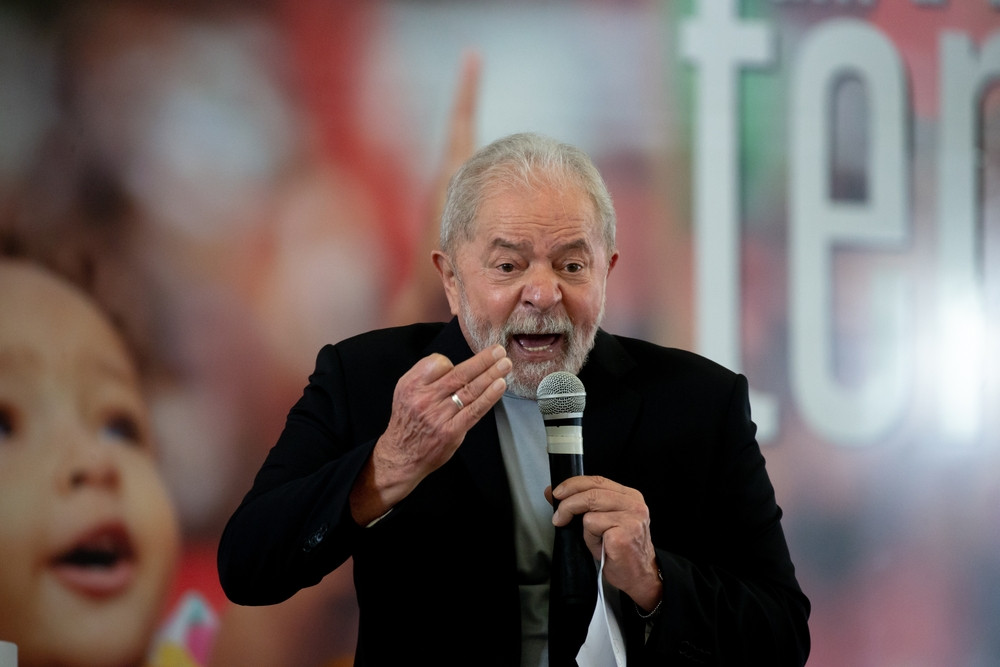
Since the provisional ban, the Brazilian government has requested the blocking of 13,241 websites, 974 Facebook pages, 900 Telegram channels and 103 TikTok profiles, the report detailed.
Brazil’s Congress has until 4 March 2027 to review the measure. Speakers at a recent SOFTSWISS panel have already cautioned that the ban could push players to unlicensed operators.

In the US, the online black market is estimated at US$8.8 billion in net expenditure in 2025, some 23% of total online gambling expenditure. Regulus estimates the market stood at around US$5 billion before domestically regulated growth.
The report furthered that online betting remains unavailable to 40% of the US population, while online gaming remains unavailable to 87%. In Pennsylvania, 2.2% of adults intentionally used black market gambling websites, according to official survey statistics cited in the report.
Looking down under, the report estimates that Australia’s online black market is around US$2.3 billion, driven primarily by the nation’s ban on online gaming. This is in addition to a licensed market of US$21.5 billion, or 2.3% of consumer GDP, with some 10% of total gambling expenditure deemed illegal.
Of 440 operator sites found through search, aggregators and communities, only 156 were licensed in Australia, while 284, or 65%, were illegal.
The Australian Communications and Media Authority (ACMA) had blocked 1,786 sites by August, the report noted, with the regulator since announcing that illegal online casinos and unlicensed betting sites will face payment blocks from January 2027.

Verticals:
Sectors:
Dig Deeper
Related stories
 2026/08/25: Total Philippines gambling ad ban seen handing market back to illegal operators, data from five countries show
 2026/09/09: “Channelization” of players into licensed sphere should be a top priority of any successful regulated gaming market: paper
 2026/10/27: Blask Index: Brazil’s igaming ban didn’t translate into offshore growth
 2026/11/22: Betano entry underscores Philippines’ standing as an investable igaming jurisdiction
2026/08/25: Total Philippines gambling ad ban seen handing market back to illegal operators, data from five countries show
2026/09/09: “Channelization” of players into licensed sphere should be a top priority of any successful regulated gaming market: paper
2026/10/27: Blask Index: Brazil’s igaming ban didn’t translate into offshore growth
2026/11/22: Betano entry underscores Philippines’ standing as an investable igaming jurisdiction
The Backstory
Black-market debate shifts from theory to measurable demand
The latest estimate that illegal operators captured nearly a quarter of online gambling demand across six major markets lands in a policy debate that has been building for years: whether governments can reduce gambling harm by restricting legal supply, or whether those restrictions simply move players to operators beyond regulatory reach.
The report’s findings on the U.S., U.K., Netherlands, Brazil, South Africa and Australia point to a common pressure point. Consumers do not disappear when legal products are unavailable, costly or difficult to use. They often search for offshore alternatives that offer fewer checks, wider product menus and faster onboarding. That is the core argument behind “channelization,” the policy aim of moving existing demand into licensed platforms where regulators can impose identity checks, monitor transactions, enforce exclusion lists and collect taxes.
That idea has become increasingly central to gambling regulation. A recent policy paper on Australia and New Zealand argued that channelization should be a top priority of any successful regulated gaming market, because prohibition or over-frictional regulation does not eliminate demand. It changes where that demand is met. The paper framed the task for regulators as keeping the legal market credible enough to compete while still imposing consumer protections that illegal sites ignore.
Brazil shows the uncertainty after a ban
Brazil is now the most closely watched test case. President Luiz Inácio Lula da Silva’s provisional measure banning sports betting and online casino gaming took effect Sept. 25, shutting down a market that had only recently moved into a formal regulatory structure. The new report’s estimate that Brazil’s illegal online gambling market is running near $4 billion suggests the ban has not removed the underlying demand, even as authorities pursue large-scale website and social media blocking.
Early data, however, showed a more complicated first phase. Blask reported that Brazil’s igaming ban did not immediately translate into broad offshore growth, with demand for licensed brands collapsing and offshore demand rising only briefly before falling below pre-ban levels. But within that smaller offshore market, demand concentrated around a few operators, giving them greater visibility and potentially more leverage over displaced players.
That distinction matters. A ban may suppress open search activity for a time, particularly when major legal brands go dark and payment channels are disrupted. But it may also reward illegal operators with stronger brand recognition, closed social media channels, affiliate networks and cryptocurrency rails. The report’s emphasis on crypto adoption and evasive black-market infrastructure in Brazil reflects that longer-term risk. Congress has until March 4, 2027, to review the provisional measure, leaving operators, enforcement agencies and consumers in a period of uncertainty.
Advertising rules have become a proxy fight
The same channelization question is playing out in the Philippines, where lawmakers have weighed severe restrictions on gambling advertising after rapid growth in licensed online gaming. A special analysis warned that a total Philippines gambling ad ban could hand market share back to illegal operators by silencing licensed companies while offshore sites continue promoting through influencers, private groups and foreign digital channels.
The Philippine experience is relevant because it shows how regulators can pull demand back into the licensed perimeter. PAGCOR cut online license fees, required know-your-customer verification, accredited parts of the supply chain and stepped up enforcement against illegal sites. As a result, the legal share of online play rose sharply from the period when offshore operators dominated the market. Licensed e-games revenue surged as wagers that had been invisible to the state moved onto platforms subject to tax, monitoring and player-protection rules.
The advertising debate reveals the fragility of that progress. Licensed operators can be fined, suspended or forced to withdraw promotions. Illegal operators cannot be disciplined in the same way; they can only be blocked, then reappear through mirror domains or new social media accounts. That is why a blanket ad ban is viewed by some industry lawyers and data providers as asymmetrical: it removes a legal operator’s ability to distinguish itself while leaving illegal competitors to keep recruiting.
Australia highlights the cost of product gaps
Australia offers another example of a mature gambling market that still leaves openings for illegal online operators. Online casino and poker remain prohibited, and online in-play sports betting is tightly restricted. Offshore operators fill those gaps with products that Australian consumers can access digitally, despite enforcement by the Australian Communications and Media Authority.
The Melbourne Cup shows the other side of the same market. When a licensed product has deep brand recognition and broad availability, legal operators can dominate demand. Blask data found that Australian betting demand surged around the Melbourne Cup while offshore brands fell, with licensed brands capturing nearly all tracked demand on race day. That suggests legal markets can retain consumers when the product is visible, familiar and competitive.
But the new six-market report’s estimate of a multibillion-dollar Australian black market underscores the limits of that success. Strong licensed sports betting does not solve demand for products that remain banned. This is the channelization argument in practical form: legal betting can work well in one vertical while illegal supply grows in another.
The Philippines is trying to turn regulation into investment
The Philippines has become a case study in using tighter regulation not to shrink the legal market indiscriminately, but to make it more credible. After the country banned Philippine Offshore Gaming Operators, or POGOs, linked to scams, trafficking and money laundering, PAGCOR shifted emphasis to a domestic licensed market serving Philippine residents. It imposed supplier accreditation, probity checks, responsible-gaming obligations and a minimum guaranteed fee intended to push out idle or weak license holders.
That reset helped change investor perceptions. Kaizen Gaming’s Betano brand entered the market after PAGCOR accreditation, a move described as evidence that the Philippines has become an investable igaming jurisdiction. The attraction was not light-touch regulation. It was a clearer system in which operators, suppliers and service providers know the requirements and can build compliant businesses around them.
The trade-off is that higher standards raise costs. The Philippine market has already contracted, with fewer online licensees and lower electronic gaming revenue in parts of 2026. Some of that was intentional consolidation. Some followed restrictions such as e-wallet delinking, which industry participants say pushed players toward illegal channels. The lesson for other jurisdictions is that regulation can attract reputable companies, but only if it does not make the licensed product too hard for consumers to use.
Policy stakes extend beyond tax receipts
The new report’s central warning is not only fiscal, though the lost tax base is substantial. The larger issue is control. Legal operators can be required to verify age and identity, block self-excluded players, display responsible-gaming messages, use certified games and respond to disputes. Illegal operators can target vulnerable players, avoid taxes, ignore advertising rules and use payment methods designed to frustrate enforcement.
That is why black-market estimates are increasingly used to judge regulatory performance. A low illegal share suggests the licensed system is attractive enough to keep most players inside the perimeter. A high or rising illegal share suggests restrictions, taxes or product bans may be out of balance with consumer behavior. The current report adds weight to that view by linking black-market demand to product restrictions and expenditure checks, with tax as a secondary driver.
For governments, the policy choice is rarely between gambling and no gambling. It is between gambling that can be supervised and gambling that operates outside the state’s reach. Brazil’s ban, Australia’s product gaps, the Philippine advertising debate and the broader channelization research all point to the same conclusion: legal markets must be restrictive enough to protect consumers, but functional enough to keep them from leaving.