


Bill proposes mandatory facial recognition for sportsbooks and prediction markets

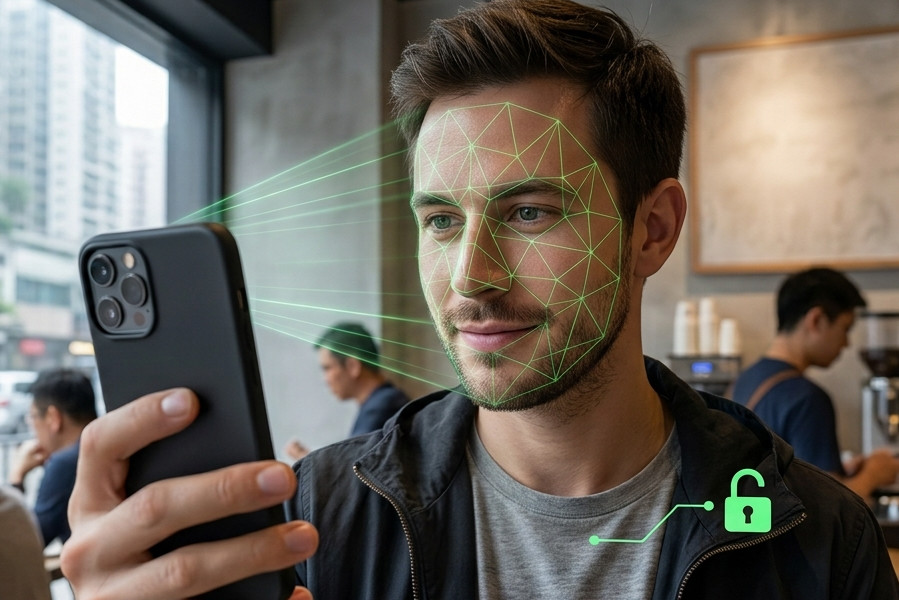
A United States Congressman has introduced a bill that would require both sportsbooks and prediction markets to implement facial recognition on their platforms to verify users’ ages before they are allowed to place bets or trades.
The “Facial Recognition to Protect Children Act,” introduced by Representative Josh Gottheimer on 15 July, would require operators to estimate a user’s age by analyzing facial features when they log into an account or make a wager. According to Gottheimer’s office, the system would not store users’ identities or biometric data.

Gottheimer cited research from US nonprofit Common Sense Media, which found that 36% of surveyed boys ages 11 to 17 reported gambling in the past year, rising to 40% among those ages 14 to 17. The official also cited reports of underage betting, including more than 80 reported cases in Iowa and more than 400 underage sportsbook accounts identified in Tennessee in 2024.
The bill has bipartisan support and is co-sponsored by multiple politicians.
If enacted, the new bill would apply to online sportsbooks and federally regulated prediction market platforms operating nationwide.

Prediction market operator Kalshi and advocacy organization ParentsRISE also endorsed the proposal, both saying that protecting kids should be the top priority as sports betting and prediction market trading become more popular.
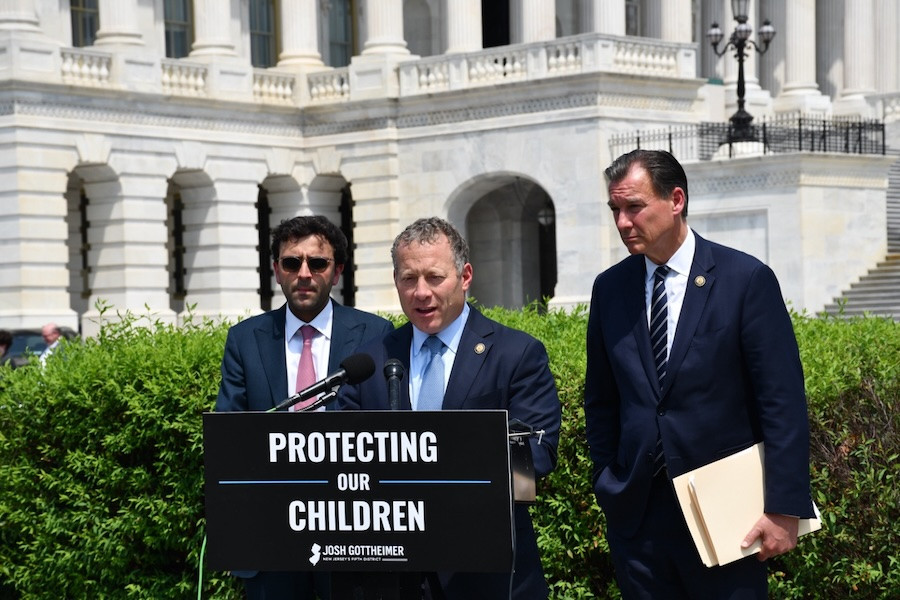
Representatives of both groups were present for the proposed bill’s announcement, with Kalshi CEO Tarek Mansour (image left) noting “Beyond what’s required of us, we already self-regulate and have a suite of measures in place to keep minors off our platform.”
Michigan appears to be the only state to enact biometric data as authenticating data in its Lawful Gaming Act and Lawful Sports Betting Act. Under a 2024 memorandum, the Michigan Gaming Control Board requires that operators have at least two authentication factors to be licensed, including biometric data, something the user possesses (like an ID card), and information known only to the user (such as a passcode).

Sportsbooks, like DraftKings and FanDuel, also offer facial recognition as a passkey to access a sports betting account, but the system does not appear to be used for age verification checks.
Charlotte Capewell brings her passion for storytelling and expertise in writing, researching, and the gambling industry to every article she writes. Her specialties include the US gambling industry, regulator legislation, igaming, and more.

Dig Deeper
Related stories
 2026/04/01: Advocacy group claims Americans view sports prediction markets as gambling
 2025/07/08: DFNN urges Philippines to employ “proportionality and precision” in online gambling restrictions
 2025/09/13: Massachusetts Attorney General sues Kalshi for illegal sports wagering operations
 2026/04/28: Ohio proposes licensing rules for prediction market operators
2026/04/01: Advocacy group claims Americans view sports prediction markets as gambling
2025/07/08: DFNN urges Philippines to employ “proportionality and precision” in online gambling restrictions
2025/09/13: Massachusetts Attorney General sues Kalshi for illegal sports wagering operations
2026/04/28: Ohio proposes licensing rules for prediction market operators
The Backstory
Age checks move from state rules to a federal fight
The proposal to require facial recognition for age verification at U.S. sportsbooks and prediction markets marks a significant escalation in how policymakers are approaching online gambling safeguards. Until now, age controls have largely been handled through state licensing rules, know-your-customer checks and operator compliance systems. A federal mandate would shift that framework toward a uniform technology requirement affecting both conventional betting apps and federally regulated event-contract platforms.
The bill also lands at a moment when lawmakers are questioning whether the rapid expansion of online wagering has outpaced consumer protections. Sports betting is now live in most U.S. states, while prediction markets have pushed into sports and political events under a different regulatory theory. That has created a gray area: sportsbooks are overseen by state gambling regulators, while platforms such as Kalshi argue they operate under federal commodities law rather than state gaming statutes.
The political appeal of an age-verification bill is clear. Underage gambling cases give legislators a concrete harm to target, and facial recognition offers a simple-sounding fix. But the measure also raises immediate questions about privacy, biometric data, state-federal authority and whether the same rules should apply to a sportsbook wager and a federally listed event contract.
Prediction markets have become the pressure point
Prediction markets are central to the current debate because they sit between financial trading and gambling. Their growth has drawn scrutiny from state regulators that view sports contracts and other event markets as functionally similar to wagers, even when operators describe them as trades. That tension has already produced enforcement disputes in several states.
Connecticut has been one of the most aggressive states in challenging the model. Lawmakers there advanced a proposal to raise the minimum age for prediction markets from 18 to 21 and apply stricter advertising standards, an effort described in Connecticut’s crackdown on prediction markets. The bill reflected concern that younger adults could be drawn into frequent trading on the outcome of events, particularly when contracts involve sports, politics or other familiar consumer-facing subjects.
The Connecticut fight also exposed the regulatory collision at the heart of the issue. State officials issued cease-and-desist letters to Kalshi, Robinhood and Crypto.com, but a federal judge later blocked enforcement. That outcome strengthened the argument that states may have limited power over federally regulated prediction markets, even if the products resemble sports betting to state gambling regulators. A federal age-verification law would sidestep some of that jurisdictional conflict by applying directly to the platforms Congress chooses to cover.
That context helps explain why prediction market operators may prefer a targeted federal consumer-protection standard over a patchwork of state prohibitions. Supporting age checks can show cooperation with policymakers while preserving the broader claim that the products are not traditional gambling and should not be governed by state gaming compacts or sportsbook laws.
State enforcement gaps have widened as betting expanded
The push for tougher controls also reflects a broader problem for state regulators: online gambling markets have grown faster than some enforcement tools. Legal sportsbooks operate under licenses, pay taxes and follow state-mandated compliance rules. Unlicensed operators and offshore sites do not, leaving consumers exposed when disputes arise and regulators with limited remedies unless statutes clearly authorize action.
Iowa illustrates the gap. Lawmakers there have been preparing legislation to give the Iowa Racing and Gaming Commission explicit authority to issue cease-and-desist orders and seek injunctive relief against illegal operators, according to a proposal to expand Iowa regulators’ authority over illegal betting platforms. The state’s legal sports wagering market generated nearly $3 billion in wagers in 2025 and about $19 million in tax revenue, but officials said complaints tied to unlicensed platforms had increased.
Those complaints show why age verification is only one part of a larger enforcement puzzle. A licensed sportsbook can be audited, fined or suspended for failing to keep minors off its platform. An illegal site may ignore state demands, misrepresent its legality and refuse to pay winnings. If younger users are migrating to unlicensed or loosely regulated products, biometric checks at licensed operators could reduce one risk while pushing another further outside the regulated market.
The Iowa experience also matters because the current federal proposal cites underage betting reports from the state. That gives the bill a law-enforcement foundation beyond abstract concerns about youth gambling. It suggests policymakers are using state-level failures and complaint data to justify national standards for identity and age controls.
Biometrics are no longer a fringe compliance tool
Facial recognition has already entered the online betting ecosystem, though mostly as an account-access feature rather than an age-verification mandate. Major operators use passkeys, device-based authentication and biometric login options to reduce fraud and account takeovers. The difference in the new proposal is purpose and compulsion: the technology would be used to estimate whether a user is old enough before wagering or trading.
Michigan provides the closest state-level precedent. Its gaming regulator has required operators to use at least two authentication factors, with biometric data listed among acceptable categories in a 2024 memorandum on identity verification and strong authentication standards. That framework focuses on authentication for licensed internet gaming and sports betting accounts, not necessarily a facial scan to estimate age at each login or wager.
The distinction is important. Authentication asks whether the person accessing an account is the authorized user. Age estimation asks whether the face presented appears old enough. The first problem can be addressed through passwords, device possession, identity documents and biometrics. The second relies more directly on algorithmic assessment, which can raise accuracy and bias concerns, especially for teenagers and young adults near the legal threshold.
Supporters argue the bill avoids the most sensitive privacy issue by barring storage of identities or biometric data. Even so, operators would need vendors, audit trails and compliance procedures to prove checks occurred. Regulators would need to determine failure standards, exemptions, appeals and treatment of users who cannot or will not submit to facial screening. Those details will shape whether the proposal becomes a workable child-protection rule or a costly compliance burden.
Regulators worldwide are tightening the bargain
The U.S. debate fits a wider pattern: governments are increasingly willing to let online gambling grow, but only in exchange for greater transparency, taxation and social safeguards. The balance differs by country, yet the direction is consistent. Lawmakers want more visibility into ownership, money flows, consumer harm and the public benefits promised by regulated gambling.
In the Philippines, officials have discussed requiring igaming companies to list on the Philippine Stock Exchange to expose beneficial ownership and improve oversight. The proposal, described in the government’s review of mandatory stock exchange listings for igaming firms, is part of a broader push that could include higher taxes and stricter compliance rules. The market reaction was immediate, with shares of major online gaming operators falling as investors assessed the risk of heavier regulation.
New Zealand’s debate shows another side of the same bargain. A proposed online casino bill would open the market to as many as 15 operators, but community sports groups worry the new framework could divert gambling revenue away from grassroots grants. Auckland cricket clubs warned that the bill could weaken funding for youth programs and facilities, as detailed in their concerns over New Zealand’s online gambling legislation. There, the issue is not age screening but whether online gambling profits should carry public obligations comparable to existing gaming systems.
These examples matter because they show the regulatory debate moving beyond whether online gambling should exist. The question is what operators must give back or give up to maintain access to consumers. In the U.S., that bargain is increasingly centered on minors, data security and the legal status of prediction markets.
Growth makes safeguards harder to delay
Commercial momentum is adding urgency. New sports betting states can generate substantial betting volume almost immediately, intensifying the need for regulators to show they can manage the market. Missouri’s launch offered an example of that scale, with online sportsbooks taking $538 million in handle in their debut month and recording $103.4 million in revenue before promotional costs, according to early Missouri sportsbook results.
That type of launch demonstrates why operators prize rapid market access and why lawmakers worry about exposure. Promotions, mobile onboarding and brand competition can bring millions of users into betting systems quickly. The same infrastructure that makes legal betting convenient for adults also creates the risk that minors will attempt to access accounts, use family credentials or find less restrictive platforms.
The proposed facial-recognition mandate is therefore best understood as part of a larger regulatory response to speed. Online betting and prediction markets have scaled faster than traditional gambling oversight was built to accommodate. State enforcement actions, age-limit bills, biometric authentication rules and federal legislation are different attempts to close that gap. The stakes are not limited to youth access. The outcome may help define whether prediction markets remain adjacent to gambling regulation, become absorbed into it or face a new federal compliance regime built around consumer protection.
