


CFTC proposes rules to allow sports contracts offered by prediction markets

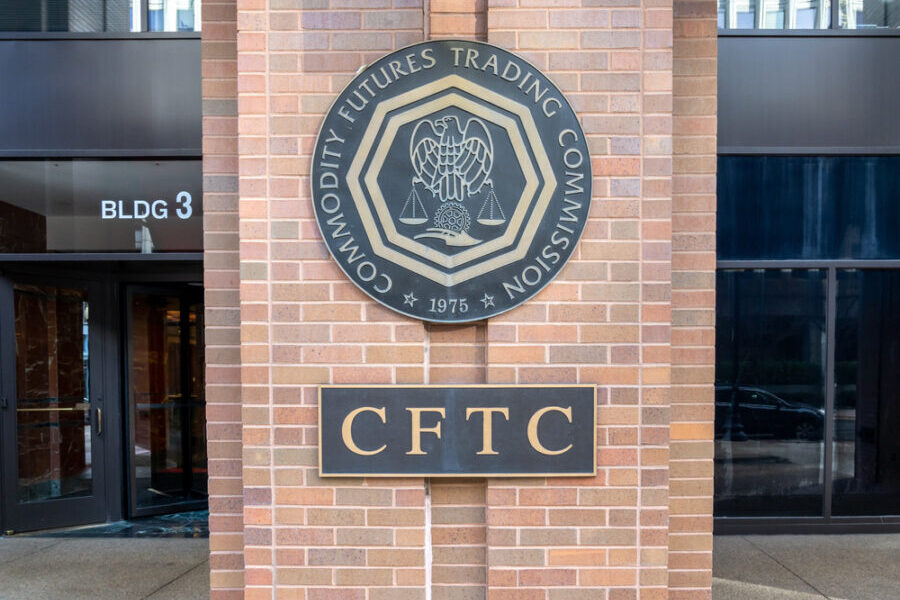
The Commodity Futures Trading Commission has set out new rules that would allow prediction markets to offer sports-related event contracts in the US but would restrict some types of wagers.
In a 267-page notice published on Wednesday, the federal regulator set out plans to allow contracts tied to sport, including final scores, match winner, tournament progress, and team or individual season’s performance.

The rules would ban contracts on in-game events, such as a pitch in baseball, a shot in hockey, or a foul in basketball. Contracts involving injuries, official decisions, physical fights during games, and pre-collegiate sports would also not be allowed.
Contracts tied to luck-based casino-style games would be banned, but contracts related to skill games, including poker, may be allowed.
The regulator reiterated that contracts involving terrorism, assassination, or war would remain banned for national security and public-interest reasons.

The Chair of the Commodity Futures Trading Commission, Michael Selig, told Axios in a May interview that prediction markets are not the same as traditional sportsbooks. Following this, the proposed rules state that some sports event contracts may serve a price-discovery function, providing information useful to businesses operating in sports-related industries.
Industry groups remain divided on the proposals. The American Gaming Association argues that prediction markets operate outside state and tribal gambling regulations, while opponents contend the Commodity Futures Trading Commission was not intended to serve as a national gaming regulator.
The White House began reviewing a draft of the proposal in May.
Charlotte Capewell brings her passion for storytelling and expertise in writing, researching, and the gambling industry to every article she writes. Her specialties include the US gambling industry, regulator legislation, igaming, and more.

Dig Deeper
Related stories
 2025/10/17: Kraken eyes prediction market launch with acquisition of CFTC-licensed Small Exchange
 2026/05/28: White House reviews CFTC prediction market proposal
 2026/02/18: CFTC files amicus brief to keep prediction markets federally regulated
 2025/09/22: RSBIX applies for sports event contracts with the Commodity Futures Trading Commission
2025/10/17: Kraken eyes prediction market launch with acquisition of CFTC-licensed Small Exchange
2026/05/28: White House reviews CFTC prediction market proposal
2026/02/18: CFTC files amicus brief to keep prediction markets federally regulated
2025/09/22: RSBIX applies for sports event contracts with the Commodity Futures Trading Commission
The Backstory
Federal derivatives law moves into sports betting territory
The Commodity Futures Trading Commission’s proposal to permit some sports-related event contracts marks a significant escalation in a long-running fight over whether prediction markets are financial exchanges or gambling platforms. The agency is seeking to define which sports contracts can trade under federal derivatives law, while drawing lines around markets it views as vulnerable to manipulation, harmful to public integrity or too close to conventional casino betting.
The proposal did not emerge in isolation. It follows months of regulatory guidance, state enforcement actions, court battles and lobbying from sports bodies, gambling interests and prediction market operators. At the center is a basic jurisdictional question: whether federally regulated exchanges such as Kalshi, Crypto.com and others can offer contracts tied to sports outcomes without complying with state gambling laws.
The CFTC has increasingly framed sports event contracts as products that can serve a legitimate economic purpose, including price discovery for businesses tied to sports, media, sponsorships and related markets. That argument puts the agency at odds with state regulators and the licensed sportsbook industry, which say these products replicate betting while bypassing consumer protections, tax obligations and integrity rules established in state-by-state gambling regimes.
Guidance set the stage for formal rulemaking
Before issuing the proposed rule, the CFTC had already begun building a framework through supervisory guidance. In guidance to prediction markets on sports event contracts, the agency told designated contract markets to scrutinize sports products that could be susceptible to manipulation. It singled out contracts tied to a single player’s actions or performance, which resemble sportsbook prop bets and can be influenced by one person.
That advisory was important because it signaled the CFTC was not prepared to treat all sports contracts alike. Broad markets on a game winner or tournament outcome present different risks from a contract tied to an individual athlete’s statistic, injury status or in-game action. The current proposal reflects that distinction by allowing some contracts tied to final scores, match winners, tournament progress and season performance, while barring in-game events, injuries, fights, officiating decisions and pre-collegiate sports.
The agency also opened a public consultation on broader questions, including insider information, investor protections and sensitive markets. Those issues cut across the prediction market sector. Platforms have expanded quickly from politics and economics into sports, entertainment and other real-world events, testing the boundaries of the Commodity Exchange Act and forcing regulators to decide which contracts serve hedging or information functions and which amount to wagers.
States pushed back as the CFTC asserted control
The regulatory pressure intensified as state gambling agencies moved against prediction market operators. State officials have argued that sports event contracts are functionally sports wagers, particularly when retail users can buy contracts on game outcomes in ways that resemble betting slips. Operators have countered that they list swaps on federally regulated exchanges and are subject to CFTC oversight, not state gaming laws.
The CFTC has taken an increasingly aggressive position in support of federal authority. In an amicus brief backing federal regulation of prediction markets, Chairman Michael Selig argued that the agency, not individual states, should decide whether event contracts fall within the Commodity Exchange Act. The brief was tied to litigation involving Crypto.com and the Nevada Gaming Control Board, but the stakes extend well beyond one dispute.
Selig’s public posture has been unusually direct for a federal market regulator. He has argued that event contracts serve legitimate economic functions and said the CFTC would defend its jurisdiction against state challenges. That stance has deepened the conflict with states that see prediction markets as an end run around gambling licensing systems. It also has drawn scrutiny from lawmakers who question whether Congress intended the derivatives regulator to become the national arbiter of sports betting access.
Recent court developments have kept the issue unsettled. Some prediction market operators have won temporary relief allowing them to continue operating in certain states, while other rulings have favored state efforts to characterize sports contracts as gambling. The uneven legal landscape has increased pressure on the CFTC to formalize its position, making the new rule proposal a potential turning point.
Sports leagues and college athletics raised integrity alarms
Sports organizations have focused less on jurisdiction and more on integrity risks. The CFTC has acknowledged those concerns by engaging with leagues and seeking data-sharing arrangements. In talks with major US sports leagues to prevent insider trading, Selig said the agency had entered into a memorandum of understanding with Major League Baseball and was speaking with other professional leagues about suspicious trading and manipulation.
Those discussions show how prediction markets may force sports integrity systems to evolve. Licensed sportsbooks already share betting data with leagues and monitoring firms, and states impose rules on prohibited bettors, inside information and reporting. Prediction markets operate under a different legal structure, so regulators and leagues must determine how information about injuries, lineup changes, disciplinary matters and other nonpublic developments should be handled.
College sports have presented a more sensitive test. NCAA President Charlie Baker asked the CFTC to suspend college sports prediction markets until stronger safeguards were in place. In his call for a CFTC suspension of college sports prediction markets, Baker said the rapid growth of the products threatened student-athletes and competition integrity. He cited potential markets tied to the transfer portal as an example of the risks facing college sports.
The proposed rule appears to respond partly to those concerns by barring pre-collegiate sports and restricting contracts tied to injuries and specific in-game events. But it would still allow some sports contracts, potentially including college contests unless otherwise limited. That means the NCAA and other sports bodies are likely to keep pressing for narrower rules, stronger surveillance and clearer limits on who can trade.
Lawmakers split over innovation and consumer protection
Congress has added another layer of uncertainty. Some lawmakers want the CFTC to crack down on sports, election and other sensitive event contracts, while others have focused on preserving financial innovation. A group of Democratic lawmakers led by Sen. Jeff Merkley of Oregon urged the agency to impose stricter safeguards and prohibit certain contracts unless they have a valid economic hedging purpose. Their letter, covered in Democratic calls for increased CFTC oversight of prediction markets, warned of risks tied to insider trading, corruption and the erosion of market integrity.
That argument challenges one of the industry’s core defenses: that prediction markets produce socially useful information and can help users hedge risk. Critics say the claim is weak when contracts track sports outcomes, elections or government actions and are primarily traded by retail users seeking a payout. Supporters say the same markets can aggregate information efficiently and should not be banned merely because they resemble betting to casual observers.
The gambling industry, including state-regulated sportsbook operators, has a direct commercial stake. If prediction markets can offer sports contracts nationwide under federal law, they could reach users in states where sports betting remains restricted or operate without the same tax and licensing burdens faced by sportsbooks. That is why the American Gaming Association and other industry voices have argued that federal event contracts create an uneven playing field.
The CFTC’s proposal attempts a middle path: allow sports contracts that the agency believes can fit within derivatives law, while excluding categories most likely to undermine integrity or public confidence. Whether that compromise survives legal, political and industry challenges will determine how far prediction markets can expand into territory long governed by state gambling regulators.
The next fight will be over the boundaries
The proposed rules are likely to draw extensive comments from exchanges, sportsbooks, sports leagues, tribal gaming interests, state regulators, consumer advocates and lawmakers. The most contested questions will include what qualifies as a permissible sports contract, how insider trading rules should apply, whether retail customers need additional protections and how federal oversight should coexist with state gambling policy.
The stakes are substantial. A final rule allowing sports contracts would give prediction markets a clearer pathway to scale nationally, potentially reshaping the competitive landscape for US sports wagering. A narrower rule or successful legal challenge could preserve state authority and limit sports event contracts to a much smaller role.
For now, the CFTC is trying to convert a patchwork of guidance, litigation and public statements into a formal regulatory structure. That shift gives the agency more control over the debate, but it also forces it to answer the central question critics have raised for months: when a contract depends on the outcome of a game, what separates a federally regulated market from a bet?
