


Arkansas sues Kalshi and VGW over alleged illegal gambling

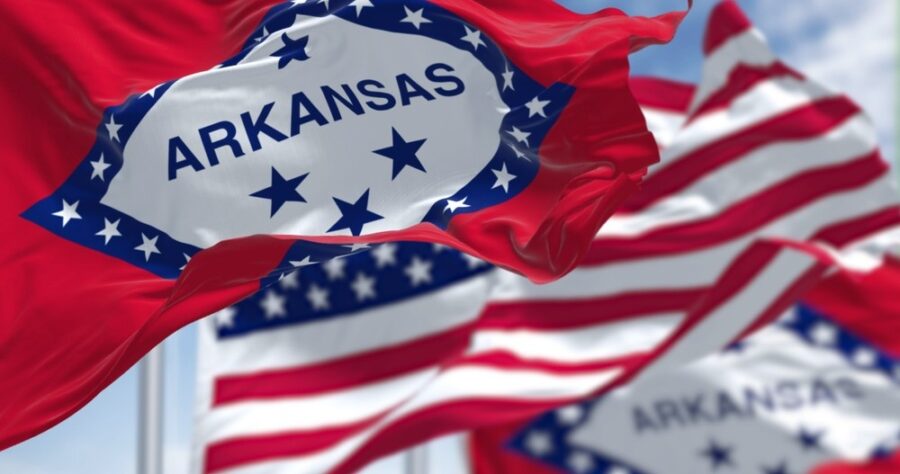
Attorney General Tim Griffin from the US state of Arkansas has filed lawsuits against prediction market operator Kalshi and online gaming company Virtual Gaming Worlds (VGW), reportedly accusing them of offering illegal gambling services.
According to the Arkansas Democrat-Gazette, the lawsuits, filed on Wednesday, allege that both companies offered gambling services in the state without a license and misled consumers about the legality of their products, in violation of the Arkansas Deceptive Trade Practices Act.

The Kalshi lawsuit was filed in Independence County Circuit Court, while the case against VGW was brought in White County Circuit Court.
Griffin is seeking restitution for customers, civil penalties, and unpaid taxes, along with court orders preventing both companies from continuing the alleged practices.
In the case against Kalshi, Griffin argues that the platform’s products constitute gambling rather than prediction markets. He cited features including self-exclusion tools, deposit limits and problem-gambling resources, arguing that these are typically associated with gambling operators. He also accused Kalshi of allowing users as young as 18 to wager on sporting and entertainment events, while Arkansas permits casino gaming and sports wagering only for those aged 21 and over.

Kalshi lets users trade contracts on real-world events, including sports and politics. In other state cases, the company has argued that its contracts are financial products regulated by the Commodity Futures Trading Commission rather than bets subject to state gambling laws. According to Kalshi, more than US$2.5 billion has been traded on its markets for the 2026 midterm elections.
The lawsuit follows an October 2025 opinion by Griffin concluding that prediction markets such as Kalshi constitute gambling under Arkansas law and require a state license. Arkansas joins several other states that have taken action against the company.
The lawsuit against VGW concerns its sweepstakes sites, including Chumba Casino, LuckyLand Casino, LuckyLand Slots and Global Poker.

On these platforms, customers purchase Gold Coins with real money and receive Sweeps Coins as a bonus, which can be used to play casino-style games, with winnings redeemable for cash.
VGW describes itself as an interactive entertainment company and maintains that it does not operate a gambling business, but Griffin said the state’s review of its model found that it amounted to gambling.
VGW has also faced action in other US states. In September, the company agreed to pay US$8 million to settle with the New York Attorney General, which had sent it a cease-and-desist letter over its sweepstakes casino operations.

Dig Deeper
Related stories
 2026/10/23: VGW political donations topped hundreds of thousands while defying Arizona shutdown order: report
 2026/09/10: New York cracks down on sweepstakes: VGW pays US$8 million for illegal gambling operation
 2025/09/13: Massachusetts Attorney General sues Kalshi for illegal sports wagering operations
 2026/07/31: New York sues Kalshi for illegal gambling operations
2026/10/23: VGW political donations topped hundreds of thousands while defying Arizona shutdown order: report
2026/09/10: New York cracks down on sweepstakes: VGW pays US$8 million for illegal gambling operation
2025/09/13: Massachusetts Attorney General sues Kalshi for illegal sports wagering operations
2026/07/31: New York sues Kalshi for illegal gambling operations
The Backstory
Arkansas moves into a widening state-by-state fight
Arkansas’ lawsuits against Kalshi and Virtual Gaming Worlds place the state in the middle of two of the most consequential regulatory fights in U.S. online gambling: whether event contracts tied to sports and politics are financial products or wagers, and whether sweepstakes casino models amount to gambling when virtual coins can be redeemed for cash prizes. The cases also show how state attorneys general are becoming primary actors in disputes that sit between gambling law, consumer protection and federal market regulation.
The Arkansas complaints follow an October 2025 opinion from Attorney General Tim Griffin that prediction markets such as Kalshi constitute gambling under state law and require a license. That conclusion gave Arkansas a legal framework for targeting companies that argue they are not traditional gambling operators. In Kalshi’s case, the state is challenging a platform that says its contracts are regulated by the Commodity Futures Trading Commission. In VGW’s case, Arkansas is targeting a sweepstakes structure that regulators in other states have increasingly treated as a workaround for online casino prohibitions.
Kalshi’s sports contracts drew the first wave of state action
Kalshi’s position has been that event contracts are federally regulated financial instruments, not sports bets. State officials have increasingly rejected that distinction when contracts involve sports outcomes, spreads or totals. The dispute escalated when Massachusetts Attorney General Andrea Joy Campbell sued Kalshi over alleged illegal sports wagering, arguing that the company was offering sports bets “under the guise” of yes-or-no event contracts.
The Massachusetts case identified several issues that now echo through other state actions. Kalshi had not applied for a sports wagering license from the Massachusetts Gaming Commission, yet offered products officials said resembled moneyline, point spread and over-under bets. Campbell’s office also focused on age restrictions, saying Kalshi allowed users ages 18 to 20 to participate even though Massachusetts requires online sports betting customers to be 21. Regulators said that gap undermined rules designed to limit youth exposure and problem gambling risk.
Those allegations helped define the broader enforcement theory now appearing in Arkansas: if a product functions like sports wagering, states may seek to regulate it like sports wagering, regardless of the terminology used by the operator. The Massachusetts lawsuit also emphasized consumer safeguards, including deposit limits, maximum wagers and gambling education. Arkansas has similarly pointed to Kalshi’s own responsible-gambling tools, such as self-exclusion and deposit limits, as evidence that the product belongs in the gambling category rather than outside it.
New York sharpened the legal stakes for prediction markets
New York intensified pressure on Kalshi by bringing its own lawsuit after a cease-and-desist order from the New York State Gaming Commission. State officials alleged that Kalshi operated an illegal, unlicensed gambling business by offering markets tied to sports, elections, culture and other public events. The attorney general’s office said those markets met New York’s definition of gambling because users risked money on uncertain outcomes outside their control.
The New York action underscored the financial exposure facing prediction market operators if states prevail. Officials sought to stop Kalshi’s operations in the state, recover restitution and impose penalties tied to profits. The state also pointed to age access, saying Kalshi’s availability to users 18 to 20 conflicted with New York’s 21-and-over requirement for mobile sports betting. That argument directly parallels Arkansas’ claim that the platform may expose younger adults to products that the state otherwise reserves for older consumers.
The procedural posture in New York also mattered. According to earlier coverage, a federal judge blocked Kalshi’s request for a preliminary injunction, allowing New York to continue enforcing its gambling regulations. That did not resolve the core question of federal preemption, but it signaled that states could press claims while the broader legal fight unfolds. Arkansas’ lawsuit enters that landscape with the benefit of prior state theories and an emerging playbook for challenging prediction markets under consumer protection and gambling statutes.
VGW became a test case for sweepstakes casino enforcement
VGW’s business model has drawn a separate but related wave of enforcement. Its brands, including Chumba Casino, Global Poker and LuckyLand Slots, use a dual-currency system in which players buy Gold Coins and receive Sweeps Coins that can be used to play casino-style games. Winnings tied to Sweeps Coins can be redeemed for cash or prizes. VGW has maintained that it operates an interactive entertainment business rather than a gambling enterprise, but regulators have increasingly focused on the practical effect of the model.
New York’s action against VGW marked a significant escalation. The company agreed to pay US$8 million after New York regulators accused it of illegal gambling through its sweepstakes brands. The case followed a cease-and-desist letter and an investigation by the attorney general’s office. New York officials said VGW’s Sweeps Coins were not meaningfully free because players could receive them in connection with real-money purchases.
That settlement gave other states a concrete enforcement example. VGW neither admitted nor denied wrongdoing, but the payment and operational changes showed that sweepstakes casino operators could face material penalties even without a traditional online casino license framework. Arkansas’ complaint now builds on that momentum by seeking restitution, penalties, unpaid taxes and an order barring the alleged conduct. The state’s theory mirrors the broader regulatory concern: if consumers spend money for a chance to win redeemable value through casino-style games, regulators may treat the activity as gambling.
Political scrutiny added pressure around sweepstakes operators
VGW also has faced scrutiny beyond courtroom filings. Reporting on Arizona showed the company had made substantial political contributions while state regulators had ordered it to cease online gambling operations. The coverage said VGW spent more than US$200,000 on groups supporting Arizona Gov. Katie Hobbs and Attorney General Kris Mayes after a 2024 cease-and-desist letter directed its casino brands to stop online gambling activity in the state.
The Arizona episode raised questions about transparency and enforcement consistency. According to prior reporting, regulators did not initially publicize the action against VGW even though similar letters to other sweepstakes operators had been made public. The Arizona Department of Gaming said it continued to evaluate enforcement options and believed VGW was operating illegally. At the same time, VGW’s political donations and lobbying activity drew scrutiny as sweepstakes casino regulation became a higher-profile issue across the country.
That political dimension is relevant to Arkansas because sweepstakes gaming has moved from a niche consumer protection concern to a legislative and enforcement priority. Operators have expanded nationally while states vary widely in online casino laws. Where online casino gambling remains illegal or limited, sweepstakes models have become a flashpoint, with regulators arguing that companies are using promotional mechanics to reach consumers without licenses, state taxes or gambling controls.
Arkansas had already been debating the unregulated market
The Arkansas lawsuits also follow an in-state debate over whether to legalize online casino gaming through licensed local operators. Earlier this year, lawmakers considered an online casino bill filed in Arkansas that would have allowed Saracen Casino Resort, Oaklawn Racing Casino Resort and Southland Casino Resort to offer internet gaming. Supporters framed the proposal partly as a defensive response to unregulated and untaxed operators already reaching Arkansas consumers.
That debate foreshadowed the enforcement posture now taken by Griffin. Saracen Casino Resort executive Carlton Saffa warned regulators that offshore and unregulated casino products were active in Arkansas and posed risks to consumers. The Arkansas Problem Gambling Council also reported rising concern around unregulated gaming, including offshore and sweepstakes platforms, with young adults accounting for a large share of calls.
Taken together, those earlier developments explain why Arkansas is pursuing both Kalshi and VGW at the same time. The state is not only asking whether a particular product fits a technical definition. It is asserting that companies offering sports-style event contracts or casino-style sweepstakes games should not be able to bypass licensing, age restrictions, taxes and consumer protections. The outcome could affect how far states can go in policing federally regulated prediction markets and how long sweepstakes casinos can operate in jurisdictions that view redeemable virtual coins as gambling stakes.
