


Albanese unveils long-awaited gambling ad reforms

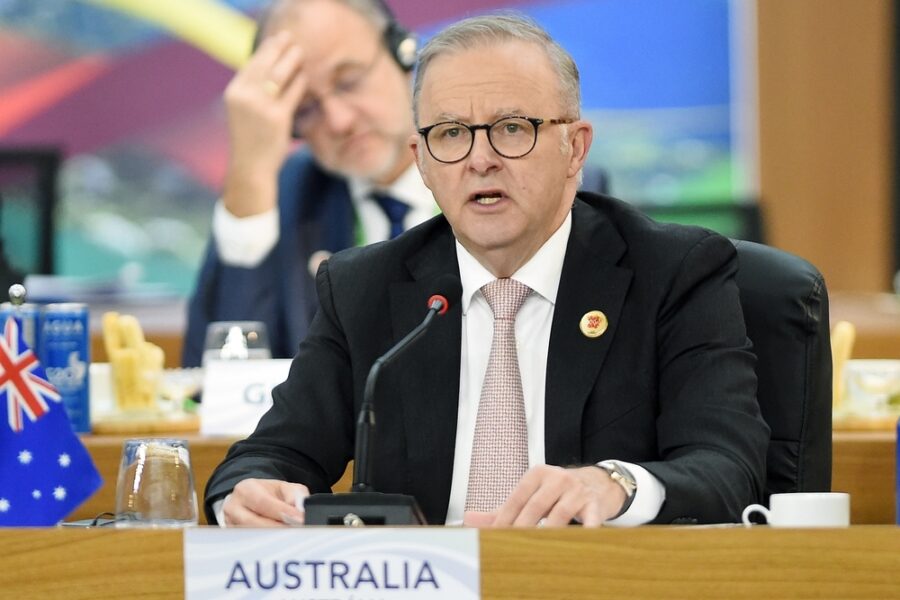
Australian Prime Minister Anthony Albanese has announced a package of gambling advertising reforms more than 1,000 days after a parliamentary report first called for an overhaul.
The measures, developed by Communications Minister Anika Wells, include a cap on television advertising volume to three per hour, an extended blackout period for sports betting ads around live matches, and a phased ban on stadium and team jersey advertising.

Social media platforms and streaming services would also be required to offer opt-out tools for parents and children, modeled on restrictions already applied to under-16s on social media. Restrictions on gambling ads around school pick-up times and no more celebrity endorsements were also included.
The government also mentioned its intention to crack down on offshore platforms, as well as ban other types of online gambling like keno and apps based on poker machines.
Speaking to the National Press Club on Thursday, Albanese said that his government was “getting the balance right” with the new gambling reforms. “Letting adults have a punt if they want to, but making sure our children don’t see betting ads everywhere they look,” he added.

The reforms stopped short of a total advertising blackout and would not establish a national gambling regulator, positions advocated by the late Labor MP Peta Murphy, whose report prompted the review.
The government faces industry backlash. Responsible Wagering Australia, which represents operators like Bet365 and Sportsbet, said the measures were “draconian” in nature and would impact jobs in the sports wagering sector.
However, earlier this week Sportsbet was reported to have dropped brand signage at the Marvel Stadium and the Melbourne Cricket Ground from its AU$100 million (US$69 million)1 AUD = 0.6911 USD
2026-04-02Powered by CMG CurrenShift deal with the Australian Football League.

Since the parliamentary review, gambling harm advocates have called for the government to introduce restrictions. Last week, the Australian Medical Association urged authorities to take immediate action to ban gambling ads.
Charlotte Capewell brings her passion for storytelling and expertise in writing, researching, and the gambling industry to every article she writes. Her specialties include the US gambling industry, regulator legislation, igaming, and more.

Dig Deeper
Related stories




The Backstory
How the government got here
The new restrictions land after years of mounting pressure on Parliament to curb the saturation of betting promotions across broadcasts, stadiums and social media. The late Labor MP Peta Murphy’s landmark inquiry in 2023 set the tone with 31 recommendations and a three-year pathway to a comprehensive ban. But as the calendar turned, the government resisted endorsing a full blackout. Earlier this year Prime Minister Anthony Albanese and senior ministers faced a coordinated push from crossbenchers and some Labor colleagues to go further, even as the caucus worked toward a compromise.
That pressure surfaced publicly when lawmakers attempted to force the issue on the House floor. Independent MP Andrew Wilkie sought a free vote on phasing out gambling advertising, a bid that failed 85 to 14 but amplified calls for action and signaled the political cost of delay. The episode captured the government’s balancing act: address community concern about children’s exposure without detonating a complex ecosystem of media rights, club sponsorships and wagering tax flows. The debate was chronicled in detail as Albanese held firm against a rapid phaseout while pointing to steps like the BetStop self-exclusion register.
Within that context, today’s package aims to cap the volume of television ads, extend blackout periods around live sport, remove celebrities from promotions and phase out stadium and jersey branding. The government also flagged attempts to tighten controls on offshore operators and certain online gambling products, signaling a two-track strategy that targets both visibility and access.
Murphy’s legacy and the unresolved ban question
Murphy’s report became the central touchstone for advocates and a political fault line for the government. Crossbench MPs have consistently urged Labor to match the inquiry’s ambition. In recent months they warned that anything short of a total ban would not meet the moment, especially with children still surrounded by betting cues at games and on screens. Those concerns were amplified as media speculation swirled that Cabinet might retreat from tougher steps, prompting campaign groups and independents to push back.
Advocates and lawmakers renewed their warning that dilution risked missing the point of the inquiry. That message coalesced in reporting that the government could soften an online ad crackdown, drawing a counteroffensive from reformers who said partial limits would leave major gaps in exposure. The campaign was captured as crossbenchers and public health voices urged Labor to follow through on a full ban, not incremental measures.
The new framework preserves Murphy’s core rationale — reducing harm and de-normalizing gambling for minors — while stopping short of her end state. It reflects a belief inside government that targeted curbs, parental controls and stronger compliance can change behavior faster than a prolonged legislative fight over blanket prohibition.
Enforcement, economics and the offshore risk
A total ban was not just a political call. It was a question of enforcement and economics. Albanese repeatedly argued that a hard prohibition would be difficult to police and could backfire by pushing bettors to unregulated markets. In a televised interview, he framed the government’s job as reducing harm without fueling an offshore shift that strips tax revenue and consumer protections. Those arguments resurfaced as the prime minister said an outright ban would be hard to enforce and could send players to illegal sites, as reported in coverage of his stance on feasibility.
Broadcasters, sports codes and bookmakers also warned of funding holes if advertising and sponsorship dollars evaporated. That leverage shaped the tempo of reform. Even as the industry pushed back, it offered concessions at the margins. Sportsbet, for instance, faced criticism for continuing to plug same-game multis on league websites after pulling them from broadcasts, reinforcing the difficulty of drawing bright lines across fragmented media. The government’s move to phase out stadium signage and jersey deals acknowledges those commercial realities while setting a clock on the most visible forms of promotion.
Sport’s influence and a cultural pivot
The most potent critics of the status quo often came from inside the tent of elite sport. Australian Test opener Usman Khawaja publicly challenged the pace of reform, saying gambling promotions had become inescapable for young fans and even teenage players. He framed the issue as cultural, not just regulatory, arguing for an immediate break between wagering and sport. His comments, delivered after meetings with crossbench MPs and health experts, sharpened the public case for change and fed political momentum. Khawaja’s critique and appeal for a ban were detailed in reporting on his call to delink sport and betting.
The government’s extended blackout windows around live matches and ban on celebrity endorsements appear designed to blunt exactly that normalization effect. Policymakers are betting that fewer on-screen betting cues — particularly those fronted by sports stars and performers — will reduce the impulse to wager and reset expectations for families watching at home or in stadiums.
Advocates press for a higher bar
Health groups and reform campaigners welcomed tougher rules but want more. The Australian Medical Association recently pressed for immediate action to ban ads outright. Crossbenchers echoed that message, warning that partial steps risk keeping a steady drumbeat of promotions on free-to-air TV and at live events. Those concerns drove a coordinated push ahead of Parliament’s return, as reformers feared the final package might fall short of Murphy’s blueprint. The political dynamics and civil society response were captured as advocates demanded the government hold the line on comprehensive restrictions.
The government counters that new parental controls on platforms and a phased wind-down of sponsorships will meaningfully cut exposure. It is also preparing a clampdown on offshore operators and certain online products, an effort meant to avoid a migration to grey markets while tightening the funnel of legal access.
International signals and what to watch
Australia is not alone in rethinking the reach of legal betting. In New York, Gov. Kathy Hochul proposed additional safeguards to keep minors off gambling apps, including biometric checks, stricter geolocation and curbs on AI-driven promotions. The proposals, described as a bid to limit personalized nudges toward risky play, highlight how regulators abroad are pairing ad and product rules with identity and data controls. The New York push was outlined as the governor introduced reforms to curb underage gambling.
Back home, the stakes are immediate. Broadcasters and codes must rework sponsorship inventories. Wagering firms will recalibrate marketing strategies around volume caps, blackout windows and a loss of celebrity endorsers. Parents will test whether opt-out tools actually wall off kids from betting promotions. Advocates will gauge whether fewer ads translate into lower harm, and lawmakers will keep Murphy’s endgame of a full ban on the table if metrics disappoint.
The government’s bet is clear: incremental but sweeping limits can meaningfully reduce exposure without fracturing sport and media economics or fueling an offshore shift. The next test will be compliance and outcomes. If ads remain ubiquitous despite caps and blackouts, or if online loopholes persist, pressure for a harder line will return fast — and with it, the unresolved question of a total ban.
