Zitro enters the UAE market after securing gaming vendor license

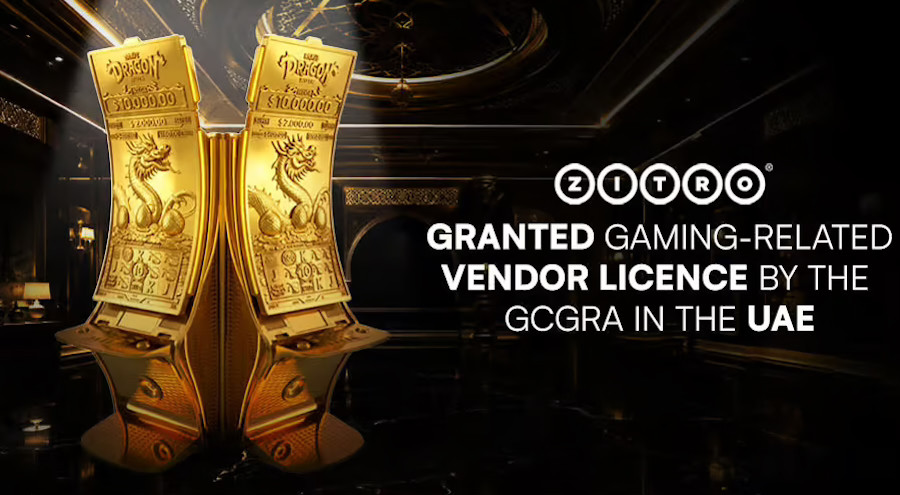
Game developer Zitro has been awarded a Gaming-Related Vendor License from the UAE’s General Commercial Gaming Regulatory Authority (GCGRA), allowing the supplier to provide its gaming products to licensed gambling operators in the country.
This approval adds another regulated market to Zitro’s international expansion, with the Luxembourg-based developer recently expanding across Latin America and launching in Brazil and Paraguay earlier this year.

Zitro’s President – International, Sebastian Salat, said, “The license enables us to offer products that have been conceived to meet the expectations of premium destinations, offering a distinctive combination of cutting-edge design, performance, and elegance that aligns naturally with the exceptional standards of this new generation of luxury integrated resorts.”
This license comes as the UAE continues to establish its regulated online gaming market, which went live on 1 June this year under GCGRA’s federal regulatory framework.
The GCGRA was established in September 2023 to oversee commercial gaming at a federal level, including internet gaming.
Gambling operator Play971 currently operates as the UAE’s only licensed gaming platform, while software developers Playtech and Endorphina have also recently secured Gaming-Related Vendor Licenses to supply gaming products and services within the country’s market.
Charlotte Capewell brings her passion for storytelling and expertise in writing, researching, and the gambling industry to every article she writes. Her specialties include the US gambling industry, regulator legislation, igaming, and more.

Dig Deeper
Related stories
 2026/08/25: Total Philippines gambling ad ban seen handing market back to illegal operators, data from five countries show
 2025/10/08: Yolo Group secures two UAE gaming vendor licences
 2026/06/30: Fanatics enters UAE market via Momentum joint venture on lottery, sports betting and igaming
 2026/07/15: Playtech granted Gaming-Related Vendor License in the UAE, supplying sole B2C operator Momentum (for now)
2026/08/25: Total Philippines gambling ad ban seen handing market back to illegal operators, data from five countries show
2025/10/08: Yolo Group secures two UAE gaming vendor licences
2026/06/30: Fanatics enters UAE market via Momentum joint venture on lottery, sports betting and igaming
2026/07/15: Playtech granted Gaming-Related Vendor License in the UAE, supplying sole B2C operator Momentum (for now)
The Backstory
UAE licensing moves from framework to market-building
Zitro’s vendor approval lands at a point when the United Arab Emirates is shifting from regulatory design to commercial execution. The General Commercial Gaming Regulatory Authority, established in 2023 to oversee commercial gaming federally, has been assembling the pieces of a tightly controlled market: a small number of operating approvals, a growing vendor register and a framework intended to give international suppliers enough certainty to invest.
The importance of the license is less about one supplier and more about sequence. A regulated gaming market cannot scale with operators alone. It needs tested game studios, platform providers, live casino systems, payment controls, compliance tools and content that can be audited. Each vendor approval broadens the product set available to licensed operators while reinforcing the GCGRA’s role as the gatekeeper for a market that is being built deliberately rather than opened all at once.
That model is consistent with other recent UAE moves. Yolo Group subsidiaries Hub88 Holdings and Live Online Gaming Services received gaming-related vendor licenses, with Live88 positioned as the first online live casino studio licensed in the country, according to Yolo Group’s UAE vendor licensing announcement. The approvals signaled that the regulator is not limiting the market to land-based resort supply chains but is also preparing for a digital gaming ecosystem.
A controlled Gulf opening draws global suppliers
The UAE is the first regulated jurisdiction in the Gulf Cooperation Council region to create a federal commercial gaming structure of this kind. That gives early licensees an advantage beyond immediate revenue. For companies accustomed to mature European, North American or Latin American markets, the UAE offers a chance to enter a high-income jurisdiction before competitive conditions harden.
Suppliers are responding accordingly. Yolo Group framed its two vendor licenses as part of a pivot away from gray markets and toward licensed jurisdictions. The company said it was closing Sportsbet.io and Bitcasino.io as it moved through the final licensing stages, a notable shift for a group whose growth was closely linked to crypto gambling and unregulated markets. Its UAE approvals therefore carried a broader message: access to the Emirates may require operators and suppliers to demonstrate a cleaner regulatory profile than in faster-opening markets.
The same dynamic applies to content companies such as Zitro. A gaming-related vendor license does not guarantee market share, but it allows a supplier to participate in a market where the number of approved counterparties remains limited. Early vendor status can shape operator integrations, product road maps and brand visibility, especially if the GCGRA maintains a selective licensing posture.
The UAE’s approach also creates a template for other regional governments watching the sector. If the market develops without the compliance failures that have accompanied rapid liberalization elsewhere, it could become a reference point for Gulf gaming regulation. If it stumbles, the same governments may delay or reject similar reforms.
Operators arrive through narrow channels
Vendor approvals are only one side of the UAE’s emerging market. On the operating side, the GCGRA has so far taken a narrow-channel approach, with Momentum Group’s licensed entities occupying a central role. The Game LLC became the regulator’s first licensed business when it received a lottery license in July 2024. Coin Technology Projects later added internet gaming and sports wagering approvals, making Momentum the key licensed platform for lottery, sports betting and igaming activity.
That position became more significant when Fanatics entered the UAE through a joint venture with Momentum. The deal, described in Fanatics’ UAE market entry through Momentum, transferred control of Momentum’s licensed entities into a new strategic venture. The GCGRA approved the change in control, allowing the joint venture to operate and expand the licensed activities already held by Momentum, including lottery, igaming, sportsbook and content websites.
For suppliers, that transaction clarified the commercial path. The UAE may not produce a crowded operator field in the near term. Instead, large international brands may enter through approved local licensees, joint ventures and controlled ownership changes. That places additional value on vendor licenses because suppliers need to be eligible before they can serve the small pool of regulated operators that may dominate the first phase.
Fanatics’ arrival also raised the stakes. The company brings technology, consumer branding and U.S. sports-commerce experience to a market with limited gaming history. If it can convert that into a compliant local offering, suppliers integrated early into the licensed ecosystem may benefit from a first-mover platform rather than competing for attention across dozens of operators.
Latin America shows why regulated access matters
Zitro’s UAE approval follows a series of Latin American expansion moves that show how suppliers are positioning themselves around newly regulated or fast-formalizing markets. In Brazil, Zitro Digital partnered with Flutter Entertainment’s Betnacional, adding titles such as King Fu Frog, Legendary Sword and Cash Totems to one of the country’s major online gaming brands. That deal, alongside a RubyPlay agreement, was covered in Betnacional’s expansion with RubyPlay and Zitro Digital.
Brazil’s market illustrates the commercial upside of regulation. The country awarded dozens of operator licenses after formalizing online betting and igaming, while revenue and tax intake rose sharply in the first months of 2026. For content providers, regulation converted a large but uncertain market into one where partnerships with licensed operators could be announced, marketed and audited.
Zitro also deepened its Paraguay presence through an agreement with Solbet, giving the operator access to the supplier’s slots and video bingo portfolio. The Solbet partnership in Paraguay underlined Zitro’s strategy of using local operators to distribute recognizable land-based titles into online channels. That model is relevant to the UAE because premium integrated resorts and digital platforms may require content that is both internationally familiar and suited to local compliance expectations.
Latin America also offers a warning. Regulation can create growth, but political pressure can quickly reshape market assumptions. Brazil’s president has floated restrictions on online casino products amid concerns over gambling harm. That tension between revenue, consumer protection and political scrutiny is likely to follow the UAE as the market gains visibility.
The regulatory bargain: visibility for compliance
The UAE’s emerging regime fits into a broader global debate over how governments should manage online gambling: prohibit, tolerate or channel activity into licensed systems. The Philippines provides a sharp example of the stakes. A proposed total ban on gambling advertising has been criticized by industry analysts who argue it would weaken licensed operators and hand market share to illegal offshore sites. The analysis in the Philippines gambling advertising ban debate pointed to Italy, Belgium, France, the Netherlands and the U.K. as evidence that channelization depends on allowing legal operators to be visible under strict rules.
That debate is relevant to the UAE even though the markets are very different. The Emirates is not trying to repair a large illegal online sector in the same way as the Philippines. It is trying to create a legal market from the top down. But the regulatory bargain is similar: companies receive access to consumers only if they submit to licensing, monitoring, product standards and responsible-gaming controls.
For vendors, that bargain means a license is both an opportunity and a constraint. Products must align with the regulator’s technical and policy requirements, and suppliers may be judged not just on game performance but on suitability, data controls, marketing practices and the conduct of affiliated operators. Early entrants gain proximity to a premium market, but they also help set the compliance baseline for those that follow.
What Zitro’s approval signals next
Zitro’s license should be read as another sign that the UAE is moving toward a full supplier stack rather than merely awarding symbolic permissions. Playtech, Endorphina, Yolo Group entities and now Zitro represent different parts of the online gaming supply chain. Momentum and Fanatics represent the operating side. Together, these developments suggest the GCGRA is building a market with enough depth to support lottery, sportsbook, igaming and live casino offerings under a federal framework.
The next test will be execution. Operators must convert licenses into products that meet local standards and attract customers without triggering political or social backlash. Suppliers must prove their content can work in a premium, highly scrutinized environment. The regulator must maintain credibility by enforcing standards consistently while allowing enough commercial flexibility for the market to function.
For Zitro, the license adds a high-profile jurisdiction to an expansion strategy already visible in Brazil and Paraguay. For the UAE, it adds another vetted supplier to a market still defining its identity. The stakes now move from regulatory announcements to whether a carefully licensed ecosystem can generate sustainable gaming revenue while preserving the control that made the UAE attractive to global companies in the first place.