


Fanatics enters UAE market via Momentum joint venture on lottery, sports betting and igaming

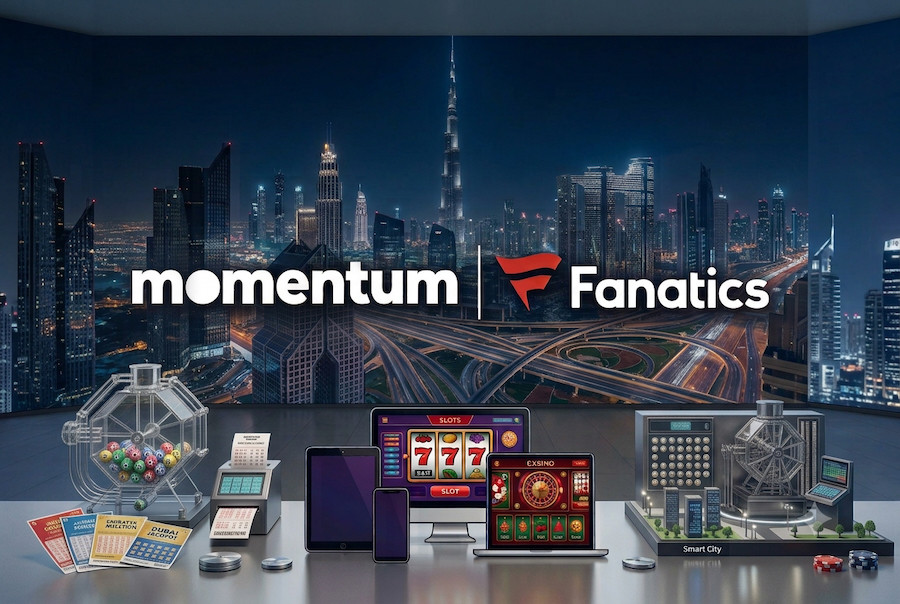
US-based digital sports platform Fanatics is gaining a foothold in the UAE, with the region’s only lottery, sports betting and igaming licensee Momentum Group transferring its licenses to a new “strategic joint venture” between the two companies.
In a joint release on 29 June, the groups noted the JV is “combining Momentum’s regional expertise, regulatory standing, and proven operational depth with Fanatics’ product knowledge, technology, and speed-to-scale capability.”

Momentum Group company The Game LLC is currently the only lottery licensee of the UAE’s General Commercial Gaming Regulatory Authority (GCGRA). The Game was also the first business ever licensed by the GCGRA, receiving its lottery license in July of 2024.
Momentum’s other subsidiary, Coin Technology Projects, is also currently the sole internet gaming licensee of the GCGRA, as well as the sole sports wagering licensee, with both licenses added to the register in November of 2025.
The company’s release indicates that the GCGRA “has approved the change in control of Momentum’s existing licensed entities” to the joint venture, which will “operate and grow the commercial gaming activities currently licensed to Momentum in the UAE including lottery, iGaming, sportsbook, and content websites with a focus on consumer experience, technology, and sustainable long-term growth.”

Speaking of the partnership, Conor Grant, President of Fanatics Gaming said “The UAE is establishing one of the most thoughtfully regulated commercial gaming markets in the world, and Momentum has demonstrated what a responsible, credible operation within it looks like. We are entering this market for the long term, committed to building something genuinely category-defining together.”
Momentum Group’s COO Scott Burton noted, “The UAE has built one of the world’s most carefully regulated commercial gaming markets, and this joint venture is a reflection of the confidence that brings. Combining Momentum’s regional experience with Fanatics’ global product capability creates a partnership well placed to grow alongside this market for the long term.”

Dig Deeper
Related stories
 2026/07/15: Playtech granted Gaming-Related Vendor License in the UAE, supplying sole B2C operator Momentum (for now)
 2026/07/28: Fanatics brings prediction market fully in-house with Water Street Labs acquisition
 2025/10/08: Yolo Group secures two UAE gaming vendor licences
2026/07/22: UAE’s gaming regulator appoints Dr Ahmad Hesham as new General Counsel
2025/10/08: Yolo Group secures two UAE gaming vendor licences
2026/07/22: UAE’s gaming regulator appoints Dr Ahmad Hesham as new General Counsel
2026/07/15: Playtech granted Gaming-Related Vendor License in the UAE, supplying sole B2C operator Momentum (for now)
2026/07/28: Fanatics brings prediction market fully in-house with Water Street Labs acquisition
2025/10/08: Yolo Group secures two UAE gaming vendor licences
2026/07/22: UAE’s gaming regulator appoints Dr Ahmad Hesham as new General Counsel
The Backstory
A regulated market takes shape around a single operator
Fanatics’ move into the UAE is not an isolated market entry. It is the latest step in a carefully sequenced rollout of commercial gaming in a country that, until recently, had no legal framework for lottery, sports betting or internet gaming. The creation of the General Commercial Gaming Regulatory Authority, followed by the licensing of Momentum Group subsidiaries, gave the UAE a structure that international operators could evaluate, finance and join.
Momentum’s position is central to that structure. Its subsidiary The Game became the first company licensed by the regulator when it secured the national lottery license in July 2024. Another Momentum-linked entity, Coin Technology Projects, later appeared on the register as the sole internet gaming and sports wagering licensee. That concentration of permissions made Momentum the gatekeeper for the first phase of legal digital gaming in the country and helps explain why Fanatics chose a joint venture rather than a greenfield application.
The regulatory design also reduces ambiguity for a U.S. company whose sports betting expansion has been shaped by state-by-state licensing, compliance reviews and product localization. In the UAE, the market is younger but more centralized. A change in control approved by the regulator allows Fanatics to plug product, technology and customer acquisition experience into an existing licensed platform while Momentum retains the regional standing and regulatory history that made the opportunity viable.
Momentum has been building the consumer layer
Before the Fanatics partnership, Momentum had already begun testing how legal gaming products might be presented to UAE consumers. The UAE Lottery launched in November 2025 and has expanded beyond traditional draw formats into faster digital products. In one example, the UAE Lottery launched the Quick 5 online game, with draws every two minutes, low ticket prices and prize multipliers tied to number-order outcomes.
That product matters because it shows the market is not being limited to a national jackpot-style lottery. Quick-draw mechanics and digital scratch-style games are closer to the engagement patterns used in modern online gambling products, though still under the lottery umbrella and regulator oversight. They also create operational lessons in payments, verification, responsible gambling controls and customer behavior in a jurisdiction where legal gaming remains new and politically sensitive.
For Fanatics, those early products provide a foundation. The company is not merely buying access to a license; it is entering a live operating environment with a regulator, consumer-facing brand activity and evidence of how digital games can be distributed under UAE rules. That lowers some execution risk while raising expectations. A larger international partner will be expected to improve user experience, product reliability and compliance reporting without undermining the cautious regulatory posture that allowed the market to open.
The UAE’s licensing stance is already reshaping corporate behavior
The UAE’s emerging regime is also affecting companies that are not yet operating consumer gaming in the country. Yolo Group recently said it would close gray-market brands Sportsbet.io and Bitcasino.io as it pursues two UAE business-to-business vendor licenses, a decision that showed how the GCGRA’s standards can influence global portfolios. In explaining Yolo Group’s retreat from gray-market gambling brands, founder Tim Heath said regulators offering licenses are not keen on applicants maintaining other operations in pre-regulated markets.
The message is significant: the UAE appears to be signaling that regulatory credibility is not confined to local conduct. Applicants may have to demonstrate that their wider businesses align with regulated-market expectations. That approach could distinguish the UAE from jurisdictions that license local entities while tolerating unrelated gray-market revenue elsewhere in a group.
For Fanatics, that is an advantage and a burden. The company’s gambling expansion has largely been tied to regulated U.S. sports betting and iGaming markets, giving it a profile more consistent with strict licensing expectations than operators built around offshore or crypto casino businesses. At the same time, entering the UAE through a high-profile joint venture means Fanatics will become part of the benchmark by which future applicants are judged. Product decisions, marketing tone, affordability controls and data practices will be watched closely.
The Yolo example also highlights a broader shift in the online gambling sector. Growth capital and technology firms that once tolerated gray-market scale increasingly face a choice between unregulated revenue and access to premium jurisdictions. The UAE, with its wealth, tourism base and regional influence, gives that choice sharper commercial stakes.
Asia offers a warning on policy reversals
The UAE’s controlled opening contrasts with the uncertainty facing online gambling businesses in parts of Asia, where policy shifts can quickly alter investment assumptions. In the Philippines, Pacific Online Systems abandoned online lottery plans after concluding that government sentiment had turned against online operators and Philippine offshore gaming operators. The company, part of Belle Corp., moved to wind down its app project with the Philippine Charity Sweepstakes Office and exit an investment in HHR Philippines, which runs the Buenas online casino, after directors determined the policy shift was unlikely to reverse. Its decision to scrap an online lottery venture in the Philippines underscored how political risk can leave digital gaming projects suspended even after commercial planning and awards are in place.
That case is relevant to the UAE because both markets involve state-supervised gaming expansion rather than mature, liberalized gambling sectors. But the direction of travel differs. The Philippines has a long history of licensed gaming and online experimentation, yet current politics have cooled parts of the sector. The UAE is moving from prohibition toward regulated authorization, with a new agency designed to centralize oversight from the start.
Investors will treat that difference as important but not definitive. New regulators can tighten rules, delay approvals or adjust product boundaries as social concerns arise. Pacific Online’s reversal is a reminder that licenses and awards do not eliminate policy risk. They only define the current permissions. Fanatics and Momentum must therefore build a business that can withstand a slow approval cadence, narrow advertising rules and possible limits on game formats or betting markets.
Regional growth is moving through partnerships, not standalone bets
Across emerging gaming markets, companies are increasingly using partnerships to gain regulatory access, technology or local operating capacity. Century Entertainment, once associated with Macau junkets and Cambodia VIP table games, has been repositioning through a joint venture with World Platinum Technologies in the Philippines. The company is using WPT’s accredited platform relationships and regulatory infrastructure to deploy mobile gaming applications across venues rather than independently securing every license or building core systems from scratch. Its plan for expanding online gaming in the Philippines through new partnerships reflects a broader industry model: attach technology and capital to entities that already have approved channels.
The Fanatics-Momentum structure follows that logic at a larger strategic level. Momentum contributes licenses, local legitimacy and operational standing. Fanatics brings a consumer technology platform, sports-oriented brand experience and the ability to scale product development. The joint venture gives both sides something they could not easily build alone: for Momentum, a global partner with depth in digital sports engagement; for Fanatics, lawful entry into a tightly controlled market without waiting for a separate licensing path to mature.
Partnerships also spread risk. In new gambling regimes, local knowledge is not a formality. It shapes how regulators interpret responsible gaming, how payments are integrated, how promotional activity is framed and how customer complaints are handled. A foreign entrant that misreads those expectations can quickly lose momentum. Conversely, a local licensee without world-class technology may struggle to meet consumer expectations once legal alternatives are available.
The stakes extend beyond one launch
The UAE market is still small in operational terms compared with the U.S., Britain or established Asian casino hubs. Its strategic value lies in precedent. If the Fanatics-Momentum venture succeeds, it could show that a Gulf jurisdiction can introduce lottery, sports wagering and iGaming under a centralized regulator while attracting major international brands and avoiding the disorder associated with offshore markets.
That would carry implications beyond the UAE. Other countries in the region are likely to study whether regulated gaming can produce consumer protection, tax or fee revenue, tourism synergies and technology investment without generating political backlash. The GCGRA’s early decisions, including who it licenses and what conduct it requires from applicants, may become a regional reference point.
For Fanatics, the joint venture offers early access to a market that could become influential before it becomes large. For Momentum, the partnership validates its first-mover role but also raises the bar. The next phase will test whether the UAE’s tightly managed framework can support a broader commercial ecosystem while maintaining the regulatory confidence that made this deal possible.
