


UAE’s gaming regulator appoints Dr Ahmad Hesham as new General Counsel


The United Arab Emirates is further filling out the Executive Management team for its gaming regulator, announcing the appointment of Dr Ahmad Hesham as General Counsel and Board Secretary.
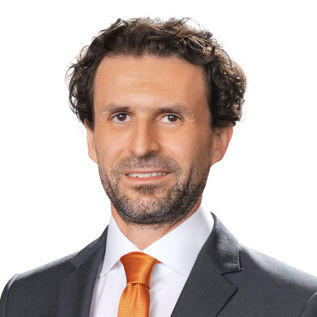
The General Commercial Gaming Regulatory Authority (GCGRA) made the announcement yesterday, noting that Hesham, “brings more than 25 years of international legal, regulatory and public policy experience, having advised governments, regulators and public institutions […] across multiple jurisdictions.

From January of 2018 until June of this year, Hesham was the General Counsel-Senior Legal Advisor of the Minister on Labor Law, Policies, and Emiratization for the UAE, where he helped with legislative reform including on the UAE Labor Law, Domestic Workers Law and “major strategic workforce and Emiratization policies and initiatives.”
The law expert has also served as a sitting judge and as Vice President of the Supreme Administrative Court of the UAE.
He has also served with the United Nations as an International Consultant on Competition Laws and Policies and was former Vice President of the Egyptian State Council.
In a release, the GCGRA noted that “We are delighted to welcome Dr Hesham to GCGRA as we continue to build a robust and internationally respected regulatory framework for commercial gaming in the UAE.”

In June, the GCGRA announced the appointment of former Crown Resorts head Ciarán Carruthers as its CEO, leading the Executive Management team that Hesham has now joined.

Dig Deeper
Related stories
 2025/10/08: Yolo Group secures two UAE gaming vendor licences
 2025/05/05: New Jersey and UAE regulators establish partnership for regulatory collaboration
 2026/06/30: Fanatics enters UAE market via Momentum joint venture on lottery, sports betting and igaming
2025/11/06: Kevin Mullally steps down as Chief Executive of UAE’s General Commercial Gaming Regulatory Authority
2026/06/30: Fanatics enters UAE market via Momentum joint venture on lottery, sports betting and igaming
2025/11/06: Kevin Mullally steps down as Chief Executive of UAE’s General Commercial Gaming Regulatory Authority
2025/10/08: Yolo Group secures two UAE gaming vendor licences
2025/05/05: New Jersey and UAE regulators establish partnership for regulatory collaboration
2026/06/30: Fanatics enters UAE market via Momentum joint venture on lottery, sports betting and igaming
2025/11/06: Kevin Mullally steps down as Chief Executive of UAE’s General Commercial Gaming Regulatory Authority
The Backstory
Legal leadership moves to the center
The appointment of Dr Ahmad Hesham as general counsel and board secretary of the General Commercial Gaming Regulatory Authority marks another step in the United Arab Emirates’ effort to build a gaming regulator before a full commercial market takes shape. For a jurisdiction attempting to introduce casino and online gaming under close government supervision, the legal function is not administrative. It is central to how the market will be defined, licensed and defended.
Hesham arrives with a background that spans courts, government ministries, public policy and international advisory work. That mix is significant because the UAE’s gaming project is not a simple matter of issuing permits to operators. The regulator is designing rules for an industry that is new to the country, sensitive in the region and likely to attract major international companies. Labor policy, administrative law, consumer protection, anti-money laundering standards and cross-border technology questions all sit inside that brief.
The GCGRA has framed its mission around integrity, responsible gaming and international credibility. Adding a senior lawyer who has worked on legislation and government reform suggests the authority is moving from founding architecture toward the practical demands of enforcement, licensing decisions and market supervision. In emerging gaming jurisdictions, the general counsel often becomes a gatekeeper for how policy intent is translated into regulations that can withstand commercial pressure and legal scrutiny.
A regulator built through leadership changes
The UAE regulator has already gone through a rapid leadership cycle. Kevin Mullally, who joined during the authority’s establishment phase in June 2023, helped create the early governance and regulatory framework before leaving to return to the U.S. His exit placed Chairman Jim Murren in an interim chief executive role, a transition the authority said would not disrupt licensing programs or stakeholder engagement. That period underscored the extent to which the GCGRA was still moving from concept to operating institution.
The next phase began with the appointment of former Crown Resorts chief Ciarán Carruthers as chief executive. Carruthers brought experience from highly scrutinized casino markets, including Macau and Australia, where regulatory remediation and suitability became defining issues for major operators. His arrival gave the GCGRA a leader with direct knowledge of casino operations and regulator relations at a time when the UAE was seeking to show it could manage gaming to international standards.
That context makes Hesham’s appointment complementary rather than isolated. Carruthers brings operating and regulatory exposure from established casino markets. Hesham brings legal, judicial and policy experience within the UAE and internationally. Together, they reflect a regulator trying to balance commercial expertise with state-level legal discipline. The combination matters because the UAE is not merely importing a gaming model from another jurisdiction. It is attempting to build one that fits domestic law, local social expectations and global investor requirements.
Licensing has already begun to set market boundaries
The GCGRA has moved cautiously but not passively. The most visible land-based project remains Wynn’s planned $5 billion integrated resort in Ras Al Khaimah, the first major casino resort development associated with the new regime. On the digital side, the regulator has begun issuing vendor licenses and authorizations that reveal how the early market may be structured.
A recent example came when Playtech received a gaming-related vendor license in the UAE, allowing it to supply approved products and services but not operate directly to consumers. That distinction is important. It indicates the regulator is separating technology supply from consumer-facing rights, a common approach in tightly controlled markets. Playtech joined a roster of global suppliers that includes major gaming and lottery technology companies, while Momentum subsidiary Coin Technology Projects LLC remained the only approved internet gaming licensee through its Play971 site.
The structure leaves open major questions. Reporting cited in the prior coverage indicated the UAE could eventually allow one online gaming license per emirate, though the authority has not confirmed that approach. If adopted, the model would limit the market to a small number of operators while allowing individual emirates to decide their level of participation. Such a system would give regulators more control over scale, responsible gaming standards and tax or fee structures, but it would also heighten the value of each license and intensify competition among international operators.
Momentum’s position has already become strategically important. Its licenses for lottery, igaming and sportsbook activities, and its partnership activity involving Fanatics, show how early license holders can become platforms for foreign market entry. That makes legal oversight more consequential. Vendor approvals, joint ventures, license transfers and operating conditions will require precise rules, especially if global companies use partnerships rather than direct applications to gain exposure to the UAE market.
Compliance demands are expanding beyond casinos
The UAE’s regulatory challenge is broader than land-based casino oversight. Online gaming, sports betting, lottery systems, payment processing, player data and cross-border supplier relationships all raise legal questions that can become reputational risks if mishandled. The regulator must decide not only who can participate but how consumer identity checks, advertising, responsible gaming tools, funds flow and enforcement obligations will operate.
Those pressures reflect a wider shift in the gambling sector, where lawyers are increasingly part of strategic decision-making. The recent appointment of Angela van den Berg as general counsel at Relax Gaming showed how suppliers are strengthening legal leadership as they expand across regulated markets. For companies, compliance is now tied directly to growth. A license can be a commercial asset, but it also creates continuing obligations that affect product design, contracts, reporting and market access.
For regulators, the same trend works in reverse. Sophisticated operators arrive with experienced counsel, complex corporate structures and products that may not fit traditional casino categories. A new regulator must be able to assess that complexity quickly and consistently. Hesham’s background in legislative reform and administrative adjudication may help the GCGRA manage the tension between encouraging investment and preserving public confidence.
Digital assets add another layer. At ICE Barcelona, Stake general counsel Jeremiah Ooi warned that it would be “unwise” for the industry to ignore cryptocurrency as regulators intensify their scrutiny of digital finance. His comments, summarized in coverage of how crypto is reshaping gambling compliance obligations, pointed to stablecoins, blockchain records, source-of-funds reviews and anti-money laundering controls. Even if the UAE chooses a conservative path on crypto gambling, the payment and compliance questions associated with digital assets are likely to influence regulatory design.
International credibility is the main asset
The stakes for the UAE are larger than the first licenses. The country is trying to establish itself as a credible commercial gaming jurisdiction in a region where gambling liberalization has been limited. That requires convincing operators, banks, technology vendors, investors and other governments that the framework is predictable and enforceable. It also requires convincing domestic stakeholders that the industry will be controlled, not simply opened.
Leadership choices are part of that message. Murren, a former MGM Resorts International chief executive, gave the authority immediate industry recognition. Mullally brought regulatory development experience during the startup phase. Carruthers added operational credibility from major casino markets. Hesham now adds senior legal and public policy depth from within the UAE’s institutional system. Each appointment signals that the regulator is building a multidisciplinary executive bench rather than relying on a single model of expertise.
That approach may prove important as the UAE decides how far to expand beyond the initial land-based and online approvals. A narrow market can be easier to supervise but may limit commercial returns and encourage offshore activity. A broader market can attract more investment but increases risks around consumer protection, advertising, payments and enforcement. The legal framework must be flexible enough to evolve while remaining clear enough for operators to plan.
Hesham’s appointment therefore lands at a pivotal moment. The GCGRA has moved past symbolic formation and into the harder work of market design. Supplier licenses are being issued, online structures are being tested and global gaming companies are positioning for access. The regulator’s credibility will depend on whether its rules can keep pace with those ambitions. Its new general counsel will help determine how that balance is struck.
