


Wisconsin starts talks on online sports betting expansion

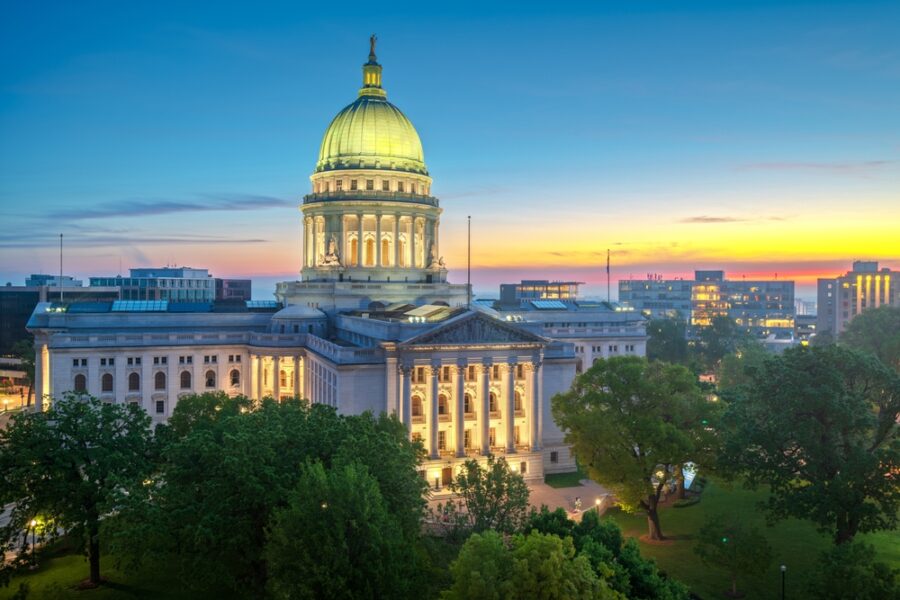
Wisconsin Gov. Tony Evers and leaders from the state’s 11 federally recognized tribes have begun discussions on the next steps toward legal online sports betting.
The governor met with tribal leaders at the state’s Capitol on June 1, following the enactment of a new sports betting law in April, according to the Milwaukee Journal Sentinel.

The meeting was the first since the legislation was signed in April, and, according to Evers’ office, discussions focused on the process for changing tribal gaming compacts, which must be renegotiated to allow online sports betting to launch in Wisconsin.
Evers reiterated his support for a model that would enable tribes to contribute to and benefit from online sports betting operations equally.
“As the tribes continue to have productive conversations amongst themselves, the Governor remains grateful for their collaboration and partnership, and he looks forward to meeting all 11 tribal leaders to continue building consensus on a solution that does the right thing for tribes and people across Wisconsin,” the Governor’s spokeswoman, Britt Cudaback, said.

All of the Wisconsin tribes supported the legislation before it became law, but it is unclear whether negotiations on revised gaming compacts will be completed before Evers leaves office at the end of the year.
The new law allows mobile sports betting wagers to be made anywhere in Wisconsin, as long as the bets are processed on servers that are based on tribal lands.
Charlotte Capewell brings her passion for storytelling and expertise in writing, researching, and the gambling industry to every article she writes. Her specialties include the US gambling industry, regulator legislation, igaming, and more.

Dig Deeper
Related stories
 2025/04/01: FanDuel and DraftKings made peace with California tribes over sports betting expansion
 2026/04/10: Wisconsin Governor greenlights online sports betting
2026/03/27: Majority of Wisconsin tribes back online sports betting bill
2026/04/10: Wisconsin Governor greenlights online sports betting
2026/03/27: Majority of Wisconsin tribes back online sports betting bill
 2026/03/18: Wisconsin online sports betting bill heads to Governor despite pushback
2025/04/01: FanDuel and DraftKings made peace with California tribes over sports betting expansion
2026/04/10: Wisconsin Governor greenlights online sports betting
2026/03/27: Majority of Wisconsin tribes back online sports betting bill
2026/03/18: Wisconsin online sports betting bill heads to Governor despite pushback
The Backstory
Compact talks move to the center
Wisconsin’s move toward online sports betting has shifted from a legislative fight to a negotiation among Gov. Tony Evers, tribal governments and federal regulators. The bill Evers signed in April created the legal framework, but it did not by itself open a market. The central task now is revising gaming compacts with the state’s 11 federally recognized tribes, which control casino gambling under agreements that date to the early 1990s.
That structure makes Wisconsin different from many states that legalized mobile wagering by licensing commercial sportsbooks directly. The state is instead pursuing a tribal-led model in which wagers may be placed anywhere in Wisconsin, provided they are processed through servers on tribal land. The model is designed to fit within the state constitution’s limits on gambling while preserving tribal exclusivity over casino-style gaming.
The June 1 meeting at the Capitol marked the first formal step after enactment. It also underscored the political deadline facing the process: Evers has said he will leave office at the end of the year, and compact amendments can take months. Even if the tribes and the governor reach terms, the changes would require federal review before betting could begin.
A bill built around tribal authority
The law grew out of a proposal to change Wisconsin’s definition of a “bet” and authorize mobile wagering through tribal compacts. Tribal leaders had spent months pressing lawmakers to treat online sports betting as an extension of existing tribal gaming rights rather than as a new commercial market. In the annual State of the Tribes address, leaders framed legalization as a way to modernize gaming, keep revenue in Wisconsin and protect government services funded by tribal casino proceeds.
That argument helped turn a long-discussed gambling expansion into a viable bill. As tribal leaders pushed lawmakers to advance online sports betting legislation, they emphasized both sovereignty and economic need. Supporters said legal betting would capture activity already taking place through offshore sites, illegal bookmakers or out-of-state platforms, while allowing Wisconsin to regulate the product.
The model also reflected Wisconsin’s legal constraints. The state constitution broadly prohibits gambling, with exceptions for the lottery, charitable games and tribal gaming conducted under federal law. A 2006 legal ruling had affirmed the ability of tribes to expand gambling offerings through renegotiated compacts, a precedent supporters cited as the pathway for mobile wagering. But the same structure also invited scrutiny from critics who argued that placing servers on tribal land does not necessarily resolve the constitutional question when a customer can place a bet from anywhere in the state.
Fast passage after an uncertain start
The proposal moved with unusual speed once it reached the floor. The Assembly approved the measure on a voice vote with little debate, a sign that legislative leaders had consolidated enough support to avoid a prolonged public fight. As the Assembly approved the online sports betting bill, backers portrayed it as a narrow modernization of tribal gaming compacts rather than a broader opening of the Wisconsin gambling market.
The Senate was less predictable. Republican leaders had not made the issue a priority, and some members questioned whether the proposal should move before the end of the session. Opposition hardened as the vote approached. A Marquette University Law School poll found 64% of voters opposed legalizing online sports betting, compared with 34% in support. National sportsbook operators also stepped up criticism, saying the bill’s revenue-sharing and compact-based framework could limit competition and discourage participation.
Despite that pushback, the Senate passed the measure 21-12 and sent it to Evers. The bill’s advance, detailed when the online sports betting bill headed to the governor despite industry and legislative opposition, showed the strength of the tribal sovereignty argument in the Capitol. It also left Evers with a political calculation: whether to sign a bill that had cleared both chambers but had not yet secured a clear, unified position from all tribes.
Evers demanded broader tribal consensus
Evers’ stance before signing was cautious. He had signaled support for legal wagering in principle but said broad tribal agreement would be important. That condition mattered because the bill did not award licenses to private operators or create a uniform state-run system. It relied on tribal governments to negotiate compact amendments, and any perception that the law favored some tribes over others could complicate both politics and implementation.
Eight tribes eventually urged Evers to sign the measure, arguing it would preserve their role as Wisconsin’s primary gaming operators and support long-term economic development. The Bad River Band of Lake Superior Chippewa Indians, Forest County Potawatomi Community, Ho-Chunk Nation, La Courte Oreilles Band of Lake Superior Chippewa Indians, Red Cliff Band of Lake Superior Chippewa Indians, Sokaogon Chippewa Community, St. Croix Chippewa Indians and Stockbridge-Munsee Community Band of Mohican Indians signed a letter supporting the bill.
Still, the tribal position was not initially unanimous. The Oneida Nation described itself as neutral, while the Lac du Flambeau Band of Lake Superior Chippewa and the Menominee Indian Tribe had not publicly taken positions at that stage. As a majority of Wisconsin tribes backed the online sports betting bill, the remaining uncertainty reinforced Evers’ concern that the law would need to be implemented in a way that did not deepen disparities among tribal nations.
When Evers signed the bill, he stressed that the “real work” would begin after enactment. He warned that he would not entertain an approach that exacerbated long-standing inequalities among tribes. That message now frames the compact talks: legalization is settled, but the distribution of opportunity, revenue and operational control remains unresolved.
Operators lost the first round
The Sports Betting Alliance, which represents companies including FanDuel, DraftKings and BetMGM, opposed the bill and favored a constitutional amendment that could create a more conventional statewide commercial market. Its objections were both legal and commercial. A tribal compact model could restrict market access, impose revenue-sharing terms the companies view as unfavorable and leave commercial operators dependent on tribal partnerships.
The alliance’s defeat in the Legislature does not mean major sportsbooks are irrelevant. If tribes choose to partner with national brands for technology, marketing or risk management, those companies may still participate. But the law gives tribes the first position, and the coming compact negotiations will determine the terms under which outside operators can enter.
That balance explains why the stakes extend beyond Wisconsin. Other states have watched the “hub-and-spoke” approach after Florida’s tribal sports betting model survived legal challenges. Wisconsin’s law follows the same basic theory: the legal bet occurs where the server is located, even if the bettor is elsewhere in the state. If Wisconsin can implement the system without a successful constitutional challenge, it could reinforce a path for states with strong tribal gaming frameworks and constitutional limits on gambling expansion.
The launch timeline remains unsettled
Wisconsin is now counted among states that have legalized online sports wagering, but residents cannot yet place legal mobile bets. The law requires compact amendments with each participating tribe, and those agreements must address operational rules, revenue sharing, responsible gambling programs, enforcement and the role of vendors. Evers has said he supports a model that allows tribes to contribute to and benefit from the market equally, a principle that may be difficult to translate into contracts among tribes with different casino footprints, resources and market strategies.
When Evers greenlit online sports betting by signing the bill, supporters said legalization could help curb illegal or offshore wagering and generate money for priorities such as mental health and opioid addiction programs. Those benefits will depend on how quickly the state and tribes can move from statutory authority to operating rules. Delays could allow offshore platforms and out-of-state betting to maintain their foothold.
The legal text of Assembly Bill 601 provided the opening. The compact negotiations will decide the market. Until those agreements are completed and approved, Wisconsin’s online sports betting expansion remains a political achievement waiting for an operating system.
