


White House claims no involvement in Lakers sale to Jared Kushner’s brother

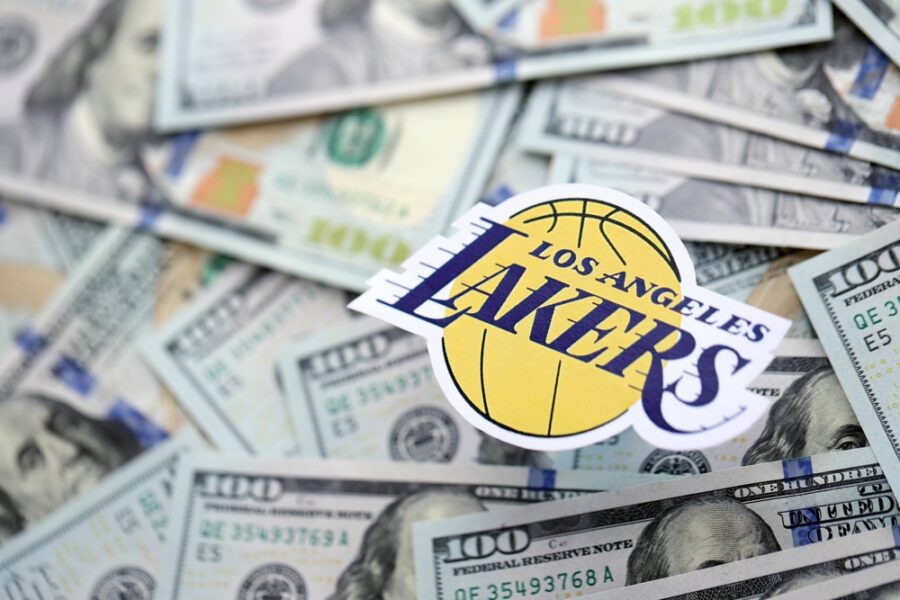
NBA franchise, the Los Angeles Lakers, has been sold in an alleged US$12.5 billion deal, but controversy has arisen over links to the White House, particularly President Donald Trump.
The Lakers takeover bid was led by US venture capitalist Josh Kushner and ex-Disney CEO Bob Iger. Kushner is also the younger brother of Jared Kushner, Trump’s son-in-law, who is also part of the Trump administration’s US Special Envoy for Peace.

The sale was confirmed by current Lakers owner Mark Walter on Wednesday, who only owned the franchise for 14 months due to ongoing federal probes into alleged tax fraud involving his insurance companies, according to a Bloomberg report from last month.
Following the announcement, internet users were quick to link the deal to the White House, with multiple users on X expressing skepticism. Many agreed that it appeared “fishy” that Walter was selling the team to someone with links to the White House following his own investigations led by Trump’s administration.
One user named “@RyanRosenblatt” said, “The real problem is the government is for sale, and it’s plausible Walter sold the Lakers to Kushner to get the feds to drop their investigation into him.” Another by the handle “@atrupar” commented, “so Mark Walter, who was at the White House recently, is under investigation by the Trump administration and just so happened to abruptly sell one of America’s premier sports franchises to the brother of Trump’s son in law.”

The White House was quick to squash the accusations, with a statement to Front Office Sports denying allegations and adding that it had “nothing to do with President Trump or his administration.”
Despite the denial, Trump and his administration have come under fire recently, particularly over insider trading allegations. The older Kushner has recently been accused by Iran of profiting from peace talks, highlighting an Axios report that found suspicious oil futures trades between April and May 2026.
Trump, on the other hand, recently announced that his own social media app, Truth Social, would introduce a new service called Truth API that would allow users to pay for faster posts from the President. The announcement sparked backlash over potential insider trading concerns in various futures offered by prediction markets.

That, coupled with the Lakers deal, shows a growing distaste with the Trump administration’s financial dealings.
Charlotte Capewell brings her passion for storytelling and expertise in writing, researching, and the gambling industry to every article she writes. Her specialties include the US gambling industry, regulator legislation, igaming, and more.

Dig Deeper
Related stories
 2025/11/17: NBA seeks player phone records amid gambling probe
 2025/01/21: Rivalry CEO cites addition of $TRUMP as kickstarting meme-coin strategy
 2026/05/20: Korean midfielder accused of match-fixing by Chinese court
 2026/05/27: Trump backs Commodity Futures Trading Commission and prediction markets
2025/11/17: NBA seeks player phone records amid gambling probe
2025/01/21: Rivalry CEO cites addition of $TRUMP as kickstarting meme-coin strategy
2026/05/20: Korean midfielder accused of match-fixing by Chinese court
2026/05/27: Trump backs Commodity Futures Trading Commission and prediction markets
The Backstory
A franchise sale lands in a charged political moment
The reported US$12.5 billion sale of the Los Angeles Lakers arrived as sports, politics and speculative finance are increasingly overlapping in Washington. The deal’s reported buyers, Josh Kushner and former Disney Chief Executive Bob Iger, would acquire one of the NBA’s most valuable franchises from Mark Walter, whose broader business interests have been under federal scrutiny. The White House has denied any role in the transaction, but the political sensitivity stems from Kushner’s family ties: His brother, Jared Kushner, is President Donald Trump’s son-in-law and a senior foreign policy figure in Trump’s orbit.
That connection has made the Lakers sale more than a sports business transaction. It has unfolded against a backdrop of allegations that politically connected figures are benefiting from regulatory decisions, market-moving information and new forms of financial speculation. For a franchise built on celebrity, influence and global commercial appeal, the timing has sharpened questions about how high-value sports assets are traded when their owners, buyers and regulators occupy the same political economy.
The White House denial is important, but it does not end the scrutiny. The issue is not only whether Trump or administration officials intervened in a private sale. It is whether the transaction fits a broader pattern in which sports properties, gambling markets, crypto products and prediction platforms are converging while federal policy is being rewritten by officials with visible ties to the industries involved.
The NBA is already under integrity pressure
The Lakers sale also comes as the NBA faces one of its most serious gambling-related integrity tests since the expansion of legal sports betting across the U.S. The league has sought cellphones, documents and other materials from multiple teams as part of an inquiry into illegal betting and the alleged sale of inside information. That probe widened after federal prosecutors charged former Miami Heat guard Terry Rozier and Portland Trail Blazers head coach Chauncey Billups over an alleged scheme to provide confidential player information to gamblers.
The league’s concern has reached the Lakers directly. According to the NBA’s request for player phone records amid its gambling probe, investigators contacted multiple Lakers figures after federal charges against former player Damon Jones, who allegedly had inside access to the team. Prosecutors have said Jones sold injury information about two Lakers stars to bettors in 2023 and 2024. He has pleaded not guilty. Lakers Assistant Trainer Mike Mancias and Executive Administrator Randy Mims voluntarily turned over their phones, and neither they nor LeBron James has been accused of wrongdoing.
The league has hired Wachtell, Lipton, Rosen & Katz for an independent review, a sign that the issue has moved beyond routine compliance. Congressional committees have asked why the NBA did not detect misconduct sooner. That matters for the Lakers sale because any buyer of the franchise is not acquiring a cleanly separated entertainment asset. They are taking control of a team at the center of a league trying to prove to lawmakers, sportsbooks, broadcasters and fans that privileged information is not being monetized in betting markets.
Prediction markets blur the line with sports betting
The scrutiny around the Lakers also reflects the rise of prediction markets, which are challenging the boundary between federally regulated event contracts and state-regulated gambling. These platforms allow users to trade on outcomes ranging from elections and inflation to sports events. Their supporters say they are financial markets. State officials and gaming regulators often argue they function like sportsbooks without the same safeguards.
Trump has placed himself firmly on the side of the prediction market industry. In his public backing of the Commodity Futures Trading Commission and prediction markets, he argued that platforms such as Kalshi and Crypto.com should remain under federal oversight and not be restricted by state gambling regulators. His comments targeted officials in states including New York, Illinois and Minnesota, where authorities have taken legal or legislative action against prediction market operators.
The policy fight is commercially significant. If prediction markets remain primarily under the CFTC, operators may avoid much of the state-by-state licensing regime that governs sports betting. That would create a parallel wagering-like market with potentially fewer gaming-specific consumer protection, integrity and responsible gambling requirements. For leagues such as the NBA, that raises practical questions: Who monitors suspicious activity? Who has access to trading data? Which regulator responds when player information moves markets?
Those questions are not abstract for the Lakers. A team with global star power can move betting lines and event-contract prices through injury news, lineup decisions or internal personnel developments. The league’s gambling investigation and the political battle over prediction markets therefore feed into the same concern: whether sports information is becoming too valuable, too tradable and too politically entangled to police through traditional league rules alone.
Trump-linked ventures deepen the conflict concerns
The president’s proximity to the sector has intensified those concerns. Trump Media & Technology Group has moved beyond social media and into event trading through an agreement with Crypto.com. Under Trump Media’s partnership with Crypto.com to offer a prediction market, Truth Social users would be able to trade on elections, inflation and sports outcomes through Truth Predict. The product is expected to use Crypto.com Derivatives North America, a CFTC-registered exchange.
The arrangement places a company associated with the president in a sector whose regulatory future is being shaped by his administration. Trump has also nominated Michael Selig, chief counsel for the Securities and Exchange Commission’s Crypto Task Force, to chair the CFTC, according to the prior report. His son Donald Trump Jr. serves as an adviser to Kalshi and has investments linked to Polymarket. Those ties give critics ammunition when they argue that policy, family business interests and speculative markets are becoming difficult to separate.
For the Lakers transaction, the relevance is reputational rather than direct. The White House says it had no involvement in the sale. But the buyer’s familial connection to Jared Kushner places the deal inside the same political narrative as Trump Media’s move into prediction markets, the administration’s support for federal oversight and the broader expansion of crypto-linked financial products. In that environment, even an arm’s-length sports franchise sale can draw suspicion if it appears to benefit someone close to power while the seller faces federal scrutiny.
Crypto gambling showed how quickly politics can become a product
The gambling industry has already shown how rapidly political moments can be converted into customer acquisition tools. Toronto-based Rivalry added Trump’s Solana-based $TRUMP meme coin as a payment method shortly after its launch, describing the move as a way to capitalize on culturally viral moments. In Rivalry’s explanation of how $TRUMP kicked off its meme-coin strategy, Chief Executive Steven Salz said meme coins can create acquisition and revenue opportunities because they generate global attention and large trading values almost instantly.
That episode illustrated a key feature of the current market: political identity, crypto speculation and gambling behavior can now be packaged into a single transaction. Rivalry said it could add emerging cryptocurrencies quickly because of its payment infrastructure, giving users a way to wager with otherwise speculative tokens. The company framed that speed as a competitive advantage.
For regulators, the problem is that volatility and virality can outpace oversight. The $TRUMP token’s price swung sharply after launch, creating winners and losers before many consumers had time to understand the risks. When similar dynamics attach to sports outcomes, player news or political events, the potential for conflicts grows. The Lakers sale is not a crypto product, but it is being judged in an environment where the president’s name, family connections and financial markets are increasingly intertwined.
Integrity questions extend beyond U.S. leagues
The stakes are not confined to the NBA or the U.S. market. Global sports authorities are confronting similar threats as illegal gambling networks target athletes, coaches and inside information. A recent Chinese court finding involving former South Korean midfielder Son Jun-ho showed how match-fixing allegations can cross borders, leagues and betting channels. In the case accusing Son of match-fixing tied to an illegal online gambling scheme, the court said players intentionally slowed play in matches linked to wagers placed through a broker. Son has denied that money he received was payment for match-fixing, and FIFA declined to impose sanctions sought by Chinese soccer authorities.
The details differ, but the lesson is consistent: Sports integrity depends on controlling access to nonpublic information and deterring participants from manipulating outcomes or market expectations. As betting expands into apps, crypto rails and prediction contracts, the number of markets reacting to sports information multiplies.
That is why the Lakers sale is attracting attention beyond its record valuation. It sits at the intersection of an NBA gambling probe, a federal-state fight over prediction markets, Trump-linked financial ventures and public skepticism about political influence. The White House denial addresses the narrow claim of involvement. The larger backstory is a market in which premier sports assets have become entangled with the same forces reshaping gambling, crypto and Washington regulation.
