


Trump’s Truth API service faces backlash over insider trading concerns

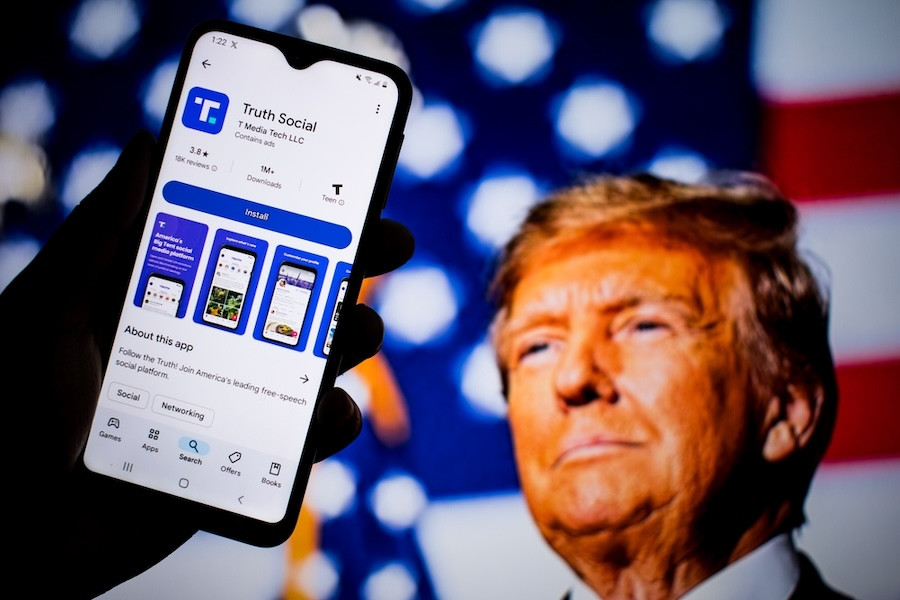
Concerns are being raised about potential insider trading after US President Donald Trump introduced a service for his social media platform, Truth Social, that allows users, such as Wall Street businesses and institutional investors, to pay for faster access to posts from the “highest-ranking Truth Social accounts.”
The subscription-based feature, called Truth API, has faced criticism from lawmakers and market observers concerned about potential consequences for fairness and transparency.

The possibility that individuals with early access to influential information could use it for insider trading and to gain an advantage when trading prediction market contracts linked to political events or other outcomes has sparked fierce debate.
California Senator Alex Padilla announced Monday that he would introduce legislation to prohibit paid presidential post subscription services following the launch of Truth API, highlighting concerns about access to government-related information.
“Selling access to his market-moving social media posts is just one example of the brazen corruption we’ve seen coming out of the Oval Office – and I am fighting back to put a stop to it. Americans deserve a government that works for them, not one that’s for sale to hedge funds and Wall Street banks that can afford the subscription fee,” Padilla said in a statement.

Insider trading is a real risk for prediction markets. Over the past year, multiple figures have been brought into the spotlight following accusations of trading on prediction markets using insider knowledge, some of whom were even government employees.
This week, it was revealed that former US Congressman George Santos must pay a US$35,000 fine for unlawful Kalshi trades. Last week, a White House teleprompter operator accused of making trades on Trump’s speeches was fired.
Following the rise in insider trading, companies have introduced measures to combat it. Goldman Sachs has prevented its employees from trading contracts linked to events involving the bank, such as elections, financial markets, and more.

Additionally, this week, Kalshi says it established additional safeguards, by partnering with compliance technology company Comply, to help identify and prevent potentially inappropriate trading activity.
This recent backlash follows additional criticisms over Trump’s financial activities, including calls from senators for the US Securities and Exchange Commission to investigate his cryptocurrency-related dealings.
Charlotte Capewell brings her passion for storytelling and expertise in writing, researching, and the gambling industry to every article she writes. Her specialties include the US gambling industry, regulator legislation, igaming, and more.

Dig Deeper
Related stories
 2025/10/29: Trump Media partners with Crypto.com to offer prediction market
 2026/05/27: Trump backs Commodity Futures Trading Commission and prediction markets
 2025/10/30: Rush Street Interactive sees upside across the board in third-quarter outlook
 2026/01/05: Bill aims to prevent government officials from using prediction market platforms
2025/10/29: Trump Media partners with Crypto.com to offer prediction market
2026/05/27: Trump backs Commodity Futures Trading Commission and prediction markets
2025/10/30: Rush Street Interactive sees upside across the board in third-quarter outlook
2026/01/05: Bill aims to prevent government officials from using prediction market platforms
The Backstory
Prediction markets move into the political information business
The backlash over Truth API did not emerge in isolation. It follows a rapid convergence of three markets that had previously been treated as separate: social media, political intelligence and event-based trading. Truth Social, already a primary communications channel for President Donald Trump, is now being positioned as both a distribution network for market-moving statements and a gateway into prediction contracts tied to politics, sports and economic outcomes.
That shift began to accelerate when Trump Media & Technology Group said it would partner with Crypto.com to launch Truth Predict, a prediction market inside Truth Social. The product is designed to let users trade on outcomes such as elections, inflation readings and sports results through Crypto.com Derivatives North America, a Commodity Futures Trading Commission-registered exchange. The company framed the move as a way to democratize access to information and turn social activity into actionable forecasting.
But the structure also raised an obvious question: If the platform that hosts Trump’s public comments also offers markets that may react to those comments, who gets access first? Truth API sharpened that concern by offering faster access to posts from high-ranking Truth Social accounts for paying users, including Wall Street firms and institutional investors. In prediction markets, speed and information asymmetry can determine whether a trade is profitable. When the source of that information is the president, the stakes become political as well as financial.
A regulatory fight over who controls event contracts
The current controversy also sits within a broader jurisdictional battle over whether prediction markets are federally regulated financial products or state-regulated gambling activity. Platforms such as Kalshi, Polymarket and Crypto.com have argued that event contracts belong under the CFTC’s authority. Several states have taken the opposite view, saying certain contracts amount to illegal sports betting or gambling.
Trump has sided with the federal model. In a Truth Social post, he backed prediction market companies and the CFTC, saying platforms should remain under federal oversight and not face interference from state regulators. His comments targeted officials in states that had moved against operators, including New York, Illinois and Minnesota. The position was important because it signaled political support from the White House at a time when the industry was seeking clearer rules and legal protection.
That support also complicated the optics. Trump is not merely a policymaker shaping the industry’s future. His media company is preparing to compete in it, and his family has ties to major platforms. Donald Trump Jr. has been an adviser to Kalshi and joined Polymarket’s advisory board after an investment by his venture capital firm. Those overlapping roles have given critics a simple line of attack: The administration is helping define the rules for a market in which Trump-linked entities and allies may benefit.
Insider trading concerns were already building
Lawmakers had been moving toward intervention before Truth API became the latest flashpoint. Rep. Ritchie Torres proposed the Public Integrity in Financial Prediction Markets Act of 2026, which would bar federal elected officials, political appointees and executive branch employees from using prediction platforms. The bill gained urgency after a Polymarket account reportedly made a large profit from contracts tied to developments in Venezuela, drawing speculation that the trader had access to nonpublic information.
The episode captured the core risk in event-contract markets: Some outcomes are shaped or known in advance by government officials, staff, contractors or other insiders. A trader with early knowledge of a military action, diplomatic decision, regulatory announcement or political resignation could exploit that information before the broader market reacts. That makes prediction markets different from traditional sports wagering or public polling. The events being traded may be directly influenced by people who have access to the platforms.
In response, Kalshi and Polymarket introduced new restrictions on insider trading, including rules barring politicians, athletes and other relevant figures from trading in certain markets. Polymarket also clarified that trading on stolen or confidential information, illegal tips or outcomes a trader can influence is prohibited. The measures were intended to show regulators that the industry can police itself, but some lawmakers were unconvinced. Rep. Alexandria Ocasio-Cortez responded on X that the changes were “not enough,” arguing that staff, advisers, consultants, cabinet secretaries and spouses can also possess inside information.
Operators weigh opportunity against legal risk
The gambling and iGaming sectors are watching prediction markets with a mix of interest and caution. Event contracts have grown quickly, with platforms reporting record volumes and major valuations. For companies that already operate in sports betting or online casino markets, prediction products could offer new revenue streams and year-round engagement beyond traditional wagering calendars.
Yet some established operators see the legal uncertainty as a reason to stay on the sidelines. Rush Street Interactive Chief Executive Richard Schwartz told analysts the company was monitoring the sector but did not want to be a pioneer while legality remains contested. In a third-quarter update, Rush Street said prediction markets could pressure state tax revenues and potentially spur more states to legalize regulated iGaming, but Schwartz emphasized the company’s focus on sustainable growth rather than testing regulatory boundaries.
That caution reflects a practical concern for gambling companies that have spent years building state-by-state licenses. Prediction markets are trying to use federal derivatives law to bypass some state gambling restrictions, a model that could disrupt sports betting and online casino operators that pay state taxes, licensing fees and compliance costs. If event-contract platforms continue to expand under CFTC oversight, states may lose some control over products that resemble wagering in consumer behavior, even if they are legally structured as financial contracts.
Truth API raises the stakes for market fairness
Truth API is different from a generic data feed because of the identity of the publisher. Trump’s posts can move securities, cryptocurrencies, prediction contracts and public policy expectations. Paid faster access to those posts creates a tiered information environment around presidential communications. That is especially sensitive when the same ecosystem is preparing to host contracts on elections, economic indicators and other outcomes influenced by government action.
The criticism from Sen. Alex Padilla, who said he would introduce legislation to prohibit paid presidential post subscription services, reflects a concern that the presidency itself could become an information product for well-capitalized traders. In traditional markets, regulators have long focused on selective disclosure and unfair access to material information. Prediction markets add another layer because the instruments may be tied not to corporate earnings or securities prices but to public decisions, political events and government operations.
The industry’s defenders argue that faster and more transparent information distribution can improve market efficiency. But that argument depends on confidence that access is fair, conflicts are managed and insiders cannot trade ahead of the public. The recent sequence of events has weakened that confidence: Trump Media is moving into prediction markets, Trump has endorsed federal protection for the sector, his family has industry ties and Truth Social is selling speed advantages for high-profile posts.
The result is a debate that reaches beyond one product launch. It is about whether event markets can mature into regulated financial infrastructure without replicating the worst features of both gambling and political influence. Truth API has become a test case because it links access, power and trading opportunity in a single service. For lawmakers, the question is whether existing market rules can handle that combination. For the prediction market industry, the answer may determine whether rapid growth continues or triggers a broader crackdown.
