


US Supreme Court receives multiple requests to review sports betting regulations

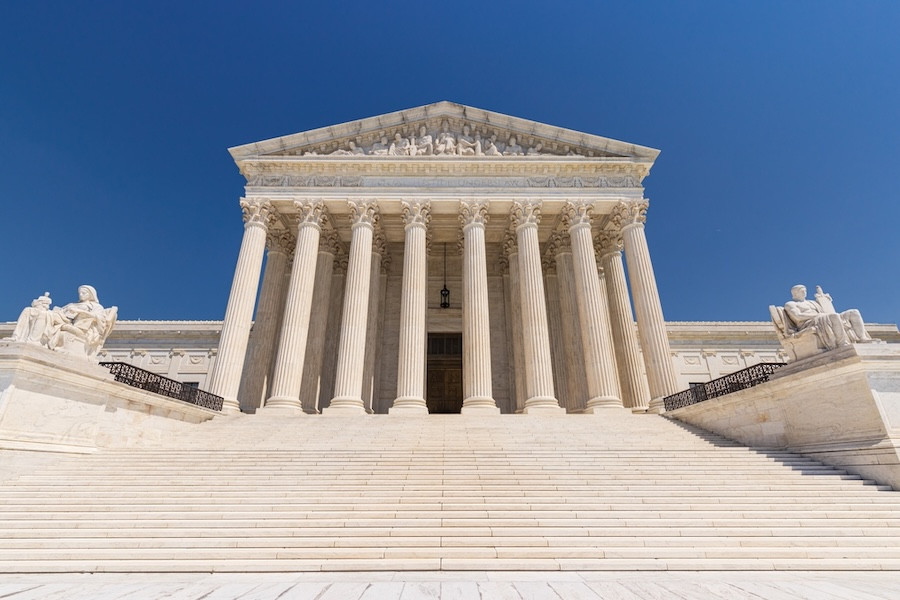
The US Supreme Court has received multiple amicus briefs this week regarding the regulation of sports betting in the country, with one focusing on revising a section of the Professional and Amateur Sports Protection Act (PASPA) and another examining sports-event contracts offered by prediction-market platforms such as Kalshi.
Both briefs were filed on Wednesday. One, a 37-page brief obtained by GamblingHarm.org, was filed by responsible gambling groups Stop Predatory Gambling, the Association of American Physicians and Surgeons and Texans Against Gambling, in the KalshiEX LLC v. Flaherty case, which focuses on whether Kalshi’s sports-event contracts fall under state gambling laws.

The brief asks the Supreme Court to revive a section of PASPA that it argues could save Americans from financial harms linked to online sports betting. To do that, the groups propose that the Supreme Court re-examine Section 3702(2) and ask whether former New Jersey Governor Phil Murphy wrongly struck down the provision.
The provision would have made it unlawful for a private company to either operate, advertise or promote any type of sports wagering that was “pursuant to the law or compact of a governmental entity.” While bad news for prediction markets, it also could mean an end to state-authorized sports betting if successful.
The second brief looks at the regulation of prediction markets and was signed by 39 state attorneys general, essentially backing New Jersey’s fight to have the Supreme Court take up the issue of whether sports-event contracts fall under state gambling jurisdiction.

The brief, obtained by Politico, argues that prediction markets infringe on state sovereignty in regulating sports betting, raises questions about the concentration of power in a federal agency, and endangers citizens who lose protections if event contracts continue to fall outside state gambling laws.
It adds that prediction markets have “splintered the circuits and lower courts with no resolution on the horizon,” and that only the Supreme Court has the power to resolve the issue.
The two briefs arrive after the Supreme Court published the list of cases it will begin to tackle for its 2026-2027 term, with no prediction market-related issues, meaning the issue might not be settled until next year.
Charlotte Capewell brings her passion for storytelling and expertise in writing, researching, and the gambling industry to every article she writes. Her specialties include the US gambling industry, regulator legislation, igaming, and more.

Dig Deeper
Related stories
 2026/10/07: NAGRA and IAGR seek US Supreme Court review of sports event contracts
 2026/09/24: US gaming lawmakers urge Supreme Court to hear Kalshi case
 2025/09/16: Flutter, FanDuel “on the sidelines” of prediction-market scrum, legal expert says
 2026/09/03: New Jersey seeks US Supreme Court review of Kalshi sports markets
2026/10/07: NAGRA and IAGR seek US Supreme Court review of sports event contracts
2026/09/24: US gaming lawmakers urge Supreme Court to hear Kalshi case
2025/09/16: Flutter, FanDuel “on the sidelines” of prediction-market scrum, legal expert says
2026/09/03: New Jersey seeks US Supreme Court review of Kalshi sports markets
The Backstory
Prediction markets push a state-federal fight toward Washington
The Supreme Court filings now before the justices reflect a dispute that has moved quickly from a niche commodities-law argument to a central question for the U.S. gambling industry: who controls sports wagering when it is packaged as a federally regulated event contract?
At the center is Kalshi, a prediction-market platform that says its sports event contracts are financial products overseen by the Commodity Futures Trading Commission. States, tribal interests, gambling regulators and incumbent sportsbooks argue the contracts are functionally sports bets and should be subject to the same licensing, age-verification, responsible gambling and integrity rules that govern legal sports betting.
The current wave of briefs builds on New Jersey’s attempt to put the question directly before the Supreme Court. In a petition seeking review of Kalshi sports markets, New Jersey Attorney General Jennifer Davenport asked the court to overturn an April ruling by the U.S. Court of Appeals for the Third Circuit. That decision found the CFTC had exclusive authority over Kalshi’s sports-related contracts because they were swaps under federal commodities law.
New Jersey’s position is that Congress did not quietly displace state gambling regulation through the Dodd-Frank Act or the Commodity Exchange Act. The state argues that sports event contracts look and operate like sports bets, making them subject to state law, including licensing, minimum-age rules and consumer protections. Kalshi counters that it cannot be subject to a patchwork of 50 state regulators when Congress gave the CFTC authority over designated contract markets.
Split rulings created the opening for Supreme Court review
The pressure for Supreme Court intervention increased after appeals courts reached conflicting conclusions. The Third Circuit sided with Kalshi, effectively limiting New Jersey’s ability to apply its gambling laws to the company’s sports markets. The Ninth Circuit took the opposite approach in a Nevada case, concluding Kalshi had not shown that federal commodities law preempted state gaming regulation of sports contracts.
That split has become the legal engine behind the current briefing campaign. The Ninth Circuit ruling was also seen as a commercial lift for incumbent sportsbooks. In a J.P. Morgan analysis of the Ninth Circuit decision, analyst Daniel Politzer called the outcome a near-term positive for DraftKings and FanDuel parent Flutter Entertainment. If Kalshi must geofence itself out of states where gambling regulators object, regulated sportsbooks may benefit from preserved market share and betting handle.
The Ninth Circuit’s reasoning sharpened the policy stakes. The court described Kalshi’s sports contracts as sports gambling regardless of the swap label and questioned whether such products hedge commercial risk, the traditional purpose of derivatives markets. That point matters because Kalshi’s argument depends heavily on treating sporting outcomes as federally regulated contracts rather than wagers regulated by states.
Other federal cases remain pending, including disputes in the Fourth and Sixth circuits. That means the same product could face different legal treatment depending on geography, at least until the Supreme Court, Congress or a consistent lower-court consensus resolves the issue. For gambling regulators, that uncertainty risks undermining state-by-state systems built after the fall of the federal sports betting ban in 2018.
Regulators and lawmakers warn of a broader loophole
The filings from state officials and gambling-policy groups reflect a shared concern that a win for Kalshi could create a road map for gambling operators to bypass state regulation by recasting bets as event contracts. The National Council of Legislators from Gaming States made that point when it urged the Supreme Court to hear the Kalshi case, warning that state authority over gaming-related matters could be weakened if prediction platforms remain outside gambling laws.
That argument is not limited to legislators. The North American Gaming Regulators Association and the International Association of Gaming Regulators also filed a brief supporting review. Their request for Supreme Court review of sports event contracts emphasized practical safeguards, including minimum age requirements, self-exclusion programs, restrictions on prohibited participants and suspicious-betting monitoring.
Those protections are central to the state regulatory model. Sportsbooks licensed by states operate under rules governing advertising, responsible gambling, data reporting, market integrity and enforcement cooperation. Prediction markets, if treated solely as CFTC-regulated exchanges, may not be required to follow the same gambling-specific obligations. State officials argue that creates both a competitive imbalance and a consumer-protection gap.
The tribal gaming dimension adds another layer. Tribal governments have negotiated compacts and exclusivity arrangements based on state and federal gaming law. If sports event contracts can be offered nationwide through a federal commodities license, tribes could see those arrangements diluted. Regulators have warned that the issue may affect not only commercial sportsbooks but also the structure of tribal gaming rights.
Incumbent sportsbooks wait as Kalshi gains room to operate
For DraftKings, FanDuel and other licensed operators, the Kalshi fight is both a threat and an opportunity. If courts decide sports event contracts are lawful swaps, major sportsbooks could potentially enter the prediction-market business using their brands, customer bases and trading technology. If courts rule the contracts are sports bets, the incumbents preserve the regulated market structure under which they already operate.
Until then, the legal uncertainty may favor Kalshi. In a Jefferies briefing on prediction markets and sportsbook strategy, legal expert Daniel Wallach said traditional online sports betting operators are largely on the sidelines pending resolution. Entering aggressively could risk relationships with regulators, state lawmakers and tribes, especially in jurisdictions where sports betting remains illegal or politically sensitive.
Kalshi’s model is disruptive because it may reach consumers in states that have not legalized online sports betting. That is precisely what alarms state officials. A federal event-contract framework could allow sports-related markets in places where voters or lawmakers have rejected sports betting or limited it to tribal or retail channels. For sportsbooks that have spent heavily to obtain licenses and comply with state rules, that would be a profound shift in competitive economics.
Wallach’s assessment also underscored the timing problem. Courts may take months or longer to resolve the competing theories, and Congress has shown little urgency to amend the Commodity Exchange Act. That delay can be valuable for a fast-growing platform seeking to build liquidity, brand recognition and legal momentum before the rules are finally settled.
The PASPA echo raises the stakes
The latest responsible-gambling brief adds an unexpected historical twist by invoking the Professional and Amateur Sports Protection Act, the federal law the Supreme Court effectively dismantled in 2018. PASPA once barred most states from authorizing sports betting. Its demise opened the door to the regulated sports wagering market that now operates across much of the country.
By asking the court to reconsider part of PASPA, the groups are not merely challenging Kalshi’s position. They are raising the possibility of a broader attack on state-authorized sports betting itself. That makes the current dispute more volatile for the industry than a narrow fight over one platform’s legal classification.
The core issue remains whether sports outcomes can be converted into federally supervised contracts without becoming gambling under state law. The answer will determine how much power states retain over sports betting, how far the CFTC’s authority extends and whether prediction markets become a parallel national wagering system. The Supreme Court has not yet agreed to hear the case. But the growing coalition asking for review shows that the question has outgrown the lower courts.
