


US gaming lawmakers urge Supreme Court to hear Kalshi case

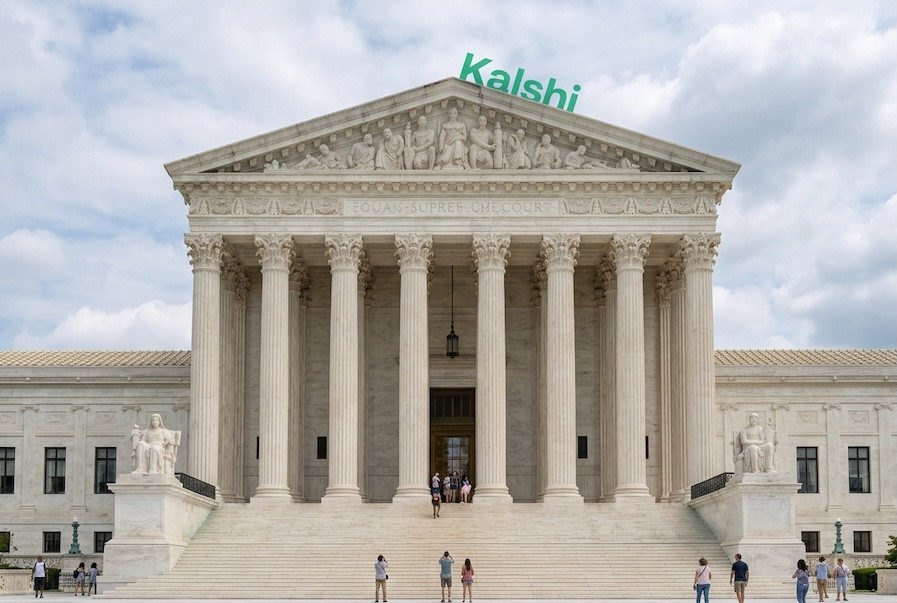
The National Council of Legislators from Gaming States (NCLGS) has urged the US Supreme Court to review a dispute over whether states can regulate sports event contracts.
According to reports, the group of US state lawmakers filed an amicus brief earlier this week, backing New Jersey’s Attorney General Jennifer Davenport’s petition for a writ of “certiorari,” which asks the Supreme Court to hear the case involving prediction market platform Kalshi.

The dispute centers on Kalshi’s sports event contracts and whether they fall under the federal oversight of the Commodity Futures Trading Commission (CFTC) or state gambling regulators.
In its filing, the NCLGS said a ruling that prevents states from regulating prediction markets like Kalshi could affect existing gambling laws and allow other gambling operators to seek similar treatment of their businesses and products.
While the petition didn’t address the CFTC’s asserted jurisdiction over federally regulated event contracts, the group maintained that state authorities should retain control over “gaming-related matters”.

Davenport asked the Supreme Court to intervene earlier this month, escalating the dispute to the country’s highest court. The case follows a ruling by the US Third Circuit Court of Appeals that found that Kalshi’s contracts fall under federal regulations.
The debate has also drawn attention from Congress, with Democrats on the Senate Banking Committee calling for a congressional hearing on prediction markets, while Chairman Sen. Tim Scott and committee Republicans met privately with Kalshi’s Chief Executive, Tarek Mansour.
Kalshi has until 9 November this year to respond to the petition, but a company spokesperson previously said it could not be “regulated by 50 different regulators”, according to Cointelegraph.
Charlotte Capewell brings her passion for storytelling and expertise in writing, researching, and the gambling industry to every article she writes. Her specialties include the US gambling industry, regulator legislation, igaming, and more.

Dig Deeper
Related stories
 2026/09/03: New Jersey seeks US Supreme Court review of Kalshi sports markets
 2026/08/31: Ninth Circuit ruling against Kalshi a boost for DraftKings and FanDuel, analyst says
 2026/09/10: Utah court wins in Kalshi dispute over injunction but fight continues
 2026/08/27: Connecticut sues Kalshi over unlicensed sports wagering
2026/09/03: New Jersey seeks US Supreme Court review of Kalshi sports markets
2026/08/31: Ninth Circuit ruling against Kalshi a boost for DraftKings and FanDuel, analyst says
2026/09/10: Utah court wins in Kalshi dispute over injunction but fight continues
2026/08/27: Connecticut sues Kalshi over unlicensed sports wagering
The Backstory
States push for a national answer
The fight over Kalshi’s sports event contracts has moved from a series of state-by-state enforcement battles into a broader test of who controls the boundary between financial markets and gambling in the United States. The National Council of Legislators from Gaming States’ request that the U.S. Supreme Court take up the dispute reflects mounting concern among state lawmakers that a federal ruling in Kalshi’s favor could weaken the licensing, taxation and consumer-protection systems that underpin legal sports betting.
At the center of the dispute is a deceptively simple question: Are contracts tied to sports outcomes federally regulated derivatives, or are they sports bets subject to state gambling laws? Kalshi says its products are event contracts overseen by the Commodity Futures Trading Commission. State officials argue the contracts function like wagers and should be treated like other sports betting products, with rules on licensing, age limits, responsible gambling, market access and enforcement.
The issue has become more urgent because lower courts have not spoken with one voice. A split between federal appeals courts has increased the likelihood that the Supreme Court will be asked to settle the matter, not only for Kalshi but for the wider prediction-market industry and for sportsbook operators watching the case closely.
New Jersey turned the dispute into a Supreme Court question
The latest push from gaming lawmakers follows New Jersey’s request for Supreme Court review of Kalshi sports markets, a petition that asks the justices to overturn an appeals ruling favoring federal oversight. New Jersey Attorney General Jennifer Davenport framed the case as a direct challenge to the state’s authority to regulate sports wagering within its borders.
The petition targets an April 2026 decision from the U.S. Court of Appeals for the Third Circuit, which held that Kalshi’s sports-related event contracts fall within the CFTC’s exclusive jurisdiction. In that 2-1 ruling, the court classified the contracts as swaps under federal commodities law, relying on the Commodity Exchange Act and amendments made through the 2010 Dodd-Frank Act. For Kalshi, that interpretation supports a national operating model under a single federal regulator. For New Jersey and other states, it risks allowing sports wagering to be offered without the state approvals required of licensed sportsbooks.
New Jersey argues the contracts are sports betting in substance, regardless of how they are labeled. That distinction matters because licensed sports betting markets are built around state-level approval, compliance monitoring and restrictions on who can bet and where. If sports event contracts are treated only as federally regulated financial instruments, states say operators could avoid the obligations that companies such as DraftKings, FanDuel and casino-affiliated sportsbooks must meet.
The New Jersey petition also underscored the breadth of opposition to Kalshi’s position. More than 40 states have challenged or opposed the company’s view in some form, according to the related filings. That cross-state alignment is unusual in gambling policy, where state approaches often diverge, and it has helped turn the case into a federalism dispute as much as a gambling-law fight.
Conflicting appeals rulings raise the stakes
The pressure on the Supreme Court increased after the Ninth Circuit reached a different conclusion from the Third Circuit in litigation involving Nevada. As detailed in a report on how the Ninth Circuit ruling against Kalshi benefited DraftKings and FanDuel, the appeals court said Kalshi’s sports-event contracts were sports gambling, even if the company described them as swaps.
The Ninth Circuit did not accept Kalshi’s argument that the Commodity Exchange Act clearly preempted state gaming rules as applied to its sports contracts. The panel also took a practical view of the products, finding that they created risk for ordinary consumers rather than hedging risk for institutions or investors. That reasoning went directly to the core of Kalshi’s classification argument: whether an exchange-traded contract tied to a game outcome should be analyzed as a financial product or as a wager.
For the established sports betting industry, the Ninth Circuit decision temporarily eased competitive pressure. J.P. Morgan analyst Daniel Politzer described the ruling as a near-term positive for DraftKings and Flutter Entertainment’s FanDuel because it preserved state restrictions in markets where Kalshi was being challenged. If Kalshi must geofence or stop offering sports event contracts in states that object, licensed sportsbooks retain the advantage of their existing regulatory approvals.
But the split also increases uncertainty. Operators, regulators and investors now face a patchwork in which the legality of the same product may depend on geography and circuit precedent. Cases involving Kalshi were also pending in other appeals courts, including the Fourth and Sixth Circuits, meaning the conflict could widen before the Supreme Court decides whether to intervene.
State lawsuits frame the consumer-protection case
Several states have pursued their own enforcement actions, arguing that Kalshi’s model bypasses safeguards that are central to regulated sports betting. In Connecticut, officials filed suit seeking to block what they described as unlicensed sports wagering, as outlined in the state’s case alleging Kalshi offered unlicensed sports wagering.
Connecticut’s argument reflects the broader state position: sports event contracts are not merely abstract financial instruments when they allow users to take positions on sports outcomes. State officials have pointed to rules governing underage gambling, problem-gambling protections, data security, advertising and the handling of customer funds. Those rules are imposed on licensed gambling operators and enforced by state gaming agencies.
Kalshi has countered that it is subject to federal oversight and should not be forced into a 50-state licensing regime. That position is central to its business model. A prediction-market platform offering sports contracts nationally would gain scale and consistency from federal regulation. Compliance with individual state gambling laws, by contrast, could require licensing, market exits, product changes or geofencing.
Utah has become another important front. A federal judge there found that state anti-gambling laws could apply to Kalshi’s sports contracts, and a panel later rejected Kalshi’s request for an injunction while the appeal proceeds. The ruling described in the Utah injunction dispute with Kalshi did not resolve the ultimate preemption question, but it allowed the state to continue enforcing its gambling laws during the litigation.
That interim result matters because injunctions can shape the market before final rulings arrive. If states can continue enforcement while appeals are pending, Kalshi may have to restrict access in key jurisdictions. If Kalshi secures injunctions, it can keep operating while courts consider whether federal law displaces state gambling rules.
Tribal gaming adds another legal layer
The dispute also extends beyond state regulators to tribal gaming authorities. In California, the Ninth Circuit blocked Kalshi from offering sports-related event contracts on the lands of two tribes after finding the tribes were likely to show the company violated federal gaming law. The decision, reported in the case over Kalshi being blocked from tribal lands, involved Blue Lake Rancheria and Chicken Ranch Rancheria of Me-Wuk Indians.
The tribes argued that Kalshi’s contracts were gambling and had not been approved under the Indian Gaming Regulatory Act or tribal gaming rules. The appeals court’s willingness to credit that theory added another dimension to the regulatory conflict. Tribal gaming operates under a distinct legal framework involving compacts, federal law and tribal sovereignty. If prediction markets can offer sports-linked contracts on tribal lands without IGRA approval, tribes say it could undermine the exclusivity and regulatory structure of their gaming operations.
The California tribal case also affects distribution partners. Robinhood, which offers Kalshi event contracts to its customers, warned that restrictions could hurt its business. That shows how the litigation reaches beyond Kalshi itself, potentially affecting brokerages, exchanges and financial-technology platforms that see event contracts as a growth area.
Why the Supreme Court fight matters
The Supreme Court question is not limited to one company’s sports markets. A ruling for Kalshi could create a path for prediction-market operators to offer sports products nationwide under federal commodities oversight, potentially pressuring state-licensed sportsbooks and challenging existing state gambling monopolies, tax systems and compliance regimes.
A ruling for the states could affirm that sports outcome markets remain gambling when they resemble wagers, even if offered through a federally regulated exchange. That would preserve state authority but could limit the growth of federally supervised prediction markets tied to sports.
NCLGS’ intervention signals that state lawmakers see the case as a structural threat to gambling regulation. Their concern is that if sports event contracts are insulated from state law, other gambling-adjacent products may seek similar treatment. The result could be a broader shift in power from state gaming regulators to federal financial regulators, with consequences for taxation, consumer protection and market access across the gambling industry.
That is why the Kalshi litigation has become a defining test for the next phase of U.S. sports betting. The legal answer will determine whether prediction markets remain a niche financial product, become a parallel sports wagering channel or are forced into the same state-by-state framework that governs the rest of the industry.
