


New Jersey seeks US Supreme Court review of Kalshi sports markets

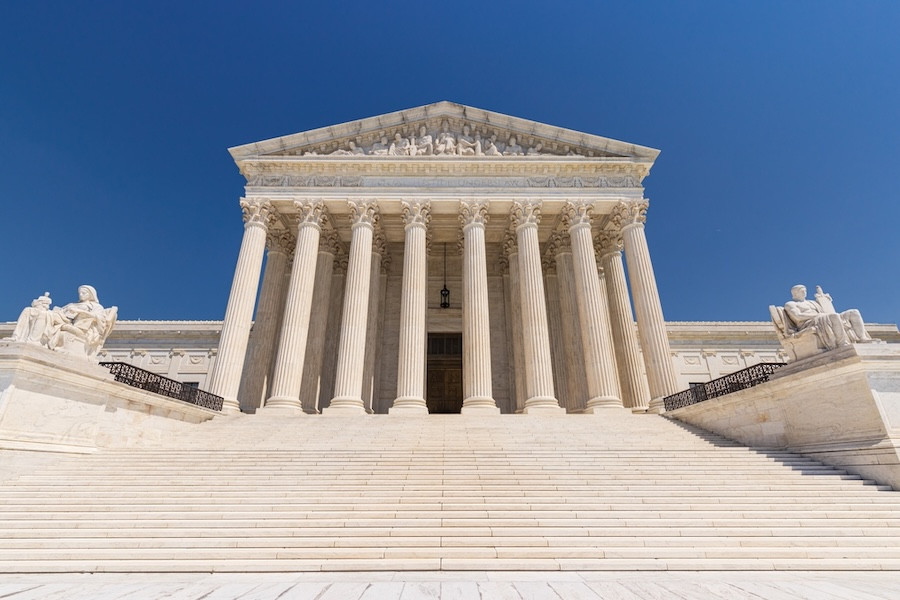
New Jersey has requested that the US Supreme Court determine whether states can regulate sports betting offered through prediction market platforms such as Kalshi.
The petition, a 332-page filing submitted by New Jersey Attorney General Jennifer Davenport, asks the Supreme Court to overturn an April 2026 ruling from the US Third Circuit Court of Appeals.

This ruling found that the Commodity Futures Trading Commission (CFTC) had exclusive authority over Kalshi’s sports-related event contracts.
In a 2-1 decision, the Third Circuit classified prediction market contracts as swaps, a type of financial derivative regulated by the CFTC under amendments introduced through the 2010 Dodd-Frank Act.
New Jersey argues that the contracts constitute sports betting and should therefore follow state gambling laws, including licensing and age restrictions.

AG Davenport said, “These companies have no right to offer their sports bets without following state law, which is why dozens of states across the ideological spectrum have opposed them.”
Kalshi maintains that its contracts are financial products, not bets, and are regulated federally under the Commodity Exchange Act.
This dispute intensified after the Ninth Circuit Court of Appeals recently reached a different conclusion in a case involving Nevada. It agreed that the CFTC had exclusive authority over swaps but it found that there was no clear congressional authorization to classify sports wagers as swaps.

This decision conflicts with the Third Circuit’s ruling, creating a split between appeals courts over whether US states can regulate sports event contracts offered by prediction markets. It’s also increased the likelihood of Supreme Court intervention.
Over 40 US states, including Connecticut, Utah and New York have opposed Kalshi’s position, while Nevada, Michigan, Massachusetts and Washington have obtained court orders restricting its activities.

Dig Deeper
Related stories
 2026/08/31: Ninth Circuit ruling against Kalshi a boost for DraftKings and FanDuel, analyst says
 2026/04/07: Federal court rules New Jersey can’t regulate prediction markets
 2026/08/31: Kalshi loses Nevada fight but signs new US Open deal
 2026/02/20: Tennessee judge grants Kalshi a preliminary injunction
2026/08/31: Ninth Circuit ruling against Kalshi a boost for DraftKings and FanDuel, analyst says
2026/04/07: Federal court rules New Jersey can’t regulate prediction markets
2026/08/31: Kalshi loses Nevada fight but signs new US Open deal
2026/02/20: Tennessee judge grants Kalshi a preliminary injunction
The Backstory
States push back as prediction markets move into sports
New Jersey’s request for U.S. Supreme Court review marks the sharpest escalation yet in a fight that has been building since prediction market operators began offering contracts tied to sports outcomes. The dispute centers on whether those products are federally regulated financial instruments or state-regulated sports wagers. That distinction carries major consequences for state gambling agencies, licensed sportsbooks and consumers using platforms that operate outside traditional sports betting frameworks.
Kalshi, a Commodity Futures Trading Commission-regulated exchange, has argued that its sports-event contracts are swaps under the Commodity Exchange Act. States including New Jersey, Nevada, Massachusetts, Michigan and Washington have countered that the contracts function like sports bets and should be subject to licensing, age limits, responsible gambling rules and tax obligations imposed on sportsbook operators.
The question has become more urgent as courts have split on the issue. New Jersey’s petition follows a Third Circuit decision that favored Kalshi, while the Ninth Circuit reached a different conclusion in a Nevada case. That divide has increased pressure on the Supreme Court to clarify whether federal commodities law preempts state gambling regulation when a prediction market lists sports contracts.
New Jersey’s earlier loss set the stage
The New Jersey case accelerated after state regulators tried to stop Kalshi from offering event contracts to residents. The state had sent cease-and-desist orders to prediction market platforms, arguing they were taking sports wagers without approval from gambling regulators. New Jersey officials said Kalshi was using a new structure to avoid laws that govern the licensed sports betting market.
Kalshi prevailed at the appellate level. In a 2-1 ruling, the Third Circuit found that the Commodity Exchange Act gave the CFTC exclusive oversight of the company’s contracts because they were traded on a CFTC-licensed designated contract market. That decision, covered in a prior report on the Third Circuit ruling, blocked New Jersey from enforcing its gambling rules against the exchange.
The dissent sharpened the policy conflict. One judge said Kalshi’s offering was “virtually indistinguishable” from sportsbook activity, reflecting the position taken by many state regulators. But the majority’s reasoning put federal market structure ahead of state gambling classifications, giving Kalshi an opening to continue operations in one of the country’s largest sports betting jurisdictions.
That outcome also created strategic uncertainty for sportsbook operators. Licensed companies such as DraftKings and FanDuel have built their businesses around state-by-state approval, taxation, advertising limits and compliance systems. If prediction markets can offer similar sports exposure under federal commodities law, they could compete without bearing the same regulatory costs.
Nevada delivered the opposing appellate view
The Ninth Circuit’s Nevada decision moved the legal landscape in the opposite direction. A three-judge panel ruled that Kalshi had not shown it was likely to prove that federal commodities law preempted Nevada gambling rules as applied to sports contracts. The court was direct in its assessment, saying the products were sports gambling regardless of the label applied to them.
That decision, discussed in coverage of Kalshi’s Nevada setback and US Open partnership, allowed Nevada to keep pressing its case that companies cannot avoid gambling laws by calling sports bets event contracts. The panel also sent questions involving election contracts back to a lower court, leaving other parts of Kalshi’s business model unsettled.
For states, Nevada’s win showed that courts were not uniformly accepting Kalshi’s preemption theory. For Kalshi, the ruling limited its ability to rely on a single national regulatory theory while operating in states with aggressive gambling regulators. For the broader market, the decision produced the appellate conflict that now underpins New Jersey’s Supreme Court petition.
Financial analysts quickly interpreted the Ninth Circuit ruling as helpful to incumbent sportsbooks. In an analysis of the ruling’s impact on DraftKings and FanDuel, J.P. Morgan analyst Daniel Politzer called the decision a near-term positive for both companies. His reasoning was straightforward: if Kalshi must geofence or stop offering sports contracts in more states, licensed sportsbooks retain more handle and face less competition from federally regulated exchanges.
Lower courts have added to the uncertainty
The split is not limited to New Jersey and Nevada. Other cases have produced uneven results, reinforcing the likelihood that the Supreme Court may need to resolve the issue. In Tennessee, Kalshi won a preliminary injunction when a federal judge said its sports-event contracts qualified as swaps under the Commodity Exchange Act. That order temporarily blocked state officials from enforcing local gambling laws against the contracts.
The Tennessee ruling, detailed in coverage of Kalshi’s preliminary injunction, emphasized how differently judges have read the same statutory framework. The court rejected Tennessee’s argument that a game outcome was distinct from the occurrence of an event, finding that the outcome could also be an occurrence. That reasoning supported Kalshi’s position that sports outcomes could fall within the broad language of federal derivatives law.
But the Tennessee decision also highlighted the fragility of Kalshi’s position. The Nevada appellate case was already moving against the company, and related appeals were pending in other circuits. Each new ruling has either expanded or narrowed Kalshi’s operating room while leaving regulators, operators and investors without a uniform national rule.
That patchwork has practical effects. A platform may operate in one state while facing enforcement in another. Consumers may see similar sports products marketed under different legal labels. Licensed operators must compete against products that may not be subject to the same tax rates, advertising standards or responsible gambling requirements, depending on the jurisdiction.
Investors see stakes beyond one platform
The legal fight has become a market-moving issue for the sports betting sector. Analysts have repeatedly framed the cases as important for DraftKings, FanDuel and other licensed operators because prediction markets could alter the economics of online wagering if courts allow them to offer sports contracts nationally under CFTC oversight.
Before the Third Circuit ruled for Kalshi, Jefferies analyst David Katz said the New Jersey litigation had become a “win-win” setup for DraftKings and FanDuel because almost any definitive legal outcome would be preferable to prolonged uncertainty. In a report on the New Jersey proceedings, Katz said incumbents would benefit from a level playing field because they already have scale, compliance infrastructure and established customer bases.
That view helps explain why the Supreme Court question matters beyond Kalshi. A ruling for states could confirm that sports contracts tied to game outcomes must comply with gambling laws, reinforcing the state-by-state sports betting model created after the fall of the federal sports betting ban. A ruling for Kalshi could open a broader federal pathway for sports-linked trading products and weaken states’ ability to police offerings they view as gambling.
The issue also reaches the CFTC. If sports-event contracts are swaps, the agency’s jurisdiction becomes central. If they are sports wagers outside the scope of federal commodities protection, state gambling regulators remain the primary gatekeepers. Courts have struggled with that boundary because sports outcomes can be structured as binary contracts while still resembling wagers to ordinary consumers.
A Supreme Court review could define the market
New Jersey’s petition asks the Supreme Court to settle a dispute that has become difficult for lower courts to manage consistently. The Third Circuit’s ruling gives Kalshi strong protection in New Jersey, while the Ninth Circuit’s Nevada decision gives states a roadmap for enforcement. That direct tension makes the case a candidate for review because businesses and regulators cannot operate efficiently under conflicting appellate standards.
The stakes are regulatory as much as commercial. States argue that allowing sports-event contracts outside gambling law would undermine licensing systems, reduce consumer protections and deprive public budgets of tax revenue tied to legal sports betting. Kalshi argues that its products are financial contracts supervised by a federal regulator and that states cannot relabel federally regulated instruments as gambling simply because they reference sports.
The Supreme Court, if it takes the case, would not just decide whether New Jersey can regulate Kalshi. It could determine whether prediction markets become a parallel national channel for sports exposure or remain subject to the same state controls as sportsbooks. Until then, operators, regulators and investors face a fractured market in which the legal status of a sports contract depends heavily on where the case is filed.
