


Kalshi loses Nevada fight but signs new US Open deal

Prediction market operator Kalshi has been was reined in, after a federal appeals court in Nevada refused to allow it to resume trading sports and election contracts in the state without a gambling license.
A panel of judges from the 9th US Circuit Court of Appeals ruled that Kalshi had not made a persuasive case that federal commodities law prevented Nevada from enforcing its gambling regulations against the company’s sports event contracts. The court indicated that federal law likely does not preempt Nevada’s authority to regulate contracts tied to sporting events. The panel sent the question of Kalshi’s election contracts back to a lower court to consider Nevada’s challenges.

Nevada’s attorney general’s office described the decision as a major victory, arguing that companies cannot avoid state gambling laws simply by describing sports bets as event contracts.
The ruling adds to a growing legal fight over prediction markets in the US. Around 20 states are involved in litigation concerning platforms including Kalshi, Polymarket and Robinhood, with courts considering whether states can regulate event contracts as gambling. The issue could ultimately reach the US Supreme Court after different federal appeals courts have reached conflicting conclusions.
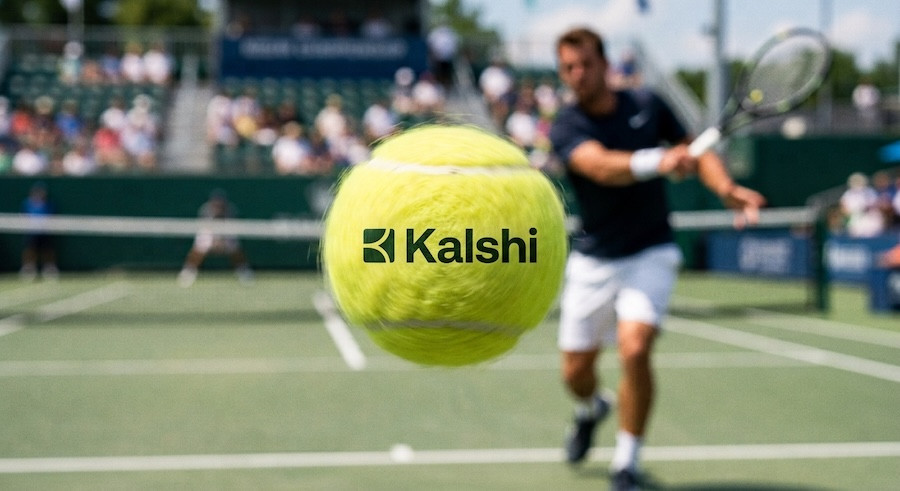
Despite the legal setback, Kalshi continues to expand its portfolio of commercial agreements, with the latest being the US Open. According to Front Office Sports, the prediction market became the tournament’s exclusive prediction-market partner as the main draw for this year’s tournament began on Sunday, although the terms of the deal were not disclosed.

According to the report, the sport’s governing body, the US Tennis Association, had not originally planned to partner with a prediction market this year but sources said new USTA CEO Craig Tiley played a major role in securing the agreement.
The deal also reportedly prevents other prediction-market platforms from advertising at the US Open or across its ESPN broadcast.

Dig Deeper
Related stories
 2026/08/17: Nevada regulators argue Kalshi failed to comply with court order, Kalshi disagrees
 2026/07/27: Kalshi withdraws unlicensed event contracts from Nevada under new agreement
 2026/02/20: Tennessee judge grants Kalshi a preliminary injunction
 2026/06/15: Nevada Gaming Control Board seeks Kalshi contempt ruling
2026/08/17: Nevada regulators argue Kalshi failed to comply with court order, Kalshi disagrees
2026/07/27: Kalshi withdraws unlicensed event contracts from Nevada under new agreement
2026/02/20: Tennessee judge grants Kalshi a preliminary injunction
2026/06/15: Nevada Gaming Control Board seeks Kalshi contempt ruling
The Backstory
Federal preemption meets state gambling law
Kalshi’s setback in Nevada is the latest turn in a fast-moving fight over whether prediction markets can offer sports-related event contracts nationwide under federal commodities law or must answer to state gambling regulators. The dispute has become a test case for a broader industry that has tried to distinguish event contracts from sports betting, even as state officials argue the products function like wagers and should be licensed as gambling.
The Nevada ruling is especially significant because it cuts against Kalshi’s central argument: that its status as a federally regulated exchange gives it protection from state gaming enforcement. The 9th U.S. Circuit Court of Appeals said Kalshi had not shown that federal commodities law likely blocks Nevada from enforcing its rules against sports event contracts. That gives state regulators momentum after months of legal uncertainty and adds pressure on other prediction-market operators watching the case.
The decision also lands as Kalshi continues to pursue high-profile commercial deals, including its newly reported partnership with the U.S. Open. That contrast underscores the company’s position: It is building a mainstream sports-adjacent business while fighting claims that some of its core products fall within state gambling laws.
Nevada built its case step by step
Nevada regulators have treated prediction markets as a direct challenge to one of the country’s most tightly controlled gaming regimes. The Nevada Gaming Control Board first moved against Kalshi after alleging the platform offered unlicensed event contracts to state residents. In a civil enforcement action against Kalshi in Carson City District Court, the regulator sought a declaration that the company’s activities violated state gaming law and an injunction barring access for Nevada residents.
The state’s complaint took aim at Kalshi’s marketing, including claims that its sports contracts were legal in all 50 states. Nevada argued such statements threatened licensed operators and the state’s regulated gaming economy. The complaint also said Kalshi had expanded its business while litigation was pending, sharpening regulators’ concerns that federally supervised prediction markets could rapidly scale without state gaming licenses.
The enforcement push was not limited to Kalshi. Nevada also acted against other prediction-market companies, including Polymarket and Coinbase, before the Super Bowl. That broader sweep showed the state was not treating the dispute as a one-company problem. Rather, Nevada was seeking to draw a boundary around sports-linked financial products before they became embedded in the same consumer market served by sportsbooks.
Geofencing became a flashpoint
As the litigation progressed, the fight narrowed from legal theory to operational compliance. Nevada said Kalshi needed to prevent residents from accessing prohibited sports and other event contracts. The board later asked a court to hold Kalshi in contempt, alleging the platform had not complied with an order to geofence its services. In its request for a contempt ruling against Kalshi, the regulator sought monetary penalties and argued the company continued to make covered contracts available in Nevada.
That pressure produced a temporary accommodation. In July, Kalshi agreed to stop offering sports and other prohibited event contracts in Nevada under a joint stipulation with the board. The agreement required the company to implement geofencing through GeoComply by Aug. 12 and included the possibility of $120,000 in daily fines for noncompliance. The company did not concede that its trades justified a contempt order and reserved its legal defenses.
The agreement to withdraw unlicensed event contracts from Nevada highlighted the practical stakes for both sides. For Nevada, geofencing was a way to preserve state authority while appeals continued. For Kalshi, it was a tactical pause that allowed the company to avoid immediate sanctions without abandoning its position that federal law governs its contracts.
Compliance dispute hardened both positions
The truce did not last. After the Aug. 12 deadline, Nevada accused Kalshi of failing to fully comply with the geofencing order. Regulators said investigators were still able to access restricted markets on mobile devices inside the state and asked for daily fines. Kalshi countered that the investigators had misrepresented their residency to place trades and accused the state of manufacturing a violation.
The dispute, detailed in the later report that Nevada regulators argued Kalshi failed to comply while Kalshi disagreed, deepened the conflict beyond the question of legal jurisdiction. It raised questions about how far state investigators may go to test access controls and what standard prediction markets must meet when blocking users in prohibited states.
Kalshi said it hired a state-approved vendor and updated Nevada on its progress. The state said the company submitted its geofencing solution too close to the deadline for residents to implement the update. Those dueling accounts matter because geofencing is likely to become a central compliance mechanism if courts allow states to restrict access to event contracts. If regulators can show such controls are ineffective, they may seek more aggressive remedies. If platforms can show users circumvented controls through false statements, they may argue they took reasonable steps to comply.
Other courts have not moved in lockstep
The Nevada decision is not the only word on prediction markets, and that lack of uniformity is why the issue could rise further through the federal courts. In Tennessee, Kalshi won an important early victory when a federal judge temporarily blocked state officials from enforcing local gambling laws against its sports-related event contracts. The decision in Kalshi’s preliminary injunction win in Tennessee accepted the company’s argument that the contracts fall under the Commodity Exchange Act.
That ruling differed from Nevada’s approach and showed why the legal landscape remains unsettled. Tennessee regulators argued that Kalshi’s contracts depended on the outcome of a game rather than the occurrence of an event. The judge rejected that distinction, concluding that the outcome of an event can also be an occurrence. The framing was favorable to Kalshi because classification as a swap under federal law strengthens the company’s claim that state sports wagering rules do not apply.
For state regulators, Nevada offers a counterweight. The 9th Circuit’s latest ruling suggests at least some judges are reluctant to let federal commodities oversight displace state gambling regulation for sports contracts. The split in reasoning creates uncertainty for companies, regulators and commercial partners. It also increases the chance that appellate courts or eventually the U.S. Supreme Court will be asked to clarify where federally regulated event contracts end and state-regulated gambling begins.
Commercial growth raises the stakes
Kalshi’s reported U.S. Open deal shows the business stakes are growing even as the legal risks mount. A prediction-market partnership with a major tennis tournament gives the company visibility with mainstream sports audiences and could help normalize event contracts alongside fantasy sports, sportsbooks and media-driven betting products. For sports organizations, the category presents a potential new sponsorship market at a time when teams and leagues have already embraced regulated betting partners.
But the Nevada ruling complicates that path. If more states succeed in treating sports event contracts as gambling, Kalshi and rivals may need state-by-state access controls or licenses, eroding the national model that makes prediction markets attractive. Licensed sportsbooks would likely welcome tighter enforcement, arguing it prevents unlicensed competitors from offering similar products without the same taxes, compliance costs and responsible-gaming obligations.
For regulators, the concern is not only sports. Nevada’s filings have also referenced politics and entertainment contracts, and the appeals court sent questions about election contracts back to the lower court. That keeps the broader policy debate alive: whether markets tied to public events should be governed as financial instruments, gambling products or something in between. The answer will shape how quickly prediction markets can expand and how much control states retain over gambling-like activity within their borders.
