


Tennessee judge grants Kalshi a preliminary injunction

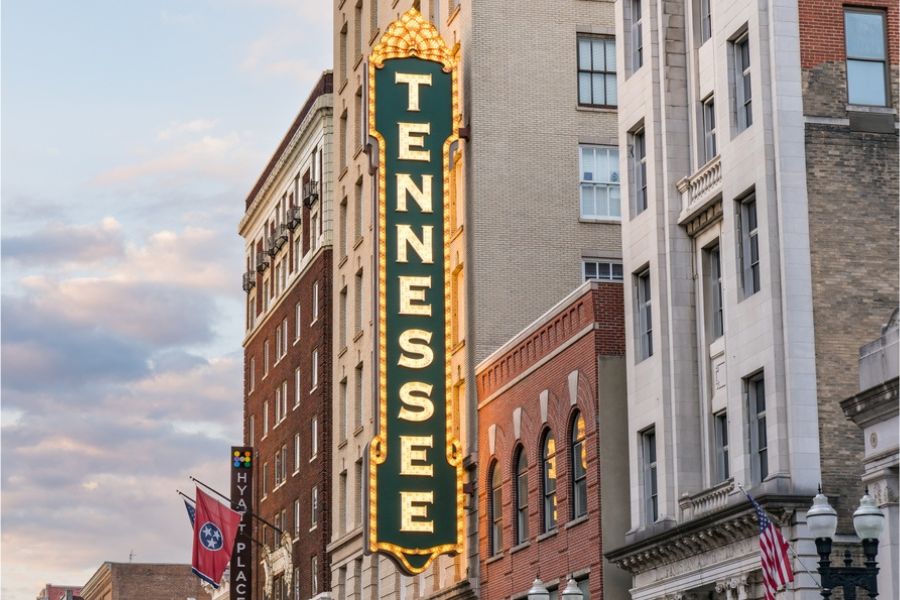
A federal judge in Tennessee has delivered a significant early victory to prediction market Kalshi by issuing a preliminary injunction that temporarily blocks state officials from enforcing local gambling laws against its sports-related event contracts.
US District Judge Aleta Trauger agreed with Kalshi that its sports event contracts fall under the Commodity Exchange Act (CEA).

In her decision, Trauger said sports event contracts qualify as swaps under the law. That classification, she concluded, ultimately places the contracts outside the reach of Tennessee’s sports wagering regulations, which target unlicensed gambling.
Tennessee regulators initially argued that Kalshi’s sports-event contracts rely on the “outcome” of a game, not the “occurrence” of an event. To that, Trauger said, “The outcome of an event can be an occurrence, too.”
This is not the first time we have seen a case like this. Last year, in Nevada and New Jersey, preliminary injunctions blocked regulators from enforcing state gambling laws on Kalshi’s sports event contracts.

Speaking on social media, appellate litigator Andrew Kim said that Trauger’s decision to define sports event contracts differed from others.
“Departing from Judge Gordon’s ruling in Nevada, Judge Trauger holds that Kalshi’s event contracts are swaps. Reasonable minds are going to differ on these questions, which is why we’re probably heading to [The Supreme Court],” Kim wrote.
Tennessee officials will see the Nevada case as a source of hope, as the US Court of Appeals denied Kalshi’s emergency request to temporarily halt Nevada’s proceedings while related appeals continue.

This has opened the door for regulators to file a civil enforcement action against Kalshi.
Charlotte Capewell brings her passion for storytelling and expertise in writing, researching, and the gambling industry to every article she writes. Her specialties include the US gambling industry, regulator legislation, igaming, and more.

Dig Deeper
Related stories



The Backstory
Why Tennessee matters now
The Tennessee case arrives after months of state-federal friction over whether event-based contracts on platforms like Kalshi are financial derivatives under federal law or sports bets under state law. The dispute escalated when the Tennessee Sports Wagering Council sent cease-and-desist letters to Kalshi and others in early January, ordering them to void sports-linked contracts for state residents and refund deposits by Jan. 31, with threats of fines and potential criminal referrals. A federal judge quickly intervened, blocking the order as Kalshi argued its Commodity Futures Trading Commission registration placed it under exclusive federal jurisdiction. That early move, described in coverage of the judge’s initial block on Tennessee’s attempt to halt Kalshi, previewed the fault lines that shaped today’s injunction: whether sports event contracts are swaps governed by the Commodity Exchange Act or wagers policed by state gambling law.
Tennessee’s actions were part of a broader crackdown. Other states including Nevada, New Jersey, Connecticut, New York, Ohio and Massachusetts have taken steps against Kalshi and peers, pulling the issue into courtrooms across the country. That multistate posture set up a patchwork of injunctions and enforcement threats that forced a court-by-court determination of jurisdiction and definitions—terms like “outcome,” “occurrence,” and “swap” now carry outsized importance for the future of event trading.
Nevada’s hard line reshaped expectations
Before Tennessee’s ruling, the most closely watched forum was Nevada, where judges were asked to decide whether Kalshi’s approach effectively functioned as unlicensed sports betting. In March, Kalshi sued after a cease-and-desist from the Nevada Gaming Control Board. A judge signaled he would move quickly, noting the suit could have broad implications for the U.S. sports betting sector. The state and the Nevada Resort Association argued Kalshi was offering unregulated sports wagering and lacked the compliance infrastructure expected of licensed operators. They also raised separate concerns about contracts tied to elections, which Nevada’s constitution bars. That preview is detailed in reporting on the court’s plan to expedite a Nevada ruling.
When the decision arrived, it cut against Kalshi. The court held that sports-outcome contracts were bets rather than swaps, lifting an earlier injunction and clearing the way for enforcement. The judge cited products linked to the timing of football touchdowns and found Kalshi’s claims of exclusive federal oversight unpersuasive under the Commodity Exchange Act. The ruling, summarized in a report on the federal judge’s decision against Kalshi in Nevada, created a sharp split from other venues and emboldened regulators elsewhere. It also introduced immediate operational risk for Kalshi by allowing Nevada regulators to proceed while appeals play out—precisely the uncertainty Tennessee’s injunction now tempers in that state.
Massachusetts pause highlights fluid enforcement
Massachusetts has been another key arena. The attorney general sued Kalshi last fall, arguing the platform let users wager on sports without a gambling license. A state judge initially agreed and prepared to issue an order blocking Kalshi’s sports-event contracts. But the court then paused enforcement to refine the injunction’s wording and give both sides time to negotiate, a step that underscored judicial caution as definitions and jurisdictional boundaries remain unsettled. The latest turn is documented in coverage of the temporary hold on the Massachusetts block.
That procedural pause matters for two reasons. First, it shows state courts are sensitive to the consequences of immediate shutdowns in markets where customers hold open positions. Second, it signals that even where states win initial findings, they may not rush to impose final remedies without tighter language that can withstand appeals. Tennessee’s federal injunction now adds to that measured trend, reinforcing a go-slow approach in contested jurisdictions while higher courts weigh in.
New Jersey’s federal ruling carved out space
New Jersey produced an early federal ruling that favored Kalshi, restricting state regulators from banning its sports prediction markets while litigation proceeds. The court did not settle the ultimate question but found enough merit in Kalshi’s preemption argument to keep the platform operating. That decision, outlined in reporting on a federal judge allowing Kalshi to continue in New Jersey, stood as a counterweight to Nevada’s later judgment and helped frame the national divide: some courts are inclined to treat event contracts as federally regulated swaps unless and until the Commodity Futures Trading Commission or Congress says otherwise; others see them as functionally indistinguishable from sports bets, especially as contract design gravitates toward game-specific outcomes.
The New Jersey case also previewed arguments now echoed in Tennessee: that a single federal regulator offers consistent rules for market integrity, surveillance and customer protections; and that fragmented state gambling regimes risk balkanizing an emerging market that behaves more like a derivatives venue than a sportsbook. Whether those arguments hold on appeal will shape how quickly event trading can scale across jurisdictions.
What’s at stake and what comes next
The split between Nevada’s ruling and the injunctions in New Jersey and Tennessee puts the issue on a path to higher courts. Regulators and industry lawyers have already suggested the U.S. Supreme Court may ultimately be asked to reconcile whether sports-related event contracts are swaps under the Commodity Exchange Act or wagers under state law. In the interim, operational realities will hinge on where platforms can keep trading during appeals and how quickly adverse rulings take effect.
Tennessee’s early block matters because it narrows the risk of immediate enforcement and clarifies that, at least for now, a federal court there accepts the premise that an event’s outcome can be the occurrence that defines a swap. That interpretation departs from Nevada’s view and could influence how other judges parse contract design. If more courts adopt Tennessee’s framing, platforms may emphasize contracts keyed to occurrences rather than granular in-game props to stay within federal definitions. Conversely, if Nevada’s reading spreads, states will gain leverage to demand gambling licensure or force exits.
The market implications extend beyond Kalshi. State regulators worry about consumer protection and the circumvention of sports betting rules. Platforms argue that federal oversight offers consistent surveillance, capital rules and disclosures, while state-by-state prohibitions create confusion and push activity offshore or into informal markets. Investors and counterparties face basis risk if outcomes diverge across states—trades permissible in one venue could be frozen or unwound in another—raising questions about liquidity, pricing and settlement integrity.
Short term, watch three tracks: enforcement timing in Nevada following the adverse ruling; any refined injunction in Massachusetts and whether it tightens or eases restrictions; and appellate or follow-on motions in Tennessee and New Jersey that test the durability of federal injunctions. As those cases evolve, the core question—whether event contracts tied to sports are swaps or bets—will drive the contours of a national framework. Tennessee’s injunction adds momentum to the federal-jurisdiction camp, but the split with Nevada ensures the fight is far from over.
