


Traders at Goldman Sachs look to get involved with prediction markets

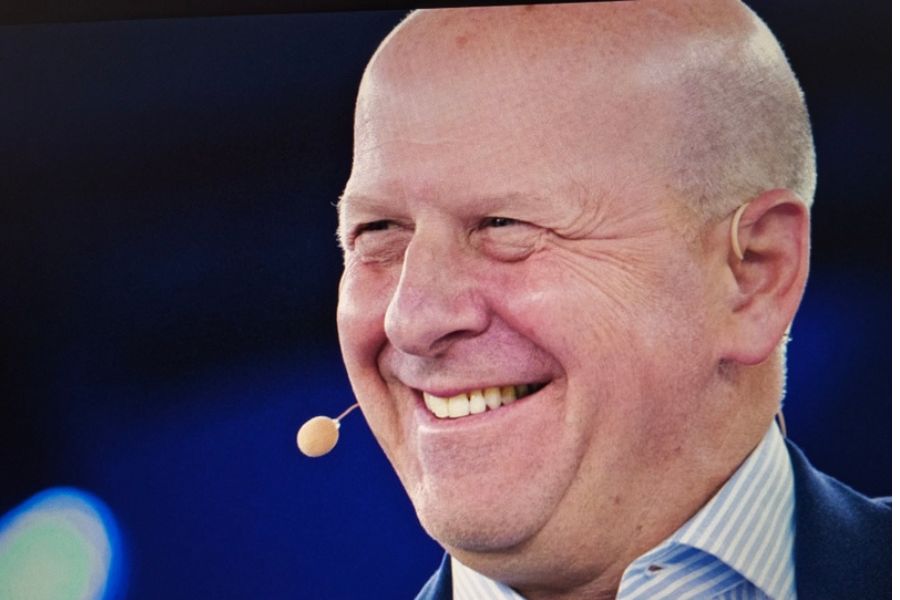
Traders at Goldman Sachs are reportedly looking to enter the prediction market industry, according to a report by The Telegraph.
In recent weeks, the Chief Executive of Golden Sachs, David Solomon, has said he has been meeting with the bosses of major prediction markets to explore opportunities.

Soloman said, “I personally met with the two big prediction companies and their leadership in the last two weeks and spent a couple of hours with each to learn more about that. We have a team of people here that are spending time with them and are looking at it.”
Prediction markets have exploded in popularity over the past few years, with operators Polymarket and Kalshi at the forefront. This rise in stardom has prompted more traders to push into the space.
Goldman Sachs ranked top bank on Wall Street in terms of stock trading in Q4 of last year, with trading profits nearly US$700 million higher than expected, and Solomon has commented that corporate bosses are currently trying to use the Trump Administration to secure major deals over the next three years.

The prediction market industry’s trading volume is expected to hit US$1 trillion by the end of the decade, with multiple sectors getting involved despite recent legal troubles faced.
Abi Bray brings strong researching skills to the forefront of all of her writing, whether it’s the newest slots, industry trends or the ever changing legislation across the U.S, Asia and Australia, she maintains a keen eye for detail and a passion for reporting.

Dig Deeper
Related stories
 2025/07/01: Intralot to acquire Bally’s International Interactive Business
 2026/07/14: Kalshi hits back: “significant flaws” in institute’s analysis of prediction markets
 2025/11/25: What does the future hold for prediction markets after big players break from AGA?
 2025/12/02: Kalshi and Polymarket hit record US$10 billion trading volume for November
2025/07/01: Intralot to acquire Bally’s International Interactive Business
2026/07/14: Kalshi hits back: “significant flaws” in institute’s analysis of prediction markets
2025/11/25: What does the future hold for prediction markets after big players break from AGA?
2025/12/02: Kalshi and Polymarket hit record US$10 billion trading volume for November
The Backstory
Wall Street’s new curiosity meets a fast-changing market
Interest from a top Wall Street trading shop comes as prediction markets move from the margins to a contested center of finance, sports and politics. The platforms let users trade contracts on future events, a format that has drawn retail bettors, crypto natives and, increasingly, institutional attention. Analysts have tied recent spikes in activity to marquee moments and new distribution, while regulators debate how far to open the gates. The result is a market in flux: big money circling, policy still unsettled, and consumer risks rising alongside volumes.
Sports, elections and the demand flywheel
Event-driven spikes have helped pull prediction markets into the mainstream. Piper Sandler projected a November surge with roughly $10 billion in combined volume on Kalshi and Polymarket, citing outsized trading around Thanksgiving NFL games and fan bases in states without legal sports betting. The firm said football-related contracts had already contributed nearly a third of volume, a trend bolstered by record TV audiences. That dynamic was captured in Piper Sandler’s call for a holiday-week bump, where analyst Patrick Moley linked demand to state-by-state gambling gaps and national broadcasts.
Politics has been another catalyst. Volumes climbed around last year’s U.S. presidential election and have stayed elevated as traders hedge or speculate on policy outcomes. Data aggregations show the rise is not episodic. Monthly activity across the two largest U.S.-focused platforms has stepped higher this cycle, according to The Block’s tracking of Polymarket and Kalshi volumes. For banks, sustained user engagement — not just one-off spikes — is the prerequisite for building market-making or connectivity businesses.
Platforms scale through deals, distribution and capital
Distribution deals have accelerated the market’s reach. Daily fantasy operator PrizePicks struck a multi-year agreement with Polymarket to integrate event contracts into its app, opening sports, entertainment and cultural markets to a large fantasy user base. The tie-up also signals Polymarket’s push back into the U.S. through its acquisition of a CFTC-licensed exchange and clearinghouse. PrizePicks’ statement framed the move as competition that could “drive innovation” in a regulated format, while Polymarket touted fandom and interactivity. The partnership details are in PrizePicks’ pact with Polymarket.
Brokerages are weighing buy-versus-build. Robinhood said it is open to acquisitions or joint ventures to grow its prediction platform, even as it leans on internal engineering. Since partnering with Kalshi in March, Robinhood estimated its users account for a sizable share of Kalshi’s daily volume. The company has also explored expansion with foreign regulators. A recent round-up noted that Intercontinental Exchange, owner of the New York Stock Exchange, invested $2 billion in Polymarket, a sign of infrastructure players placing long-term bets on the category. Those developments were outlined in Robinhood’s remarks on M&A and partnerships.
Regulators test the guardrails
Policy remains the swing factor. The Commodity Futures Trading Commission has been at the center of debates over whether event contracts are hedging tools or retail gambling by another name. Polymarket’s path back into the U.S. has run through federal licensing steps, including approval to relaunch after a 2022 withdrawal, a milestone noted in Bank of America’s risk note. Separately, Kalshi’s approach of listing contracts through a CFTC-regulated exchange has given larger counterparties a clearer compliance framework, even as specific categories, like political control or sports, trigger additional scrutiny.
The regulatory spotlight has intensified with leadership changes. President Donald Trump nominated Brian Quintez to lead the CFTC. Senators pressed him over board ties to Kalshi and equity holdings that could present conflicts. Quintez pledged to divest if confirmed and argued that event contracts and crypto markets could strengthen U.S. market infrastructure. The hearing before the Senate Agriculture Committee on June 10, along with his prepared remarks, are posted by the committee at the nomination hearing docket and in Quintez’s testimony. Inside the industry, the nomination was read as a sign the agency will keep grappling with where to draw lines on permissible contracts and how to police consumer harm.
Policy positioning from nominees matters because it sets expectations for issuers, brokers and institutional entrants. In a recap of Quintez’s appearance, he framed new event contracts as “hedging tools,” language that, if reflected in policy, could widen use cases for corporate treasurers and investors — the kind of users a bank would cultivate.
Banks eye profits as credit risks mount
As platforms scale, lenders are flagging second-order effects. Bank of America warned that prediction markets and online sports betting introduce new credit risks as consumers face more “rapid-fire” and gamified wagering. The bank said underwriting models may need updates. It cited academic research tying the legalization of online betting to lower average credit scores, higher bankruptcy risk and more accounts sent to collections. The caution came as Polymarket advanced its U.S. reentry, underscoring the tension between growth and consumer protection. The details are in BofA’s analysis of credit exposure.
For banks contemplating market-making or connectivity to event exchanges, these risks bleed into compliance and reputational calculus. Revenue opportunities sit alongside questions about suitability, marketing and safeguards for retail users. Institutional participation could deliver deeper liquidity and tighter spreads, but it also raises stakes for policymakers if losses ripple through consumer credit channels.
What changes if the big guns join
A major dealer’s entry could accelerate a shift from niche product to alternative asset class. With sports calendars, political cycles and economic data releases providing year-round catalysts, volumes have a path to compound. If capital and distribution from brokers, fantasy operators and exchanges continue to converge — through deals like PrizePicks–Polymarket and potential moves flagged by Robinhood — liquidity could deepen and contract design could standardize. That, in turn, makes the space more legible to institutions.
The open questions remain regulatory scope, consumer safeguards and data integrity. Confirmation outcomes at the CFTC, after the June 10 hearing, will shape which event types are permitted and how exchanges supervise them. Meanwhile, sustained growth shown in monthly volume trackers suggests the market is unlikely to shrink back. For Wall Street, that combination — persistent demand and evolving rules — explains the timing. The opportunity is large, but the playbook is still being written.
