


ToonieBet becomes exclusive sportsbook partner of CFL’s Ottawa Redblacks

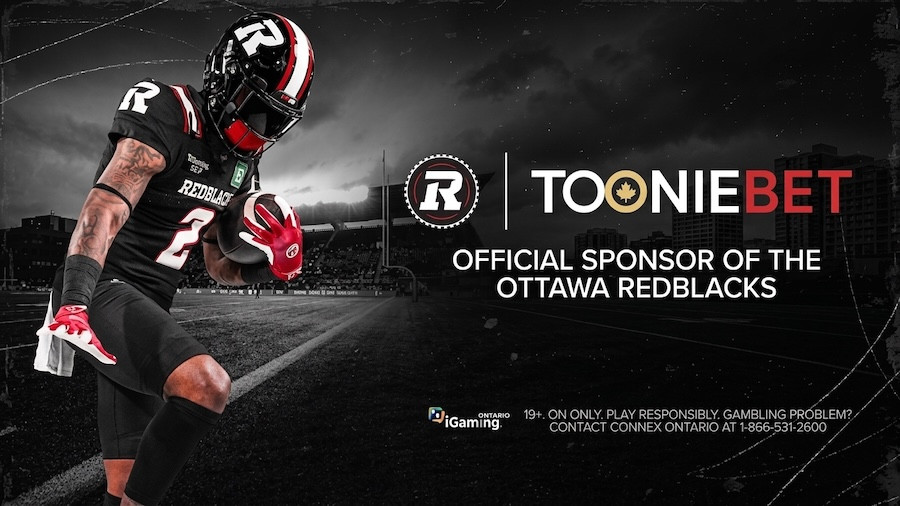
Canadian igaming and sportsbook operator ToonieBet has signed an agreement with professional Canadian Football League (CFL) team the Ottawa Redblacks to become the team’s exclusive sportsbook partner.
The deal will give ToonieBet branding across Redblacks player jerseys, TV and LED displays at the team’s stadium TD Place and integration in the team’s social media channels. The operator will also become the sponsor of the field-level seating area at TD Place, the Sideline Club.

In addition, the partnership includes three pre-game events featuring live music, games and giveaways on the outdoor pedestrian pathway outside TD Place, Exhibition Way, during Redblacks game days.
“Partnering with an iconic franchise like the Ottawa REDBLACKS marks an exciting milestone as we continue to expand ToonieBet’s footprint in Canada. We look forward to wearing the team colors on the field, hosting unforgettable game day experiences, and offering Ottawa fans a fun, innovative platform to engage with the sport they love,” commented Head of ToonieBet Canada, Daniel Madmon.
The collaboration follows ToonieBet’s wider expansion across Canada and Canadian sports, with the operator being named an official sports betting and online casino partner of the CFL in July last year, as well as an Official Authorized Gaming Operator of the CFL.

After launching in Ontario in May 2025, ToonieBet expanded into Alberta – following the province’s regulated online gambling market launch in July 2026. ToonieBet was among the online sportsbook and igaming brands registered ahead of the market opening. ToonieBet is Soft2Bet’s igaming product made for the Canadian market.
An Alberta minister has estimated the nation’s most recent igaming province’s online gaming market can generate CA$76 million (US$55 million)1 CAD = 0.7204 USD
2026-08-27Powered by CMG CurrenShift in tax revenue during its first year.
iGaming Ontario recently reported its highest-ever monthly total cash wagers in July, reaching CA$9.9 billion (US$7.1 billion)1 CAD = 0.7204 USD
2026-08-27Powered by CMG CurrenShift.
Charlotte Capewell brings her passion for storytelling and expertise in writing, researching, and the gambling industry to every article she writes. Her specialties include the US gambling industry, regulator legislation, igaming, and more.

Dig Deeper
Related stories
 2025/05/19: Edmonton Elks and Play Alberta announce multi-year partnership
 2026/07/23: Hard Rock’s Ontario igaming debut marks first official digital international market expansion
 2026/02/04: PointsBet Canada enables registration for access in Alberta
 2026/07/09: FanDuel entering Alberta market before 13 July launch, with sign-ups already available
2025/05/19: Edmonton Elks and Play Alberta announce multi-year partnership
2026/07/23: Hard Rock’s Ontario igaming debut marks first official digital international market expansion
2026/02/04: PointsBet Canada enables registration for access in Alberta
2026/07/09: FanDuel entering Alberta market before 13 July launch, with sign-ups already available
The Backstory
Canada’s betting market moves closer to the CFL sideline
ToonieBet’s agreement with the Ottawa Redblacks is the latest sign that Canadian sports betting operators see the Canadian Football League as more than a media-buying channel. The deal puts the Soft2Bet-owned Canadian brand on Redblacks jerseys, stadium signage, social media and a field-level hospitality area at TD Place, tying the operator to game-day routines in one of the league’s core markets.
The partnership follows a broader national shift in which sportsbooks are seeking local sports franchises, stadium inventory and community events to build trust in a regulated but fragmented Canadian gambling landscape. For ToonieBet, the Redblacks deal builds on its CFL relationship after the operator became an official sports betting and online casino partner of the league last year. It also gives the company a visible platform in Ontario after launching there in May 2025.
The timing matters. Ontario has become the country’s benchmark for private online gambling regulation, while Alberta has opened the door to a second competitive provincial market. Operators are now racing to establish provincial relevance before the field becomes crowded. Sports sponsorships, particularly in the CFL, offer a direct route to fans in markets where brand recognition can determine early customer acquisition.
Ontario set the template for private operators
Ontario’s regulated online gambling market, launched in 2022, reshaped expectations for Canada’s provincial gaming models. The province gave private operators a legal path to compete under local oversight, creating one of North America’s largest regulated markets. That framework became the reference point for operators looking beyond single-province exposure.
The scale of Ontario’s market explains why major brands continue to arrive. Hard Rock Digital recently made Ontario its first official digital market outside the U.S., introducing Hard Rock Bet’s sportsbook and online casino to the province. The launch, detailed in Hard Rock’s Ontario igaming debut, underscored how global and U.S.-based gambling companies view Ontario as a serious standalone market rather than a regulatory experiment.
Ontario reported CA$3.2 billion in gross gaming revenue in 2025 and CA$82.7 billion in handle, with both figures up by more than 30% year over year. Those numbers have encouraged operators to localize marketing, support and partnerships. ToonieBet’s Ottawa agreement fits that strategy: a national sports product attached to a province where regulated digital betting already has scale.
For CFL teams, the growth of regulated online betting has opened a new sponsorship category after years of reliance on traditional local and national advertisers. The Redblacks arrangement goes beyond passive logo placement, extending to jersey branding, in-stadium LED exposure, social content and pregame events. That mix reflects how betting companies are competing for engagement while staying inside provincial regulatory frameworks.
Alberta adds a second front
Alberta’s move toward an open online gambling market has intensified competition. The province is widely viewed as Canada’s second major private igaming opportunity, and operators have been preparing market-entry campaigns around both sportsbook and casino products. ToonieBet’s expansion into Alberta after the market’s July 2026 launch links its Redblacks partnership to a broader two-province growth plan.
Other operators moved early. PointsBet Canada opened registration for Alberta residents as it worked through final regulatory steps, saying the province’s competitive framework would give players more choice and consumer protections. Its Alberta plans, including pre-registration through PointsBet Canada, were outlined in PointsBet Canada’s Alberta access announcement.
FanDuel also positioned itself ahead of Alberta’s launch, allowing eligible residents to set up accounts before betting and casino services went live. The company paired its market entry with responsible gambling partnerships, supplier content and an expanded CFL agreement that included Alberta and online casino. That approach, covered in FanDuel’s Alberta market entry plans, showed how national operators are using the CFL as both a sports betting channel and a community-facing brand asset.
Alberta officials have estimated CA$76 million in first-year tax revenue from the market, while analysts have projected CA$700 million in annual revenue. Those figures have raised the stakes for early positioning. Operators that can combine digital readiness with recognizable Canadian sports partnerships may have an advantage as players shift from offshore sites or provincial incumbents to regulated alternatives.
State-run brands are defending home turf
The expansion of private operators does not mean provincial lottery corporations are stepping aside. In Alberta, Play Alberta has used sports sponsorship to reinforce its status as a local, government-run option. The platform signed a multi-year partnership with the Edmonton Elks, becoming the CFL team’s official sports betting partner and securing the Play Alberta Field name for Elks home games at Commonwealth Stadium.
The Play Alberta and Edmonton Elks partnership illustrates a different but related strategy. Rather than entering Alberta from outside, Play Alberta is emphasizing local ownership, provincial revenue retention and community connection. The stadium naming component is particularly significant because it gives the government-run operator one of the most visible sports assets in the province.
That creates a competitive contrast with brands such as ToonieBet, FanDuel and PointsBet. Private operators often emphasize product speed, casino depth, odds, promotions and national partnerships. Lottery-run platforms typically highlight public-benefit returns, local accountability and safer play under direct provincial control. As Alberta opens, both models will compete not only on customer experience but also on public legitimacy.
The CFL sits at the center of that contest. Its teams are deeply local, yet the league offers national inventory and a fan base already familiar with legal sports betting advertising. For operators, affiliation with a team can help translate regulatory approval into consumer confidence. For teams, the category offers revenue at a time when live sports properties are trying to diversify commercial income.
Grey-market pressure shapes the policy debate
Behind the rush into Ontario and Alberta is a larger question: how Canada can move online betting activity from illegal or grey-market sites into regulated provincial systems. The Atlantic Lottery Corporation has been blunt about the challenge. Its new president and chief executive, Dallas McCready, said confusion over advertising from gambling websites not legally available in Atlantic Canada has made it harder for consumers to know which platforms are lawful.
In an interview on Atlantic Lottery’s competitive posture, McCready said the corporation estimates CA$200 million leaves the region each year through illegal gambling sites. Atlantic Lottery remains the only legal online gambling and sports betting provider in the four Atlantic provinces, but it is watching Ontario’s model and Alberta’s opening closely.
The Canadian Lottery Coalition, which includes Atlantic Lottery and other provincial lottery corporations, has also taken legal action against Bodog in Manitoba. The effort reflects a broader policy argument: regulated markets can generate tax revenue, support responsible gambling and impose anti-money laundering controls, but only if consumers can distinguish legal brands from offshore alternatives.
That context gives sports sponsorships added importance. A jersey patch, stadium activation or league designation is not merely advertising; it signals that a betting brand is operating within the approved market. As more provinces consider competitive models, the ability to establish visible legitimacy may become as important as bonuses, content libraries or odds.
Why the Redblacks deal matters now
ToonieBet’s Redblacks partnership lands at the intersection of these trends: Ontario’s proven scale, Alberta’s competitive opening, CFL sponsorship growth and the continuing fight to channel players into regulated platforms. The Ottawa deal gives ToonieBet a local face in a major Ontario market while reinforcing its national CFL credentials.
It also shows how operators are adapting to a provincial system that rewards local relevance. Canada is not a single online gambling market. Each province has its own rules, incumbents, public-policy priorities and consumer habits. A brand that wants national scale must build province by province, often through sports properties that already carry trust with local fans.
For the Redblacks, the agreement brings a high-growth sponsor into the club’s commercial mix. For ToonieBet, it provides stadium visibility, digital reach and direct fan engagement in a league where betting partnerships are becoming more sophisticated. For regulators and policymakers, the deal is another example of how quickly the legal market is becoming embedded in mainstream sports.
The next test will be whether these partnerships drive sustainable, regulated play rather than short-term promotional spikes. As Ontario matures and Alberta develops, operators will need to show that their local investments can coexist with responsible gambling obligations and public confidence. The Redblacks deal is not just a team sponsorship; it is part of the next phase in Canada’s regulated betting expansion.
