


Hard Rock’s Ontario igaming debut marks first official digital international market expansion


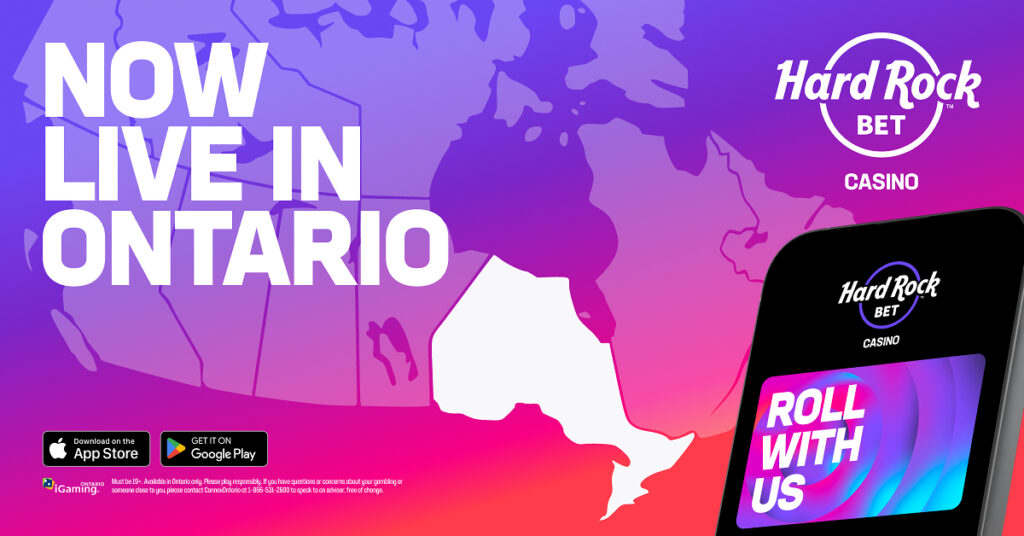
Hard Rock Bet has launched in Ontario, bringing its online casino and sportsbook to Ontario players, officially marking Hard Rock Digital’s first international market expansion.
Residents will now have access to its gaming portfolio of over 3,000 games, including slots, live dealer games, and table games.

The operator has also established an Ontario-based marketing team and a local customer support set-up to support new customers, with Ontario customers having access to its online rewards program, both Legendary Reward Drops and Unity Points, along with its sportsbook.
“Expanding into Ontario with Hard Rock Bet marks the first time we’ve brought our platform to an audience outside the US,” said Marlon Goldstein, Executive Managing Director and Chief Executive of Hard Rock Digital.
“We’re excited to introduce Ontario players to a premium entertainment experience that reflects the energy and service synonymous with the Hard Rock brand. And by investing in local talent, local partnerships, and localized customer support, we’re creating an experience designed specifically for Ontario players,” noted Goldstein.

“Hard Rock Hotel & Casino Ottawa has the reputation of bringing people together for amplified entertainment experiences, and we’re excited to see that spirit extend into the digital space,” commented Christine Crump, President of Hard Rock Hotel & Casino Ottawa. “The launch of Hard Rock Bet is a natural next step for the Hard Rock brand in Ontario, and we look forward to building on that connection with guests and players over time.”
Ontario was the first province in Canada to launch a regulated online gaming market in 2022. Aside from Alberta, which launched its own regulated market on 13 July, it is one of the fastest-growing markets in North America and Canada’s largest regulated market. In 2025, the market generated CA$3.2 billion (US$2.3 billion)1 CAD = 0.7110 USD
2026-07-23Powered by CMG CurrenShift in gross gaming revenue and recorded a handle of CA$82.7 billion (US$58.8 billion)1 CAD = 0.7110 USD
2026-07-23Powered by CMG CurrenShift, a yearly increase of 32% and 31%, respectively.
Charlotte Capewell brings her passion for storytelling and expertise in writing, researching, and the gambling industry to every article she writes. Her specialties include the US gambling industry, regulator legislation, igaming, and more.

Dig Deeper
Related stories
 2025/03/27: Hard Rock Bet launches Hard Rock Highway Megaways slot
 2025/06/18: Hard Rock Bet launches online rewards program Legendary Rewards Drops
 2025/05/13: Games Global supplies Hard Rock Digital with exclusive slot in New Jersey
 2025/04/28: Hard Rock Digital launches Playtech live trivia experience in New Jersey
2025/03/27: Hard Rock Bet launches Hard Rock Highway Megaways slot
2025/06/18: Hard Rock Bet launches online rewards program Legendary Rewards Drops
2025/05/13: Games Global supplies Hard Rock Digital with exclusive slot in New Jersey
2025/04/28: Hard Rock Digital launches Playtech live trivia experience in New Jersey
The Backstory
Ontario became the proving ground
Hard Rock Digital’s move into Ontario puts the company into one of North America’s most closely watched regulated online gambling markets. The province opened its competitive internet gaming framework in 2022, separating itself from much of Canada by allowing private operators to compete under provincial oversight. That structure turned Ontario into a testing ground for brands seeking scale, product depth and regulatory credibility before considering broader Canadian or international ambitions.
The timing also reflects the market’s maturity. Ontario has moved beyond the initial rush of operator launches and into a period defined by product differentiation, local partnerships, content depth and customer retention. Operators entering now face a more competitive environment than the one early movers encountered, but they also benefit from a market with established payment habits, regulatory processes and player demand.
That backdrop is central to Hard Rock Digital’s decision to make Ontario its first official digital market outside the United States. The company is bringing a platform that combines online casino, sports betting, loyalty tools and local support, a model increasingly common among operators that want to connect digital play with broader hospitality and entertainment brands.
Hard Rock built the infrastructure before crossing the border
Hard Rock Digital’s Ontario launch did not come in isolation. The company has spent the past several years building its U.S. online betting and casino business around Hard Rock Bet, while positioning itself as a regulated operator rather than a pure digital challenger. That distinction matters in a market such as Ontario, where regulators and commercial partners place weight on operational controls, responsible gambling standards and brand accountability.
A key step came when Hard Rock Digital joined the International Betting Integrity Association, adding its sportsbook data to a global monitoring network that includes more than 70 companies and 140 brands. The move tied Hard Rock Bet to an integrity framework used across major sports betting markets and gave the operator another credential as it prepared for broader expansion.
Sports betting integrity has become a larger issue as U.S. and Canadian markets grow. The International Betting Integrity Association monitors hundreds of billions of dollars in annual handle and flags suspicious activity to operators, leagues and regulators. For Hard Rock Digital, participation helps address one of the central risks in cross-border betting expansion: convincing regulators that fast growth will not come at the expense of market safeguards.
The Ontario launch also leans on Hard Rock’s existing land-based footprint in the province. The brand’s casino and hotel presence in Ottawa gives the company a physical connection to Canadian consumers that many digital-only operators lack. That link may help the company market loyalty benefits, entertainment offers and brand experiences beyond the app, though execution will determine whether those advantages translate into online share.
Suppliers are following the same regulated-market map
Hard Rock Digital is entering Ontario at a time when major suppliers are also prioritizing the province. The market’s size and regulatory clarity have made it a launchpad for games that can be distributed across Canada and selected U.S. states. That has helped create a deeper content environment for operators but also raised the bar for any new entrant trying to stand out.
IGT’s PlayDigital unit, for example, is preparing to introduce Tiger and Dragon Cash on Reels in Ontario and several U.S. jurisdictions. The game’s North American online debut shows how suppliers use Ontario alongside states such as Michigan, New Jersey and Pennsylvania to scale proven land-based titles into digital formats.
That pattern is significant for Hard Rock. A large online casino library is now a baseline requirement, not a differentiator by itself. Players in Ontario already have access to a wide range of slots, live dealer games and table games across competing platforms. Operators must combine breadth with usability, promotions, loyalty programs and local relevance to keep players engaged.
Other suppliers are taking a similar approach. Playson expanded its Ontario position through a partnership with Mohegan Digital’s PlayFallsview.com, with titles scheduled to roll out through Light & Wonder’s aggregation system. The agreement underscores how land-based casino brands and digital suppliers are using Ontario to connect established entertainment properties with online casino content.
For Hard Rock, the supplier activity cuts both ways. A rich content market gives the operator more tools to compete, but it also means rivals can quickly match game libraries and promotional themes. The more crowded the market becomes, the more important brand, trust, rewards and product reliability become.
Canadian growth is no longer limited to Ontario
Ontario remains Canada’s largest regulated online gaming market, but it is no longer the only province moving toward a competitive model. Alberta launched its own regulated market in July, creating another potential path for operators seeking a broader Canadian footprint. That development gives Hard Rock Digital’s Ontario debut added strategic weight: success in one province could inform how the company approaches others.
The Canadian market still differs sharply from the United States, where online sports betting and casino expansion is handled state by state and often separated by product. Some states allow only sports betting, while others also permit online casino. Operators must navigate licensing rules, tax rates, tribal gaming compacts and local political dynamics. Canada’s provincial model presents its own challenges, but Ontario has provided a clearer template for private-sector participation.
Smaller U.S. markets show how uneven expansion can be. In Vermont, online sportsbooks recorded $23.8 million in handle in January 2025, one year after legal betting launched in the state. The market is meaningful for licensed operators but far smaller than Ontario’s multibillion-dollar annual activity, illustrating why large brands continue to focus on jurisdictions with both regulatory stability and population scale.
Ontario’s reported handle and revenue growth suggest that the province can support additional competition, though not without pressure on margins. Marketing costs, product investment and promotional spending can rise quickly when global operators compete for the same customers. Hard Rock’s challenge will be to grow without relying only on incentives that erode profitability.
Prediction markets add pressure to gambling policy debates
Hard Rock’s expansion also lands as the broader definition of wagering is being contested. Regulated sportsbooks and casinos operate under provincial or state licensing systems, but prediction markets have drawn attention by offering event-based contracts that can resemble betting while falling under different legal frameworks.
Polymarket’s agreement to become the official prediction market partner of X highlighted how quickly alternative wagering-adjacent products can reach mainstream audiences. The partnership is expected to combine Polymarket probabilities with data from X, bringing prediction market content closer to real-time news and social media consumption.
Polymarket has said billions of dollars in predictions were made on its platform in 2024, covering politics, entertainment, news and other events. The growth has attracted scrutiny from regulators who argue some products may function like wagering without following state gambling rules. The debate is not directly the same as online casino or sportsbook licensing, but it affects the environment in which companies such as Hard Rock Digital operate.
For licensed operators, the rise of prediction markets creates both competitive and regulatory stakes. If event contracts continue to expand, policymakers may face pressure to clarify the boundary between financial products, prediction platforms and gambling. Licensed sportsbook and casino companies are likely to argue that similar risk-based products should meet comparable standards for integrity, consumer protection and taxation.
That makes Ontario’s regulated structure more important. The province offers a model built on explicit licensing, oversight and reporting. Hard Rock Digital’s entry signals confidence that large entertainment brands still see value in regulated online gambling markets, even as new forms of event-based speculation test the edges of gambling law.
The stakes are brand, scale and regulatory credibility
Hard Rock Digital’s Ontario debut is more than a geographic expansion. It is a test of whether a U.S.-built online betting and casino platform can travel into an international regulated market while preserving the brand’s hospitality identity. The company is betting that its mix of casino content, sportsbook access, loyalty features, local staff and existing land-based recognition can give it a foothold in a crowded field.
The move also comes as operators, suppliers and regulators are converging on the same lesson: scale matters, but credibility matters too. Ontario has become a market where international ambitions, supplier innovation and regulatory expectations meet. For Hard Rock, performance there could shape its next steps in Canada and influence how it presents itself to other jurisdictions weighing online gaming expansion.
If the company can convert brand recognition into sustained digital play, Ontario could become a platform for wider growth. If not, the launch will show how difficult it has become for even well-known casino and entertainment brands to gain share in a mature, highly competitive online market.
