


Sportradar revenues, profits leap in third quarter

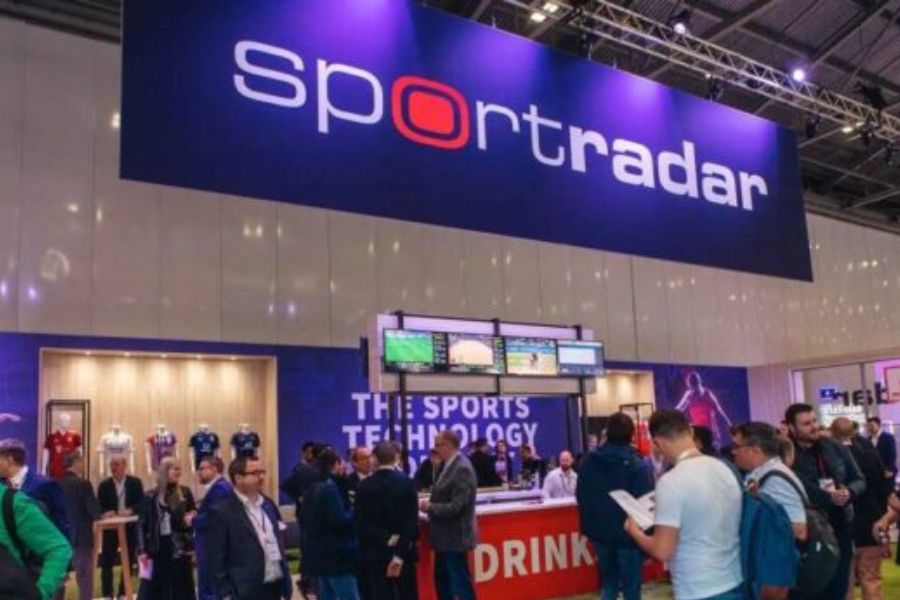
Sports betting data service Sportradar released its numbers for the third quarter early on 3 November 3, and they showed double-digit increases in revenue, profit and cash flow.
Revenues for Sportradar jumped 24%, reaching €363 million (US$406 million)1 EUR = 1.1189 USD
2026-11-03Powered by CMG CurrenShift. Profit increased 20% to €27 million (US$30 million)1 EUR = 1.1189 USD
2026-11-03Powered by CMG CurrenShift and cash flow leapt 21% to €102 million (US$114 million)1 EUR = 1.1189 USD
2026-11-03Powered by CMG CurrenShift.

Sportradar credited the revenue increase to its IMG Arena acquisition one year earlier, saying in a release that earnings also were helped by “further uptake of the company’s products and services by existing and new customers, including prediction market participants.”
Revenue grew 47% in the United States and 17% overseas, US-derived revenues expanded to 27% of Sportradar’s total. The US enlargement was attributed to prediction-market activity.
In addition to divesting of Atrium Sports during the quarter for US$170 million, Sportradar spent US$157 million on share buybacks. Unfavorable soccer results negatively affected the Managed Betting Services and Sports Performance departments, which were down 3% and 8% respectively.

Sportradar also announced the renewal of its contract with Euroleague Basketball. This extends the company’s role as official data provider, covering 650 games annually.
As part of a prepared statement, Sportradar CEO Carsten Koerl said, “Sportradar delivered another strong quarter of double-digit growth, once again demonstrating the value of our role as a key technology and content partner to the global sports ecosystem.
“Our performance was driven by strong demand for our premium content portfolio, deep data and innovative technology solutions, including further monetization of the acquired IMG Arena rights and significant contributions from across the prediction markets landscape,” said the CEO.

Continued Koerl, “fans are engaging with sports across more platforms than ever before, expanding our addressable market and increasing demand for our products and solutions.”
Koerl concluded, “as we capitalize on these new opportunities, further leveraging our existing portfolio, we remain focused on innovation and execution to drive additional value for our partners and clients and deliver durable growth and expanding profitability for our shareholders.”
Sportradar ended the quarter with €190 million (US$213 million)1 EUR = 1.1189 USD
2026-11-03Powered by CMG CurrenShift in cash on hand and no debt. This was a diminution from €365 million (US$408 million)1 EUR = 1.1189 USD
2026-11-03Powered by CMG CurrenShift on hand at the end of the fourth quarter. The cash reduction was attributed to sports-rights payments and financing activities such as ongoing share repurchases.
David McKee is an award-winning journalist who has three decades of experience covering the gaming industry.

Dig Deeper
Related stories



The Backstory
IMG Arena deal becomes the hinge point
Sportradar’s third-quarter results land after a year in which management repeatedly told investors that the company’s growth would depend on turning sports rights, betting data and media tools into higher-margin products. The latest quarter suggests that strategy is beginning to show up more clearly in the numbers, helped by the integration of IMG Arena and demand from prediction-market participants.
The IMG Arena acquisition has been the central thread. Sportradar closed the deal after Endeavor Group Holdings agreed to offload the sports-rights portfolio, with Endeavor making payments to reset certain rights terms. Analysts at the time viewed the transaction as a way for Sportradar to broaden its global data-rights base on better economics and accelerate revenue, cash flow and margin growth. At an April investor day focused on Sportradar’s long-term growth plan, management framed IMG Arena as both a content expansion and a pricing-power opportunity.
That framing matters because Sportradar’s business is built on owning or controlling rights, packaging data into products and selling those tools to bookmakers, media companies, leagues and other customers. The current quarter’s revenue growth reflects the same logic: more proprietary content gives Sportradar more ways to deepen existing relationships, not just add new customers.
Share buybacks answered a valuation gap
Sportradar has paired its expansion strategy with an aggressive capital-return program. Management has repeatedly argued that the company’s market value does not reflect the durability of its business. In March, Chief Executive Carsten Koerl said the company had performed ahead of its own expectations and described a disconnect between fundamentals and the stock price. Sportradar then moved to expand a US$300 million repurchase authorization to US$1 billion, according to an earlier report on how Sportradar said its three-year strategy remained on schedule.
That message continued through the year. After short-seller allegations pressured the stock, Sportradar announced further buybacks and Koerl said he personally intended to purchase shares. By the second quarter, Chief Financial Officer Craig Felenstein was still describing repurchases as the best use of capital, even as the company’s cash balance fell because of those buybacks and sports-rights payments.
The latest quarter shows the same trade-off. Sportradar remains debt-free but cash has declined from earlier levels as it funds rights, acquisitions and repurchases. For investors, the question is whether those uses of cash compound into durable revenue growth. Management is betting that content rights and product depth will create more recurring revenue, while share repurchases magnify the benefit if the stock later rerates.
Prediction markets moved from theory to revenue
Prediction markets have become one of the most important variables in Sportradar’s U.S. outlook. Management began the year by describing them as a rapidly developing opportunity, especially because they can reach states where online sports betting is not legal. Koerl said Sportradar was working with leagues to establish safeguards, while Felenstein estimated the opportunity could eventually contribute tens of millions of euros.
By the second quarter, the company said the rollout was slower than expected but still promising. In an update on how the U.S. online sports betting market was slowing, executives said deals with prediction-market operators were taking time because league approvals were required. Sportradar also said activity was concentrated in states such as Texas and California, where online sports betting has not been legalized, limiting cannibalization of sportsbook customers.
That distinction is central to the current results. Sportradar’s U.S. revenue grew sharply in the quarter, and management attributed part of that growth to prediction-market activity. The company has positioned itself as an infrastructure supplier rather than a consumer-facing operator. That may offer regulatory distance, but it also ties Sportradar’s upside to a market whose legal status remains contested and whose product scope can depend on league consent.
Regulatory scrutiny remains a recurring risk
The upside from prediction markets and betting data has come with reputational and regulatory pressure. Earlier in the year, Sportradar executives spent part of an earnings call responding to short-seller allegations that the company had provided services to illegal or unlicensed gambling operators. Koerl rejected the accusations and said the company supported only licensed businesses, relying on know-your-customer checks and compliance controls. The episode was covered in detail when Sportradar executives pushed back on the allegations during an earnings call.
The allegations mattered beyond the immediate stock reaction because they struck at a key selling point of Sportradar’s business: trust. The company sells data, monitoring tools and integrity services to leagues and betting operators. If partners doubt whether its data distribution is tightly controlled, the commercial risk can extend beyond one contract or one market.
Management has tried to answer that concern by emphasizing compliance, league relationships and integrity services. In the second quarter, Koerl said Sportradar’s audit committee had refuted the short-seller charges and noted that regulatory approvals had been received in several jurisdictions. Later, executives again pointed to the integrity business as a growth area, especially as sports leagues become more sensitive to betting scandals and wagering anomalies.
U.S. growth slowed before it reaccelerated
The third-quarter U.S. growth rate also should be read against a softer backdrop earlier in the year. Sportradar executives said in the second quarter that U.S. online sports betting growth had flattened and that unfavorable currency exchange rates were weighing on reported results. Felenstein said fundamentals remained intact but did not expect a major second-half pickup in traditional U.S. online sports betting.
That slowdown explains why prediction markets and adjacent products have become more strategically important. If sportsbook growth matures in large regulated states, Sportradar needs additional channels to sustain U.S. expansion. Event contracts, affiliate marketing, media services and league-approved data products give the company a way to grow without relying solely on handle growth at traditional sportsbooks.
The company’s international scale also limits its dependence on the U.S. market. Earlier updates emphasized that most Sportradar revenue comes from outside the United States. Still, U.S. growth carries symbolic and financial weight because North America remains one of the fastest-growing sports betting and fan-engagement markets, and because investors often value the company through that lens.
The stakes shift to execution
Sportradar has spent the year telling investors that it can convert a broader content portfolio into higher revenue, stronger cash flow and better margins. The latest quarter gives management evidence for that case, with double-digit gains in revenue, profit and cash flow, an expanded U.S. contribution and continued contract momentum with major sports properties.
But execution risks remain. Sports results can affect managed betting services, as unfavorable soccer outcomes showed. Rights costs have risen. Currency can distort growth. Prediction markets could expand quickly, stall under regulatory pressure or require more league restrictions than operators expect. And buybacks reduce cash flexibility even as the company funds sports-rights payments and product investment.
The backstory, then, is not simply that Sportradar had a strong quarter. It is that several bets made over the past year are converging: IMG Arena is becoming a revenue driver, prediction markets are starting to matter, and management is using repurchases to underline its confidence. The next test is whether those forces can keep offsetting slower traditional U.S. sportsbook growth while preserving the trust of leagues, regulators and investors.