


Philadelphia 76ers sign first NBA team partnership with Kalshi

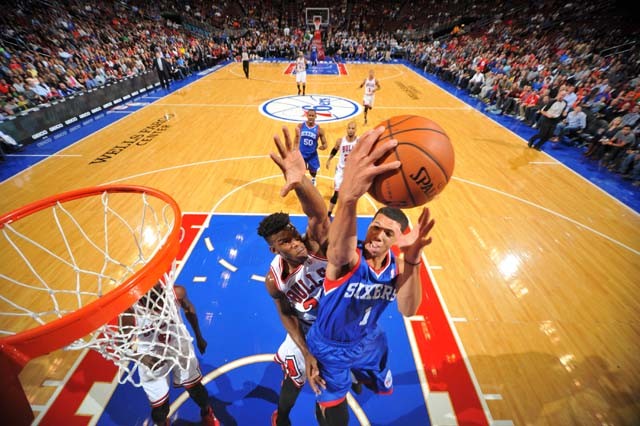
Prediction market platform Kalshi has signed its first partnership with an NBA franchise, agreeing a multi-year deal to become the official prediction market partner of the Philadelphia 76ers – the first deal between a prediction market and an NBA team.
According to Sportcal, the deal will involve the two groups developing new features for supporters, including fan voting and other interactive experiences. One of these features, called Beat the Pro, will run throughout the season as a virtual game, culminating in an on-court event where fans can compete for a $76,000 prize.

Kalshi will also become the presenting partner of the team’s digital art series, Sixers Posters, which showcases work by Philadelphia artists. They will also get branding opportunities inside the arena and across the club’s social media channels, app, mobile ticketing service and other digital platforms.
The deal comes just days after the NBA announced league-wide partnerships with Kalshi and its rival prediction market operator, Polymarket, on 26 October. Both companies were named the league’s preferred prediction market exchanges.
Those partnerships allow Kalshi and Polymarket to use NBA data, statistics and intellectual property, including team logos and imagery. In return, the league will have oversight of which NBA-related contracts can be offered, and league and team personnel are barred from trading on NBA events.

The exchanges have also committed to sharing information with the NBA during investigations into suspicious trading. The league also signed a memorandum of understanding (MOU) with the Commodity Futures Trading Commission (CFTC) to support regulatory oversight of the arrangements.
The NBA joins several other major leagues, including the NHL, MLB and MLS, in reaching deals with prediction market operators, with the NFL the sole standout. The NFL has been open about its hesitance towards prediction markets in recent months.
On 8 October, the NFL filed an amicus brief with the Supreme Court in New Jersey’s case against Kalshi, arguing that sports-event contracts are gambling that should be subject to state gambling laws, and that they do not constitute ‘swaps’ and therefore should not fall under the CFTC’s exclusive jurisdiction.

The next day, NBA Commissioner Adam Silver told CNBC that although he agreed with the NFL that prediction market traders should be at least 21 and wanted access to trading data to help detect insider trading and manipulation, he did not share the NFL’s support for state regulation, saying that “a consistent policy nationally” would be in the NBA’s “best interest”.
Charlotte Capewell brings her passion for storytelling and expertise in writing, researching, and the gambling industry to every article she writes. Her specialties include the US gambling industry, regulator legislation, igaming, and more.

Dig Deeper
Related stories
 2026/10/27: NBA partners with Kalshi and Polymarket as Preferred Prediction Market Exchanges, signs MOU with CFTC
 2026/08/19: Fanatics strikes deal with NFL to become its official sportsbook
 2025/08/21: Aristocrat Leisure, NFL combine for free-to-play NFL Super Bowl Slots social casino game
 2026/10/13: NBA wants prediction market data to monitor insider trading activity
2026/10/27: NBA partners with Kalshi and Polymarket as Preferred Prediction Market Exchanges, signs MOU with CFTC
2026/08/19: Fanatics strikes deal with NFL to become its official sportsbook
2025/08/21: Aristocrat Leisure, NFL combine for free-to-play NFL Super Bowl Slots social casino game
2026/10/13: NBA wants prediction market data to monitor insider trading activity
The Backstory
A team deal built on a leaguewide shift
The Philadelphia 76ers’ partnership with Kalshi marks a new stage in the rapid convergence of professional sports, betting-adjacent products and federally regulated prediction markets. The deal is significant not only because it is Kalshi’s first with an NBA franchise, but because it follows almost immediately after the league moved to create a formal structure for prediction-market activity tied to its games.
That sequencing matters. The 76ers agreement did not emerge in isolation. It came days after the NBA named Kalshi and Polymarket its preferred prediction market exchanges, granting the companies access to league intellectual property, data and marketing opportunities under a framework the NBA said was designed to manage integrity risks. The franchise-level partnership extends that strategy from league office policy into team-level fan engagement, with Kalshi branding, digital activations and arena visibility tied to one of the league’s most visible clubs.
For the NBA, the move reflects a calculated attempt to shape a category that is already expanding rather than wait for courts, regulators or state lawmakers to define the limits. For Kalshi, it provides mainstream sports legitimacy at a moment when prediction markets are under legal and political pressure.
NBA chose cooperation over distance
The league’s broader agreement with Kalshi and Polymarket provided the foundation for the 76ers deal. In announcing that arrangement, the NBA said the exchanges would be subject to limits on permissible markets, prohibitions on trading by league and team personnel and information-sharing duties tied to suspicious activity. The league also signed a memorandum of understanding with the Commodity Futures Trading Commission, underscoring its preference for a national oversight model.
That approach put the NBA in a different position from parts of the sports and gaming establishment. State regulators, tribal gaming groups and sportsbook operators have questioned whether sports-event contracts offered on prediction markets should be allowed to operate under federal commodities regulation rather than state gambling laws. The NBA, however, moved to work with the federally regulated platforms while seeking data access and market controls.
The framework also gave Kalshi and Polymarket rights to official NBA data through Sportradar, along with the ability to use league logos and other intellectual property in authorized contexts. Those assets are central to the 76ers deal because team-level activations depend on the ability to present prediction-market products as official, sanctioned extensions of the fan experience rather than unofficial betting-like offerings outside the league’s orbit.
The NBA also expanded its DraftKings relationship to include prediction markets and national promotion, signaling that it does not view the category as separate from its existing betting ecosystem. Instead, the league is building a tiered commercial structure in which sportsbooks, data suppliers and prediction exchanges each have a role.
Integrity concerns shaped the commercial terms
The 76ers partnership arrives against a backdrop of heightened concern about betting manipulation, inside information and player harassment. The NBA has spent the past year tightening restrictions on betting markets it considers vulnerable, particularly wagers involving low-volume player actions or outcomes that could be influenced by limited participation.
In a recent policy shift, the league barred partner sportsbooks from offering several categories of wagers, including same-player parlays built around multiple unders, unders on players expected to play fewer than 12 minutes, first-event markets and bets tied to whether a player will miss a specific shot. Those restrictions built on earlier limits covering two-way players, 10-day contracts, turnovers, fouls and missed free throws.
The logic behind those rules now carries into prediction markets. The NBA has made clear that it sees prediction contracts and sports wagers as raising many of the same integrity issues, even if they sit in different regulatory systems. Commissioner Adam Silver has said the league wants both access to trading data and control over markets, particularly to detect insider trading or manipulation before it damages public trust.
That stance followed federal cases involving former and current NBA figures accused of supplying inside information to bettors or participating in illegal gambling schemes. Those allegations sharpened the league’s argument that official partnerships can offer more oversight than prohibition or passive observation. By bringing Kalshi into a formal team partnership, the NBA and the 76ers are betting that commercial integration can be paired with monitoring obligations and defined guardrails.
The NFL remains the counterweight
The NBA’s posture contrasts sharply with the NFL’s caution. While the NFL has embraced regulated sports betting and licensed gaming products, it has been more resistant to prediction markets. The league filed an amicus brief with the Supreme Court in New Jersey’s case against Kalshi, arguing that sports-event contracts are gambling and should be governed by state gambling laws rather than the CFTC’s exclusive jurisdiction.
That split highlights a core question facing U.S. sports: whether prediction markets are financial instruments, gambling products or a hybrid category requiring a new regulatory settlement. The NFL’s position favors state-level gambling oversight and age restrictions consistent with sports betting. The NBA agrees on some safeguards, including a higher minimum age for traders, but has argued that a consistent national policy is preferable for leagues operating across all states.
The NFL’s commercial strategy shows that its caution is specific to prediction markets, not gaming overall. The league recently signed Fanatics as an official sportsbook partner, continuing a model in which licensed operators pay for league rights, media exposure and access to official data. That agreement followed the expiration of prior deals with FanDuel, DraftKings and Caesars Sportsbook and was tied to the value of official NFL data supplied through Genius Sports.
The NFL also has moved deeper into gaming entertainment through non-wagering products. Aristocrat Leisure’s Product Madness launched an NFL-licensed free-to-play social casino game, extending the league’s brands into slot-style mobile entertainment without real-money wagering. Together, those moves show a league comfortable monetizing gaming engagement but unwilling, for now, to accept prediction markets as merely another licensed channel.
Fan engagement is the strategic prize
For the 76ers, the Kalshi agreement is as much about digital fan interaction as it is about the regulatory debate. The planned activations include fan voting, interactive features and a season-long virtual game called Beat the Pro, culminating in an on-court event with a $76,000 prize. Kalshi also becomes presenting partner of the Sixers Posters digital art series, which showcases Philadelphia artists.
Those elements are designed to make prediction-market branding feel less like a financial exchange and more like part of the entertainment layer around the team. That mirrors a broader sports-industry trend: leagues and franchises are seeking products that increase daily fan engagement beyond live broadcasts. Sportsbooks, fantasy games, free-to-play contests, social casino apps and prediction markets all compete for that same attention.
The difference is that prediction markets remain legally unsettled. Kalshi’s regulatory status under the CFTC gives it a path to operate nationally in a way sportsbooks cannot, but that is precisely what opponents challenge. If courts or regulators narrow that authority, the commercial value of league and team partnerships could change quickly. If Kalshi prevails, the 76ers deal could become an early template for franchise-level integrations across major sports.
The stakes therefore extend beyond one NBA team. The partnership tests whether a prediction-market operator can move from courtrooms and regulatory filings into arenas, apps and team content without triggering the same backlash that has followed some sports betting expansion. It also tests the NBA’s thesis that official partnerships, data-sharing and market restrictions can mitigate integrity risks better than keeping the category at arm’s length.
A first mover with unresolved risks
The 76ers are now the first NBA team attached directly to a prediction market, but they are operating inside a framework built by the league to contain risk. Kalshi receives visibility and credibility. The team gains a new sponsor in a high-growth category. The NBA gains a laboratory for how prediction markets may be presented to fans at the franchise level.
What remains unresolved is whether regulators, courts and rival leagues will accept the NBA’s preferred model. The CFTC memorandum gives the league a federal partner for information sharing, but it does not settle the broader legal dispute over whether sports contracts should be treated like swaps or wagers. Nor does it eliminate concerns from state gaming regulators and tribal operators that prediction markets may bypass established gambling rules.
That uncertainty is central to the deal’s importance. The 76ers partnership is not just another sponsorship. It is an early commercial test of a market category that could reshape how fans engage with sports outcomes, how leagues police inside information and how betting-adjacent products are regulated in the United States.
