


ICE: Paysafe’s Zak Cutler prepares the ground for greater crypto adoption over next two years

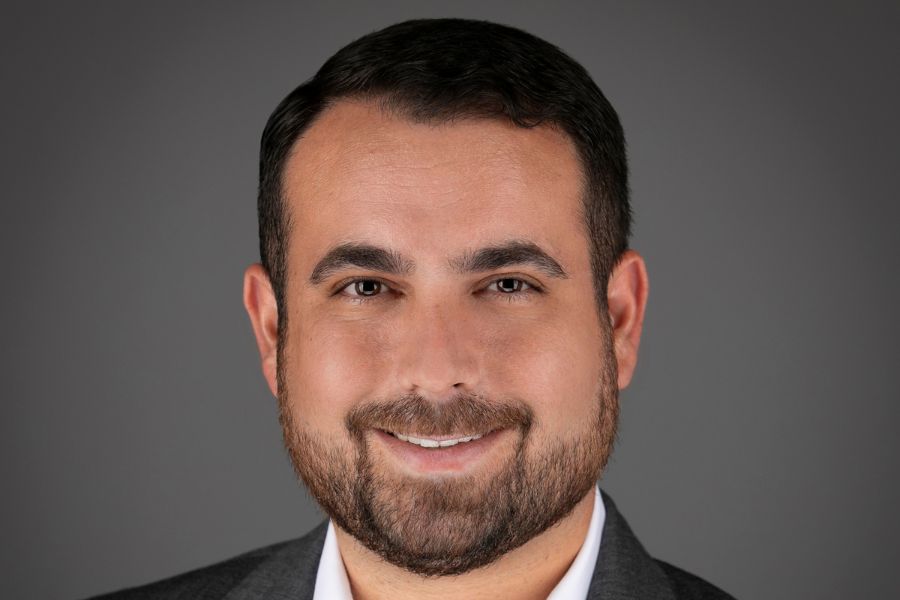
Paysafe president of global gaming Zak Cutler has said the business is expecting a large-scale shift towards greater crypto adoption by regulated operators over the next 12 to 24 months.
Reflecting on day one at ICE 2026 in Barcelona yesterday, Cutler said conversations with operators have revealed that they all have their “own unique set of challenges” when it comes to payments, but one area they are universally preparing for is the integration of crypto payment methods.

Wider crypto adoption is inevitable
While crypto is largely the preserve of the offshore operators at present, Cutler told COMPLETE iGAMING that integrating crypto payment methods into major regulated brands is inevitable as demand grows among gamblers.
“There is a huge one-to-one relationship between those that have crypto balances and those that like to gamble. What that means for the regulated areas is that there is no choice but to convert that demand into licensed operators. So, we believe that’s coming. I believe it’s coming, and we will be prepared for it,” he said, adding that he expected that shift to happen over the next 12 to 24 months.

Elsewhere, Paysafe has been preparing for the boom in gambling activity that will be generated by the World Cup later this year. Research conducted by the payments supplier estimates that 60% of World Cup fans plan to bet online, while 19% of global consumers with an interest in following the tournament plan to place their first ever online bet during it.
Making the most of the World Cup
Cutler, who joined Paysafe as Chief Executive of North American iGaming in 2021 after stints at DraftKings, Jackpocket, and other high-profile igaming brands, said that for operators that want to take advantage of this surge in volume, it’s critical to have “localized payments through one platform.”
He emphasized that while, ecash for example, might only account for a small percentage of overall transactions, that deposit volume will grow significantly during a major tournament, making it as important as any other payment method.

“For us, the name of the game is literally getting everything integrated into one platform. And then, of course, making sure our core products, like PaySafeCard and Skrill are continuing to get millions and millions of users through our consumer business,” he said.
“The thing that connects us to our merchants – we probably have more connections into global merchants than anyone in the gambling business – is the fact that we have seven million active users that we own that they want to tap into. So, we’re balancing this act of making sure we have valuable consumers for them to tap into, but also making sure we have all these APMs, from Apple Pay to debit and credit cards to PayPal, so that there’s nowhere else you need to go.”
Bettors prioritize trust, localization and rapid payouts
Paysafe’s World Cup research found that 38% players cited brand trust as crucial to why they choose a sportsbook, 33% said rapid payouts are the most important factor, being prioritized over odds, promos, UX, and sports markets.
Moreover, in some markets like Peru, bettors consider cashing-out quickly (38%) even more important than a sportsbook’s reputation (34%), according to Paysafe’s study.
Payment localization came across as a key consideration in all markets, with 19% favoring a local payment method. This was more the case in markets with strong local payment brands like Brazil, where 48% of bettors said the central bank’s Pix instant payment tool would be their go-to choice.
With the tournament lasting five weeks, operators will be focused on keeping new customers onboard beyond the competition. Paysafe found that 88% of global bettors would switch sportsbooks after a bad experience, with US and Ecuadorean players having an even higher propensity to switch, both at 93%.

Verticals:
Sectors:
Dig Deeper
Related stories


The Backstory
Why the payments pivot is happening now
The push for broader crypto acceptance in regulated betting doesn’t exist in a vacuum. Operators and their payment partners have been reshaping tech stacks to capture surging, event‑driven demand while steering customers toward legal markets. During this year’s Super Bowl, for instance, engagement on licensed sportsbooks jumped notably in states that enforced against offshore sites, according to geolocation firm GeoComply. The company reported a 14% increase in active player accounts across clients and said growth was twice as high in states that had taken action against illegal operators. That pattern, outlined in GeoComply’s Super Bowl analysis, underscores a core dynamic: as enforcement tightens, payment providers servicing regulated books gain leverage to innovate and consolidate customer flows. Crypto’s future in regulated gaming will ride that same channel shift.
Payments companies are also using global tournaments and seasonal peaks to stress‑test scale and new rails. Research from the industry has consistently shown that bettors prize trust, fast payouts and localized options when choosing a sportsbook. That mix of preferences is pushing operators to aggregate more methods on a single platform and to partner with vendors that can quickly activate local wallets, instant bank transfers and alternative payments in multiple markets. The bet is straightforward: once customers are inside the regulated ecosystem and can fund and cash out seamlessly, they are less likely to drift to gray markets that already court crypto users.
Latin America as the proving ground
No region illustrates this transition more than Latin America, where regulatory frameworks are maturing and digital wallets are already embedded in daily commerce. Paysafe has been expanding in the region, securing a Payment Institution license from Brazil’s central bank that lets it offer Skrill, Neteller and SafetyPay gateways, including instant transfers via Pix. The license, detailed in Paysafe’s Brazil entry, positions the company to service an igaming market expected to reach substantial turnover by 2028. For operators, tapping Pix’s ubiquity is a practical bridge between cash‑heavy habits and regulated digital betting, and it lays groundwork for future crypto features once rules and demand align.
The company is following a similar playbook in Peru, where it turned its eCash brand PagoEfectivo into a full digital wallet. The product launch, reported in Paysafe’s Peru expansion, adds instant loading, P2P transfers and code‑based payments. This builds on consumer familiarity with PagoEfectivo in ecommerce and igaming and gives operators a localized wallet that can speed payouts and reduce friction. In markets like Brazil and Peru, the ability to switch on trusted local rails now and evolve to new methods later is central to converting first‑time bettors who arrive during big events into long‑term customers.
The regional strategy also serves a broader competitive need. As regulated operators catch up to offshore sites on payment choice and speed, they can pitch regulated crypto rails as a safer on‑ramp for users who already hold digital assets. Crypto implementation will depend on licensing, KYC and AML guardrails, but the commercial logic mirrors what’s happening with Pix and local wallets: meet users where they are, then migrate them into compliant, high‑trust channels.
Portfolio cleanup to chase regulated growth
To support this pivot, payments companies are pruning noncore assets and refocusing on verticals with outsized upside. Paysafe moved to sell its direct marketing payment processing business to Kort Payments, led by the company’s former chief executive Joel Leonoff. The divestiture, disclosed alongside preliminary results and covered in the sale announcement, is framed as a resource reallocation toward larger growth opportunities and a milestone in repositioning the merchant solutions segment. The financials reflect a mixed picture: modest revenue gains paired with pressure on adjusted EBITDA as the company invests for scale in targeted markets.
Trimming lower‑synergy lines and doubling down on gaming, ecommerce and travel is consistent with a strategy to be the default switchboard for operators. If sportsbooks demand unified back ends that can toggle between cards, instant bank transfers, wallets and—eventually—crypto, payments providers need to sharpen offerings around reliability, localization and compliance. The same infrastructure that reduces chargebacks and speeds payouts today will be critical if and when crypto becomes a standard checkout option within licensed environments.
Enforcement is nudging users to licensed platforms
Consumer migration patterns strengthen the case for this focus. GeoComply found that states issuing cease‑and‑desist orders against offshore books saw faster growth in legal sportsbook engagement during Super Bowl weekend than states that did not. The report on enforcement and engagement reinforces a feedback loop: enforcement drives users to regulated platforms, which in turn invest in better user experiences, including payment choice and payout speed. That investment then helps retain users through the offseason when promotional intensity wanes.
As that loop tightens, crypto’s path into regulated channels becomes more viable. Offshore operators have long used digital assets as a workaround for card declines and as a marketing lure. If licensed operators can support compliant crypto rails alongside mainstream methods and local instant transfers, they can blunt that advantage while maintaining AML and responsible gaming controls. The result could be a more level playing field where payments are a competitive differentiator, not a barrier.
Rules are catching up, fast
Policy shifts are also accelerating. Belize is moving to consolidate oversight across gaming and lotteries under a single commission, with legislators citing the need to modernize rules for online betting and virtual gaming that were not contemplated in older statutes. The proposal, summarized in coverage of Belize’s regulatory overhaul, would amalgamate existing acts into a unified law aimed at transparency and harm reduction, while opposition voices warn about unchecked authority and market concentration. The draft framework, the Gaming, Lotteries, and Control Bill 2025, signals how smaller markets are updating regimes to accommodate modern products and payment flows.
Brazil’s pragmatic licensing of payment institutions, coupled with Peru’s wallet proliferation, illustrates how regulators can encourage formalization without stifling innovation. By blessing instant bank transfers like Pix and permitting global providers to operate under local oversight, authorities create a clear lane for operators to move customers off cash and into traceable, auditable systems. That approach can extend to crypto once frameworks for custody, travel rule compliance and consumer protection are fully aligned.
The stakes are straightforward. Operators want to tap new demand during tentpole events and keep those customers through superior payments, faster withdrawals and trusted brands. Payments providers want to be the connective tissue that translates local habits into global standards. Regulators want channelization to legal markets with strong safeguards. As enforcement actions push users into the legal ecosystem and as markets like Brazil and Peru scale local rails, the groundwork is being laid for regulated sportsbooks to match offshore rivals on payment choice, including crypto, without sacrificing compliance. The next two years will test how quickly that alignment can translate from road maps into checkouts.
