


PAGCOR’s Alejandro Tengco urges industry to come together as impact of Middle East conflict makes its mark

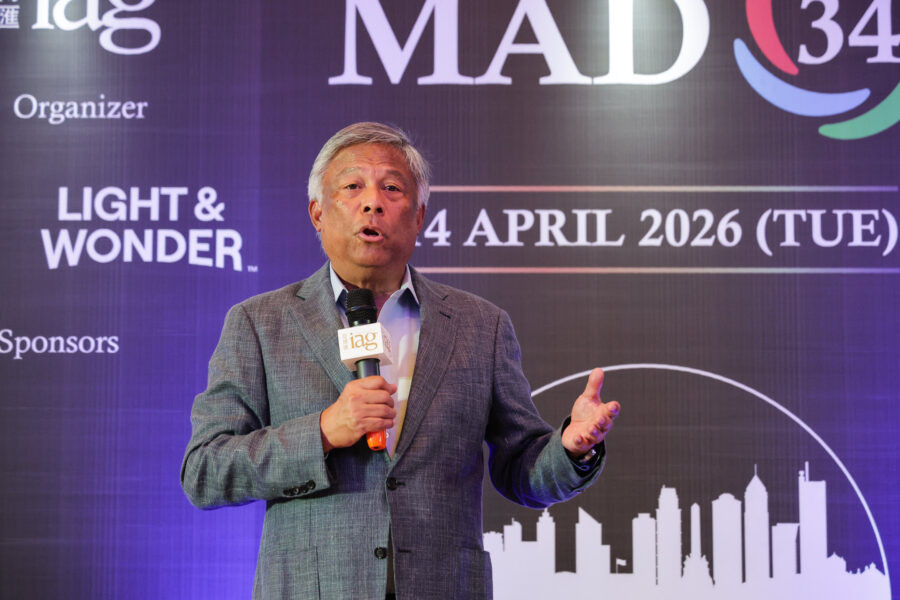
The ongoing conflict in the Middle East is already impacting the gaming industry in the Philippines and further afield, according to PAGCOR Chairman and Chief Executive Alejandro Tengco.
However, the head of the Philippine gaming regulator also believes it has never been more important for the industry to come together as one.

Tengco was speaking at Manila After Dark on Tuesday evening – a regular social networking event run by Complete iGaming’s sister company Inside Asian Gaming and held for the first time at LaVie Resort & Casino in Malate, Manila.
Pointing to the global impact of the Middle East conflict, which has been particularly felt in the Philippines, Tengco said, “This is not a good time for everyone. Gaming jurisdictions globally are feeling the impact of the oil crisis, and even more progressive countries like Singapore, Macau and the United States are not spared.”
However, he added, “Being together like this makes us forget, even for a while, the challenges we face. It allows us to rekindle relationships – whether as clients, suppliers or partners – and that is important, especially in difficult times.

“It is important that we come together, that we continue these conversations, and that we support each other as an industry.”
PAGCOR will, Tengco added, play its part. “At PAGCOR, we will adjust what we need to do. We have to be in tune with the times and ensure that responsible gaming remains at the center of what we do.”
First held in 2019, IAG’s MAD series of events – typically held six times a year in Macau and Manila – is a regular industry networking event organized by Inside Asian Gaming, bringing together key industry decision-makers with the people they want to meet in a relaxed and friendly environment. The event rotates around the region’s best hospitality venues – some well-known and some hidden gems.

Dig Deeper
Related stories
 2026/06/26: Into the unknown with Light & Wonder’s New Markets guru
 2026/06/04: Philippine gaming revenue forecast to fall 19%
 2025/09/08: Chairman Tengco: ‘PAGCOR is for stricter regulation and not for a total ban’
2025/02/19: PAGCOR to support special class companies providing outsourced work to international gaming firms
2025/09/08: Chairman Tengco: ‘PAGCOR is for stricter regulation and not for a total ban’
2025/02/19: PAGCOR to support special class companies providing outsourced work to international gaming firms
2026/06/26: Into the unknown with Light & Wonder’s New Markets guru
2026/06/04: Philippine gaming revenue forecast to fall 19%
2025/09/08: Chairman Tengco: ‘PAGCOR is for stricter regulation and not for a total ban’
2025/02/19: PAGCOR to support special class companies providing outsourced work to international gaming firms
The Backstory
An industry plea amid external shocks
PAGCOR Chairman Alejandro Tengco’s call for unity comes as the Philippines’ gaming sector navigates a convergence of pressures: geopolitical tensions that threaten energy costs and travel, a domestic policy push for tighter oversight and a payments clampdown that has redrawn the online revenue map. The appeal, delivered at an industry networking event in Manila, lands after a year in which regulatory pivots and operational headwinds reshaped how money flows through licensed e-gaming platforms and how operators prove they know their customers.
Behind the public message is a practical objective. PAGCOR is signaling it will adapt rules and coordination to keep legal operators viable while raising consumer protections. The regulator is also leaning on enforcement partnerships and policy advocacy to limit leakage to illegal sites. The stakes are significant: online play has overtaken land-based revenue contributions, but its growth has also triggered scrutiny in Congress, at the central bank and among influential civil society voices. The backstory to Tengco’s remarks shows how these strands have tightened around the industry in quick succession.
Regulatory screws tighten at home
After months of Senate hearings into the surge in domestic e-gaming, PAGCOR moved to harden guardrails. The regulator told lawmakers it is studying an expanded broadcast ad blackout and has already reinforced know-your-customer rules that require identity verification before deposits. New players must provide a government ID, contact details and a real-time selfie match, with illegal promotions flagged to social media platforms. The agency also previewed a broader safer gaming push, including a 24/7 helpline, enhanced self-exclusion and treatment referrals. These steps, detailed in PAGCOR tightens regulations for Philippine online gambling industry, aim to close gaps exposed by pandemic-era digital adoption and the rapid scaling of e-games.
Legislators have pressed for more. A bill backed by Sen. Sherwin Gatchalian seeks higher minimum cash-in thresholds, a higher gambling age and a ban on e-wallet integrations. Industry supplier DFNN urged lawmakers to calibrate changes to avoid pushing casual players to unlicensed offshore sites, arguing for targeted protections that reflect operational differences across platforms and retail outlets. Its warning, in DFNN urges Philippines to employ “proportionality and precision” in online gambling restrictions, underscores a core tension: aggressive restrictions can reduce harm, but blunt instruments risk shrinking the regulated channel and weakening safeguards where they matter most.
The payments squeeze and its ripple effects
Nothing has reshaped the online landscape more than the central bank’s decision last August to delink e-wallets from gaming platforms. The Bangko Sentral ng Pilipinas ordered providers to remove gambling payment links within 48 hours to curb unauthorized transactions and strengthen monitoring. As Inside Asian Gaming reported, critics argued that cutting direct payment ties made it harder for players to identify licensed sites and easier for illegal markets to poach traffic.
Revenue data bore out the shock. PAGCOR later flagged a marked slowdown in e-games income after delinking, while still notching a record annual online GGR on the strength of pre-order momentum. The regulator has since shifted from reaction to persuasion. In ICE: PAGCOR preparing position paper outlining case for central bank to restore online gaming links to e-wallets, Tengco said the agency is drafting a submission to the BSP laying out new safeguards and arguing that restoring links for licensed operators would bring players back under visible, auditable rails. The aim is a compromise that preserves traceability and consumer protections without handing market share to gray operators.
Meanwhile, PAGCOR has tried to starve the illegal trade. It allocated PHP50 million to bolster National Bureau of Investigation operations against unlawful gaming, including costs tied to raids and detainees. That commitment, described in PAGCOR adds PHP50 million to illegal gambling crackdown, came as the regulator acknowledged a 40% to 50% income drop linked to delinking. Enforcement is meant to complement the policy case for relinking by narrowing off-ramps to the black market.
Debate over bans versus better oversight
As political pressure mounted, Tengco sharpened his public stance: PAGCOR supports stricter regulation, not prohibition. In Chairman Tengco: ‘PAGCOR is for stricter regulation and not for a total ban’, he warned that a blanket ban would erase billions in government revenue, cut thousands of jobs and leave consumers exposed to illegal operators. He also emphasized the separation of PAGCOR’s regulatory and operating functions to address conflicts of interest and improve investor confidence.
The message calibrated to two audiences. For policymakers, it framed online gaming as a structural shift that regulation can channel but not reverse. For the industry, it signaled that compliance expectations will keep rising, from KYC and ad standards to harm-minimization tools. The balancing act—maintaining economic contributions while tightening controls—runs through the agency’s strategy and Tengco’s call for unity against reputational and operational risks.
Reforms to professionalize the market
PAGCOR’s agenda also targets market structure. The regulator has begun licensing more B2B providers, including content and marketing firms, to put the supply chain on firmer regulatory footing. It has rolled out a new minimum guaranteed fee framework for licensed online operators to deter revenue misreporting and encourage consolidation. Inside Asian Gaming outlined the policy’s intent and likely effects in PAGCOR’s new minimum guaranteed fee to solve misdeclaring revenues, lead to market consolidation. The move dovetails with PAGCOR’s broader push, noted in its ICE Barcelona comments, to align with international standards and clarify licensing tiers across the ecosystem.
Taken together—B2B licensure, minimum fee floors, stricter KYC, tighter ad rules and an expanded safer gaming program—the reforms aim to raise the cost of noncompliance and reduce the arbitrage that tempts operators to cut corners. They also set a compliance baseline that PAGCOR can present to the central bank as evidence the regulated corridor is safer than the alternatives.
What’s at stake now
The external environment remains volatile. Higher oil prices from Middle East tensions can sap discretionary spending and raise operating costs, while travel disruptions weigh on regional gaming hubs. At home, the delinking order continues to squeeze payments convenience for legal platforms, and political pressure has not fully abated. Against that backdrop, industry “togetherness” is less a platitude than a requirement: coordinated compliance, data sharing on problem gambling indicators and unified messaging around consumer protection are essential to sustain the regulated market’s legitimacy.
The next inflection points are clear. If the BSP accepts a controlled restoration of e-wallet links for licensed operators, legal platforms could regain lost ground and visibility. If lawmakers calibrate restrictions with the proportionality urged by market participants such as DFNN, regulated operators can retain casual players who might otherwise drift to unlicensed sites. And if PAGCOR’s enforcement support shrinks the illegal channel while new B2B and fee policies professionalize the supply side, the industry could emerge more resilient.
Tengco’s remarks cast this as a collective project with shared risk. The payoff would be a stable revenue base for the state, better safeguards for consumers and a clearer runway for compliant operators. The cost of failure—fragmentation, offshoring of play and reputational damage—would be borne across the ecosystem. That is the context for the chairman’s appeal, and the test that now confronts the sector.
