


North Carolina lawmakers consider raising taxes for gambling operators

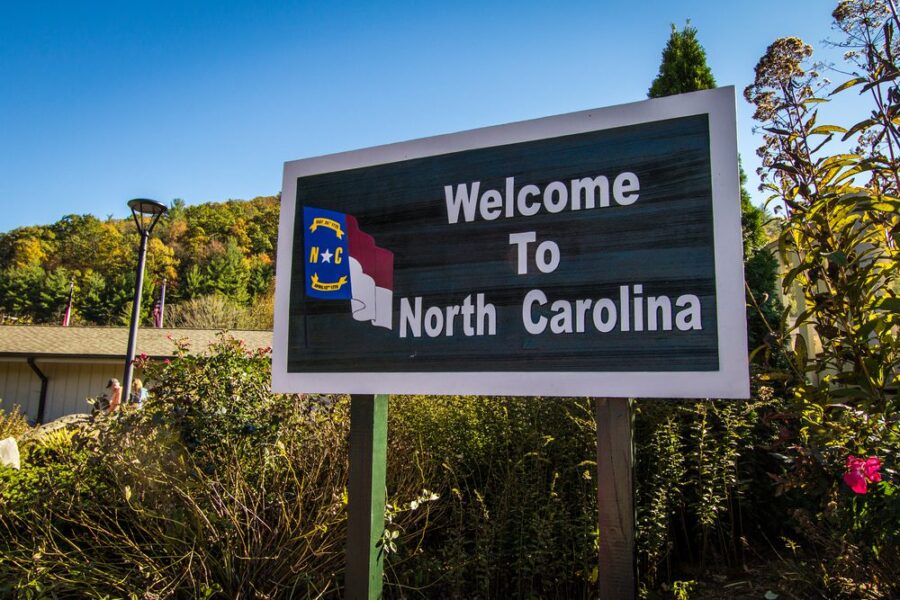
North Carolina lawmakers are considering raising taxes on sports betting operators as negotiations over the state’s next budget continue.
According to WRAL News, the state wants to generate more revenue to help pay for spending priorities. Last week, House budget writer Donny Lambeth confirmed that both legislative chambers have agreed to raise the sports betting tax, but refrained from going into any specifics.

Sports betting has become a major source of tax income since it was legalized in North Carolina in March 2024. Licensed operators pay an 18% tax. Since 2024, the state has collected more than US$287 million in taxes, far exceeding initial estimations. Bettors also have wagered more than US$15.3 billion during the same period.
North Carolina has a fairly average sports betting tax compared to neighboring states. Tennessee taxes operators at 19.7%, while New York has implemented a 51% tax.
Sources have told WRAL that lawmakers are looking to increase their tax rate to between 20% and 30%, with an agreement reached last month to focus on the lower end of that range. Those figures can change as the state continues to hash out its spending budget or if they face industry pushback.

This year, North Carolina regulators granted regulatory approval to sports wagering provider Beter to launch in the state.
Charlotte Capewell brings her passion for storytelling and expertise in writing, researching, and the gambling industry to every article she writes. Her specialties include the US gambling industry, regulator legislation, igaming, and more.

Dig Deeper
Related stories
 2026/06/22: North Carolina increases tax rate on sports betting from 18% to 23%
 2025/04/15: North Carolina proposes doubling online sports betting tax
 2025/03/12: North Carolina State Lottery Commission releases report to mark one year of online sports betting
 2025/06/02: Illinois tax increase surprises analysts
2026/06/22: North Carolina increases tax rate on sports betting from 18% to 23%
2025/04/15: North Carolina proposes doubling online sports betting tax
2025/03/12: North Carolina State Lottery Commission releases report to mark one year of online sports betting
2025/06/02: Illinois tax increase surprises analysts
The Backstory
A fast-growing market changes the budget math
North Carolina’s latest debate over sports betting taxes is rooted in a simple fiscal reality: the market has grown faster than lawmakers initially expected. Since online sports betting launched in March 2024, the state has collected more than $287 million in taxes from operators and bettors have wagered more than $15.3 billion. Those figures have made sports wagering a recurring part of budget discussions less than two years after legalization.
The current rate of 18% put North Carolina near the middle of the regional pack when the market opened. Tennessee taxes operators at 19.7%, while New York’s 51% rate remains the most aggressive major benchmark in the country. But North Carolina’s early returns have altered the political calculation. What began as a new regulated entertainment market has become a meaningful revenue source at a time when lawmakers are weighing broader spending priorities.
That is why the tax discussion has moved from whether the state should revisit the rate to how far it should go. WRAL News reported that budget negotiators have agreed to raise the tax, though the final figure remains unsettled. Sources told the outlet lawmakers have discussed a range between 20% and 30%, with talks focused on the lower end. The outcome will determine whether North Carolina preserves its current operator-friendly position or moves closer to higher-tax states that use betting revenue to fund public programs.
The 36% proposal reset expectations
The groundwork for a larger increase was laid earlier this year, when Senate Republicans floated a budget plan that would double the tax on online sports betting operators from 18% to 36%. That proposal, detailed in North Carolina’s plan to double the sports betting tax, would have placed the state alongside Pennsylvania at 36% and behind only New York among the nation’s highest-taxed sports betting markets.
The Senate plan was not just a tax measure. It was tied to a broader effort to direct more money to college athletics, including roughly $11.5 million each for the University of North Carolina and North Carolina State. Smaller University of North Carolina system schools would receive tiered payments, giving lawmakers a political argument that the success of sports betting should be shared more widely across public campuses.
That proposal also included a provision requiring UNC and N.C. State to play basketball games against other UNC system schools, underscoring how sports betting revenue had become linked to state athletics policy. Senate leader Phil Berger framed the approach as a way to extend the benefits of the wagering program to more campuses. The idea drew attention because it connected a fast-growing gambling tax base to one of the state’s most visible public institutions: college sports.
The current talks appear less aggressive than the 36% plan, but that earlier proposal shifted the terms of the debate. Once lawmakers publicly considered doubling the rate, a more modest increase to the 20% to 30% range began to look like a compromise rather than a dramatic change.
Operator pushback meets public revenue demands
Any increase will test how much additional pressure operators such as DraftKings and FanDuel are willing to absorb in North Carolina. Sportsbooks often argue that higher tax rates can reduce promotional spending, limit market competition and make it harder to compete with unregulated offshore sites. Lawmakers, however, have a different incentive: capturing more revenue from a product that has already proved popular.
North Carolina’s position is complicated by the fact that it is no longer a speculative market. The state has hard data showing substantial betting volume, strong tax receipts and continued consumer participation. March 2025, boosted by the NCAA men’s basketball tournament and ongoing NBA and NHL seasons, produced more than $667 million in wagers. That handle helped fuel separate legislative concerns about the types of bets being offered, particularly those tied to college athletes.
The revenue performance also weakens the industry’s argument that modestly higher taxes would damage the market. A move from 18% to the low 20s would keep North Carolina close to Tennessee and well below New York. Even a rate closer to 30% would leave it below Pennsylvania’s 36% level, though still high enough to affect operators’ calculations on promotions, pricing and marketing.
The state also continues to expand its regulated ecosystem. Regulators this year granted approval to sports wagering provider Beter to launch in North Carolina, evidence that suppliers still see opportunity in the market. The tax decision could influence whether that momentum continues or whether operators and vendors reassess the long-term profitability of the state.
College sports exposure creates a second front
The tax debate is unfolding alongside scrutiny of college prop betting, an issue that has gained attention nationally and in North Carolina. In April, lawmakers introduced a bipartisan bill to ban college prop bets at commercial online sportsbooks. The measure would bar wagers on individual actions, statistics or occurrences that do not directly determine the final outcome of a game.
The proposal reflects concern that college athletes are uniquely exposed to harassment, manipulation and pressure when bettors can wager on individual performances. NCAA President Charlie Baker called for a nationwide ban on college prop betting in March 2024, and several states, including Ohio, Maryland, New York, Pennsylvania and Louisiana, have already acted. North Carolina’s bill would align the state with that trend if enacted.
This matters for the tax discussion because college sports are both a driver of betting activity and a proposed beneficiary of tax revenue. Lawmakers are trying to capture money from wagering on sports while also limiting parts of the market they view as risky for athletes and institutions. That balancing act is particularly delicate in North Carolina, where college basketball is a central part of the sports economy.
The state’s March handle showed how tournament betting can lift the market. But it also highlighted why lawmakers may be reluctant to leave all betting categories untouched. If a tax increase is paired, formally or informally, with tighter rules on college props, North Carolina would be signaling that market growth will come with stronger oversight.
Problem gambling data adds pressure for oversight
Public health concerns are also shaping the backdrop. North Carolina’s Problem Gambling Helpline recently reported that sports betting surpassed the lottery as the top reason people sought help for the first time. As described in the state helpline’s latest sports betting figures, the service answered more than 8,100 calls in the latest fiscal year, an increase of more than 11% from 2024.
The demographic shift is important. State officials said sports betting-related contacts tended to involve younger adults, particularly people ages 18 to 34, and that problems emerged more quickly than with other forms of gambling. Half of sports betting contacts came from concerned parents, compared with 25% of non-sports betting contacts coming from spouses.
Those numbers give lawmakers another rationale for raising taxes: a larger market may require more funding for treatment, education and enforcement. When sports betting launched, lawmakers allocated $2 million more to the Department of Health and Human Services, while the lottery contributed $1 million annually to the helpline. As betting activity grows, policymakers may argue that operators should contribute more to the social costs associated with the product.
The trend mirrors national concerns about mobile betting’s reach among younger consumers. A TransUnion study cited by state officials found Gen Z and millennial consumers helping drive U.S. gambling growth. For North Carolina, that means the market is not only producing tax revenue. It is also creating measurable demand for support services, which could strengthen legislative support for higher operator payments.
A state-level pattern, not an isolated fight
North Carolina’s debate fits a broader national pattern in which states are revisiting gambling policy soon after launch or expansion. Nebraska lawmakers, for example, are considering a proposal to legalize online sports betting partly to capture revenue now flowing to other states or offshore operators. Supporters estimate mobile betting could generate $32 million a year for property tax relief, while opponents warn of addiction and financial harm.
Other states are tightening rules around products that resemble sports wagering. Connecticut lawmakers have examined stricter limits on prediction markets, including raising the minimum age to 21 and imposing advertising restrictions. The debate reflects regulators’ concern that event contracts tied to sports or politics can function like gambling even when marketed differently.
Together, those fights show how quickly the policy conversation has shifted. Legalization was once framed primarily around consumer demand, tax revenue and the need to displace illegal markets. Now states are asking how much revenue they should extract, which bet types should be restricted and how to address social costs that appear after mobile platforms scale.
For North Carolina, the stakes are immediate. A higher tax rate could help finance state priorities and broaden the public benefits of sports betting revenue. But going too high could invite operator resistance and reshape the market’s economics. The likely compromise will reveal how lawmakers value a young but lucrative industry: as a revenue engine to be maximized, a consumer market to be managed or both.
