
Missouri to decide on NCAA request to ban prop bets on college sports

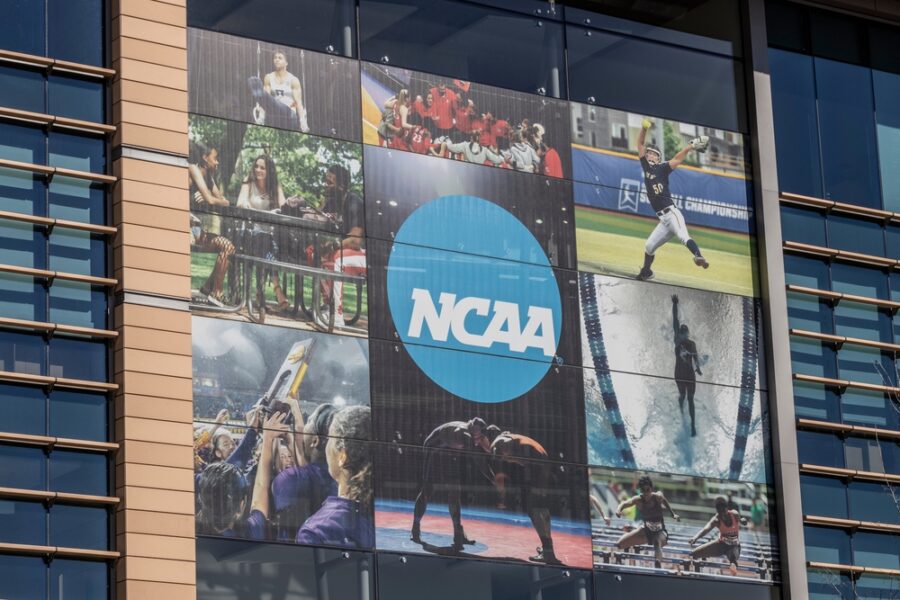
Missouri regulators are set to decide this week whether to ban certain college sports wagers, less than two months after legal sports betting began in the state.
According to FOX4, the Missouri Gaming Commission is considering proposals that would remove individual player prop bets and possibly other college markets from the list of permitted wagers.

This comes after NCAA President Charlie Baker sent a letter to Missouri last week after another federal investigation into men’s collegiate basketball.
The letter discussed how 11 student-athletes from seven schools, including in Missouri, had bet on their own games or manipulated outcomes by sharing information. The outcome led Baker to request that player props for collegiate sports be removed from sportsbooks.
While the Missouri Gaming Commission has not calculated the amount wagered on college player props, Ryan Butler, Senior Editor for Covers.com, told FOX4 that prop bets across the country were not prevalent because of the difficulty in setting lines for more than 300 Division 1 schools.

“The argument against these player prop bans is there are offshore books that exist in Missouri that will still take action and there’s no way to protect them,” Butler said. “But the argument for them is there absolutely this temptation especially with people that have access to these books that maybe US$1,000 can go along way, especially if you are the sixth man on a lower Division 1 school.”
The state will decide on 22 January whether action is needed over the regulation of prop bets.
Abi Bray brings strong researching skills to the forefront of all of her writing, whether it’s the newest slots, industry trends or the ever changing legislation across the U.S, Asia and Australia, she maintains a keen eye for detail and a passion for reporting.

Verticals:
Sectors:
Topics:
Dig Deeper
Related stories
 2026/01/16: NCAA urges a ban on prop bets after new point shaving scandal
2025/05/21: Athletes to be protected from negative prop bets, NCAA reveals
2026/01/15: NCAA President calls for CFTC suspension of college sports prediction markets
2026/01/16: NCAA urges a ban on prop bets after new point shaving scandal
2025/05/21: Athletes to be protected from negative prop bets, NCAA reveals
2026/01/15: NCAA President calls for CFTC suspension of college sports prediction markets
 2025/06/23: New Jersey college player prop ban passes Senate committee
2026/01/16: NCAA urges a ban on prop bets after new point shaving scandal
2025/05/21: Athletes to be protected from negative prop bets, NCAA reveals
2026/01/15: NCAA President calls for CFTC suspension of college sports prediction markets
2025/06/23: New Jersey college player prop ban passes Senate committee
The Backstory
Why Missouri’s decision lands at a critical moment
Missouri’s review of whether to prohibit player-specific proposition bets in college sports comes as U.S. regulators and the NCAA intensify efforts to curb markets seen as most vulnerable to manipulation and harassment. The NCAA has pressed states to strip college player props from sportsbooks, arguing those wagers heighten integrity risks and expose student-athletes to abuse. That push accelerated after federal prosecutors unveiled a sprawling bribery and point-shaving scheme implicating dozens of former Division I men’s basketball players across multiple programs.
The NCAA’s latest call to action underscores a broader shift: regulators are moving from permissive early-market experimentation toward tighter guardrails as data accumulates on betting-related threats. As Missouri weighs changes barely weeks into its legal era, it is doing so with fresh examples from other states that have either narrowed or are attempting to narrow the scope of permissible college markets. The stakes are immediate. A ban on individual college player props would alter how sportsbooks set their boards during peak events like March Madness, while regulators would need to balance integrity protections against the risk that action migrates to unregulated sites.
Scandals that hardened regulators’ resolve
Federal charges alleging a point-shaving and bribery network jolted the college sports ecosystem and gave new urgency to proposals to curtail player props. In the aftermath, NCAA President Charlie Baker asked state regulators to eliminate college player proposition wagers, tying the request to athlete safety and competitive integrity. The Association also signaled it wants stronger consequences for bettors who harass players and a formal avenue to advise regulators on market approvals. A recent overview of Baker’s campaign outlined how the NCAA is pressing for uniform restrictions as part of a multilayered integrity program tracking more than 22,000 contests each year; see the summary of the organization’s renewed lobbying in the NCAA’s push following the point-shaving case.
The crackdown has not been limited to rhetoric. As regulators and sportsbooks adjust their offerings, the NCAA has paired public pressure with contractual levers aimed at limiting the most corrosive bet types. That combined approach—policy advocacy, integrity monitoring and data-contract conditions—has created a template other leagues are likely to study as they confront similar tensions between betting engagement and game protection.
Data deals reshaped to protect athletes
Beyond regulatory appeals, the NCAA is using its data rights to constrain negative betting markets that historically correlate with abusive fan behavior. In extending its long-term agreement with Genius Sports, the Association included a clause that bars the use of NCAA data for “negative” prop bets that invite targeting of athletes for poor outcomes. Baker framed that provision as a nonnegotiable condition for data access, a shift that aligns commercial incentives with athlete welfare. The contours of the arrangement and the broader surge in online abuse—especially during marquee events—are detailed in the NCAA’s disclosure on protections against negative props.
The posture reflects two realities. First, social media pressure on college players has intensified as betting proliferates, with harassment often spiking around individual performance bets. Second, the NCAA believes it can blunt the worst incentives by making the official data feed unavailable for wagering markets that target mistakes rather than outcomes. While data restrictions do not directly ban a sportsbook from posting a market, they complicate pricing and risk management, making those offerings less attractive or feasible for regulated operators.
States moving—some faster than others
In the absence of federal legislation, states have taken uneven approaches to college props. Several have already prohibited individual player markets for collegiate events, and more are advancing bills. In New Jersey, a measure to eliminate college player prop bets cleared a Senate committee with bipartisan support and received a second reading. Sponsors cited rising harassment and integrity threats in pressing for a ban. The path forward, including timing and final votes, is laid out in the update on New Jersey’s committee action.
North Carolina’s legislature is also debating a prohibition. House Bill 828, filed with bipartisan backing, would bar wagers on individual actions or statistics that do not directly affect a game’s final outcome. The proposal followed a record handle month driven by March Madness and the NBA and NHL seasons, a reminder that the most popular betting windows often coincide with peak pressure on college athletes. Details of the bill’s definition and effective date target are in coverage of North Carolina’s proposed ban.
The NCAA has also highlighted states that already restrict college player prop bets, positioning those regimes as models others could adopt. It is a state-by-state chessboard, with momentum building but timelines and specifics differing.
The pushback: revenue, freedom and a slippery slope
Efforts to curtail prop betting are meeting resistance, particularly when proposals extend beyond college sports. In Ohio, Gov. Mike DeWine urged regulators to remove certain props after probes involving professional athletes, prompting a public rebuttal from a state lawmaker who defended the wagers as core to consumer choice and tax collections. Rep. Brian Stewart said props remain popular and significant for revenue, and he pressed for reinstating college markets even as the state maintains its current college prop ban. The statehouse split is captured in reporting on Ohio’s intrastate fight over prop bets.
The revenue argument resonates in jurisdictions where betting taxes backfill budgets. But integrity authorities counter that any short-term gains are outweighed by enforcement costs, reputational damage and the risk of driving bettors to offshore sites if regulated markets fail to set guardrails. That tradeoff—consumer demand versus integrity and athlete safety—sits at the center of the Missouri debate.
What Missouri’s choice signals for the market
If Missouri removes college player props, it would join a growing cluster of states tightening collegiate offerings after the latest federal case. Such a step would align with the NCAA’s strategy: curb the most sensitive markets through state rulemaking while leaning on official data partnerships to limit negative bet types. It would also mirror action in places like New Jersey and North Carolina, where elected officials and regulators are building formal bans into statute or rule.
A contrary decision would mark Missouri as an outlier at a moment when integrity concerns are ascendant. Regulators would likely face pressure to expand monitoring and enforcement, while sportsbooks could position the state as a differentiated market for player-centric engagement during the college basketball calendar. Either way, the call will be closely watched. Operators adjust menus state by state, and athletes, universities and integrity firms calibrate their safeguards accordingly.
The broader lesson is that college sports betting rules are no longer static. Scandals have accelerated policy cycles, and the NCAA has learned to pair public advocacy with contractual mechanisms that influence how sportsbooks construct markets. Missouri’s move will help define the next phase—whether more states converge on a baseline of restricted college player props, or whether resistance in some capitols sustains a patchwork where the same bet is legal in one state and outlawed in the next.

