


Missouri rejects NCAA push to restrict college athlete prop bets

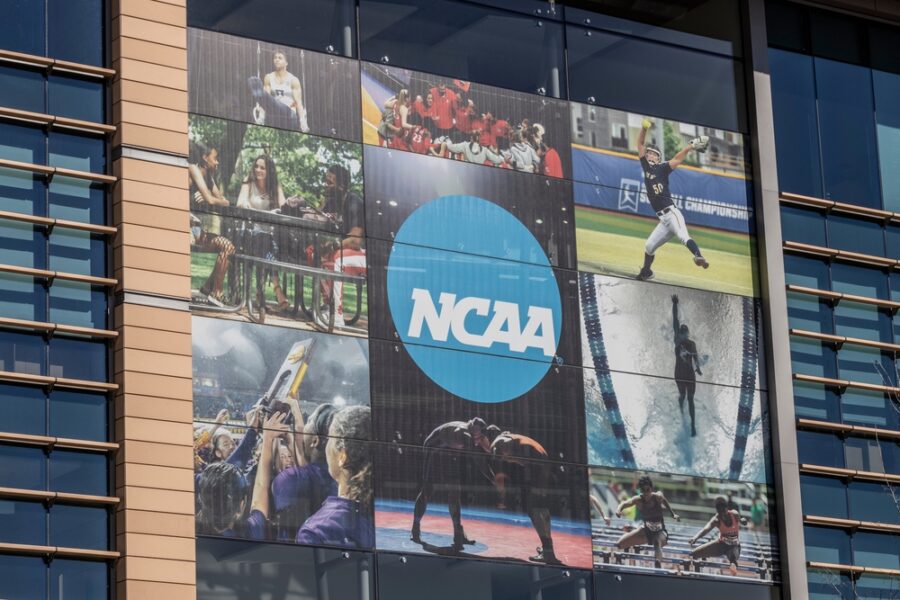
Missouri’s gambling regulators have refused to ban wagers on college athletes, resisting pressure from the NCAA, as the new sports betting market is in its early stages, according to a report by The Associated Press.
The Missouri Gaming Commission voted against changing its rules less than two months after legal sports betting began on 1 December. The decision followed a letter from the NCAA urging regulators nationwide to ban college athlete prop bets and specific specialty wagers.

Missouri Gaming Commission Chair Jan Zimmerman said the regulator lacked sufficient evidence to justify immediate revision, adding that the commission preferred to observe how betting activity develops before intervening.
The NCAA argued that prop bets increase the risks of harassment, coercion, and match manipulation. Its request cited recent federal indictments involving alleged bribery and conspiracy linked to attempts to influence men’s college basketball games.
Missouri allows prop bets on college athletes except when games involve in-state colleges and universities. Other states have adopted stricter approaches, with some banning collegiate prop bets and others allowing them with no limits.

NCAA President Charlie Baker wrote in a letter to Missouri that there are regular reports from schools and students on the effects of sports betting. Four states have banned college student prop bets after the NCAA encouraged them.
Baker also has written to the Commodity Futures Trading Commission requesting that prediction market operators stop offering event contracts tied to college sports.
Abi Bray brings strong researching skills to the forefront of all of her writing, whether it’s the newest slots, industry trends or the ever changing legislation across the U.S, Asia and Australia, she maintains a keen eye for detail and a passion for reporting.

Dig Deeper
Related stories
 2026/01/22: Missouri to decide on NCAA request to ban prop bets on college sports
2026/01/16: NCAA urges a ban on prop bets after new point shaving scandal
2026/01/22: Missouri to decide on NCAA request to ban prop bets on college sports
2026/01/16: NCAA urges a ban on prop bets after new point shaving scandal
 2026/02/05: New York latest gambling regulator to discuss banning prop bets
 2025/06/23: New Jersey college player prop ban passes Senate committee
2026/01/22: Missouri to decide on NCAA request to ban prop bets on college sports
2026/01/16: NCAA urges a ban on prop bets after new point shaving scandal
2026/02/05: New York latest gambling regulator to discuss banning prop bets
2025/06/23: New Jersey college player prop ban passes Senate committee
The Backstory
Why Missouri held the line
Missouri’s decision to keep allowing most college athlete prop bets did not come in a vacuum. In the weeks leading up to the vote, the Missouri Gaming Commission weighed whether to constrain the state’s young market as national scrutiny of college wagering intensified. Regulators had been expected to consider proposals to strip out individual player props and potentially other collegiate markets, a move previewed in coverage of the agenda and NCAA outreach. NCAA President Charlie Baker had urged Missouri and other states to act after new federal investigations into men’s college basketball, warning that athlete-targeted markets raise harassment and manipulation risks.
The commission ultimately opted against an immediate rule change. The rationale, according to the chair, was to collect more data on how the newly opened market behaves before imposing restrictions. Missouri already bars collegiate props when in-state schools are involved, a narrower limitation than in some jurisdictions. The outcome keeps sportsbooks’ college player markets open in most cases and signals regulators’ preference, at least for now, to observe trends rather than react to pressure.
That stance sets Missouri apart from the NCAA’s national push and from states that have tightened rules since last year’s wagering scandals. It also places the burden on operators’ internal controls and integrity partners to flag suspicious activity while the state monitors early betting patterns. The stakes are practical as well as philosophical: any reversal would reshape what Missourians can bet on and what tax revenue flows from a category that, while not the largest, contributes to handle and engagement.
A crescendo in the NCAA’s campaign
The governing body for college sports has been escalating its campaign against prop bets since a wave of federal cases exposed attempted point shaving and bribery tied to Division I men’s basketball. In a broadside to regulators nationwide, the NCAA urged the elimination of individual proposition bets on college athletes, citing the potential for coercion and harassment and pointing to indictments that detailed schemes to profit from manipulated performance metrics. The effort was laid out in detail in the association’s renewed call for bans after a sprawling scandal, which noted that several states had already moved to prohibit college player props entirely.
Alongside regulatory lobbying, the NCAA has used its data partnerships to curb what it calls the most harmful bet types. In an extension of its deal with data firm Genius Sports, the association added a clause to block access to its data for any sportsbook offering “negative” props on college athletes — markets that can incentivize rooting for poor performance and often correlate with online abuse. That approach, described in the NCAA’s announcement on protecting athletes from negative props, connects integrity policy to commercial leverage over official data pipelines through 2032.
The NCAA also has pressed for tougher accountability for bettors who harass or try to influence athletes and has floated a more formal role for itself in vetting which markets states allow. Together, the agenda aims to shrink the surface area for abuse while standardizing safeguards across a patchwork of state rules.
States carve divergent paths
Missouri is one of several states testing the boundaries of where to draw the line on college markets. Some jurisdictions have adopted comprehensive bans on collegiate props. Others, like Missouri, allow them with caveats tied to local schools or specific event types. The spread reflects competing priorities: protecting athletes, shoring up game integrity, channeling bettors away from unregulated sites and preserving consumer choice.
Ohio’s debate shows how quickly the calculus can shift when professional leagues and state leaders react to integrity scares. After microbetting controversies in Major League Baseball and the NBA, Gov. Mike DeWine urged the Ohio Casino Control Commission to prohibit prop bets more broadly, citing threats to athletes and integrity. That push met resistance from legislative leaders who argued that prop markets are a popular part of regulated betting and a meaningful tax contributor. State Rep. Brian Stewart publicly opposed an expanded ban, saying he would work to keep props legal and even advocated reinstating college props in Ohio, which are currently prohibited.
The divide underscores a core policy tension: whether limiting legal markets curbs harm or drives action offshore. Advocates for bans say fewer markets reduce temptation and the risk of insider influence, particularly among young athletes. Opponents counter that prohibitions push bettors to unregulated books that lack monitoring and recourse, undercutting integrity efforts and state revenue.
Leagues’ integrity worries ripple into regulation
Professional leagues, once wary of betting’s expansion, are now focused on narrowing markets they see as most vulnerable to manipulation and abuse. In the NBA, the players’ association and the league have endorsed limits on certain player props following a series of high-profile investigations. The case of Jontay Porter, who pleaded guilty to federal conspiracy charges after influencing outcomes tied to his props, sharpened the league’s stance. The NBA then asked sportsbook partners to remove “under” props for two-way players and signaled support for further guardrails. Those steps and broader league sentiment are detailed in reporting on the NBA union’s call for bet limits.
Leagues’ positions often carry weight with regulators and operators, who rely on official data deals and team partnerships. Their calls for restraint reinforce the NCAA’s message and offer political cover to state officials considering tighter rules. At the same time, pro leagues grapple with maintaining fan engagement and legal clarity for operators, which complicates blanket restrictions. The result is an incremental approach: targeted limits on the riskiest markets rather than wholesale rollbacks of regulated betting.
What Missouri’s choice signals next
Missouri’s rejection of an immediate ban buys time for the state to observe how its market functions under existing guardrails. Expect regulators to keep a close watch on wagering patterns around college events, the volume and nature of complaints to schools and teams, and any law enforcement alerts about suspicious activity. If red flags rise or neighboring states tighten, the commission could revisit its rules, an option it preserved by framing the decision as evidence driven.
For sportsbooks, the call maintains a broader menu in Missouri but heightens pressure to demonstrate robust integrity controls and proactive monitoring. Operators are likely to lean on data partners’ alerts and in-house risk teams to identify irregular prop activity and to collaborate with regulators on any future adjustments. For the NCAA, the outcome is a reminder that state adoption of its recommendations will be uneven and influenced by local politics, revenue considerations and enforcement capacity.
The policy trajectory elsewhere will continue to shape Missouri’s posture. As laid out in the NCAA’s post-scandal push, several states have already banned college player props. If more follow, Missouri could face pressure to harmonize. Conversely, if states like Ohio resist broader prohibitions despite high-profile cases, Missouri’s “wait and see” approach may gain validation.
Either way, the national debate is coalescing around a narrower set of questions: which specific markets pose unacceptable risk, what enforcement tools exist to deter abuse and how to balance athlete protection with a channelized, transparent betting ecosystem. Missouri’s ruling plants a marker in that conversation without closing the door to change.
