


Kambi Bet Builder drives 20% of live bets for World Cup group stage

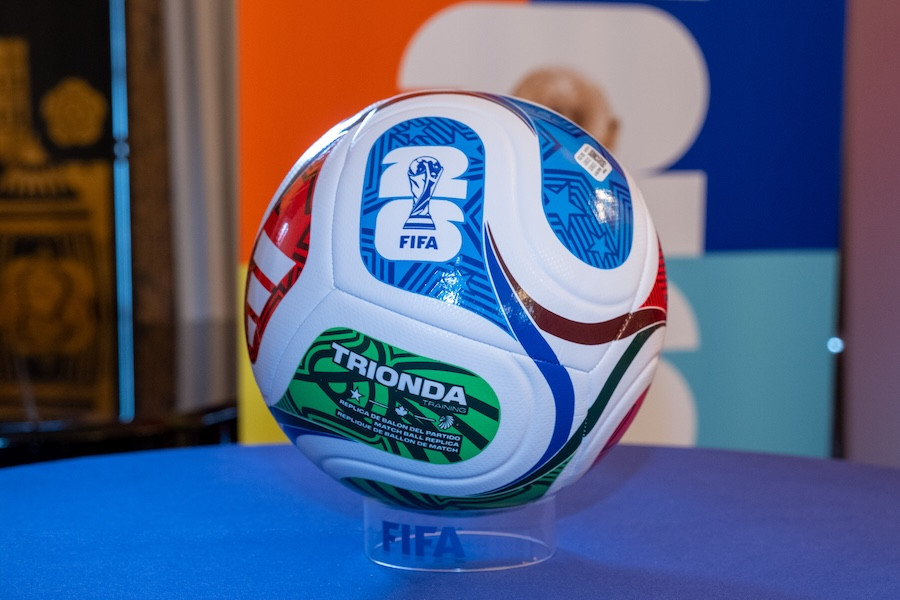
Sports betting technology supplier Kambi has found a sharp rise in live betting using its Bet Builder during the FIFA World Cup 2026 group stage.
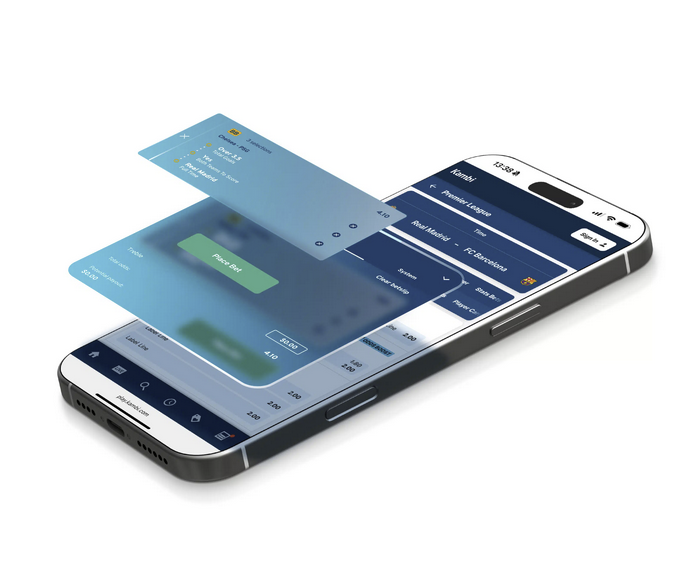
According to a company release, Kambi’s Bet Builder “drove approximately 20% of all live bets throughout the group stage – a substantial increase on the equivalent figure of 3% during the full length of the 2022 tournament.”

Player props were noted to be “a core part of the soccer offering, with ‘player top shots on target’ among the top five pre-match bet offers by turnover on the tournament”.
The group evaluated data from Kambi’s global network of over 70 partners, also finding key player-related match turnover data, including that Erling Haaland drove 60% of player prop turnover, Lionel Messi drove 48%, Harry Kane drove 47%, Kylian Mbappé drove 47% and Cristiano Ronaldo drove 40%.
The group also evaluated bets on substitutions, noting that “it is a tournament in which substitutes are having a big impact, with over 40 goals scored by players coming off the bench so far.” The group’s Auto-Sub product data show the top five Auto-Sub payouts on individual games during the group stage were Donyell Malen (replaced by Crysencio Summerville) in Netherlands vs. Sweden, Ousmane Dembélé (replaced by Bradley Barcola) in France vs. Senegal, Ismael Saibari (replaced by Soufiane Rahimi) in Morocco vs. Haiti, Anthony Gordon (replaced by Marcus Rashford) in England vs. Croatia, and Jamal Musiala (replaced by Deniz Undav) in Germany vs. Ivory Coast.

Kambi’s SVP Risk Oliver Lamb stated, “The 2026 FIFA World Cup is unquestionably the biggest opportunity for the betting industry in a generation. Data from across the Kambi network is underlining just how critical a best-in-class live Bet Builder is becoming, giving players the same depth and UX they are accustomed to pre-match.”
The executive furthered, “the Kambi network is giving partners an edge and enabling them to capitalize on the tournament and drive customer engagement long after the final whistle has been blown on 19 July.”

Dig Deeper
Related stories


The Backstory
World Cup demand puts live products under pressure
Kambi’s World Cup data lands at a moment when sportsbook suppliers and operators are competing to turn major events into higher-frequency, higher-margin engagement. The company’s finding that Bet Builder accounted for about 20% of all live bets during the 2026 World Cup group stage, up from 3% across the 2022 tournament, points to a material change in how customers are betting on soccer. The shift is not only toward in-play wagering, but toward more complex, personalized bet construction during matches.
That matters because the World Cup is a stress test for sports betting platforms. A global audience, uneven kickoff times, high-profile players and volatile match scripts all place pressure on pricing, risk controls and user experience. Live bet builders are harder to run than pre-match versions because odds must adjust quickly to goals, cards, substitutions and tactical changes. If a supplier can keep markets available and intuitive during the busiest tournament in soccer, it strengthens the case for its technology beyond the event itself.
Kambi’s emphasis on player props and substitution-linked outcomes also reflects broader product convergence. Customers are increasingly betting around individual athletes and game events rather than only match winners, totals or handicaps. The World Cup has amplified that trend because star players such as Erling Haaland, Lionel Messi, Harry Kane, Kylian Mbappé and Cristiano Ronaldo concentrate both fan attention and betting turnover. The result is a sportsbook product that looks less like a static odds board and more like a live entertainment interface.
Suppliers race to own the engagement layer
The rise in live Bet Builder activity follows several moves by Kambi to position itself as both a full sportsbook provider and a modular technology supplier. In recent months, the company has signed or expanded agreements across regulated markets, each showing a different part of its strategy. Its deal to supply Stake in Brazil with a turnkey sportsbook, detailed in Kambi’s Brazil partnership with Stake, showed the value of a complete platform in a newly regulated market where compliance, localization and speed to launch are central concerns.
Brazil is especially important because the regulated market opened Jan. 1, creating one of the most significant new sports betting opportunities globally. Stake’s use of Kambi technology there gives the supplier a foothold with a high-profile operator in a market where soccer dominates customer acquisition and retention. World Cup performance data can therefore become a sales tool: It demonstrates not just tournament capacity, but the potential to drive betting depth in soccer-first jurisdictions.
Kambi has also pursued partnerships that separate parts of its stack. Its agreement with ComeOn Group, covered in Kambi’s odds feed deal with ComeOn, was built around Odds Feed+ and esports pricing from Abios rather than a full turnkey sportsbook. That approach broadens Kambi’s addressable market by serving operators that want to keep proprietary platforms while improving pricing accuracy and market depth. Live bet builders, odds feeds and player-prop products are linked by the same requirement: fast, reliable trading supported by data infrastructure.
Regulated markets shape the product roadmap
Kambi’s recent licensing and partnership activity shows how regulation has become part of the competitive moat for sportsbook technology companies. The company’s approval in Nevada, where it secured Manufacturer and Distributor and Informative Services licenses, was described in Kambi’s Nevada licensing milestone as its 15th U.S. state authorization. Nevada carries symbolic and practical weight because of its long-standing role in sports betting oversight and its concentration of retail sportsbook expertise.
That matters for the current World Cup findings because sophisticated live products are not only a consumer-facing feature. They must be acceptable to regulators, auditable for operators and resilient under heavy demand. In markets such as Nevada, New York, Ontario and Brazil, suppliers must balance innovation with rules on integrity, reporting, responsible gambling and technical controls. A live Bet Builder product that can scale across regulated jurisdictions gives operators a way to compete without building every trading and compliance function internally.
The Oneida Indian Nation agreement also fits this pattern. Kambi’s long-term deal to provide sportsbook technology to Turning Stone Enterprises’ three sportsbooks in upstate New York, described in Kambi’s partnership with Oneida Indian Nation sportsbooks, includes kiosks, point-of-sale terminals, bring-your-own-device technology and bet builder. That retail context is important. Bet builders are often discussed as online products, but major-event betting demand spans physical and digital venues. For tribal casinos and regional operators, modernizing the on-property sportsbook can be as important as mobile reach.
Free-to-play products broaden the World Cup funnel
Kambi’s live betting data also sits alongside a parallel effort by operators and media companies to use the World Cup as a broader fan-engagement opportunity. Tabcorp and DAZN Bet recently launched WorldPlay, a global sports games platform tied to the knockout rounds. The initiative, outlined in Tabcorp and DAZN’s World Cup entertainment platform, is structured as a free-to-play bracket challenge across Australia, the United Kingdom, Germany, Spain and Austria.
That launch underscores a key industry dynamic: Not every World Cup product is designed to capture immediate wagering revenue. Free-to-play games can collect registrations, build brand affinity, encourage repeat visits and introduce casual fans to prediction-based formats. For operators, those products can sit above the betting funnel, especially in markets where advertising rules are tightening or where companies want to appeal to fans who are not regular bettors.
The contrast with Kambi’s Bet Builder data is instructive. WorldPlay aims to create a shared global prediction experience, while live Bet Builder targets customers already active during matches. Both approaches respond to the same challenge: global sports events are too valuable to be treated as one-off betting peaks. Companies want products that extend engagement before, during and after games. The difference lies in monetization timing and regulatory exposure. Free-to-play games can scale more broadly, while live betting products depend on licensed sportsbook infrastructure and robust risk management.
Player-led betting changes the economics
The prominence of player props in Kambi’s World Cup analysis highlights a structural change in soccer betting. Historically, soccer sportsbooks relied heavily on match result, over-under, both-teams-to-score and handicap markets. The growth of player-based betting adds more combinations, more personalization and more opportunities for in-play engagement. It also creates new pricing complexity because player markets are sensitive to lineup decisions, substitutions, injuries and tactical roles.
Kambi’s Auto-Sub product data, which tracked payouts tied to substitutes replacing selected players, reflects that complexity. A tournament with more than 40 goals from substitutes makes bench decisions central to betting outcomes. That creates both opportunity and risk. Operators can offer more relevant markets as managers rotate squads and chase late goals, but they also need technology that can respond instantly to personnel changes. A delayed or mispriced substitution market can expose an operator during high-liquidity events.
The player-prop trend also aligns with the broader personalization push seen in Kambi’s ComeOn partnership, where the operator cited hyper-personalization and localized player experiences. Sportsbooks are trying to serve customers who follow individual stars, fantasy-style statistics and social-media narratives as much as clubs or national teams. During a World Cup, that behavior intensifies because casual bettors may recognize global stars even if they do not closely follow the teams involved.
The post-tournament test
The central question for Kambi and its operator partners is whether World Cup behavior carries over after the final. Tournament betting can temporarily lift engagement, but suppliers are judged by whether products create repeatable habits across domestic leagues, continental competitions and other sports. Kambi’s comments around driving customer engagement after July 19 indicate that the company views the World Cup as a showcase for long-term product adoption rather than a standalone revenue event.
The stakes are significant. Operators face higher costs for customer acquisition, stricter regulatory scrutiny and intense competition from rival sportsbooks, media companies and gaming platforms. Suppliers such as Kambi must show they can help partners differentiate through product depth, uptime, pricing and compliance. The 20% live Bet Builder figure suggests customers are willing to use more advanced in-play tools when the event is compelling and the product is accessible.
But the same trend raises expectations. If bettors become accustomed to deep live markets during the World Cup, they may expect similar functionality for club soccer, basketball, tennis, esports and local leagues. That places continuing pressure on suppliers to expand coverage without weakening risk controls. Kambi’s recent activity in Brazil, Nevada, New York and modular odds supply suggests it is building for that demand across channels and jurisdictions. The World Cup data gives it a timely proof point, but the longer-term contest will be whether live, player-led betting becomes a standard feature rather than a tournament-driven spike.
