


Indonesian Police Chief blames FOMO and unemployment for rise in online gambling

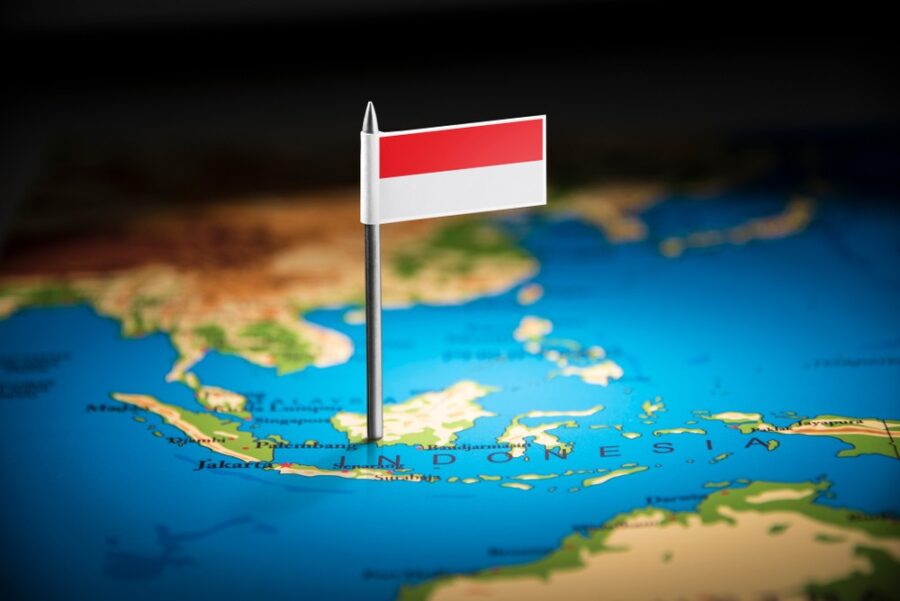
Indonesia’s National Police force has reported a significant increase in online gambling cases, with authorities linking the rise to unemployment and a ‘fear of missing out’.
During a speech at the Parliament building, Police Chief General Listyo Sigit Prabowo said online gambling addiction is being fueled by factors including low education, limited digital literacy, and widening social inequality, according to Tempo.

Last year, the National Police dealt with 665 online gambling cases, leading to 741 arrests. They also froze 5,961 bank accounts and blocked access to 241,013 gambling sites to disrupt illegal networks.
Despite this, Listyo added that tackling illegal gambling was still a challenge. Many online sites were hosted on servers outside Indonesia, where different laws on gambling and financial transactions apply.
He also said the police have found complex financial practices that criminals have used to avoid detection, including “transaction layering schemes” that use overseas accounts and shell companies to hide money flows.

Listyo emphasized that the eradication of online gambling was a top priority for the National Police, with continued coordination planned between domestic agencies and international partners to break up gambling networks and their financial flows.
Indonesia’s government was pushed to toughen its crackdown on igaming in November by Commission I Member of the House of Representatives, Oleh Soleg, who called for the continued blocking of igaming platforms, even as transactions were falling at the time.

Dig Deeper
Related stories




The Backstory
Why the police chief’s message resonates now
Indonesia’s top cop put a social frame around a financial crime problem, citing fear of missing out and joblessness as accelerants for online gambling. The warning lands after months of aggressive enforcement actions and early moves toward tighter rules that have reshaped the government’s approach to an industry that is illegal domestically but relentlessly migrates across borders and platforms.
Authorities have characterized the fight as both a criminal and consumer protection issue, noting that operators exploit gaps in digital literacy and economic insecurity. Law enforcement has also stressed the cross-border nature of the networks, saying offshore hosting and layered transactions complicate prosecutions and asset recovery.
That backdrop helps explain why officials have blended policing with policymaking. Investigators have targeted bank accounts and payment rails as much as websites, and ministers have signaled that the legal framework will be updated to blunt operators’ ability to reconstitute networks after takedowns.
A crackdown measured in accounts, not just websites
The enforcement campaign has increasingly focused on the money trail. In a significant step, authorities froze more than 5,000 bank accounts tied to suspected gambling activity, seizing roughly Rp600 billion and flagging patterns that linked online gambling to other crimes. Indonesia’s Financial Transaction Reports and Analysis Center led the effort, positioning account suspensions as a way to prevent social harms and sever access to liquidity that keeps illegal platforms running.
Officials also widened their lens beyond domestic platforms to strike at the connective tissue of the business. Regulators and police have reported hundreds of thousands of domain blocks and content removals across websites and social media, with takedowns accelerating in the first months of the new administration. The tactic recognizes that websites are disposable while settlement accounts and payment intermediaries are not.
Despite the volume of removals, lawmakers and police say demand persists. That demand, they argue, reflects the same factors the police chief cited: unemployment, low digital literacy and the pull of social media hype. Cutting the financial circuits is designed to make that demand harder to monetize.
Following the money through crypto and QR rails
Recent arrests show how operators adapted to evade detection. Police detailed a case in which suspects allegedly laundered gambling proceeds through cryptocurrency and Indonesia’s QR payment system, moving funds through a web of accounts and a shell company to obscure origins. Investigators said the network funneled money into thousands of bank accounts before redistributing it to operators, a process built to frustrate tracing and slow asset seizures.
The probe culminated in the seizure of Rp530 billion in assets, including cash across dozens of banks, government securities and luxury vehicles. The case underscored how quickly illicit finance can piggyback on legitimate innovations like QR payments when monitoring lags behind product adoption. It also gave prosecutors a template for charging both predicate offenses and money laundering counts, raising potential prison terms and fines that could alter the risk calculus for organizers.
For banks and fintechs, the episode is a compliance stress test. It signals that regulators expect real-time detection of smurfing patterns, rapid response to suspicious activity reports and tighter onboarding for merchants and shell entities that can serve as payment pass-throughs.
From takedowns to rulemaking at the palace
Enforcement muscle is being paired with a regulatory pivot. After a review at the Presidential Palace, officials said the government is preparing a regulation aimed at online gambling platforms. The Communication and Digital Affairs Ministry framed the forthcoming rule as the next step in a campaign that has already delivered a sharp drop in measured transactions, citing internal monitoring to support the trend.
Those signals were amplified when ministers described a sustained program of content blocks across websites and major platforms, and when the administration reported hundreds of thousands of gambling-related items removed early in the year. The framing ties platform accountability to national security and financial integrity as much as to moral concerns, opening the door to tighter obligations on intermediaries that facilitate payment, hosting or promotion.
The policy trajectory was set out in statements from the president’s team that previewed a government regulation, a legal instrument that can impose binding operational rules without a protracted legislative process. For operators and service providers, that raises the prospect of faster, more prescriptive requirements on due diligence, takedown timelines and data sharing with investigators.
Regional ripples: jobs and reputational risk
Indonesia’s crackdown is unfolding as neighbors grapple with their own fallout. In the Philippines, layoffs in gambling and betting were cited as a driver of rising unemployment, with jobless Filipinos increasing to 1.95 million in June and the rate ticking up to 3.7%. Officials said the gambling and betting subsector shed nearly 210,000 jobs, feeding a policy debate now moving toward prohibition. Lawmakers have advanced a ban through the Anti-Online Gambling Act, while the executive branch ordered a data-driven review amid mounting political pressure.
Thailand, where most gambling is illegal, is facing a reputational test tied to sponsorships and promotion. Police opened an investigation into whether Miss Universe contestants promoted online casinos during the pageant lead-up, an allegation that prompted a public distancing by the local host committee and renewed scrutiny of how brands police endorsements. Authorities clarified that promotion of online casinos violates Thai law, and the episode followed a separate operation that shut an online gambling site. Details of the case were laid out in an update on the Miss Universe probe.
The crosscurrents point to a regional market in flux: one country tightening rules and enforcement, another weighing an outright ban after labor-market shocks, and a third moving to deter promotional gray zones that lend illicit operators mainstream visibility.
The stakes for platforms, payments and consumers
For Indonesia, the immediate stakes are social and financial. Policymakers argue that online gambling siphons household income, pushes vulnerable users toward debt and adjacent crimes, and corrodes confidence in digital finance. That has made banks, e-wallets and QR providers central to the response. The account freezes and laundering cases signal heightened scrutiny of onboarding, merchant monitoring and beneficial ownership—areas where gaps have allowed shell firms to act as transaction laundromats.
For platforms and advertisers, a tougher rulebook could require faster takedowns, verified sponsors and clearer liability for repeat violations. The Thai investigation shows how quickly reputational damage can spread when consumer brands intersect with illegal operators, even indirectly. In the Philippines, the employment shock illustrates the sector’s volatility and the political blowback that follows.
Consumers sit at the center of the policy calculus. The government’s narrative links addiction risks to economic precarity and digital literacy gaps, arguing that enforcement alone will not change behavior if marketing and easy payment access persist. The pending regulation will test whether Indonesia can limit financial access points and content distribution enough to blunt demand, while regional developments show that labor and reputational risks are now part of the equation for businesses touching the digital economy.
