


India’s Supreme Court rejects review pleas against state online gaming bans

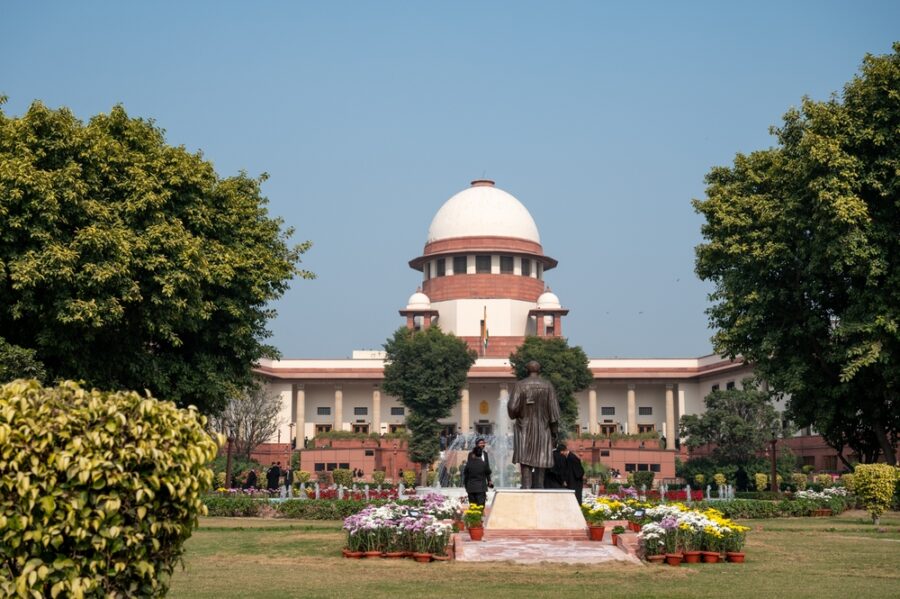
India’s Supreme Court has dismissed petitions seeking a review of its May ruling upholding Tamil Nadu and Karnataka’s bans on online games played for stakes.
According to The Economic Times, a two-judge Supreme Court bench dismissed review petitions filed by gaming companies challenging its 27 May judgment, which overturned high court rulings that had struck down bans on online games played for stakes instituted by state authorities.

The Supreme Court said that betting and gambling are not protected as a fundamental right to carry on trade or business under the Constitution. It also held that states may prohibit games of skill when they are played for stakes.
The judges also said that staking money on uncertain outcomes had the potential to encourage addiction and a desire to win more. It also said that online gaming for money had made betting more widely accessible and had normalized gambling behavior.
The review petitions were led by Junglee Games India. Play Games24x7, Head Digital Works, the All India Gaming Federation and the Federation of Indian Fantasy Sports were also parties to the original case.

The companies argued that the distinction between skill and chance games should apply online and offline and that states did not have the power to ban skill-based games like rummy and poker.
The governments of Tamil Nadu and Karnataka defended their bans on the grounds of public safety, saying that online gambling increased the risk of cybercrime, addiction, and harm to families.

Dig Deeper
Related stories
 2025/03/31: Indian politician calls for better igaming regulations in Tamil Nadu
 2025/04/10: Karnataka becomes latest Indian state to address online gambling
 2026/08/06: Supreme Court of India to hear challenges against online gaming laws
 2025/03/27: Indian lawmakers hold heated debate on risks of online gambling
2025/03/31: Indian politician calls for better igaming regulations in Tamil Nadu
2025/04/10: Karnataka becomes latest Indian state to address online gambling
2026/08/06: Supreme Court of India to hear challenges against online gaming laws
2025/03/27: Indian lawmakers hold heated debate on risks of online gambling
The Backstory
State bans reset the legal baseline
India’s online gaming industry has been moving through a tightening legal corridor for years, but the Supreme Court’s refusal to review its earlier ruling marks a sharper turn. The court’s May judgment had upheld Tamil Nadu and Karnataka laws banning online games played for stakes, reversing high court decisions that had favored operators and the long-standing industry argument that skill-based games should be treated differently from gambling.
The review petitions dismissed by the court were not a narrow procedural fight. They represented a broader attempt by gaming companies to preserve the distinction between games of skill, such as rummy and poker, and games of chance when money is involved. Junglee Games India led the review effort, with Play Games24x7, Head Digital Works, the All India Gaming Federation and the Federation of Indian Fantasy Sports also tied to the underlying litigation. The companies argued that constitutional protections for trade and business should extend to lawful skill-based formats, whether played offline or online.
The states argued from a different premise: that staking money online changes the public-interest calculation. Tamil Nadu and Karnataka said the rapid spread of digital gaming had made betting more accessible, increased risks of addiction and fraud and created wider social harm. By accepting that states may prohibit even skill-based games when played for stakes, the court strengthened the hand of local governments that see prohibition as more effective than supervision.
Tamil Nadu became the political pressure point
Tamil Nadu has been central to the dispute because it combines assertive legislation with intense political scrutiny. The state enacted the Tamil Nadu Prohibition of Online Gambling and Regulation of Online Games Act 2022, then expanded its framework through the Tamil Nadu Online Gaming Authority Regulation 2025. The later rules covered “online real money games,” defined broadly as games in which a user deposits cash with an expectation of winnings.
Those measures did not end the political debate. Dr. Anbumani Ramadoss, president of the Pattali Makkal Katchi party, recently pressed the state government to do more, alleging that dozens of people had died by suicide because of online gaming since the Dravida Munnetra Kazhagam came to power. His claims were not supported with evidence in the report, but they reflected the political environment in which courts are deciding these cases. Tamil Nadu’s restrictions have been defended not only as gambling laws but as consumer protection and public-health measures.
The same state-level pressure was visible in Ramadoss’ call for tighter igaming enforcement in Tamil Nadu, which underscored a gap that opponents of the industry often cite: laws may be on the books, but political actors want faster implementation and broader enforcement. Operators including A23, Head Digital Works, Games 24x7 and Junglee Games have challenged such laws, warning that broad definitions can sweep up legitimate gaming businesses along with gambling operators.
Karnataka’s search for a middle path narrowed
Karnataka’s position has been more complicated. The state is a major technology and gaming hub, and officials have acknowledged the economic value of the online gaming sector. Information Technology Minister Priyank Kharge has said India’s online gaming market is valued at about $4 billion, with Karnataka accounting for roughly 25% of it. That has made the state’s policy choices especially consequential for startups, investors and employees tied to the sector.
Before the Supreme Court’s latest refusal to review the bans, Karnataka had been considering a new law that would curb online gambling and games of chance while allowing skill-based gaming in a regulated setting. The proposed approach resembled the Chhattisgarh model, which seeks to distinguish gambling from skill-based gaming rather than ban the whole category. Home Minister Gangadharaiah Parameshwara said the goal was to protect consumers from fraud while supporting sustainable growth for skill-based gaming.
That balancing act was evident in Karnataka’s effort to draft a fresh online gambling law. Industry bodies such as the E-Gaming Federation and All India Gaming Federation had promoted codes of ethics covering user safety and responsible gaming. But the Supreme Court’s reasoning reduces the legal force of the industry’s central distinction. If states can ban skill games once stakes are involved, regulatory models that preserve real-money skill gaming may face tougher political and legal tests.
Parliament put federal limits in focus
The national debate has also exposed tension between state authority and central responsibility. In the Lok Sabha, Union Information Technology Minister Ashwini Vaishnaw was questioned by lawmakers from Punjab, Maharashtra and Tamil Nadu over the growth of online gambling and its effect on children and young people. Vaishnaw said 1,410 online gaming sites had been banned but emphasized that gambling falls under the State List of the Constitution, leaving regulation or prohibition primarily to state assemblies.
That exchange, covered in a heated parliamentary debate on online gambling risks, showed why India’s regulatory map remains fragmented. Central authorities can block websites, freeze accounts and act against fraud, but state legislatures retain core power over gambling law. Vaishnaw pointed to the federal structure when pressed on whether the central government should impose a total ban, rejecting the suggestion that New Delhi was avoiding moral responsibility.
Enforcement has nevertheless expanded at the national level. The Directorate General of Goods and Services Tax Intelligence reported blocking almost 2,000 bank accounts linked to online gambling and freezing 392 more. That financial enforcement track runs alongside state bans and court challenges, creating multiple points of exposure for operators. Even companies that argue they offer games of skill must navigate criminal law, tax demands, payment restrictions and platform-blocking actions.
A national ban challenge could define the next phase
The Supreme Court is also expected to hear challenges to the Promotion and Regulation of Online Gaming Act, which came into effect on May 1, 2026 and introduced a nationwide ban on online real-money games. That case could determine whether India moves further toward prohibition or adopts a more defined framework that distinguishes between gambling, betting, esports, social gaming and skill-based real-money contests.
The wider challenge, led by Dr. K A Paul, argues that a blanket national ban covering games of chance and skill-based games such as poker may conflict with protections for lawful business activity. The court will also consider a public interest litigation from the Centre for Accountability and Systemic Change, which seeks action against platforms allegedly presenting betting and gambling as social gaming or esports. According to the petitioners, authorities had been given details of about 2,000 apps allegedly offering betting or gambling services in India.
The pending litigation described in the Supreme Court’s review of online gaming law challenges now sits against a less favorable backdrop for operators. The court has already said betting and gambling are not protected as a fundamental right to conduct trade or business, and it has accepted the states’ power to prohibit staked skill games. That does not resolve every constitutional question around a nationwide law, but it signals judicial concern about addiction, accessibility and the normalization of gambling behavior online.
Tax and enforcement risks remain unresolved
Separate proceedings could still shape the industry’s economics even if prohibition expands. The Supreme Court earlier directed authorities not to take coercive action against Fanmade11 Fantasy Sports and 9Stacks Games until judgment is delivered in a related Gameskraft matter. The dispute is expected to clarify the legal and tax treatment of real-money online gaming and fantasy sports after the recent national legislation and amid disputes over goods and services tax demands.
That temporary protection, reported in the court’s order shielding some real-money gaming operators from coercive action, offered limited relief rather than certainty. Legal observers said the Gameskraft outcome could influence how platforms are classified and taxed, with major financial consequences. The permitted external report by Storyboard18 also covered the interim order at its account of the Supreme Court halt on coercive action.
The latest dismissal of review pleas therefore does more than close one procedural door. It reinforces state authority, weakens the industry’s skill-game defense and raises the stakes in pending national and tax cases. For operators, the path forward now depends less on marketing games as skill-based and more on whether courts and lawmakers are willing to leave any space for real-money gaming under regulated conditions.
