
Indian Supreme Court delays online gaming challenge until January

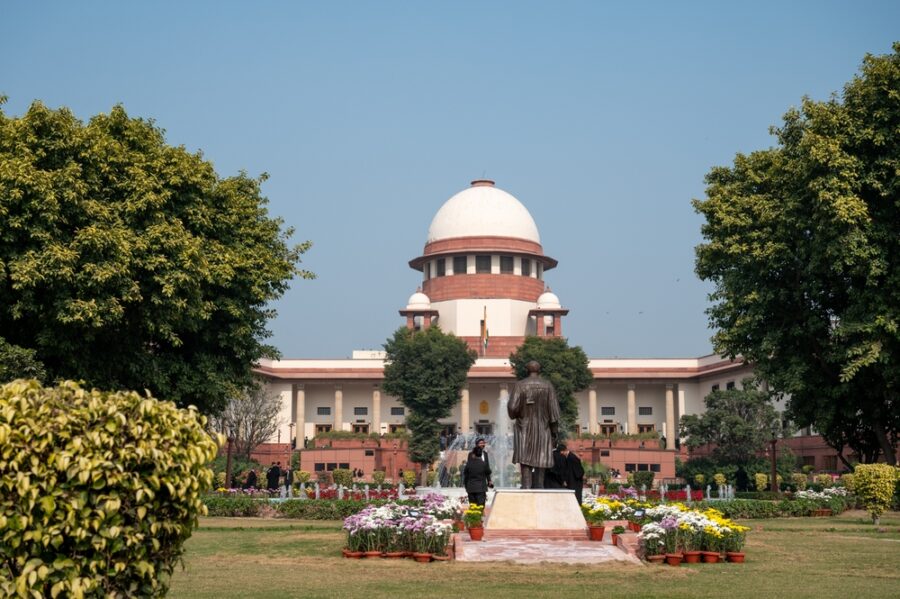
The Supreme Court of India has ruled that the constitutional challenge to the Promotion and Regulation of Online Gaming Act 2025 will be heard on January 21, 2026, before a three-judge bench, despite calls from the gaming industry for an early hearing.
According to Storyboard 18, earlier this week judges heard a plea for early listing from gaming company Head Digital Works, which is the operator of the gambling site A23.

Their lawyers argued that the very law being challenged is pushing operators into collapse before its constitutionality been tested.
However, the Chief Justice said that a three-judge bench usually hears issues regarding the constitutionality of laws, and that all issues related to the legislation are likely to be heard together in January, once a full bench has been constituted.
Head Digital Works argued that the delay had already created a de facto enforcement environment, with banks, payment gateways, and intermediaries freezing services after the act was published in August.

The company reports that revenue has dropped to zero, operating costs have increased, and its workforce has shrunk from 606 to 178.
The law was passed in August, on the basis that the gambling sector was unregulated and needed to be curbed. It will now be up to the Supreme Court to decide whether Parliament, the states, or both have the power to regulate online casino gaming.
Charlotte Capewell brings her passion for storytelling and expertise in writing, researching, and the gambling industry to every article she writes. Her specialties include the US gambling industry, regulator legislation, igaming, and more.

Verticals:
Sectors:
Topics:
Dig Deeper
Related stories
 2025/10/16: Indian Supreme Court to hear public interest case against social games
 2025/10/24: Indian Supreme Court seeks government input on plea to ban online gambling
 2025/05/26: The Supreme Court of India hears plea to ban all online sports betting apps
 2025/10/01: Chile’s Supreme Court clarifies online gambling laws
2025/10/16: Indian Supreme Court to hear public interest case against social games
2025/10/24: Indian Supreme Court seeks government input on plea to ban online gambling
2025/05/26: The Supreme Court of India hears plea to ban all online sports betting apps
2025/10/01: Chile’s Supreme Court clarifies online gambling laws
The Backstory
How the legal fight reached the high court
India’s online gambling standoff has been building for months as regulators, courts and companies test the edges of the Promotion and Regulation of Online Gaming Act 2025. The Supreme Court’s decision to push constitutional arguments to January reflects a crowded docket and the complexity of a law that redraws the line between permissible games and illegal wagering. Industry operators say the delay itself has become a form of enforcement, with payments blocked and traffic throttled since the act took effect in August. Policymakers contend that the sector needed a reset after years of uneven state rules and consumer harm. The stakes are high: the court will decide who gets to regulate the sector and how far the government can go in collapsing real-money play into gambling even when packaged as skill or social games.
The path to this moment runs through multiple petitions and policy moves converging at once. A wave of public interest litigation, agency rulemaking and emergency pleas from operators have given the court several entry points into a fast-evolving market. The result is a fragmented, high-stakes test of jurisdiction, consumer protection and digital commerce that now rests with a three-judge bench.
Public interest cases reshape the debate
The judiciary’s early signals came through citizen petitions arguing that betting apps were fueling social harm and evading oversight. In October, the Supreme Court agreed to hear a public interest litigation seeking a nationwide ban on online gambling platforms operating under the guise of e-sports or social games. The petition, filed by the Centre for Accountability and Systemic Change, named Apple and Google among respondents and urged a coordinated crackdown led by key ministries, including Electronics and Information Technology and Information and Broadcasting. It framed the issue as a national crisis tied to financial losses, data misuse and mental health.
Days later, a separate bench asked the government to engage directly. The court sought a formal response from the Centre on the same plea, effectively pulling executive agencies into the interpretive fight over the 2025 act. The petition pressed for the Reserve Bank of India and payments networks to block transactions tied to unregistered applications, and called for tax probes and cross-border enforcement against offshore operators. Those asks signaled where enforcement pressure might shift even before the constitutional challenge is heard.
The court has also entertained broader pleas reflecting mounting political and social scrutiny. It heard a petition to ban all online sports betting apps, with arguments focused on alleged youth harms and celebrity promotions. While the bench noted the limits of prohibition as a tool, the proceeding underscored a judiciary receptive to claims that existing frameworks have not kept pace with digital wagering models.
Rulemaking accelerated after Parliament’s move
Parliament acted quickly in August, passing the Promotion and Regulation of Online Gaming bill just days after its introduction. The law’s centerpiece is a sweeping restriction on real-money play, backed by criminal penalties for those who promote or interact with banned platforms. The Ministry of Electronics and Information Technology followed by publishing draft rules to operationalize the law, including definitions of legal games, the role of a new Online Gaming Authority and schedules of penalties. The ministry invited public feedback through October, a tight window that suggested a desire to move from legislative intent to enforcement guidelines before courts could set boundaries.
The draft rules emphasize a bright-line distinction: e-sports and video games as entertainment are encouraged, while real-money games—spanning poker, fantasy and traditional card games—would be barred. That approach aims to resolve years of litigation over “skill” versus “chance” by treating real-money mechanisms as gambling regardless of format. Operators argue that such a treatment is overbroad and intrudes on state powers where gaming historically sits, setting up the constitutional question the Supreme Court will now take up in January.
Payments and platforms feel the squeeze
The pressure points are not confined to courtrooms. Petitioners have explicitly targeted the money pipes that sustain the segment, urging the Reserve Bank of India, the National Payments Corporation of India and UPI to block transactions tied to unregistered apps. The public interest filing also pressed for app-store scrutiny by Apple and Google, raising the risk that distribution channels could narrow even before any final judicial ruling.
That posture has a cascading effect. Payment gateways and intermediaries have tightened compliance following publication of the act and the ministry’s draft rules, leading to service freezes that operators say have eroded revenue and accelerated layoffs. The dynamic creates a de facto enforcement regime: companies face operational shutdowns driven by risk-averse partners while they wait for constitutional clarity. For policymakers, that outcome is not necessarily a bug. Financial choke points offer a faster path to curbing activity than case-by-case prosecutions, and they align with the petitions asking courts to force a coordinated response across agencies.
Regional signals offer a cautionary tale
India is not alone in pushing for categorical clarity. Chile’s highest court moved decisively this fall, with the Third Constitutional Chamber ruling that all online gambling is illegal unless expressly authorized. The decision compelled internet providers to block unlicensed sites and narrowed the legal market to state-sanctioned lotteries, racetracks and authorized casinos. Chile’s push followed a legislative effort to regulate online play and a separate clampdown that ended betting sponsorships in professional football. For India’s justices, the Chilean example shows how courts can tip the balance toward explicit authorization models, then leave it to lawmakers and regulators to decide which activities qualify.
The comparison has limits. India’s federal structure embeds state roles in gambling oversight, and past rulings have carved space for skill-based games. Still, the Chile case illustrates how quickly a judiciary can crystallize uncertainty and how internet and payments controls can be central to enforcement. It also hints at the economic stakes: Chilean regulators estimated hundreds of millions in annual revenue flowing through informal platforms, a dynamic that India’s petitions claim mirrors domestic conditions.
What the court must settle next
When the Supreme Court reconvenes on the constitutional challenge, it will have to settle two core issues. First is jurisdiction: whether Parliament can impose a national standard that sweeps in real-money formats long litigated at the state level, or whether a cooperative model is required. Second is scope: how to draw durable lines between gaming and gambling in an app economy where mechanics evolve quickly and cross-border operators can rebrand offerings as social, skill or e-sports.
The surrounding petitions ensure that the bench will also weigh practical enforcement. The call for payments blocks, app-store scrutiny and coordinated ministry action invites the court to endorse or curb a multi-agency approach. Operators argue that preemptive choke points punish legal activity and consumers before courts rule, while petitioners claim immediate steps are needed to stem losses and abuse.
However the bench rules, the outcome will set the template for online gaming in India. A broad affirmation of Parliament’s approach would accelerate rulemaking and likely harden payment and platform restrictions. A narrower reading could force a return to state-led definitions and carve-outs for certain formats. Either path requires speed. With revenue models already disrupted and enforcement pressure rising, clarity is now the market’s most valuable commodity.

