


India Supreme Court rules for 28% levy on igaming firms

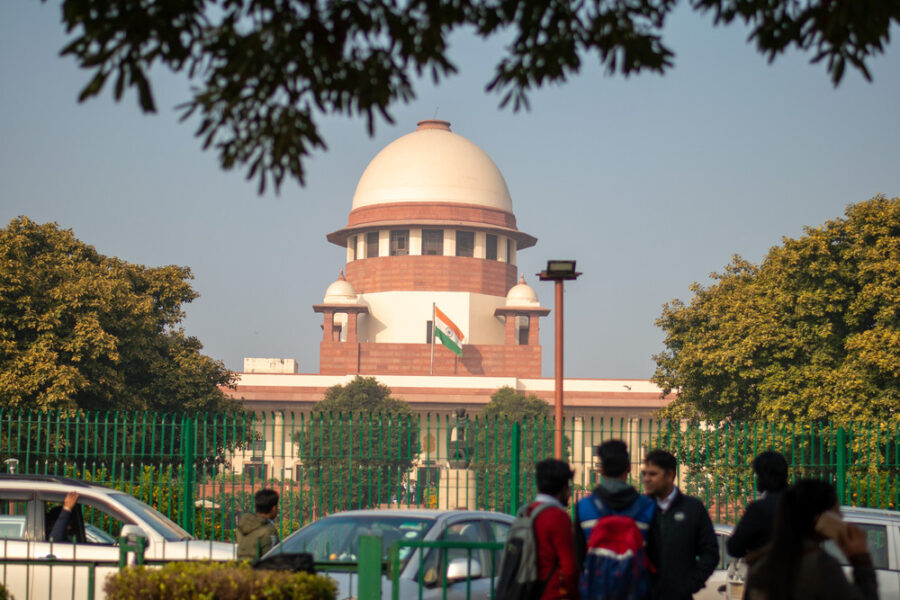
India’s Supreme Court has upheld a retroactive 28% goods and services tax levy on igaming firms, approving tax demands totaling nearly INR2.5 trillion (US$26.0 billion)1 INR = 0.0104 USD
2026-05-28Powered by CMG CurrenShift.
The bench, comprising of Justices JB Pardiwala and R Mahadevan, dismissed claims by real-money gaming firms and industry bodies that challenged the goods and services tax, arguing that it would hurt businesses.

After the verdict, igaming companies under the goods and services tax framework will no longer be treated as intermediaries or facilitators. Instead, they will qualify as betting and gambling and can no longer avoid taxation.
Under Rule 31A of the Central Goods and Services Tax Rule, now validated by the Supreme Court, the tax department is able to demand tax for the full value of bets placed, instead of just platform fees or commissions generated by operators.
Tax experts argue that the decision could reshape the country’s igaming market, with operators such as GamesKraft and Dream11 set to face increased pressure over tax disputes.

“This decision is retroactive, meaning it could have an impact for the period even before 2023, when the law was amended. As a result, the gaming industry now faces substantial challenges, including significant past tax liabilities along with interest and penalty and the prospect of paying GST at 40% from September 2025. One will also need to consider the impact on other laws, which govern betting and gambling activities, which are prohibited in many states,” Nitin Vijaivergia, Partner at Price Waterhouse & Co LLP., told The New Indian Express.
Charlotte Capewell brings her passion for storytelling and expertise in writing, researching, and the gambling industry to every article she writes. Her specialties include the US gambling industry, regulator legislation, igaming, and more.

Dig Deeper
Related stories
 2025/03/25: India cracks down on illegal online gambling ahead of IPL season
 2026/02/23: India’s Supreme Court rules no action for real-money gaming operators ahead of Gameskraft case
 2025/04/03: India blocks 357 offshore igaming platforms
 2025/10/09: NCAA moves towards allowing college athletes to bet on professional sports
2025/03/25: India cracks down on illegal online gambling ahead of IPL season
2026/02/23: India’s Supreme Court rules no action for real-money gaming operators ahead of Gameskraft case
2025/04/03: India blocks 357 offshore igaming platforms
2025/10/09: NCAA moves towards allowing college athletes to bet on professional sports
The Backstory
A tax ruling that resets the market
India’s Supreme Court decision to uphold a retroactive 28% goods and services tax levy on online real-money gaming companies marks a decisive turn in a yearslong fight over whether platforms should be taxed as intermediaries or as gambling businesses. By validating tax demands tied to the full value of bets placed, rather than only commissions or platform fees, the court has shifted the financial basis on which much of the sector was built.
The ruling lands at a moment when India’s online gaming industry is already facing overlapping legal, political and commercial pressures. Operators have argued that fantasy sports, rummy, poker and similar products involving skill should not be grouped with betting and gambling. Tax authorities and critics of the industry have pushed in the opposite direction, saying real-money wagering creates risks that justify tougher rules and heavier taxation.
The Supreme Court’s finding effectively narrows the industry’s room to argue that its role is limited to facilitating play between users. Under the framework now affirmed, platforms can be treated as supplying betting and gambling services, making the entire stake amount taxable. That distinction is central to the sector’s economics because a tax on gross deposits or bet value can exceed the revenue retained by the operator.
Gameskraft dispute became the legal pivot
The tax conflict has long been tied to the Gameskraft litigation, which became a bellwether for how courts would treat skill-based real-money gaming under India’s goods and services tax system. Earlier proceedings focused on whether the company’s games could be taxed as betting and gambling and whether authorities could pursue large demands based on the full contest entry amount.
The sector was watching the matter because related petitions by other operators were effectively placed in a holding pattern. In February, the Supreme Court directed authorities not to take coercive action against Fanmade11 Fantasy Sports and 9Stacks Games until the Gameskraft judgment was delivered, a pause covered in the court’s order protecting real-money gaming operators from enforcement action. That interim relief underscored the stakes: A single ruling could determine whether tax claims across the industry were enforceable.
The court’s latest position removes much of that uncertainty, but not in the industry’s favor. Operators now face the possibility that past periods, including those before the 2023 GST changes, may be exposed to tax claims, interest and penalties. That retroactive effect is what makes the decision more than a prospective compliance change. It creates balance-sheet risk for companies that had priced products, paid taxes and raised capital under a different interpretation of the law.
The immediate pressure will fall on companies with large historical transaction volumes. For firms that operated at scale with thin margins, liabilities tied to total bet value could overwhelm earnings. Smaller operators may face even harder choices, including consolidation, product withdrawal or insolvency, depending on the size and timing of notices.
Regulatory uncertainty deepened before the verdict
The tax ruling also intersects with India’s broader attempt to regulate online gaming nationally. The Promotion and Regulation of Online Gaming Act has been central to that debate, but delays in formal publication and implementation left companies operating in a legal gray zone. In a related account of pending challenges, petitions over the Promotion and Regulation of Online Gaming Act were still awaiting a Supreme Court hearing, reflecting the unsettled environment in which operators were trying to plan.
That uncertainty was not theoretical. Head Digital Works, one of the operators challenging the law’s effects, said it had suffered a steep revenue hit, reduced its workforce and lost a planned investment amid the uncertainty. Such claims highlight how legal risk has become an operating risk. Capital providers are less likely to support companies when core questions over legality, taxation and enforcement remain unresolved.
The government’s parallel efforts to block offshore sites further complicate the market. Thousands of websites have been blocked, yet offshore gambling platforms continue to attract Indian traffic. Regulated domestic operators argue that punitive taxation and uncertain rules may push users toward unlicensed alternatives that do not pay tax, observe local safeguards or submit to Indian courts. Policymakers counter that the domestic industry cannot avoid accountability by pointing to offshore competition.
The Supreme Court’s tax ruling may therefore accelerate a split between companies able to absorb compliance costs and those dependent on high-volume, low-margin play. Larger brands may try to redesign products, reduce promotional spending or pass costs to users. Others may exit real-money formats and focus on casual gaming, esports or non-wagering products.
Public-interest challenges raised political pressure
The industry’s legal battles have not been limited to tax classification. Public-interest litigation has pushed the Supreme Court to examine whether online betting and gaming apps should face stronger restrictions because of their alleged social impact. Politician and activist Dr. Kilari Anand Paul has argued that betting apps harm young people, contribute to suicides and are promoted by celebrities with mass influence.
In one proceeding, the Supreme Court heard Paul’s plea seeking a ban on online sports betting apps, as detailed in the petition urging a nationwide ban on sports betting apps. The court did not immediately impose such a ban, but it notified the central government and sent the matter to top law officers, keeping the issue alive at the national level.
Those arguments matter because they shape the political climate around taxation. When courts and lawmakers view real-money gaming through a consumer-protection or public-health lens, the industry’s claims about innovation and skill-based entertainment carry less weight. The comparison to tobacco-style warnings, youth harm and celebrity endorsements has broadened the debate beyond revenue collection.
For operators, the convergence of social-policy scrutiny and tax enforcement creates a difficult defense. A company can argue that a game is skill-based, but if policymakers see real-money play as functionally similar to gambling, regulatory tolerance narrows. The Supreme Court’s validation of GST demands reinforces that shift by placing fiscal treatment closer to betting than to digital intermediation.
Global tax fights show the same pressure point
India’s dispute is unusually large because of the retroactive demands and the size of its consumer market, but it fits a broader pattern: Governments are seeking more revenue from online betting and gaming as digital wagering expands. Operators, in turn, warn that excessive taxation can weaken regulated markets and strengthen illegal or offshore competitors.
In the United States, a similar argument surfaced when Illinois imposed a tax tied to betting volume, prompting major operators to add customer surcharges. DraftKings followed FanDuel with a 50-cent fee on online wagers, a response described in DraftKings’ move to offset Illinois’ higher betting tax. The Illinois measure differs from India’s GST system, but the business logic is comparable: When tax is linked to handle rather than operator revenue, companies look for ways to pass on or offset the burden.
The risk is that users respond by reducing play or shifting to unregulated sites. India’s authorities must balance the appeal of large tax recoveries against the durability of a compliant domestic market. A crushing tax burden may produce short-term claims on paper while reducing future collections if licensed operators shrink or disappear.
What comes next for operators
The immediate aftermath will likely center on assessment notices, settlement strategies and possible requests for relief from penalties or timelines. Companies may also revisit their product structures to reduce taxable exposure, though the court’s reasoning leaves limited space for avoiding GST treatment where real-money stakes are involved.
The decision could also influence pending challenges under the online gaming law and future debates over whether India should create a clearer distinction between skill gaming, betting and gambling. Without such clarity, companies will face the dual threat of tax liabilities for past activity and uncertain permissions for future activity.
For investors, the ruling changes the sector’s risk profile. India remains one of the world’s largest digital consumer markets, but the economics of real-money gaming now depend less on user growth and more on legal survivability. Tax classification, enforcement discretion and political tolerance may determine which operators remain in the market.
The Supreme Court has answered one major question by siding with the tax department. It has also raised another: whether India can sustain a regulated online gaming industry under a fiscal and legal framework that treats much of the business as gambling first and technology second.
