


Gaming Corps extends North American presence with Loto-Québec deal

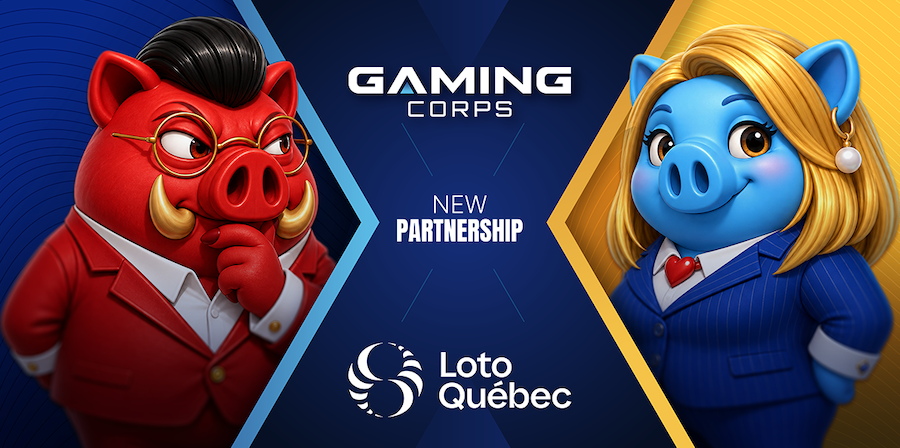
Sweden-based online gaming supplier Gaming Corps has expanded its presence in the North American regulated market by entering into a partnership with Canadian crown corporation Loto-Québec.
Under the partnership, Gaming Corps will supply its catalog of games to Loto-Québec’s online gaming platform, including slots, blackjack, Plinko and its Smash4Cash series. The games will become available to Québec players in the fourth quarter of this year.

Gaming Corps described the partnership as the next step in its North American expansion plans.
Loto-Québec was established in 1969 and provides the province with lottery, sports betting, casino, poker and bingo products through both its retail and online operations.
“This agreement represents much more than adding another operator to our network. It reflects the increasing recognition of our games among leading regulated operators and further strengthens our position in North America,” commented Juha Kauppinen, Gaming Corps’ CEO.

“We see significant long-term potential in this partnership and look forward to collaborating with the Loto-Québec-team to deliver quality content that enhances their offering and supports their long-term content strategy. This is hopefully just the start of Gaming Corps’ global expansion strategy with national and provincial lottery operators, as we believe our unique suite of content types can plug a clear gap of opportunity within the lottery segment,” he furthered.
Online gaming is currently only offered in the province through Loto-Québec’s online platform, but that might soon change. Last week, the Québec Liberal Party (PLQ) and the Parti Québécois (PQ) revealed their intention to regulate online gaming.
The comments come ahead of Québec’s provincial vote on 5 October. The two rival party leaders, Charles Milliard of the PLQ and Paul St-Pierre Plamondon of the PQ, both agreed that Loto-Québec’s monopoly over online gaming needed to end and that the province should adopt a regulated model similar to Ontario’s.

Both leaders ultimately agreed that opening the market to global operators would help raise taxes in Québec, with Milliard adding, according to Canadian Gaming Business, that it could potentially raise CA$1.7 billion (US$1.2 billion)1 CAD = 0.7148 USD
2026-09-17Powered by CMG CurrenShift in recurring savings for the province.
Charlotte Capewell brings her passion for storytelling and expertise in writing, researching, and the gambling industry to every article she writes. Her specialties include the US gambling industry, regulator legislation, igaming, and more.

Dig Deeper
Related stories


The Backstory
Québec becomes a test case for supplier expansion
Gaming Corps’ agreement with Loto-Québec lands at a moment when Québec’s online gambling market is drawing increased attention from suppliers, operators and politicians. The province remains one of Canada’s most tightly controlled digital gaming jurisdictions, with Loto-Québec serving as the only legal online casino platform. That structure has made each supplier agreement with the crown corporation a meaningful route into a market that is regulated, centralized and still largely closed to private operators.
For Gaming Corps, the deal is less a one-off content launch than part of a broader campaign to move deeper into regulated markets. The company has been building distribution through direct operator deals and platform partnerships, positioning its mix of slots, blackjack, Plinko, instant-win products and Smash4Cash titles as suitable for state-backed lottery operators as well as commercial online casinos. Québec gives it a foothold with a government-run operator in a province whose future model is now being openly debated.
The timing matters. Political leaders in Québec have begun calling for the province to move toward an Ontario-style regulated market, arguing that Loto-Québec’s online monopoly should give way to a licensing framework that could bring in global operators and generate new public revenue. Until that happens, suppliers seeking access to Québec players have one practical path: reaching an agreement with Loto-Québec.
Loto-Québec has been refreshing its digital shelves
Gaming Corps is joining a growing roster of suppliers that have treated Loto-Québec as a strategic Canadian entry point or expansion channel. In recent months, the crown corporation has signed or activated a series of content deals aimed at broadening its online casino portfolio and keeping pace with product standards in more open commercial markets.
One example came when Incentive Games expanded into Canada through a Loto-Québec partnership. The deal gave Québec players access to crash and arcade-style real-money titles from Incentive Studios through the Light & Wonder platform. It also marked Incentive Games’ first Canadian client, underlining how Loto-Québec can function as a gateway for studios seeking regulated Canadian exposure without first entering Ontario’s competitive operator market.
That launch followed other supplier additions. Fennica Gaming launched online casino titles in Québec, making its games available in Canada for the first time through Loto-Québec’s platform. Fennica’s parent company, Veikkaus Group, shares a public-sector lottery background with Loto-Québec, which may have helped align compliance, certification and localization requirements. The launch showed how lottery-affiliated suppliers see Québec as a natural fit for regulated expansion.
These deals point to a clear pattern. Loto-Québec is not simply maintaining a static online casino. It is adding suppliers with different product categories, from lottery-style games to crash, arcade and casino content, to improve engagement within the confines of its monopoly model. That creates room for companies such as Gaming Corps, whose pitch rests on content variety rather than a single slot vertical.
Aggregation platforms are shaping the content pipeline
The buildup in Québec also reflects the importance of aggregation technology. Loto-Québec’s ability to onboard multiple suppliers depends on platforms that can integrate, certify and distribute content efficiently while meeting local regulatory standards. That is why several recent agreements have involved large infrastructure providers as well as individual studios.
Aristocrat Interactive reached an agreement with Loto-Québec to use its Fusion aggregation platform to support an expansion of Aristocrat content in the province. The first games went live in late June, with more content, including NeoGames Studio titles, scheduled for later rollout. The arrangement also gives Loto-Québec the ability to onboard third-party content more quickly, a key advantage for a monopoly operator that must compete for consumer attention against offshore websites and entertainment alternatives.
Bragg Gaming has pursued a similar role. Through Bragg Gaming’s deal with Loto-Québec, players gained access to titles from Bragg’s in-house studios and partner studios through the company’s HUB platform and remote games server technology. The deal also expanded Bragg’s Canadian reach beyond one province, showing that Québec can serve as an additional regulated foothold for suppliers already active elsewhere in Canada.
For Loto-Québec, these platform-driven arrangements offer speed and breadth. For suppliers, they lower the barriers to market entry. Gaming Corps’ own strategy has increasingly relied on distribution networks as well as direct partnerships, making the Loto-Québec deal part of a wider industry shift in which content providers scale by plugging into established pipes rather than negotiating market access one operator at a time.
Gaming Corps has been building regulated-market credentials
The Québec agreement follows a broader expansion push by Gaming Corps. The company has been seeking recognition beyond its European base by targeting jurisdictions where regulation offers stability, even if entry requirements are more demanding. Regulated markets typically require certification, compliance processes and local approvals, but they also provide suppliers with stronger long-term prospects than gray-market distribution.
Its recent trajectory includes a major platform arrangement after Gaming Corps entered a global distribution deal with Playtech. That agreement, expected to go live later in 2026, is designed to place Gaming Corps’ portfolio across Playtech’s operator network through its Open Platform. Playtech’s scale, licensing footprint and access to tier-one operators give Gaming Corps a route to markets where direct entry would be slower and more costly.
The Playtech deal also followed expansion steps in Canada and Brazil, reinforcing the company’s emphasis on regulated or regulating jurisdictions. Canada is particularly attractive because each province can represent a separate commercial opportunity. Alberta, Ontario and Québec operate under different frameworks, requiring suppliers to tailor their market strategies rather than treat Canada as a single uniform market.
That makes Québec strategically distinct. Unlike Ontario, where many private operators compete under a licensing system, Québec’s online casino channel is concentrated through Loto-Québec. A supplier that wins placement there gains access to a government-backed platform but not to a broad field of competing operators. If Québec eventually liberalizes, suppliers already integrated with Loto-Québec may be better positioned to adapt to a wider market.
The monopoly debate raises the stakes
Québec’s political debate over online gambling regulation is now central to the commercial backdrop. Leaders from the Québec Liberal Party and the Parti Québécois have both signaled support for ending Loto-Québec’s online monopoly and adopting a model more like Ontario’s. Their argument is largely fiscal and regulatory: a licensed private market could capture activity now flowing to offshore sites, broaden tax revenue and give the province more oversight of online gambling behavior.
Ontario’s model has become the reference point because it opened the door to global operators while preserving government oversight through a regulated framework. If Québec follows, the province could become one of the most important online gambling expansion opportunities in Canada. That prospect explains why suppliers are eager to establish relationships before the policy environment changes.
Still, a shift would not be simple. Loto-Québec has long served as both a public revenue generator and a controlled gambling channel. Opening the market could create competition for its digital platform, pressure its margins and require new regulatory capacity. It also could force the province to balance consumer protection, tax policy and the commercial demands of international operators.
Against that backdrop, Gaming Corps’ deal is both commercial and strategic. The company gains access to Québec players under the current monopoly system while strengthening its credentials with lottery and government-backed operators. Loto-Québec, meanwhile, continues to diversify its online offering as political pressure builds around whether the province’s closed model can remain competitive. The result is a supplier agreement that reflects a larger transition in Canadian online gaming: regulated markets are expanding, but the shape of that regulation remains contested.
