


Aristocrat Interactive reaches agreement with Loto-Quebec

Aristocrat Interactive on Thursday announced an agreement with Loto-Québec. As the exclusive legal gaming operator in the province of Québec, Loto-Québec will leverage Aristocrat Interactive’s Fusion aggregation platform to power its Aristocrat content expansion.
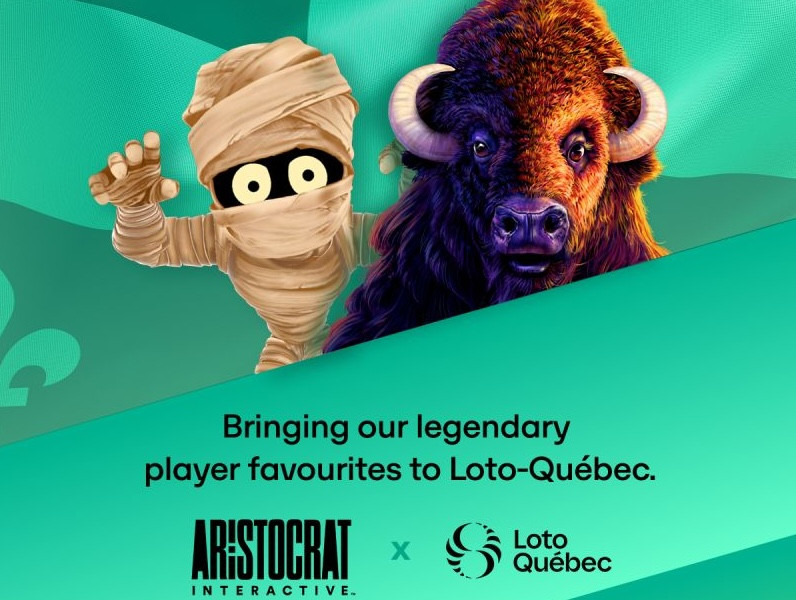
The integration will provide Loto-Québec with online access to a portfolio of Aristocrat Interactive’s content including Buffalo, Mo Mummy, and other titles. The first online games went live in late June.

“Completing our Canadian lottery footprint with Loto-Québec is a significant milestone for Aristocrat Interactive,” Aristocrat Interactive Managing Director, iLottery, Chris Shaban said in a statement. “As the exclusive operator in one of Canada’s largest provinces, Loto-Québec offers a unique opportunity to bring our premium content and aggregation capabilities to players across the region. We’re excited to support their digital roadmap with our broad portfolio of proven titles and innovative experiences.”
The agreement includes Aristocrat Interactive’s NeoGames Studio content, scheduled for rollout in late 2026. That content will further diversify the range of digital iLottery experiences available to players in Québec.
Beyond Aristocrat Interactive’s titles, the Fusion platform facilitates the rapid onboarding of third-party content, providing Loto-Québec with the flexibility to continuously scale and refresh player experiences.

Dig Deeper
Related stories



The Backstory
Québec becomes a key test of lottery-led igaming
Aristocrat Interactive’s agreement with Loto-Québec lands in a market that has become increasingly important to suppliers seeking regulated Canadian growth without the fragmentation of a competitive private-operator model. Québec’s structure gives Loto-Québec a central role: It is the province’s exclusive legal online gaming operator, making supplier access to players dependent on partnerships with the government-owned lottery corporation.
That status raises the stakes for content and platform deals. A supplier that secures integration with Loto-Québec is not just adding another operator account. It is gaining entry into a regulated provincial channel with a broad mandate, established player trust and an obligation to balance entertainment, revenue generation and responsible gambling. For Loto-Québec, the challenge is different: It must keep its digital product competitive enough to retain players who may otherwise gravitate toward offshore gambling sites or neighboring regulated markets.
The Aristocrat Interactive deal reflects that balance. Its Fusion aggregation platform gives Loto-Québec access to Aristocrat titles and a mechanism to onboard additional third-party games. The arrangement also extends Aristocrat Interactive’s Canadian lottery footprint and positions the company for further content rollouts, including NeoGames Studio titles expected in late 2026. The timing matters because lottery operators are increasingly judged not only on draw products but on whether they can deliver modern digital casino and ilottery experiences at scale.
Loto-Québec has been widening its supplier bench
The Aristocrat Interactive integration follows a series of moves by Loto-Québec to broaden its online casino library through outside content specialists. Earlier, the corporation added Bragg Gaming content through a partnership that brought games from Bragg’s in-house studios, including Atomic Slot Lab and Indigo Magic, as well as titles delivered through the Powered By Bragg program. That deal gave Québec players access to content from partner studios such as King Show Games, Bluberi, Incredible Technologies and Sega Sammy Creation through Bragg’s HUB platform and Remote Games Server technology.
The Bragg Gaming agreement with Loto-Québec signaled that the province’s sole online casino was moving beyond a narrow portfolio and using aggregation and remote gaming infrastructure to refresh its offering. It also gave Bragg a second Canadian provincial foothold, underscoring how lottery-controlled markets can offer meaningful distribution even without a fully open commercial licensing regime.
Loto-Québec also has shown interest in newer game formats. Incentive Games entered the province with crash and arcade-style real-money titles developed by Incentive Studios. Its games were integrated through the Light & Wonder platform, building on an existing supplier relationship and giving the developer its first Canadian client. The Incentive Games partnership in Québec suggested Loto-Québec was willing to test emerging formats that appeal to digital-native players while operating within a regulated lottery environment.
Together, those deals provide context for Aristocrat Interactive’s entry. Loto-Québec is not making a single content bet. It is building a layered supplier ecosystem in which proprietary casino games, partner studio titles, arcade-style products and lottery-adjacent experiences can be integrated through technology platforms that reduce deployment time and operational friction.
Aggregation has become the strategic layer
For suppliers, the most valuable asset is no longer only the game catalog. Increasingly, it is the platform layer that lets operators manage a changing mix of content, compliance requirements and player preferences. Aristocrat Interactive’s Fusion platform fits that pattern. It functions as an aggregation system, allowing a lottery operator to bring in Aristocrat games while also supporting third-party content additions.
That capability is important for a provincial lottery because product cycles in online gaming move quickly. Land-based slot brands can attract recognition, but digital performance depends on frequent new releases, localized merchandising and the ability to test different game types. A platform that shortens the path from supplier agreement to launch can help Loto-Québec respond to market demand without rebuilding integrations each time it adds content.
The same logic can be seen elsewhere in Aristocrat Interactive’s lottery work. In Virginia, Aristocrat Interactive worked with NeoPollard Interactive and Inspired Entertainment to launch the first virtual sports games in the U.S. ilottery market through the Virginia Lottery. The project used Fusion to integrate Inspired’s VSports content, allowing football, basketball and horse racing-themed draw games to be offered through one digital platform. The Virginia Lottery virtual sports launch showed how aggregation technology can be used to introduce products that sit between traditional lottery draws and sports-style entertainment.
That Virginia rollout also highlighted a broader trend: Lotteries are searching for formats that can appeal to players accustomed to rapid digital engagement. VSports games run every few minutes and use certified random number generation, preserving lottery mechanics while borrowing the presentation and cadence of sports content. Québec’s Aristocrat deal is not identical, but it is part of the same strategic shift toward more flexible, content-rich lottery platforms.
Content competition is pushing deeper partnerships
The pressure to differentiate is not limited to lottery operators. Across igaming, major suppliers are using licensing, aggregation and exclusive content arrangements to improve the breadth of their portfolios. Galaxy Gaming’s five-year licensing agreement with IGT PlayDigital is one example. Under that arrangement, IGT PlayDigital licensed Galaxy’s table game content, including brands such as 21+3, Perfect Pairs, Buster Blackjack, Lucky Lucky, Lucky Ladies and Caribbean Stud, for its online content portfolio.
The Galaxy Gaming licensing deal with IGT PlayDigital illustrates how suppliers are adding proven game types to defend market position and improve operator appeal. Table games, once less central to online content strategies than slots, have become an important way for platforms to serve a wider audience and create differentiation beyond high-volume slot releases.
For Loto-Québec, this competitive backdrop raises expectations. Players increasingly encounter broad game libraries in regulated markets such as Ontario and in offshore environments. A single provincial operator must therefore replicate enough variety to remain credible. That does not mean matching every commercial sportsbook or casino app title for title, but it does require a pipeline of recognizable games, new mechanics and supplier-backed innovation.
Aristocrat Interactive brings several advantages in that environment. Its land-based slot brands have established recognition, and its digital business has been reshaped by the company’s acquisition and integration of lottery technology assets, including NeoGames. The reference to NeoGames Studio content for 2026 points to a longer runway than an initial launch. It suggests the Loto-Québec relationship could evolve from a content supply deal into a broader digital roadmap partnership.
Canada’s patchwork shapes supplier strategy
Canada remains a complex igaming market because regulation varies by province. Ontario has an open, competitive regulated market with private operators, while Québec relies on Loto-Québec’s monopoly structure. Other provinces follow their own lottery-led models. For content suppliers, that means market entry is not a single national campaign. It requires province-by-province relationships, different technical integrations and different commercial expectations.
Bragg’s expansion into Québec after securing other Canadian access points reflects that reality. Incentive Games described Loto-Québec as a gateway into the Canadian regulated market, but that gateway is specific to Québec. Aristocrat Interactive’s statement that the agreement completes its Canadian lottery footprint indicates a more mature phase: The company is seeking comprehensive coverage through official lottery channels rather than isolated operator deals.
The economics are attractive but constrained. Lottery operators can offer reach and legitimacy, yet they also move under public-sector obligations. Procurement, responsible gambling controls and political scrutiny can slow experimentation. Suppliers that succeed in these markets often must provide not only content but operational reliability, compliance support and a product mix that aligns with public mandates.
That context helps explain the importance of Fusion. An aggregation platform can give Loto-Québec choice while maintaining a controlled environment. It also gives Aristocrat Interactive leverage: Once embedded, the platform can support more content, more partners and more frequent updates, deepening the relationship over time.
The stakes extend beyond one content launch
The immediate effect of the Aristocrat Interactive-Loto-Québec deal is more games for Québec players, including recognizable titles such as Buffalo and Mo Mummy. The broader significance is that Loto-Québec continues to modernize its digital offering through a supplier network built around aggregation, proprietary games and new formats.
That modernization carries policy and commercial stakes. A stronger regulated product may help keep gambling activity within the provincial system, where consumer protections and revenue flows are clearer. It also increases pressure on suppliers to prove that their content can perform in monopoly lottery environments, not just in open commercial markets.
For Aristocrat Interactive, Québec strengthens its position as a lottery technology and content provider at a time when lotteries are becoming more sophisticated digital operators. For Loto-Québec, the deal adds another building block in a strategy that has already brought in Bragg, Incentive Games and platform-based integrations from other suppliers. The result is a more competitive provincial online casino, shaped by the same forces transforming igaming globally: faster content cycles, broader aggregation and the need to make regulated channels compelling enough to hold player attention.
