


Four arrested as Indian police break up igaming operation

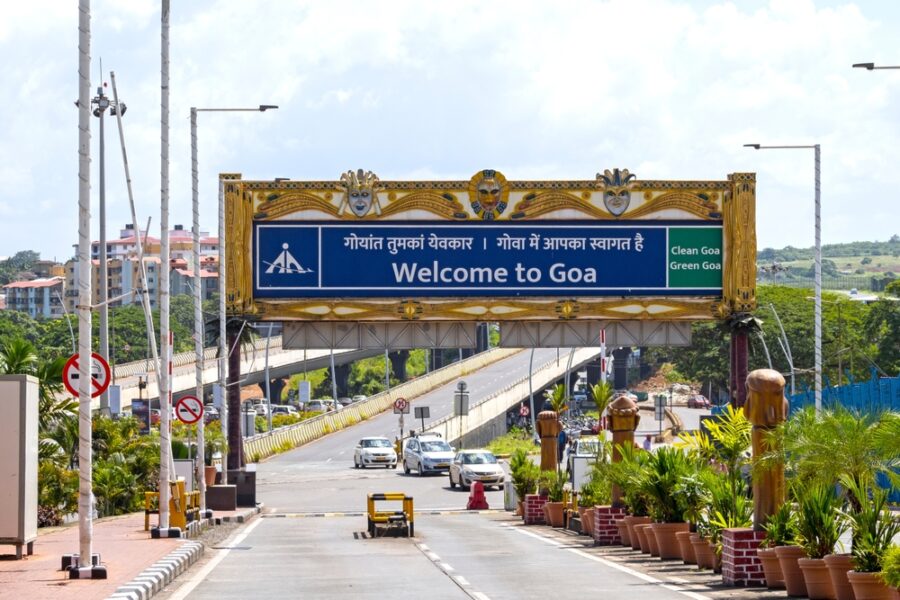
Police in Colva in the Indian state of Goa have broken up an alleged igaming operation after a raid that led to the arrest of four men.
According to officials, the operation began after authorities received a tip-off about illegal betting activities taking place inside a flat in the Vaswaddo area of Benaulim. Officers then began to verify the claims and secured a search warrant.

The overnight raid resulted in the suspects being caught accepting bets linked to computer-based games. Police found that the group had been running the operation from a common gaming house in a closed premises, effectively functioning as an illegal gambling setup.
Jiger Thakar, Dhaval Patel, Jay Patel from Gujarat, and Vishal Chawla from Haryana were arrested. Officers found and confiscated electronic equipment believed to have been used in the activity, including laptops, mobile phones, and related devices.
The total value of the seized items was estimated at around INR 260,000.

This comes as India is set to implement the Promotion and Regulation of Online Gaming Act on 1 May, banning real-money igaming.
A case has been registered under the provisions of the Goa, Daman and Diu Public Gambling Act.

Dig Deeper
Related stories
 2025/04/15: Goa police make 45 arrests in Indian Premier League gambling crackdown
 2026/05/01: Philippine National Police axe 11 senior officers over anti-gambling failures
 2025/04/11: Goa police stop illegal IPL betting operation through online apps
 2025/09/17: FanDuel to repay Jacksonville Jaguars US$5 million after team’s former employee stole US$22 million to gamble
2025/04/15: Goa police make 45 arrests in Indian Premier League gambling crackdown
2026/05/01: Philippine National Police axe 11 senior officers over anti-gambling failures
2025/04/11: Goa police stop illegal IPL betting operation through online apps
2025/09/17: FanDuel to repay Jacksonville Jaguars US$5 million after team’s former employee stole US$22 million to gamble
The Backstory
How a Goa raid fits a wider crackdown
The late-night arrests in Goa did not occur in a vacuum. Across Asia, police and immigration authorities have intensified operations against illegal online gambling, tightening enforcement as tech-enabled betting rings proliferate and migrate. In recent months, coordinated actions in the Philippines, India and Cambodia have led to arrests, seizures of equipment and stepped-up deportations of foreign nationals accused of running offshore platforms that target bettors across borders. The through line: tip-offs and digital forensics are accelerating raids, while governments pair on-the-ground policing with regulatory hard lines meant to deter the next iteration.
India’s push has gathered momentum at the national and state levels. Officials have moved toward stricter controls on real-money igaming and are leaning on existing public gambling laws to interrupt small, mobile operations that can spring up in rented flats and co-working spaces. State police units are deploying cyber teams to trace financial flows, freeze accounts and monitor social media advertising that funnels users to betting portals. The Goa arrests reflect that playbook, with the added signal that raids are expanding beyond sports wagering to computer-based games that mimic casino play.
Philippines shifts from tolerance to zero tolerance
Nowhere has the policy turn been more visible than in the Philippines, where authorities have targeted foreign-run hubs that flourished during the heyday of Philippine Offshore Gaming Operators, or POGOs. Following President Ferdinand Marcos Jr.’s July 2024 ban on all POGO operations, immigration agents have carried out repeated sweeps aimed at dismantling remnants of the industry.
Earlier this month, the Bureau of Immigration said it detained seven South Korean nationals in the Clark Freeport Zone on allegations they managed workstations tied to illegal betting platforms linked to global sporting events. The arrests, described in a Bureau of Immigration account of a Clark Freeport raid, underscored the government’s plan to arrest and deport violators of the ban. One suspect had been on the bureau’s wanted list since January 2025 for failing to depart after the POGO shutdown.
The Clark sweep followed an operation in Cebu City, where police said they found a condominium “mini-hub” that promoted numbers-based betting and sports wagering on major leagues through social media over five years. The unit allegedly generated at least PHP10 million a month. All four South Korean suspects posted bail and face charges under laws stiffening penalties for illegal numbers games, as detailed in a report on the Cebu online gambling hub raid.
Those cases came amid a series of cross-border moves. A joint effort by Philippine and Korean authorities led to multiple arrests, including a suspected ringleader in Clark and others nabbed at the airport and in subsequent operations. Korean officials allege the networks collectively made profits measured in trillions of won while operating clusters of sports betting and casino sites. The roundup, which coincided with new funds from the Philippine Amusement and Gaming Corp. to speed deportations, is captured in an account of four Korean nationals arrested in related stings.
India tightens the screws during marquee sports season
India’s enforcement surge has been especially visible during the Indian Premier League, when betting spikes and syndicates exploit fan traffic to expand their reach. In Andhra Pradesh, the director general of police convened a high-level meeting to task officers with aggressive action against organized betting networks, triggering raids on lodges and clubs and a clampdown on websites, apps and social channels that serve as conduits to offshore books. Authorities reported freezing suspect bank accounts and warned that repeat offenders could face detention and property seizure. That drive will run through the IPL season, as outlined in a report on the Andhra Pradesh crackdown.
The enforcement rhythm helps explain why smaller, apartment-based operations are drawing faster responses. With states building cyber units and standardizing cooperation with payment intermediaries, the lag between a tip-off and a warrant has narrowed. Investigators now focus on communications traffic, affiliate marketing patterns and device forensics to connect local hubs to larger networks and payment rails. The Goa arrests follow that script: a tip verified, a search warrant secured and a sweep that netted laptops and phones used to accept bets on computer-based games.
Policy is moving in parallel. Lawmakers advanced national measures to restrict real-money gaming and rein in advertising that blurs the line between entertainment and wagering. While implementation timelines and definitions vary by jurisdiction, the signal to operators has been clear. In states that already prohibit gambling, prosecutions are drawing on legacy laws adapted to digital contexts, with penalties extending from fines to property attachment.
Cross-border hubs face shrinking havens
As the Philippines and India step up operations, neighboring Cambodia has kept in place a hard line it first set years ago. Prime Minister Hun Sen halted online gambling in 2019, a decision that reshaped regional flows as many operators decamped from Sihanoukville and Phnom Penh. Yet enforcement remains active. In Phnom Penh, police said they detained about 170 foreign nationals in a raid that uncovered an alleged online operation alongside suspected trafficking and drug activity. Laptops, phones and passports were seized, and detainees not charged will be deported, according to a report on the Cambodia police raid.
The Cambodia case illustrates how illegal platforms often sit within broader criminal ecosystems that blend cyber fraud, coerced labor and illicit finance. That overlap raises the stakes for regulators across the region, who face pressure not only to police gambling laws but also to curb human trafficking and money laundering risks that accompany gray-market gaming.
At the same time, cross-border coordination is tightening. Korean authorities have tracked fugitives into Philippine hubs. Philippine agencies have paired cybercrime units with immigration teams and tapped state-owned gaming revenues to fund deportations. Indian police have shared intelligence across states as major sports seasons attract new operators. The net effect is fewer safe harbors for operators who rely on porous borders and light-touch regimes.
What to watch next
Three themes will shape the next phase. First, follow the money. Freezes of bank and e-wallet accounts in India, as well as reported multi-trillion-won profits in Korea-linked cases in the Philippines, suggest investigators are prioritizing financial disruption over one-off raids. Second, expect more immigration-led actions. The Philippines is leaning on deportations to thin foreign-run operations quickly, as seen in the Clark Freeport arrests and the multi-agency Korean stings. Third, watch the sports calendar. With enforcement pegged to peak betting periods, IPL and global sports events will likely trigger fresh waves of monitoring and raids, like those in Andhra Pradesh’s IPL-focused operation.
For operators weighing risk, the message is converging across jurisdictions: covert scale is harder to sustain, penalties are rising and cross-border mobility is no longer a reliable hedge. For regulators, the challenge will be keeping cyber tools and financial tracing ahead of constantly shifting platforms that can reboot with new domains and devices. The Goa raid slots into that larger contest, a reminder that a single apartment can be a node in a much larger network—and a trigger for the next round of enforcement.
