


Former NBA star Malik Beasley to plead guilty in federal sports betting case: report

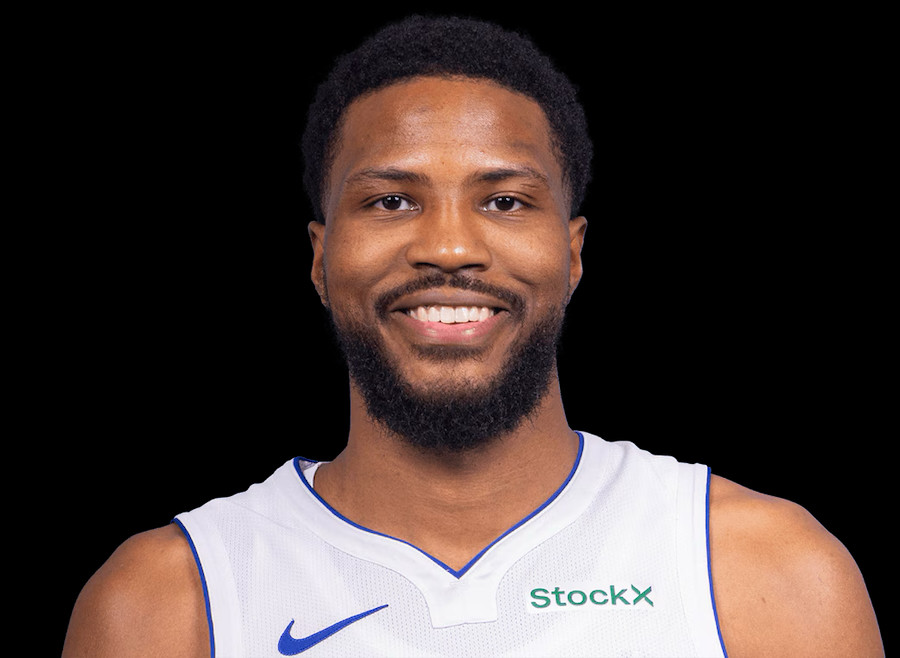
Former National Basketball Association (NBA) player Malik Beasley is reportedly going to plead guilty in his federal sports betting case, with his hearing scheduled for 9 December.
Over the weekend, Beasley’s attorney Steven Haney told ESPN that the former player was in talks with prosecutors regarding a potential plea agreement, clarifying on Tuesday that a deal had been reached, without providing details.

Beasley had initially pleaded not guilty to four federal charges: conspiracy to commit wire fraud, bribery in sporting contests, honest services wire fraud conspiracy and conspiracy to commit money laundering.
Beasley is one of six defendants in a case which alleges the former NBA star – who played nine seasons – had coordinated with sports bettors to manipulate his statistics across at least four NBA games in the 2023-2024 season while playing for the Milwaukee Bucks.
According to previous reports, prosecutors allege the manipulation allowed his co-conspirators to win at least US$21,000 in prop ets – wagers on specific events or individual performance.

The former player had allegedly accumulated millions in gambling losses before joining the scheme. One of the other defendants has already pleaded guilty this month, while two others are expected to plead guilty, while two other defendants have pleaded not guilty, including former NBA player Ed Davis.
Court documents reportedly include text messages in which the defendants allegedly talked about betting strategies and Beasley’s planned performances. The documents also reveal the “fraudulent wagers” were placed through betting companies’ “mobile applications and retail sportsbooks.”
Two of the three betting companies identified in the documents are classified as “co-official sports betting partners of the NBA” since “approximately 2021.”

Dig Deeper
Related stories
 2026/06/30: Former NBA stars Malik Beasley and Ed Davis indicted in illegal betting scandal
 2025/08/28: Former GVC boss Kenny Alexander among 11 charged in connection with fraud investigation
 2026/09/14: Indian national pleads guilty to US$9.36 million illegal gambling scheme
 2025/07/01: Federal authorities investigate Malik Beasley in relation to NBA gambling activity
2026/06/30: Former NBA stars Malik Beasley and Ed Davis indicted in illegal betting scandal
2025/08/28: Former GVC boss Kenny Alexander among 11 charged in connection with fraud investigation
2026/09/14: Indian national pleads guilty to US$9.36 million illegal gambling scheme
2025/07/01: Federal authorities investigate Malik Beasley in relation to NBA gambling activity
The Backstory
Prop bets move from compliance issue to criminal case
Malik Beasley’s expected guilty plea would mark a sharp turn in one of the most closely watched U.S. sports betting prosecutions since the expansion of legal wagering reshaped the relationship between professional leagues, sportsbooks and fans. What began as scrutiny of unusual betting patterns on individual player statistics has become a federal case alleging that a former NBA player coordinated with bettors to manipulate performance outcomes in regular-season games.
The case centers on prop bets, wagers tied to specific events or player statistics rather than the final score. Federal prosecutors say Beasley, while playing for the Milwaukee Bucks in the 2023-24 season, altered or attempted to alter his statistical output in at least four games so co-conspirators could profit. Those allegations connect directly to an earlier indictment of Beasley and former NBA player Ed Davis in an alleged illegal betting scheme, which accused Davis of acting as an intermediary between Beasley and bettors.
The alleged conduct underscores why prop betting has become a particular concern for leagues and regulators. These wagers can be influenced by decisions that are difficult for the public to detect in real time, such as whether a player takes fewer shots, avoids rebounds or leaves a game early. The integrity risk is magnified when markets are available through mobile betting applications and retail sportsbooks, the same channels cited in court documents tied to the Beasley case.
Unusual activity triggered early scrutiny
The federal case did not emerge in isolation. Months before the indictment, authorities were examining betting activity connected to Beasley’s player statistics during the 2023-24 NBA season. At the time, he was with Milwaukee, though he later became associated with the Detroit Pistons. Reports of the inquiry said at least one sportsbook noticed unusual action on Beasley-related props, including heavy wagering before a Jan. 31, 2024, game between the Bucks and Portland Trail Blazers.
In that example, bettors heavily backed the under on Beasley recording 2.5 rebounds. The odds reportedly moved significantly before the game. Beasley finished with six rebounds, meaning those wagers lost, but the pattern was enough to draw attention. The earlier report that federal authorities were investigating Beasley over NBA gambling activity showed how monitoring systems and sportsbook alerts can provide the first public sign of a wider criminal inquiry.
The immediate business consequences were also notable. Beasley had been in talks with Detroit on a three-year, US$42 million contract, but those negotiations were put on hold after the investigation became public. The episode highlighted a growing reality for athletes: betting-related inquiries can affect employment, endorsement and league status before any conviction. For teams, even an unresolved investigation can complicate roster decisions and salary commitments.
Indictment broadened the alleged network
The later indictment transformed the matter from a betting integrity concern into a broader fraud and bribery prosecution. The charges included wire fraud conspiracy, bribery in sporting contests, honest services wire fraud conspiracy and money laundering conspiracy. Prosecutors alleged that Beasley had accumulated significant gambling losses and that bribe payments were sometimes used to reduce debts he owed to Davis.
The indictment described a structure familiar in sports corruption cases: an athlete with access to the field of play, intermediaries who communicate with bettors and betting accounts used to place wagers before information becomes public. Court documents reportedly included text messages in which defendants discussed betting strategies and Beasley’s planned performance. Prosecutors said wagers were placed through betting companies’ mobile applications and retail sportsbooks, with two of the three identified companies described as NBA co-official sports betting partners since about 2021.
That detail carries reputational stakes for the league and the regulated betting industry. Since the U.S. Supreme Court opened the door for expanded legal sports wagering in 2018, major leagues have embraced sportsbook partnerships, data deals and advertising revenue. The Beasley allegations show the tension in that model: the same legal channels that create transparency and tax revenue also provide markets that can be exploited if insiders manipulate information or performance.
A wider NBA enforcement wave
The Beasley case is part of a broader run of betting-related enforcement involving current and former NBA figures. The earlier indictment noted that over the past two years, six current or former NBA players had been named in illegal betting schemes. Three defendants in similar Eastern District of New York cases were described as co-conspirators in Beasley’s case, including former NBA player Damon Jones, who pleaded guilty in a sports betting case involving Terry Rozier.
Another related prosecution has already produced prison time. A Brooklyn federal judge issued the first prison sentence in an NBA betting scandal involving Terry Rozier and Jontay Porter, giving Timothy McCormack two years after prosecutors said he used nonpublic player information to defraud sportsbooks. Porter pleaded guilty in 2024 and was banned from the NBA. Rozier pleaded not guilty to allegations that he helped friends profit from wagers tied to games when he played for the Charlotte Hornets.
Those cases share a common theme: sports betting crimes increasingly revolve around inside information and micro-markets rather than traditional point shaving. A player need not determine the winner of a game to affect a prop bet. A limited statistic, an early exit or a disclosed injury can be enough to move money. That makes the enforcement burden more complex for leagues, sportsbooks and regulators, which must distinguish legitimate performance variance from coordinated manipulation.
Federal prosecutors lean on fraud tools
The charges against Beasley also reflect how federal prosecutors are using broad fraud statutes to pursue gambling-related misconduct. Wire fraud, money laundering and conspiracy counts can capture conduct that crosses state lines through digital betting platforms, messaging apps and financial transfers. Bribery in sporting contests adds a charge tailored to the alleged corruption of athletic competition, but the backbone of these cases often remains the movement of money and communications.
That strategy mirrors other gambling prosecutions outside sports integrity. In Missouri, for example, an Indian national pleaded guilty in a US$9.36 million illegal gambling scheme involving arcade-style businesses that prosecutors said operated illegal games of chance. Though factually distinct from the NBA cases, the matter shows how federal agencies have focused on wire fraud, illegal gambling business counts and money laundering when pursuing gambling enterprises.
The enforcement climate is not confined to the U.S. or to athlete misconduct. In the U.K., former GVC Holdings Chief Executive Kenny Alexander was among 11 people charged in connection with a fraud investigation tied to gambling services in Turkey between 2011 and 2018. That case involves different allegations, including conspiracy to defraud and bribery, but it points to a broader regulatory direction: gambling-linked financial conduct is drawing sustained criminal scrutiny.
Why the plea matters
If Beasley pleads guilty, prosecutors would secure an admission from the central player alleged to have influenced the underlying NBA statistics. That would strengthen the government’s position against remaining defendants and could provide more detail about how the scheme operated, including communications, payment flows and sportsbook accounts. It also may accelerate plea decisions by other defendants facing trial risk.
For the NBA, the case deepens the challenge of protecting competitive integrity while maintaining commercial ties to legal betting. Leagues have argued that regulated markets are easier to monitor than illegal ones. The Beasley matter supports that point to a degree, because unusual betting activity appears to have helped surface concerns. But it also shows that regulated markets can become targets when insiders believe they can exploit obscure wagering categories.
The stakes now extend beyond Beasley’s sentence. Teams, leagues and betting operators will face pressure to tighten education, monitoring and limits around player-specific markets. The central question is whether the industry can preserve consumer access to prop betting while reducing the incentive and opportunity for athletes, associates or intermediaries to corrupt the data those markets depend on.
