


Entain plans to cut around 400 customer care jobs: report

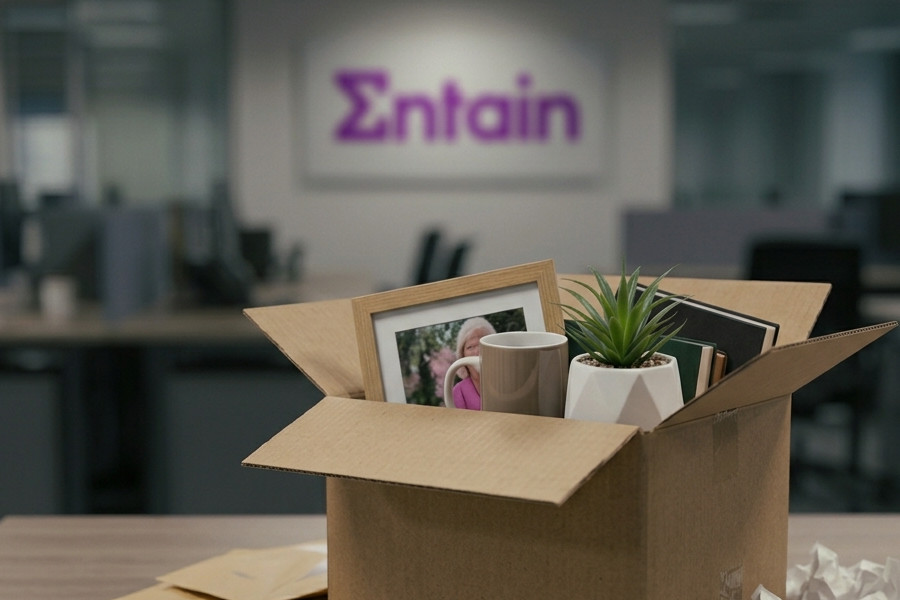
Global gaming group Entain is planning to cut approximately 400 customer care jobs as it seeks to reduce costs and cope with higher taxes in the UK.
According to The Guardian, Entain has begun a consultation process that could affect around 20% of its 2,000 customer care staff.

These plans come just weeks after the company reported £479 million (US$641 million)1 GBP = 1.3381 USD
2026-09-17Powered by CMG CurrenShift in underlying operating profits for the first half of 2026. While the figure was 2% lower than the same period in 2025, it was still higher than the company’s investors had anticipated.
Entain said higher gambling taxes in the UK were among the reasons behind the planned job cuts.
Entain’s Chief Executive Stella David added that the layoffs were proposed to ensure the “business remains competitive, financially resilient, and well positioned for the future as our sector faces an increasingly challenging operating environment.”

At the same time, Entain is preparing to expand its presence in New Zealand as the country moves towards launching its regulated online casino market, which is expected to open on 1 December this year after the Online Casino Gambling Act 2026 came into effect on 1 May of this year.
The company expects the market to attract several major gaming operators, with up to 15 licenses available.
As reported by our sister publication Inside Asian Gaming, Andrew Hannan – Entain Australia and New Zealand’s Director of Industry and External Affairs – said the existing grey market shows strong demand for online gambling in the country.

“The grey market is very prevalent. We think it could be up to about NZ$920 million (US$527 million)1 NZD = 0.5728 USD
2026-09-17Powered by CMG CurrenShift in a couple of years’ time because of the size of the market,” he commented.
Entain plans to bid for three of New Zealand’s 15 available licenses, which would be the maximum allowed for any one gambling operator.
Charlotte Capewell brings her passion for storytelling and expertise in writing, researching, and the gambling industry to every article she writes. Her specialties include the US gambling industry, regulator legislation, igaming, and more.

Dig Deeper
Related stories
 2026/06/26: Entain divesting European interest, selling 20% of Entain CEE to Emma Capital for US$484 million
 2026/07/17: Entain to cut 500 jobs as UK gambling tax pressure increases: report
 2026/02/10: Entain shifts focus to online growth in New Zealand
 2026/08/13: Entain’s 1H26 net gaming revenue rises 5% as online drives growth
2026/06/26: Entain divesting European interest, selling 20% of Entain CEE to Emma Capital for US$484 million
2026/07/17: Entain to cut 500 jobs as UK gambling tax pressure increases: report
2026/02/10: Entain shifts focus to online growth in New Zealand
2026/08/13: Entain’s 1H26 net gaming revenue rises 5% as online drives growth
The Backstory
Tax pressure meets a restructuring push
Entain’s plan to cut about 400 customer care roles fits into a broader reset at one of the world’s largest betting and gaming groups, where management is trying to protect margins while absorbing higher costs in its core U.K. market. The proposed cuts, which would affect about one-fifth of its customer care staff, follow earlier workforce reductions and come despite first-half profit that exceeded investor expectations.
The company has framed the latest proposal as a response to a tougher operating environment, including higher U.K. gambling taxes. That explanation is consistent with earlier disclosures. Entain previously estimated that tax changes introduced by the U.K. government in April would add about £200 million to annual costs, increasing pressure on a business already contending with regulation, intense digital competition and shareholder scrutiny.
Those pressures were visible before the current customer care consultation. Entain was already moving to cut costs across the group, with Bloomberg reporting that the company planned to eliminate 500 roles across corporate, product and technology teams. That round of reductions, described in earlier reporting on Entain’s global job cuts, represented about 2% of the company’s workforce and was tied to management’s focus on growth, margin expansion and cash generation.
Profit resilience has not removed cost concerns
Entain’s financial performance has been stronger than the scale of its restructuring might suggest. In the first half of 2026, the company reported 5% year-over-year growth in net gaming revenue to £2.5 billion, supported by online momentum and higher betting and gaming volumes. Online net gaming revenue rose 7%, while regions including Australia, the U.K. and Ireland performed strongly.
Still, underlying earnings moved in the opposite direction. EBITDA fell 2% to £479 million, even though that result topped market expectations. The figures, detailed in Inside Asian Gaming’s coverage of Entain’s first-half results, underscored the company’s central challenge: revenue growth is not fully offsetting pressure from taxes, compliance costs and investment needs.
Entain maintained its full-year outlook, forecasting online net gaming revenue growth of 5% to 7% on a constant-currency basis and underlying EBITDA of £910 million to £960 million. But the outlook also depends on cost control. For investors, the question is whether management can convert online growth into cash generation while avoiding erosion from higher taxes and restructuring charges.
The company’s share performance has added urgency. Entain’s stock has fallen sharply over the past year amid concerns about profitability and the effect of tax changes on U.K.-exposed operators. That has made management’s capital discipline a central part of its equity story, alongside operational improvements and expansion into selected growth markets.
Asset sales are part of the balance sheet response
Cost reductions are only one part of Entain’s response. The company has also moved to simplify its portfolio and reduce debt, most notably through a planned phased exit from its Central and Eastern Europe business. Entain agreed to sell a 20% interest in Entain CEE to joint venture partner EMMA Capital for €425 million, a transaction that implied a €2.1 billion valuation for the unit.
The deal, covered in Inside Asian Gaming’s report on Entain’s European divestment, marked a shift from expansion to capital recycling. Entain CEE was built through earlier deals involving Croatian operator SuperSport and Poland’s STS, but management now says the proceeds will be used to reduce debt. Completion is expected in the fourth quarter of 2026, subject to regulatory approvals.
The sale also changed the company’s earnings profile. Entain said it would no longer recognize its share of Entain CEE profits and dividends until a full exit is achieved, and it adjusted online EBITDA margin guidance to reflect the divestment. That trade-off shows the tension in the strategy: asset sales can strengthen the balance sheet and support shareholder returns, but they also remove profit contributions from businesses that were previously part of the growth portfolio.
Management has said proceeds from a future full exit would help bring reported leverage below three times, with excess capital potentially returned to shareholders. That objective explains why job cuts, divestments and operating discipline are being pursued at the same time. Entain is trying to demonstrate that it can generate cash and reduce leverage without giving up growth in markets it considers strategically important.
New Zealand has become a key growth option
While Entain is cutting costs in mature markets, it is positioning itself for expansion in New Zealand. The country’s Online Casino Gambling Act 2026 came into force on May 1, creating a regulated online casino licensing regime intended to replace a market long served by offshore operators. From Dec. 1, only licensed operators will be allowed to serve New Zealand customers.
The market structure is especially important for Entain. Only 15 online casino licenses are expected to be available, and operators are limited to a maximum of three licenses. Entain already has a strong position through its long-term strategic partnership with TAB New Zealand and the exclusive license for online racing and sports betting. That gives it an established customer base and brand presence before online casino licenses are awarded.
The company has been explicit about its ambitions. Entain has said it intends to bid for multiple licenses and hopes to become the only operator offering a full suite of online gambling products in the country. Those plans gained further weight when the company appointed Chris Haigh to a newly created managing director role for New Zealand, a leadership change described in Inside Asian Gaming’s report on Entain’s New Zealand management revamp.
New Zealand also offers growth that is difficult to replicate in Australia, where online casinos remain prohibited. Entain’s international first-half results showed online net gaming revenue in New Zealand up 21%, suggesting momentum ahead of regulation. For a group under pressure in the U.K., a newly regulated market with capped licenses and existing customer relationships offers a chance to redeploy attention toward higher-growth digital revenue.
A sharper focus after regional missteps
Entain’s current strategy in Australia and New Zealand also reflects lessons from earlier missteps. Regional management has acknowledged that investments outside the company’s core strengths, including thoroughbred horse ownership and pub-based gambling lounges, failed to deliver the desired results. The response has been to sell noncore operations, cut local headcount and refocus on digital betting and gaming products.
Andrew Vouris, who became head of Entain’s Australia and New Zealand operations after Dean Shannon’s departure, has emphasized discipline and online growth. In coverage of Entain’s shift toward New Zealand online growth, the company’s regional strategy was presented as a move away from costly diversification and back toward Ladbrokes, Neds and TAB-related online opportunities.
That pivot is directly connected to the broader group restructuring. Entain is not retreating from growth, but it is becoming more selective about where it spends capital and management time. Markets with clear regulation, scalable online products and existing brand advantages are likely to receive support. Activities that consume capital without improving the group’s digital position are more vulnerable.
The stakes are high because Entain must balance competing demands. It needs to satisfy investors seeking stronger cash generation and lower leverage. It must manage higher taxes and compliance expectations in the U.K. and other established markets. It also has to invest enough in technology, product quality and customer service to compete with rivals and retain customers as gambling markets continue shifting online.
The latest customer care job cuts therefore are not an isolated efficiency measure. They are part of a wider attempt to reshape Entain around fewer priorities: protect margins, reduce debt, exit selected assets and pursue regulated online growth where the company believes it has an edge. Whether that strategy can offset tax pressure without weakening service quality or execution will shape how investors judge the next phase of Stella David’s turnaround.
