


New Zealand government publishes online gambling rules

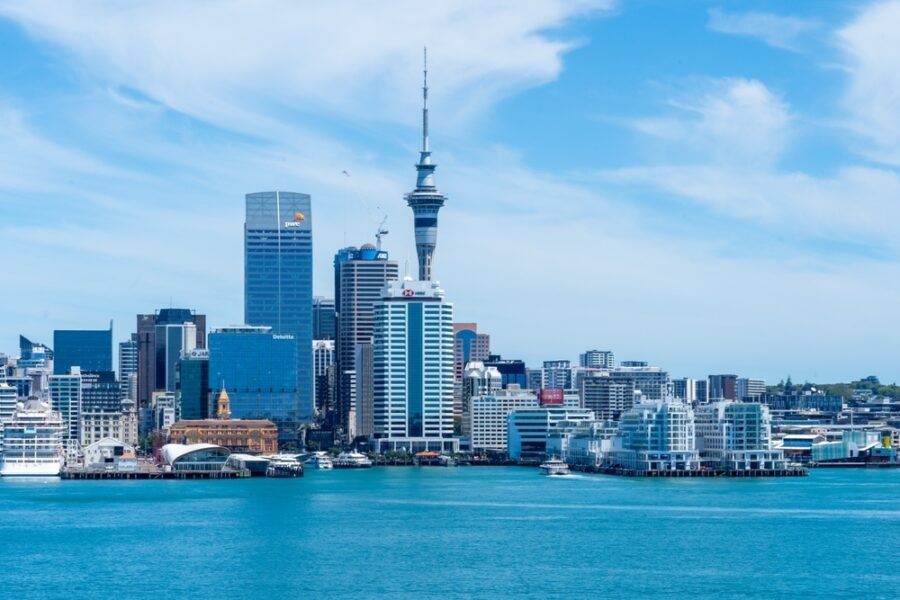
The New Zealand government has introduced regulations to implement the Online Casino Gambling Act 2026, ahead of the legislation taking effect on 3 July 2026.
The Act establishes a legal and regulated online casino market in New Zealand, introducing a licensing framework for operators and granting authorities oversight of igaming activity.

The newly released regulations were approved through an Order in Council following proposals from the Minister of Internal Affairs.
The rules set out player protection requirements that licensed operators in New Zealand must follow. Players will be able to set daily, weekly, or monthly limits on spending, deposits, and play time. Operators must provide self-exclusion tools, time-out options, and ‘break-in-play’ features.
Customer identification verification will be required before accounts can be activated, while the regulations will prohibit the use of credit cards and other credit-based payment methods for igaming deposits.

In addition to prohibiting autoplay mechanics on slot games, licensed operators may not permit users to play more than one online slot at the same time.
Moreover, advertising restrictions will ban several forms of gambling promotion, including sponsorship-style advertising, affiliate marketing, adverts promoting impulsive play, personalized offers targeting increased spend, and marketing that targets under-18s.
Gambling advertisements will be prohibited from appearing on public transportation, the front pages of print publications, and more.

Operators will be required to submit regular reports to regulators on user metrics and profits, alongside paying a quarterly levy equal to 3.5% of online gambling profits.

Dig Deeper
Related stories
 2025/03/11: New Zealand’s SkyCity calls on government to limit online gaming licenses to five
 2026/07/01: Entain revamps New Zealand leadership ahead of regulated online casino market launch
 2025/07/03: New Zealand’s closed licensing regime presents ‘good test case’ for better regulation
 2026/06/24: New Zealand’s largest illegal lottery operator sentenced over US$6.2 million operation
2025/03/11: New Zealand’s SkyCity calls on government to limit online gaming licenses to five
2026/07/01: Entain revamps New Zealand leadership ahead of regulated online casino market launch
2025/07/03: New Zealand’s closed licensing regime presents ‘good test case’ for better regulation
2026/06/24: New Zealand’s largest illegal lottery operator sentenced over US$6.2 million operation
The Backstory
From offshore access to domestic control
New Zealand’s online casino framework has moved from a policy promise to an operating regime. The regulations published for the Online Casino Gambling Act 2026 fill in the detail that operators, consumers and regulators had been waiting for: how accounts must be verified, how gambling limits must work, what forms of advertising are off limits and how much operators must contribute through a quarterly levy.
The shift follows years in which New Zealanders could legally use offshore gambling sites while the government had little practical oversight of the companies taking their money. That gap drove the case for legislation. When the online gambling legalization bill cleared its first parliamentary hurdle, Internal Affairs Minister Brooke van Velden framed the proposal as a response to an unregulated offshore market, arguing that New Zealand needed enforceable safety standards, harm minimization rules and a licensing system rather than continued reliance on foreign operators outside domestic supervision.
The newly published rules show how that strategy will be implemented. Rather than ban online casino gambling, New Zealand is bringing a limited number of operators into a regulated market, with the Department of Internal Affairs positioned as the central regulator. The model is intended to capture activity already taking place, apply consumer protections and create a tax and levy base from a sector that had largely operated beyond the reach of local rules.
A licensing model shaped by political compromise
The core architecture was established as the legislation advanced through Parliament. The bill proposed up to 15 online casino licenses, a competitive process for operators and penalties of up to NZ$5 million for serious breaches. Those elements survived scrutiny and were reinforced when New Zealand’s online casino bill passed its final parliamentary reading, leaving the government to move from broad policy to operational regulations.
That passage was significant because it confirmed several political decisions. New Zealand would not copy prohibition-based approaches, nor would it reserve the market for domestic incumbents. Offshore-based casino companies would be able to apply, but only if they accepted licensing conditions, paid tax in New Zealand and complied with harm-prevention standards. The Department of Internal Affairs would gain enforcement tools including warnings, fines and take-down notices.
The regulations now give those principles practical force. Operators must verify customer identity before accounts are activated, restrict credit-funded deposits and offer tools such as self-exclusion, time-outs and break-in-play features. Players must be able to set limits on spending, deposits and play time across daily, weekly or monthly periods. Slot play is also constrained through bans on autoplay and simultaneous play on more than one online slot.
Those requirements are designed to reduce the speed and intensity of online gambling, two issues that have made digital casino products a focus for public health advocates. By embedding limits and friction into product rules, the government is trying to prevent the regulated market from simply legitimizing the same high-risk behavior that critics associated with offshore gambling.
Community funding became the central fault line
The most contentious issue was not whether online gambling should be regulated, but who should benefit from the revenue. The original proposal triggered a backlash because critics said it lacked a clear community benefit principle, unlike New Zealand’s long-standing rules for gaming machine proceeds. Under the Gambling Act 2003, gaming machine operators have been required to return a share of revenue to sports clubs, charities, cultural groups and other community causes.
That contrast was central to criticism of the bill. As New Zealand’s online gambling bill faced backlash, opponents warned that allowing online casino operators to advertise and retain profits without a comparable community return would undermine the funding model that supports grassroots organizations. The concern was intensified by estimates that the online market was already worth nearly NZ$800 million a year and growing.
Sports organizations became some of the most vocal critics. Sport Otago CEO James Nation said the bill risked deepening inequality if offshore operators could profit from New Zealand customers while social costs remained local. In a related dispute, Sport Otago urged the government to amend the gambling bill, reflecting broader concern among regional sports bodies that online gambling could divert spending away from channels that currently fund community activity.
The final law partly answered that pressure by stating that revenue from licensed operators would support sport and other social causes. The regulations add a 3.5% quarterly levy on online gambling profits, creating a recurring mechanism tied directly to market performance. That levy sits alongside the broader tax obligations operators will face and marks a policy shift from merely licensing offshore firms to extracting public value from their New Zealand-facing business.
Advertising limits reflect a tighter social license
Advertising was another major point of contention because legalization could have allowed online casino brands to become more visible in everyday life. The regulations therefore impose broad restrictions intended to prevent normalization of gambling, especially among children and vulnerable groups. The rules ban sponsorship-style advertising, affiliate marketing, promotions encouraging impulsive play and personalized offers designed to increase customer spending.
The limits also restrict where gambling ads may appear. Promotions will be barred from public transportation, the front pages of print publications and other high-visibility settings. Marketing targeting under-18s is prohibited. These controls reflect the political bargain behind legalization: operators may gain lawful access to New Zealand customers, but they will not receive an unrestricted right to build mass-market brands.
The advertising rules also respond to earlier concerns from sports organizations. Sponsorship-style promotion had the potential to connect online casinos with clubs, leagues and events, creating new revenue opportunities but also exposing community sport to gambling branding. By cutting off that channel, the government is prioritizing harm minimization and youth protection over a more commercially open model.
That approach leaves operators with a narrower path to customer acquisition than in some regulated markets. It may also reduce the value of licenses for companies accustomed to affiliate networks, personalized bonus campaigns and sports sponsorship. But the restrictions are consistent with the government’s attempt to distinguish regulation from promotion: New Zealand is allowing online casino gambling under license, not encouraging market expansion without constraint.
New Zealand diverges from regional crackdowns
New Zealand’s model stands in contrast to India’s more prohibitive turn. The Indian Ministry of Electronics and Information Technology recently published draft rules for its online gaming bill, which seeks to draw a hard line between gaming and gambling by banning most real-money games while supporting e-sports and video games. Under that framework, people who interact with or promote banned platforms could face penalties including jail time.
That comparison is useful because it shows the range of policy responses now emerging across major markets. India is trying to remove real-money online gambling from the formal digital economy. New Zealand is taking the opposite route, accepting that offshore access already exists and attempting to regulate, tax and supervise it. Both approaches are framed around consumer protection, but they differ sharply on whether legalization or prohibition is the better tool.
The stakes for New Zealand will become clearer once licensing begins and operators decide whether the market is attractive under the new constraints. The cap of 15 licenses creates scarcity, while the levy, product controls and advertising limits raise compliance costs. Operators that secure approval will gain legal certainty in a developed market, but they will also face close monitoring and exposure to penalties if they fail to meet local standards.
For consumers, the immediate test will be whether regulated sites offer safer products without driving players back to unlicensed offshore alternatives. For community groups, the question is whether tax and levy arrangements deliver meaningful funding as gambling shifts online. For the government, success will depend on balancing three goals that can pull in different directions: reducing harm, capturing revenue and preventing the regulated market from becoming a platform for aggressive gambling growth.
