


Entain to cut 500 jobs as UK gambling tax pressure increases: report

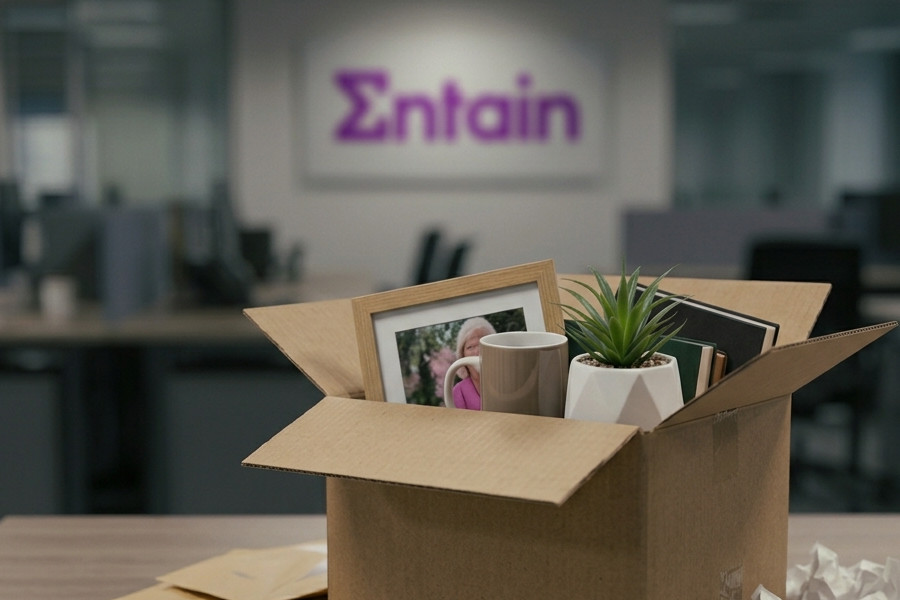
Global sportsbook operator Entain is reportedly going to reduce its global workforce by 500 roles, representing approximately 2% of its employees.
According to financial data first published by Bloomberg, the job cuts have already begun and will affect teams across corporate, products and technology.

In an email sent to staff, Entain said the move is part of efforts to improve efficiency and support its focus on “growth, margin expansion and cash generation.” The company cited a challenging operating environment, as the gambling market faces increased taxes, regulatory changes and rising competition from prediction market platforms.
The cuts follow tax increases introduced by the UK government in April this year. Entain previously estimated that these changes would increase its annual costs by around £200 million (US$269 million)1 GBP = 1.3460 USD
2026-07-17Powered by CMG CurrenShift.
The company has also taken steps to strengthen its financial position, including selling a 20% stake in its Central and Eastern European business to reduce debt. Its shares have fallen 40% in the past year amid concerns about the impact of higher taxes on profitability.

When asked about the job cuts in an email sent by Bloomberg, an Entain spokesperson replied, “These changes will help make Entain a stronger, better business and are further demonstration of our strategic focus on maximizing shareholder value.”
Even as it reduces its workforce, Entain is focusing on new opportunities. Andrew Vouris, Chief Executive of Entain’s Australia and New Zealand branch, told the Australian Financial Review in February that the group is placing greater focus on entering New Zealand’s market, which is expected to launch on 1 December, 2026, in an effort to secure a stronger position when it goes live.
Charlotte Capewell brings her passion for storytelling and expertise in writing, researching, and the gambling industry to every article she writes. Her specialties include the US gambling industry, regulator legislation, igaming, and more.

Verticals:
Sectors:
Dig Deeper
Related stories
 2026/06/26: Entain divesting European interest, selling 20% of Entain CEE to Emma Capital for US$484 million
 2026/06/09: FanDuel goes through third round of layoffs in a year
 2026/02/10: Entain shifts focus to online growth in New Zealand
 2025/02/18: Former Entain execs sue company over bribery case
2026/06/26: Entain divesting European interest, selling 20% of Entain CEE to Emma Capital for US$484 million
2026/06/09: FanDuel goes through third round of layoffs in a year
2026/02/10: Entain shifts focus to online growth in New Zealand
2025/02/18: Former Entain execs sue company over bribery case
The Backstory
Tax pressure turns into a cost-cutting test
Entain’s plan to cut about 500 jobs marks the latest sign that large gambling operators are being forced to defend margins as governments, regulators and investors demand more from the sector. The reductions, equal to about 2% of the company’s global workforce, come after the U.K. government introduced tax increases in April that Entain has said could add about 200 million pounds to annual costs.
The cuts are not isolated. They follow a period in which Entain has been reshaping its balance sheet, reviewing assets and trying to persuade shareholders that it can improve cash generation after a sharp fall in its share price. The company has framed the workforce reduction as part of a wider push for efficiency, but the backdrop is broader: higher tax bills, tighter gambling rules, tougher advertising scrutiny and new competitive threats are changing the economics of sports betting and iGaming.
For Entain, whose brands include Ladbrokes, bwin, Eurobet, Gala, Partypoker and PartyCasino, the stakes are particularly high. The company operates across online and retail betting markets, owns half of BetMGM with MGM Resorts in the U.S. and has exposure to several European and international markets. That scale offers diversification, but it also leaves the group exposed to regulatory and tax shifts in multiple jurisdictions at once.
Debt reduction became a strategic priority
The job cuts follow Entain’s decision to begin exiting part of its Central and Eastern Europe business, a move designed to unlock cash and reduce leverage. In June, the company announced it would sell a 20% interest in Entain CEE to its joint venture partner EMMA Capital for 425 million euros, or about $484 million. The deal was described as the first step in a broader phased exit from the business.
Entain CEE was created in 2022 after EMMA sold a majority stake in Croatian gambling company SuperSport to Entain. The venture later expanded through the acquisition of STS, Poland’s largest bookmaker. Under the latest transaction, EMMA Capital is set to increase its stake in the venture to 42.5%, while Entain’s holding will fall to 47.5%.
The company said proceeds from the transaction would be used to cut debt, with completion expected in the fourth quarter of 2026, subject to regulatory approvals. Entain also said any eventual proceeds from a full exit would support its goal of bringing reported leverage below three times earnings, with excess capital potentially returned to shareholders.
That divestment helps explain the context for the current restructuring. As outlined in Entain’s sale of a 20% stake in Entain CEE to EMMA Capital, management has been trying to sharpen capital allocation and improve cash flow while maintaining growth guidance. But selling profitable assets can also lower reported earnings contribution, increasing the pressure on the remaining business to become leaner and more productive.
Regulation is narrowing the room for error
Across major gambling markets, operators are facing a less forgiving policy environment. The U.K. tax increases are the immediate trigger for Entain’s cost challenge, but similar pressure is visible elsewhere. Governments are increasingly treating online betting not only as a source of revenue but also as a public health concern, particularly as mobile products make wagering easier and more constant.
Australia shows how quickly political and regulatory risk can build. In recent months, medical groups and lawmakers have increased pressure on the federal government to act on gambling advertising. The Australian Medical Association has called for action after what it described as 1,000 days of delay since a parliamentary report recommended sweeping restrictions on gambling ads.
The association has argued that partial bans are ineffective and that ongoing exposure to betting promotions can harm vulnerable groups, including children. It has also cited gambling losses of AU$31.5 billion annually, or about AU$1,500 per adult each year, as evidence of broader social and health costs.
Those concerns were detailed in rising pressure on the Australian government over gambling advertising. For multinational operators, the message is clear: marketing practices that once fueled customer acquisition are increasingly vulnerable to legislative limits. Any advertising restrictions can raise acquisition costs, slow growth and force operators to rely more heavily on product quality, brand loyalty and disciplined retention.
Compliance failures add to sector scrutiny
Regulatory pressure is not limited to new laws. Enforcement actions are also reshaping the industry’s risk profile. In Australia, PointsBet was fined AU$500,000 by the Australian Communications and Media Authority after the regulator found the company sent more than 800 marketing messages that breached spam rules and obligations linked to BetStop, the national self-exclusion register.
The case was particularly sensitive because some messages were sent to people who had taken steps to exclude themselves from online gambling. PointsBet said it self-reported the issue and strengthened compliance processes, but the regulator’s action highlighted the reputational and financial risks that come with weak controls.
The penalty, described in PointsBet’s AU$500,000 fine for gambling advertising spam, also showed why operators are investing more in compliance infrastructure even as they cut elsewhere. Marketing automation, data management and customer protection systems now carry direct financial consequences. A missed unsubscribe option or a failure to screen against self-exclusion databases can become a public enforcement matter.
For Entain, which has large customer bases across multiple jurisdictions, those risks compound. Cost cutting cannot simply mean reducing regulatory, compliance or safer-gambling functions. The challenge is to find savings in corporate, product and technology teams while maintaining enough oversight to avoid fines, license pressure or political backlash.
Growth capital is moving toward clearer winners
Even as some global operators retrench, investors are still rewarding companies that can show growth, profitability and regulatory discipline. That contrast is visible in the U.S. market, where online gambling remains fragmented but offers scale for companies that can acquire customers efficiently and convert revenue into earnings.
Rush Street Interactive, the parent of BetRivers, has attracted increased institutional attention. BlackRock more than doubled its ownership stake over 15 months, according to a Legal Sports Report analysis, holding a 13.3% stake as of June 30. The increase came as Rush Street’s stock price rose sharply and the company reported stronger revenue and EBITDA growth.
As noted in BlackRock’s increased ownership of Rush Street Interactive, the company’s revenue rose to $1.1 billion in 2025, while adjusted EBITDA increased 66.2%. It also reported record first-quarter 2026 revenue of $370.4 million. That performance illustrates the market’s preference for operators that can pair top-line expansion with operating leverage.
Bet365 offers another comparison. The company returned to pre-tax profit in the year ended March 2024 after expanding in several U.S. states, even as Chief Executive Denise Coates took a substantial pay cut. Its revenue rose to 3.72 billion pounds, with betting revenue up 11%, supported by launches in states including Arizona, Iowa, Indiana, Kentucky, Louisiana, North Carolina and Pennsylvania.
The company’s results, covered in Bet365’s U.S.-driven growth and leadership pay cut, underscore the industry’s split screen: growth remains available, but it requires heavy investment and patience. For Entain, BetMGM provides U.S. exposure, but the group must balance that opportunity against debt reduction, tax costs and pressure to improve shareholder returns.
New markets offer upside but not relief
Entain is still looking for growth, including in New Zealand, where the company already operates TAB NZ through a long-term strategic partnership. Management has pointed to the country’s expected regulated online casino market as a future opportunity, with a launch anticipated in December 2026.
That push fits a broader pattern among major gambling groups: as mature markets become more expensive and more tightly regulated, operators seek jurisdictions where licensing frameworks are opening or being modernized. But those opportunities do not remove the near-term pressure. New markets often require upfront spending on technology, compliance, marketing and local partnerships before they contribute meaningfully to earnings.
The job cuts therefore reflect a company trying to create room to invest while absorbing higher costs. Entain’s strategic problem is not a lack of scale. It is that scale alone no longer guarantees resilience. Governments want more tax revenue, regulators want tighter safeguards, public health advocates want advertising restrictions and shareholders want cash generation.
That combination is forcing the company to simplify, sell assets and reduce headcount while still competing for customers in markets where rivals are growing. The result is a sharper operating model, but also a narrower margin for mistakes.
