


DAZN partners with ADI Predictstreet to launch free-to-play World Cup prediction market experience

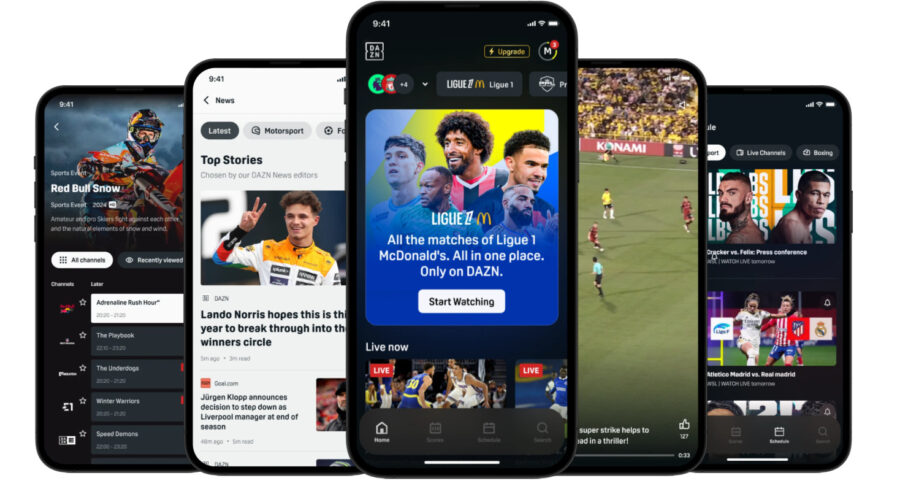
Sports entertainment group DAZN has partnered with prediction market operator ADI Predictstreet to launch a free-to-play prediction market experience for the World Cup.
The experience will be available on DAZN and will offer users a free way to interact with prediction markets, enabling them to engage with World Cup matches through real-time predictions, leaderboards, and exclusive rewards.

After the World Cup, ADI Predictstreet will work with DAZN across its vast sports portfolio and provide new engagement opportunities for the major leagues and competitions it covers, including ways to predict match outcomes and view tournament statistics.
DAZN users also will be able to earn points through accurate predictions, allowing them to compete with other users and win various prizes.
“DAZN is redefining sports entertainment by making it more immersive, interactive and connected for every fan, ” Shay Segev, CEO of DAZN Group, said in a news release. “Launching the ADI Predictstreet free-to-play experience directly within the DAZN app brings real-time prediction and fan participation into the heart of the live viewing experience. With millions of fans now able to play for free, compete on leaderboards, and engage with the world’s biggest sporting moments in entirely new ways, this launch represents another important step in the evolution of sports entertainment ahead of the FIFA World Cup 2026.”

DAZN also partnered with Polymarket this year to add prediction market trading features to its livestreams.
Charlotte Capewell brings her passion for storytelling and expertise in writing, researching, and the gambling industry to every article she writes. Her specialties include the US gambling industry, regulator legislation, igaming, and more.

Dig Deeper
Related stories
 2026/07/02: Australia gambling ad reform bill sent to Senate inquiry after backlash
 2026/05/28: Fanatics Markets launches World Cup prediction market hub
 2026/06/26: Australia’s Tabcorp and UK’s DAZN launch global sports entertainment platform ahead of World Cup Round of 32
 2026/01/27: Polymarket becomes the official prediction market of MLS and Leagues Cup
2026/07/02: Australia gambling ad reform bill sent to Senate inquiry after backlash
2026/05/28: Fanatics Markets launches World Cup prediction market hub
2026/06/26: Australia’s Tabcorp and UK’s DAZN launch global sports entertainment platform ahead of World Cup Round of 32
2026/01/27: Polymarket becomes the official prediction market of MLS and Leagues Cup
The Backstory
World Cup turns into a proving ground
DAZN’s partnership with ADI Predictstreet places the broadcaster in the middle of a fast-developing competition to make the 2026 FIFA World Cup more interactive, more measurable and more commercially valuable. The move is not isolated. It follows a series of deals in which media companies, betting suppliers, trading platforms and sports leagues have used soccer’s biggest tournament as a test case for prediction markets, data-driven fan engagement and free-to-play gaming.
The World Cup offers a rare combination of scale, schedule density and global attention. That makes it attractive for companies seeking to turn passive viewing into participation without always crossing into traditional sports betting. DAZN’s approach — a free-to-play prediction market experience inside its app — reflects that wider shift. The product is designed to keep fans engaged during matches through real-time predictions, leaderboards and rewards, while also giving DAZN another layer of data on user behavior across live sports.
For ADI Predictstreet, the deal broadens distribution after it became a more visible supplier in World Cup-related prediction products. For DAZN, it adds another engagement feature to a platform that has increasingly sought to position itself as more than a rights holder or streaming outlet. The commercial logic is straightforward: the longer fans remain inside the app, the more opportunities DAZN has to sell subscriptions, advertising, sponsorship and adjacent services.
DAZN’s data strategy was already taking shape
The latest agreement builds on DAZN’s earlier moves around soccer data and live engagement. In June, Sportradar reached a deal with DAZN to distribute ultra-low latency betting data and non-exclusive media content from the FIFA Club World Cup 2025 to hundreds of betting operators and media companies. Under the FIFA Club World Cup rights agreement between Sportradar and DAZN, the broadcaster gave Sportradar access to micro and player markets for all 63 matches.
That arrangement showed how DAZN’s rights portfolio could be used beyond conventional broadcasting. Sportradar said it would supply data for 190 pregame markets and 200 in-play markets, supported by its integrity systems. The deal also tied media coverage, betting data and fraud monitoring together, underscoring the infrastructure required when live sports content becomes linked to predictive or wagering-style products.
The Club World Cup agreement helped frame DAZN’s current World Cup initiative. A free-to-play prediction product is different from distributing betting data to operators, but both depend on speed, accuracy and user trust. In live soccer, prediction features lose value if data lags or outcomes are unclear. The earlier Sportradar deal showed DAZN’s willingness to support products built around granular match information, a prerequisite for more ambitious in-app engagement.
It also highlighted the integrity dimension. As broadcasters move closer to prediction mechanics, they face scrutiny over whether products encourage betting behavior or expose users to financial risk. DAZN’s choice of a free-to-play format helps lower that regulatory and reputational burden, but the broader ecosystem is still shaped by the same questions facing betting operators and event-contract exchanges: who monitors activity, how markets are structured and how disputes are handled.
ADI Predictstreet expands through fan platforms
ADI Predictstreet has been building its World Cup footprint through partnerships that place its technology inside large fan-facing platforms. Before the DAZN announcement, the company joined with Fanatics Markets to launch an official FIFA World Cup 2026 hub for U.S. soccer fans. The Fanatics Markets World Cup prediction hub combined prediction markets, live statistics, tournament news and fan content in one product available through the Fanatics Markets app and website.
That partnership was important because Fanatics brings a broad customer base across sports merchandise, collectibles, betting and gaming. ADI Predictstreet’s role as the technology provider allowed it to reach fans through a company that already has direct relationships with tens of millions of sports consumers. The model is similar to the DAZN deal: use an existing fan platform, rather than requiring users to discover a stand-alone prediction product.
The DAZN partnership takes that logic into live viewing. Fanatics can aggregate tournament engagement across a sports commerce and gaming ecosystem, while DAZN can embed predictions around the match broadcast itself. That distinction matters. Predictions made before or during a live event can influence how long users watch, how often they check the app and whether they return for the next fixture.
ADI Predictstreet’s emergence also reflects the way prediction markets are being packaged for different regulatory and commercial environments. In some cases, companies emphasize event contracts and trading. In others, they emphasize entertainment, points, rewards and social competition. DAZN’s product falls into the second category, using prediction-market mechanics without requiring users to stake money.
Trading platforms chase the same tournament
The pressure around World Cup prediction products is not limited to sports media companies. Financial technology and trading platforms have also moved aggressively into event contracts tied to the tournament. Robinhood expanded its 2026 World Cup prediction market offering through Rothera, the derivatives exchange in which Robinhood and Susquehanna International Group acquired a majority stake. The Robinhood World Cup prediction market expansion included contracts on match outcomes, total goals and the tournament winner.
Robinhood’s move signaled a broader strategic shift. The company had long relied on Kalshi for prediction market access, but the decision to route a large share of World Cup contracts through Rothera showed an effort to control more of the infrastructure behind event trading. Robinhood said routing decisions would depend on liquidity and the clarity of outcomes, while some player-related and combination contracts would remain on Kalshi.
That development illustrates why DAZN’s free-to-play product is commercially significant even without real-money trading. Prediction markets are becoming a battleground for customer acquisition, liquidity, engagement and data. Robinhood wants activity on its platform. Fanatics wants to deepen its connection with sports fans. DAZN wants live viewers to become active participants. Each company is approaching the World Cup from a different regulatory lane, but all are using predictions to make sports consumption more interactive.
The scale of trading activity has added urgency. Robinhood said more than 16 billion event contracts had traded on its platform so far in 2026, already exceeding the prior full-year total. That growth gives sports media companies a reason to adopt lighter, entertainment-focused versions of prediction products before financial platforms dominate the category.
Growth moves beyond the U.S. market
The prediction market push is also spreading geographically. Ovanti launched the initial release of its Ominari platform in Southeast Asia, positioning the product around football-related markets during the World Cup. The Ominari prediction market launch in Southeast Asia followed Ovanti’s deal with Yuno.trade and targeted a region the company described as having a population of 700 million.
Ovanti’s plan included markets such as match winners, group-stage progression, knockout advancement and tournament winners. It also pointed to future categories including entertainment, business, geopolitics, digital assets and macroeconomic news. That roadmap shows how operators view sports as an entry point into broader prediction market behavior. Soccer provides the immediate audience, but the long-term ambition is to normalize event-based forecasting across many subjects.
The growth numbers cited around the sector help explain the rush. Ovanti pointed to Pew Research Center data showing monthly trading volume on Polymarket and Kalshi rising from less than $5 billion in September 2025 to about $24 billion in April. Even if DAZN’s product does not involve paid trading, it is entering a market shaped by that surge in attention and user familiarity.
For DAZN, global reach is an advantage. The company can test a prediction experience around a World Cup audience and, if engagement is strong, extend the format to other competitions in its portfolio. The announcement already points beyond the tournament, with ADI Predictstreet expected to work with DAZN across major leagues and events after the World Cup.
Free-to-play becomes a safer bridge
The use of free-to-play mechanics also fits a broader sports gaming trend. Leagues and suppliers have increasingly used no-cost products to engage fans without exposing them to the same legal complexity as wagering. Aristocrat Leisure’s Product Madness, for example, launched NFL Super Bowl Slots as the first NFL-licensed free-to-play social casino mobile game for adults. The NFL-licensed free-to-play social casino launch blended team branding, player associations and social casino mechanics without positioning the product as sports betting.
That example is not a prediction market, but it helps explain the commercial template DAZN is following. Sports rights holders and media platforms want interactive products that extend fandom beyond the broadcast. Free-to-play games, leaderboards, badges and rewards offer a way to capture attention while managing regulatory risk and preserving access to broad audiences.
The stakes for DAZN are therefore larger than a single World Cup feature. The company is testing whether prediction markets can become part of the standard live sports interface, much like statistics, highlights and chat functions. If fans respond, broadcasters may increasingly treat prediction tools as core engagement infrastructure rather than optional add-ons.
That would deepen competition among media companies, trading platforms, betting suppliers and sports leagues. It also would raise fresh questions about responsible design, data use and the boundary between entertainment and gambling-like behavior. DAZN’s partnership with ADI Predictstreet sits at that intersection, using the World Cup as a global stage for the next phase of interactive sports media.
