


Cambodia PM links origin of scam problems in country to gaming

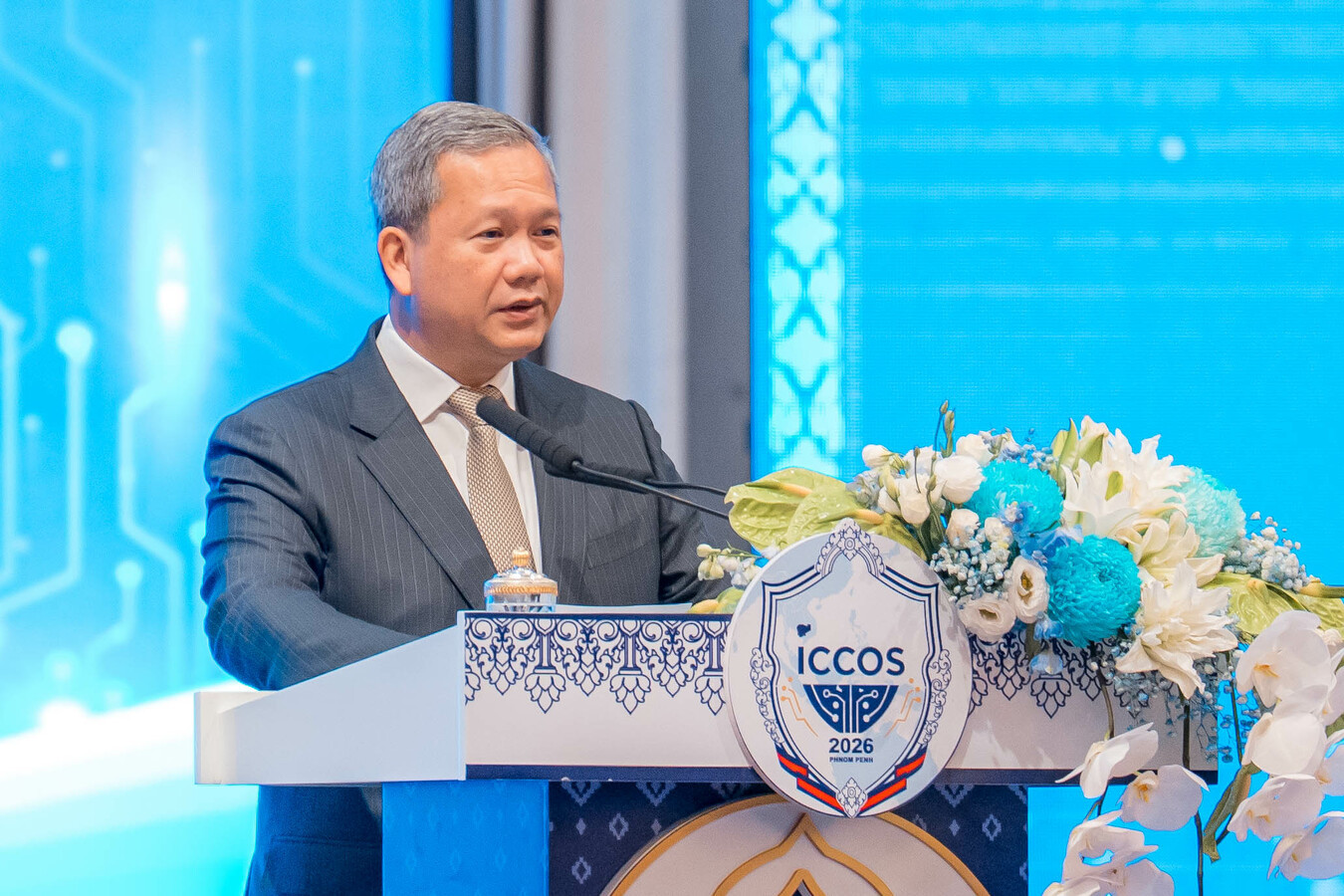
Cambodia’s Prime Minister has directly linked the online scam problem that has plagued the nation to the growth of online gambling and casino-related businesses.
In statements at the opening of the two-day International Conference on Combating Online Scams, Prime Minister Hun Manet said that the scam industry did not originate in Cambodia and is not confined to the country, but that casinos and online gaming caused the country’s early exposure to the issue.

The official hailed the country’s efforts in eliminating scam operations, stating “ Today, I declare that scam compounds no longer exist within the sovereign territory of the Kingdom of Cambodia.”
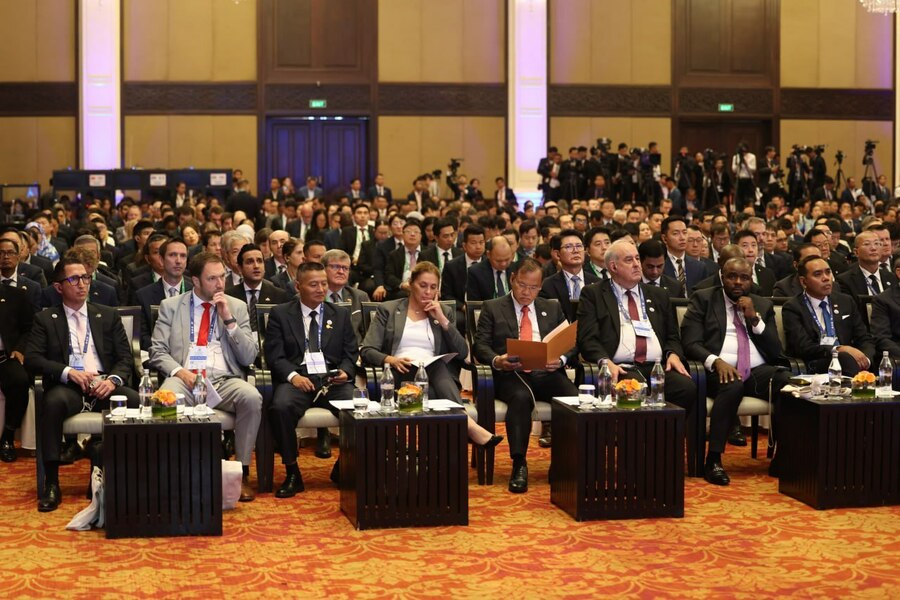
The official called for strong collective action against online scam operations, urging the delegates from 27 nations and seven international organizations to adopt the Phnom Penh Declaration on Thursday, “as a testament to our collective commitment to disrupt the chain and eradicate online scams.”
Chhay Sinarith, Senior Minister in charge of Special Missions and Head of the Secretariat of the Ad-Hoc Commission for Combating Online Scams (CCOS), indicated that the joint declaration would outline the collective commitment to combating online scams, providing a framework for strengthening cooperation, information sharing, capacity building, prevention, law enforcement, victim protection and coordinated responses to online scam crimes.

Nicholas Court, Director of Taskforce Coordination Directorate of INTERPOL said the international police body welcomes the Phnom Penh Declaration, advancing recognition of the importance of international cooperation in combatting fraud.
Meanwhile, China’s Vice Minister of Public Security Yang Weilin praised Cambodia’s efforts in combatting telecom and cyber fraud, saying it had fully eliminated large-scale casino-fraud compounds within its territory, arresting and repatriating tens of thousands of fraud-related suspects. Chinese citizens have been highly targeted by the scam operations, many of which have been organized by Chinese nationals.
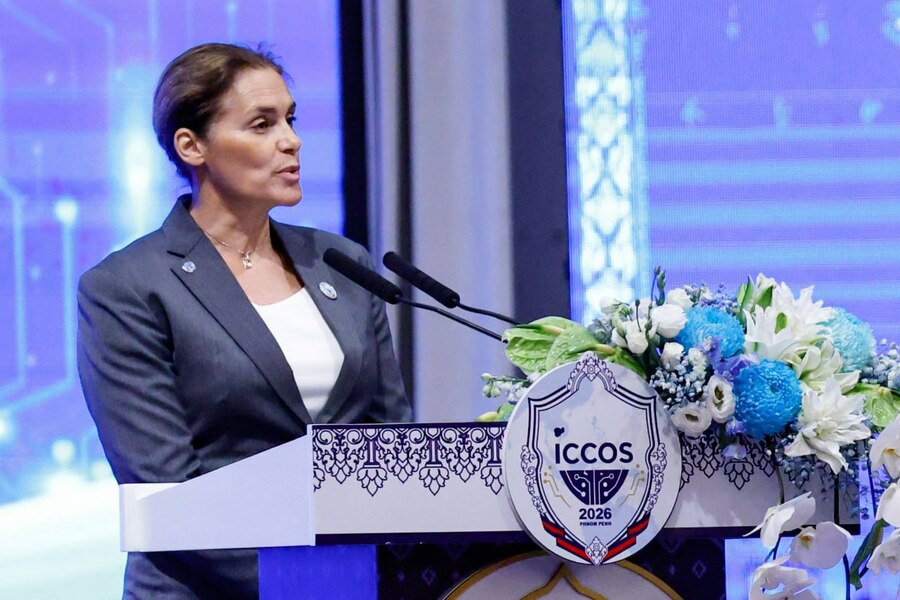
Also speaking at the event, the Regional Representative of the United Nations Office on Drugs and Crime (UNODC), Delphine Schantz praised Cambodia for the establishment of the CCOS.

“Let us use this opportunity to not just reflect on the progress made, and the challenges ahead, but to define clear, actionable steps toward more effective responses at the national, regional and global level,” noted Schantz.
The UNODC official specifically outlined five areas requiring immediate attention: developing a shared understanding of emerging trends; strengthening regulatory frameworks and digital-evidence capabilities; improving inter-agency cooperation and information analysis; increasing the involvement of the private sector, particularly FinTech and social media companies; and better understanding and disrupting how criminal profits are reinvested to expand criminal networks.

Dig Deeper
Related stories
 2026/09/07: Cambodia to end live-dealer streaming from casinos in October, amongst regulatory crackdown
 2026/07/30: Crypto scams estimated to cost Americans US$80.7 billion in 2025
 2026/01/09: Chen Zhi detained in China over online gambling and fraud allegations
 2026/06/30: APAC igaming suspicious transaction volumes down by 45% since 1Q24: fraud report
2026/09/07: Cambodia to end live-dealer streaming from casinos in October, amongst regulatory crackdown
2026/07/30: Crypto scams estimated to cost Americans US$80.7 billion in 2025
2026/01/09: Chen Zhi detained in China over online gambling and fraud allegations
2026/06/30: APAC igaming suspicious transaction volumes down by 45% since 1Q24: fraud report
The Backstory
Gaming’s role in Cambodia’s scam reckoning
Cambodia’s effort to present a united international front against online scams follows years in which gambling, digital payments, cross-border crime and weak oversight became intertwined. Prime Minister Hun Manet’s acknowledgment that casinos and online gaming accelerated Cambodia’s exposure to scam operations marks a significant shift in tone for a government that has spent years trying to separate its licensed casino sector from criminal compounds operating behind or alongside it.
The current campaign did not emerge in isolation. Cambodia’s gaming market expanded quickly in the years before 2020, drawing investors, junket operators, online platforms and service providers targeting customers outside the country, particularly in China. That boom created jobs and tax revenue but also produced regulatory blind spots. When China intensified pressure on outbound gambling and cross-border betting, Cambodia became one of the jurisdictions where online operators clustered, often using land-based casino licenses as cover for digital gambling or fraud schemes.
The connection between gambling infrastructure and scam activity has since become central to Cambodia’s law enforcement and diplomatic challenge. Scam compounds exploited the same advantages that made online gaming attractive: foreign-language workforces, payment channels, internet infrastructure, casino premises and cross-border customer networks. As authorities now seek regional cooperation through the Phnom Penh Declaration, the issue is no longer only whether Cambodia can shut sites within its borders but whether the business model can be disrupted as operators move between jurisdictions.
From online gambling ban to live-dealer limits
Cambodia’s regulatory pivot began before Hun Manet took office. Online gaming was permitted from about 2015 until Jan. 1, 2020, when then-Prime Minister Hun Sen ordered a halt to new licenses and the shutdown of existing operations. The decision followed growing concern over Chinese-facing online gambling, debt collection, extortion and other crimes associated with the sector. It also reflected Beijing’s pressure on Southeast Asian governments to curb gambling services aimed at Chinese nationals.
Yet the 2020 Law on the Management of Commercial Gambling preserved a narrow pathway for live-streamed casino games. Licensed land-based casinos were allowed to offer live-dealer streaming as an add-on, so long as the games served foreign players. That exemption became a focal point for regulators as authorities found gambling streams operating from casinos and struggled to monitor whether platforms were staying within legal boundaries.
The government has now moved to close that loophole. In a related crackdown, Cambodia said it would end live-dealer streaming from casinos in October, with license revocation or other penalties possible for operators that continue. The Commercial Gambling Management Commission of Cambodia is also developing a new framework for casino license renewals, raising the stakes for operators that once treated online extensions as a low-risk revenue stream.
The live-dealer decision shows how Cambodia’s anti-scam strategy is reshaping gambling policy. Authorities are no longer only targeting unlicensed call centers or cyber-fraud sites. They are tightening the legal gaming sector itself, particularly where casino licensing, internet broadcasts and foreign-facing betting could be used to mask illicit activity.
China’s pressure and the Chen Zhi cases
China’s role is central to the enforcement environment. Chinese citizens have been prominent targets of scam operations, while Chinese nationals have also been accused of organizing or financing many of the networks. Beijing has pushed regional governments to cooperate on arrests, extraditions and repatriations, making anti-scam enforcement a major feature of China’s security diplomacy in mainland Southeast Asia.
Few cases illustrate the political sensitivity more than the allegations surrounding Chen Zhi, the Cambodian businessman linked by prosecutors and investigators to online gambling and fraud. Chinese authorities recently detained him, with the Ministry of Public Security calling the operation a major achievement in joint law enforcement with Phnom Penh. The case underscored how Cambodian business, political connections and alleged criminal activity can overlap in ways that complicate the government’s reform narrative. Chen had cultivated a public image as an investor and philanthropist, while authorities have described operations tied to his network as transnational and lucrative. His case, detailed in reporting on how Chen Zhi was detained in China over online gambling and fraud allegations, demonstrates the scale of scrutiny now facing Cambodia-linked conglomerates.
Chinese police have also pursued associates allegedly connected to the same network. One case involved the extradition from Cambodia to China of a figure linked to Chen Zhi, whom investigators accused of helping establish Jinbei Group and manage online gambling platforms targeting Chinese residents. Authorities said the group later expanded into telecom fraud compounds in Cambodia. The allegations tied online gambling, illegal detention, violence and fraud into one enforcement narrative, reinforcing the idea that gambling platforms served as both revenue source and operational base for broader criminal networks.
A regional problem moving across borders
Cambodia’s claim that large-scale scam compounds have been eliminated within its territory comes as neighboring states confront similar risks. Crackdowns in one jurisdiction can displace workers, operators and capital into another, especially along porous border zones where law enforcement capacity is uneven and armed groups or local power brokers can complicate state control.
Myanmar has become a key part of that regional picture. Its authorities recently established a Central Committee on Combating Telecom Fraud and Online Gambling and held a first meeting to coordinate policy, policing and financial measures. The committee is expected to develop national strategies and support a planned National Anti-Scam Centre in the 2026-27 financial year. Myanmar has also said it is demolishing and closing buildings used for online gambling and fraud, including in border areas. The creation of a Myanmar committee to combat online gambling shows how the enforcement focus is spreading across the region.
This migration risk is one reason international agencies emphasize coordination. If Cambodia tightens casino licensing and shuts compounds while operators relocate to Myanmar, Laos or elsewhere, the global harm remains. Scam networks are mobile, digitally enabled and often able to rebuild quickly when they retain access to payment channels, recruitment pipelines and corrupt protection. The Phnom Penh Declaration is therefore intended not only as a Cambodian statement of progress but as an attempt to align governments around information sharing, victim protection, digital evidence and cross-border investigations.
Global losses raise the stakes
The urgency extends beyond Southeast Asia. Online fraud has become a global consumer and financial crime problem, with victims targeted through investment pitches, romance scams, social media advertising, cryptocurrency platforms and fake job offers. The same compounds associated with illegal gambling have often been tied to forced labor and trafficking, with workers coerced into running scams against victims abroad.
Recent estimates show the scale of the economic damage. The Consumer Federation of America estimated Americans lost US$148.2 billion to online scams and crimes in 2025, with crypto scams accounting for more than half of cybercrime losses. The report estimated crypto-related losses at US$80.7 billion, far above official FBI reports after adjusting for underreporting. Coverage of how crypto scams are estimated to cost Americans US$80.7 billion in 2025 highlights how fraud networks that operate in Asia can generate losses thousands of miles away.
That global reach explains why Cambodia’s domestic gambling reforms are being watched closely by foreign governments, Interpol and the United Nations Office on Drugs and Crime. The issue is no longer framed as a local casino regulation problem. It is part of a broader contest over cyber-enabled crime, illicit finance and the ability of states to police digital markets that cross borders faster than traditional law enforcement can respond.
Hun Manet’s message that Cambodia has eliminated scam compounds is intended to draw a line under a damaging chapter. The harder test will be sustaining enforcement after international attention fades, preventing licensed gambling from again becoming a cover for illegal operations and ensuring that displaced networks do not simply reappear under new names in the region’s next weak spot.
