


Betsson revenue jumps in third quarter

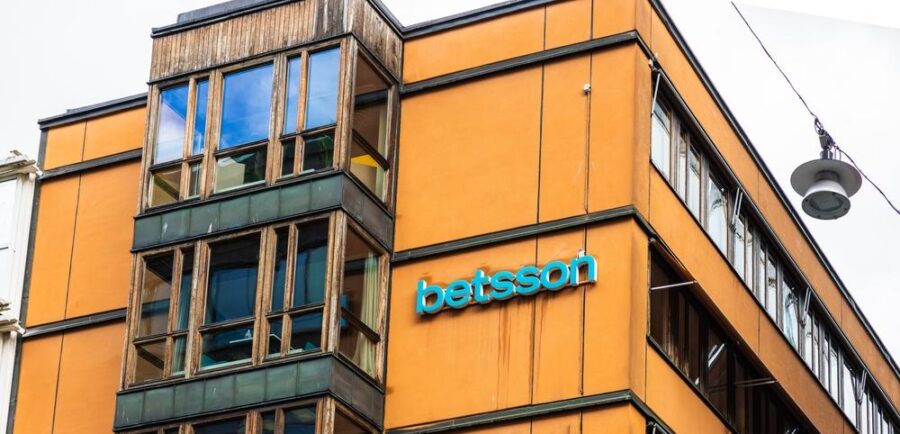
Earnings for Betsson Group rose 10% in the third quarter, up 8% on a same-store basis, reflecting the addition of Rhino Entertainment Group to Betsson’s portfolio.
The growth was driven predominantly by iGaming, which saw a 14% revenue increase. Online sports betting was up only 1% in the quarter.

Overall group revenue was €326.5 million (US$367 million)1 EUR = 1.1244 USD
2026-10-22Powered by CMG CurrenShift, while cash flow stood at €63.4 million (US$71.3 million)1 EUR = 1.1244 USD
2026-10-22Powered by CMG CurrenShift, representing a 23% decrease. Betsson ended the quarter with net debt of €98.3 million (US$111 million)1 EUR = 1.1244 USD
2026-10-22Powered by CMG CurrenShift.
Profit also tightened. It was €28.2 million (US$31.7 million)1 EUR = 1.1244 USD
2026-10-22Powered by CMG CurrenShift for the quarter, down from €50.1 million (US$56.3 million)1 EUR = 1.1244 USD
2026-10-22Powered by CMG CurrenShift in the third quarter of 2025. Active customers rose to 1.9 million, a near-40% increase.
CEO Pontus Lindwall, in a prepared statement, credited the World Cup and ongoing European soccer play for the strength of the quarter. He said deposits and handle were up for the period.

Lindwall also reported all-time-high revenue, “which is particularly positive given that the sportsbook margin was considerably lower than in the second quarter. Instead, growth was driven by the casino product.” He called this a validation of Betsson’s business model and its geographical diversification.
The main driver of growth was Latin America, where revenue jumped by more than 50%, said Lindwall. “Peru and Argentina once again stood out, with high customer activity and strong revenue growth, largely due to the successful execution of marketing activities in connection with the FIFA World Cup,” he added.
Betsson also went live in Belgium during the third quarter, rebranded from betFIRST. “The rebranding strengthens Betsson as one of the industry’s leading global brands and reflects the group’s ambition to drive greater consistency and scalability across the business,” Lindwall said.

The CEO also noted an increase in operating income, as well as one in operating margins. The latter was achieved in spite of lower sportsbook margins in the third trimester.
Lindwall also touted certain Betsson innovations. “Several new features were added to the sportsbook during the period,” he said, “including additional betting opportunities during extra time in football matches, as well as team and player pages for the biggest matches in Europe.”
The company launched its third sponsorship-predicated iGame, developed for team Inter Milan. This joined comparable products featuring soccer clubs Boca Juniors and Atletico Nacional.
“Following another quarter of record revenue, improved operating income and a positive start to October, we now look forward to an intensive end to the year,” Lindwall summarized. “We have a full pipeline of activities aimed at enhancing our customers’ entertainment and engagement.
“With a scalable business model,” the CEO concluded, “attractive products and strong market positions, we are well positioned to return to earnings growth and continue creating long-term value for our shareholders.”
David McKee is an award-winning journalist who has three decades of experience covering the gaming industry.

Dig Deeper
Related stories


The Backstory
Casino growth carries Betsson through a thinner sportsbook cycle
Betsson’s latest quarterly report fits a pattern that has been building across several reporting periods: The company is still expanding, but the composition of that growth is changing. Revenue rose 10% in the third quarter to €326.5 million, aided by the addition of Rhino Entertainment Group and a 14% increase in iGaming. Sports betting, long a core part of Betsson’s customer acquisition strategy, advanced just 1% as margins softened from the previous quarter.
The result underscores the value of Betsson’s diversified model, which Chief Executive Pontus Lindwall has repeatedly presented as a buffer against volatility in sports results, regional taxes and uneven business-to-business revenue. The third quarter was marked by higher deposits, increased handle and nearly 1.9 million active customers, a near-40% rise. But profit narrowed to €28.2 million from €50.1 million a year earlier, while cash flow fell 23% to €63.4 million and the group ended the period with net debt of €98.3 million.
That mix of record revenue and tighter profit margins places the quarter in a broader arc. Betsson has been investing in regulated markets, product upgrades and acquisitions while absorbing higher gaming taxes and weaker B2B results. The latest numbers show those moves are producing scale, particularly in Latin America, but also highlight the cost of maintaining momentum in a more regulated and competitive market.
World Cup marketing turned into a Latin American catalyst
Betsson entered the World Cup period with unusually high expectations for player engagement. During its second-quarter update, the company said it had posted all-time-high revenue of €310.6 million, with roughly two-thirds from iGaming and the balance from sports betting. The group had already focused marketing around the tournament, including a dedicated campaign, a talk show called “Pride of the Nation” and a World Cup podcast. It also launched a new betting application in Argentina.
Those investments appear to have paid off most clearly in Latin America. In the third quarter, Lindwall said revenue in the region rose more than 50%, with Peru and Argentina standing out because of high customer activity and marketing tied to the tournament. That followed a second quarter in which Latin America represented the largest share of Betsson revenue, at about 36%, and management said product development, not just the tournament calendar, was driving customer activity.
The World Cup also helped offset weakness elsewhere. Betsson had reported in the second quarter that deposits were down 7% and handle fell 12%, even as monthly active users reached a company high. That suggested customers were engaging more broadly but not uniformly wagering more. The third-quarter rebound in deposits and handle therefore matters because it indicates that targeted tournament spending helped convert audience growth into revenue, particularly in countries where Betsson already had brand recognition and local operations.
The company’s earlier second-quarter results ahead of the World Cup also showed why management was reluctant to pull back on product spending. Lindwall said cutting product development would not be wise, even as the company kept an eye on costs. The third-quarter casino-led increase supports that position: Sports betting drew users and attention, but iGaming delivered the bulk of the growth.
Regulation expanded the addressable market but raised the cost base
Betsson’s regional strategy has increasingly depended on moving deeper into locally regulated markets. That approach provides clearer operating rights and long-term legitimacy, but it also tends to bring higher tax and compliance costs. The company’s fourth-quarter 2025 report showed the trade-off. Revenue slipped 1% in the quarter to €303.9 million, sportsbook winnings fell 9% and cash flow declined 20%, even as Betsson remained profitable and posted full-year revenue of €1.2 billion.
Management attributed part of the margin pressure to higher gaming taxes. In the fourth quarter, Lindwall said regulated markets often move quickly toward greater taxation once local frameworks are established. Chief Financial Officer Martin Öhman said taxes took a €30 million larger bite out of the bottom line, while license fees also increased. That backdrop is important to understanding the third quarter: Revenue growth in regulated markets can be strong, but profit does not always move in tandem.
The pressure continued into 2026. In the first quarter, Betsson reported that group revenue fell 3% to €285.3 million despite 4% organic growth. Profit dropped to €25.5 million from €48.4 million a year earlier and cash flow fell 36%. The company said a larger share of locally regulated revenue was a key reason profitability was lower than in the prior year. It also said it was investing €10 million to €15 million per quarter in B2C markets that were not yet profitable.
Those earlier first-quarter revenue and profit declines showed how Betsson was absorbing near-term costs to build market positions. Latin America, Western Europe, Italy, Croatia and Greece remained areas of strength, but the company’s profitability increasingly depended on whether customer growth in those markets could outpace taxes, license costs and marketing spend.
Rhino added Canada scale and technology options
The acquisition of Rhino Entertainment Group is a central reason Betsson’s third-quarter growth exceeded its same-store performance. Revenue was up 10% overall, but 8% on a comparable basis, reflecting the newly acquired assets. The deal, announced in March and later completed, gave Betsson Canadian-licensed B2C operations, brands including Casino Days and Lucky Spins and proprietary front-end and middleware technology.
Betsson paid an estimated €64.5 million for Rhino, with €51.25 million upfront and the remaining amount due six months after closing. The assets had generated an estimated €13.7 million in EBITDA in 2025. Strategically, the purchase gave Betsson a stronger position in Canada, where Ontario is the country’s largest regulated online gaming market. Betsson had already entered Ontario through Betsafe, but Rhino expanded its licensing, operating capacity and technology base.
The transaction also had significance beyond Canada. Betsson has been trying to restore growth in B2B after weaker performance in that segment. Rhino’s proprietary technology is meant to strengthen Betsson’s offering to partners and support licensing revenue. That matters because Betsson’s B2B slowdown has been one of the most persistent drags on recent results.
The company’s Rhino acquisition in Canada therefore served two purposes: It added direct consumer exposure in a regulated market and gave Betsson more technology infrastructure for its B2B ambitions. The third-quarter contribution shows the deal already affected reported revenue, though the longer-term test will be whether it can help revive partner-driven growth and improve margins.
B2B weakness remains the unresolved issue
While Betsson’s consumer business has been resilient, B2B remains the main structural weakness in the recent story. In the second quarter, management said B2C revenue accounted for 84% of the total and rose 14%, while B2B grew at a lower level. Lindwall said the company was working to return B2B to growth. The imbalance persisted through later reports.
In the fourth quarter, Betsson again said B2C was stronger and B2B weaker, with consumer activity accounting for 77% of the business. In the first quarter of 2026, the company attributed the overall revenue decline largely to B2B operations. The loss of one key customer drove B2B earnings down to €51 million from €90 million a year earlier, though Betsson said that customer’s activity had stabilized since early December and that it expected medium-term improvement with existing and new partners.
The third-quarter revenue increase does not erase that risk. Betsson’s stronger casino performance, Latin American expansion and Rhino assets improve the company’s growth profile, but B2B recovery remains important because it offers a potentially higher-scale revenue stream that is less dependent on direct marketing spend. If B2B growth remains soft, Betsson will need continued strength in consumer markets to offset investments, taxes and acquisition costs.
The company has also stayed cautious on adjacent opportunities such as prediction markets. Lindwall has said the segment is interesting but not as complementary to Betsson’s business as it may be for U.S. operators, because it would fall under gaming regulations in Betsson’s markets. That stance reinforces the company’s focus: regulated online casino, sports betting, geographic expansion and selective acquisitions rather than a pivot into new product categories.
Brazil adds another test of regulated-market execution
Brazil represents one of Betsson’s most important future opportunities in Latin America. The company obtained a license that took effect Feb. 25, allowing it to offer online casino and sports betting in a market that became regulated on Jan. 1. Betsson had already been active in Latin America for up to 10 years, with licenses in Argentina, Colombia and Peru, but Brazil adds a far larger addressable market.
The license aligns with Betsson’s broader strategy of geographic expansion through regulated jurisdictions. It also increases exposure to the same trade-off seen elsewhere: higher legitimacy and market access, paired with tax, compliance and marketing costs. Betsson’s Brazil gaming license could deepen its Latin American growth engine, but success will depend on whether the company can replicate its momentum in Peru and Argentina while protecting margins.
Betsson’s renewed sponsorship with Boca Juniors through 2028 and its club-linked iGaming products show how sports branding supports its casino and betting funnel. In the third quarter, the company launched its third sponsorship-based iGame, tied to Inter Milan, after similar products involving Boca Juniors and Atletico Nacional. Those initiatives connect brand partnerships to higher-margin digital gaming, helping explain why casino, not sportsbook margin, carried the latest quarter.
The stakes are clear. Betsson has built a broader, more regulated and more geographically diverse business, and the third quarter showed that the model can produce record revenue even when sportsbook margins soften. The challenge is converting that scale into earnings growth as taxes rise, B2B recovers unevenly and new markets require sustained investment.