


Betsson experiences narrower numbers in fourth quarter

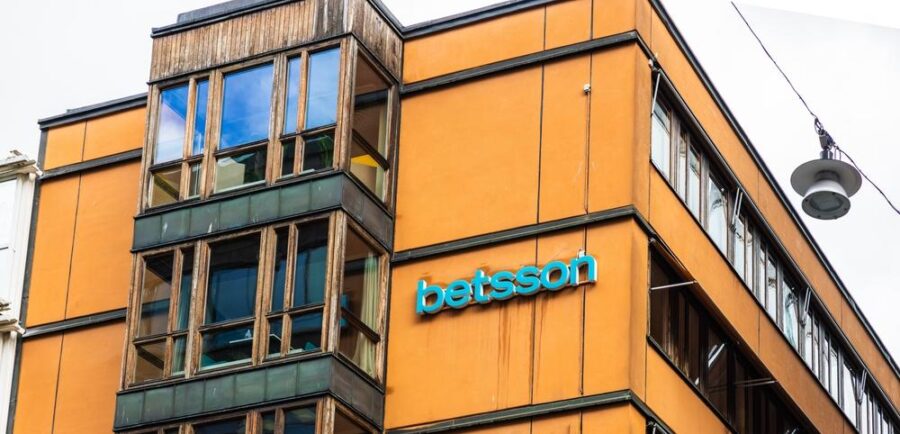
Igaming firm Betsson reported fourth-quarter and full-year results for 2025 on 5 February. Although group revenue decreased 1% in the quarter, to €303.9 million (US$358 million)1 EUR = 1.1777 USD
2026-02-05Powered by CMG CurrenShift, for the entire year it was up 8%, coming in at €1.2 billion (US$1.4 billion)1 EUR = 1.1777 USD
2026-02-05Powered by CMG CurrenShift.
Although igaming revenue increased 3%, sports book winnings were off 9% in the fourth quarter. Monthly active users were up 5% but deposits were down 6% and handle fell 14% in the quarter. Even so, Betsson executives said they saw their second-highest igaming revenue to date.

Quarterly cash flow slid 20% downward, reaching €69.3 million (US$81.6 million)1 EUR = 1.1777 USD
2026-02-05Powered by CMG CurrenShift. For the year, it was €313.7 million (US$369 million)1 EUR = 1.1777 USD
2026-02-05Powered by CMG CurrenShift, a 1% slippage.
Despite those narrowing numbers, Betsson was profitable for the fourth quarter and of 2025 as a whole. It came out €35 million (US$41 million)1 EUR = 1.1777 USD
2026-02-05Powered by CMG CurrenShift in the black in the quarter and, for 2025, €182.4 million (US$215 million)1 EUR = 1.1777 USD
2026-02-05Powered by CMG CurrenShift ahead.
Betsson finished the year with cash on hand of €158 million (US$186 million)1 EUR = 1.1777 USD
2026-02-05Powered by CMG CurrenShift and debt of €157.7 million (US$186 million)1 EUR = 1.1777 USD
2026-02-05Powered by CMG CurrenShift. The company repurchased €40 million (US$47 million)1 EUR = 1.1777 USD
2026-02-05Powered by CMG CurrenShift in shares.

In prepared remarks, CEO Pontus Lindwall said Latin American and European business was up, “thanks to successful marketing efforts,” but Nordic countries saw a dip. Business-to-customer trade was stronger and business-to-business custom was weaker. The former comprised 77% of Betsson’s business, however.
Profitabillty was hampered, Lindwall said, by higher gaming taxes. “It’s not a surprise that the gambling market goes into taxes once they regulate locally,” he lamented, adding that he still saw opportunities for profitability.
“Our strong financial position provides us with good conditions to invest in long-term profitable growth,” Lindwall continued. He also highlighted new slot- and table-game launches in the fourth quarter.

The CEO also took pride in the company’s sponsorship of various Greek sports teams as well as a Peruvian volleyball squad. As for Betsson’s charitable efforts, “supporting the causes of nonviolence against women and anti-bullying … is also the right thing to do,” Lindwall said.
“Revenue is more or less flat, year on year,” observed Chief Financial Officer Martin Ohman. He enumerated various movements within Betsson’s finances. License fees were up €2.2 million (US$2.6 million)1 EUR = 1.1777 USD
2026-02-05Powered by CMG CurrenShift and gross profits down €60 million (US$71 million)1 EUR = 1.1777 USD
2026-02-05Powered by CMG CurrenShift in the previous year.
Marketing expenses dropped €3 million (US$3.5 million)1 EUR = 1.1777 USD
2026-02-05Powered by CMG CurrenShift but personnel costs rose €7 million (US$8.2 million)1 EUR = 1.1777 USD
2026-02-05Powered by CMG CurrenShift, reflecting new hires. Taxes also took a €30 million (US$35 million)1 EUR = 1.1777 USD
2026-02-05Powered by CMG CurrenShift larger bite out of Betsson’s bottom line.
Looking ahead to 2026, Betsson execs disclosed that average daily revenues had ticked up 0.6% for the first five weeks of the year.
Pressed on the future of Betsson’s business-to-business sector, Lindwall said, “it’s very hard for us to make predictions and we usually don’t.” He added that he expected it to grow. He also declined to predict additional share buybacks.
“We continue to invest in both technology and our organic growth,” the CEO said when queried about potential consolidation. “But we are still looking for M&As. It’s not thousands of companies out there that fit our needs,” he continued, adding that Betsson would be in a strong position to be a buyer should the opportunity arise.
The topic of prediction markets arose and Lindwall demurred. “It’s a very interesting market segment,” he said. “We don’t see that fit as well in our core as it seems to fit in the US,” where Betsson does not operate.
David McKee is an award-winning journalist who has three decades of experience covering the gaming industry.

Dig Deeper
Related stories



The Backstory
Why Betsson’s mixed quarter lands at a turning point
Betsson’s fourth quarter underscores a split in online gambling economics that has been building for more than a year: casino keeps the lights on while sportsbooks ride out volatility, taxes and tougher comps. The company delivered modest full-year growth and stayed profitable despite a late-year dip in group revenue, softer sports results and a heavier tax bite. That pattern mirrors what larger peers have navigated as they balance user growth, product mix shifts and regulatory pressure across markets.
The moving pieces are familiar. Operators leaned into igaming to offset sportsbook swings, tightened promotions and chased operating leverage as tax and compliance costs rose. Some doubled down on product breadth through acquisitions. Others leaned into discipline after years of land-grab tactics. Betsson’s numbers, with business-to-customer outpacing business-to-business and Europe and Latin America doing the heavy lifting, fit the narrative.
Sportsbook headwinds, casino ballast
Several operators reported the same quarter’s core dynamic: resilient casino, choppy sports. DraftKings posted fourth-quarter revenue of US$1.4 billion, up 13% year over year, but said “customer-friendly” outcomes dented hold. Average revenue per monthly unique player fell, partly due to its Jackpocket acquisition skewing averages lower. BetMGM’s parent cited a quarter of “investment and rebuilding,” with the joint venture’s run rate improving late in the year even as adjusted EBITDAR stayed negative. Penn Interactive, which houses ESPN Bet and online casino, delivered US$275 million in fourth-quarter revenue despite the same sports outcomes, leaning on disciplined promos and faster online casino growth.
Betsson’s mix followed suit. Igaming revenue edged higher in the quarter while sportsbook winnings fell, a trade-off the company has embraced with new slot and table releases. The premise is straightforward: casino revenue tends to be steadier, less tied to single-event variance. Sportsbooks can expand hold with product improvements and pricing, but quarters can hinge on results. Operators that balance both can keep cash flow intact even when sports math breaks the wrong way.
Taxes, regulation and the profitability math
The tax line has grown into a strategic driver. Betsson said higher gaming taxes clipped profitability in the quarter. That matches broader evidence that regulated markets, while more durable, require cost discipline to preserve margins. DraftKings emphasized “optimizing promotional reinvestment,” a nod to the new reality where tax and compliance expenses devour more of each dollar and marketing must work harder. BetMGM framed 2024 as a reset year, with an eye toward profitability in 2025, reflecting the delayed payback that comes with heavier regulatory overhead and platform enhancements.
This pressure has also sharpened debate over marketing channels. A class action in Virginia alleges that celebrity streaming tied to an icasino brand fueled harmful gambling promotion and manipulated music streaming data. The case, which names high-profile promoters, claims use of tipping and crypto flows to fund amplification campaigns. The suit, detailed here — a complaint linking Stake.us promotions to alleged streaming fraud — is separate from licensed operators’ practices, but it raises questions about influencer-led funnels that regulators are increasingly scrutinizing. The legal climate is unlikely to loosen marketing guardrails. That, in turn, reinforces the sector’s pivot from blitz spending to lifetime value math and product-led retention.
North America’s scale game, Europe’s steadier climb
In the U.S., scale players are bending the curve on costs while absorbing variability. DraftKings grew monthly unique players 36% year over year to 4.8 million and touted live betting and cross-sell as next-stage levers. Even so, its average revenue per player fell in the quarter, showing the trade-offs as operators widen the funnel and absorb results noise. BetMGM posted 28% full-year net revenue growth but remained loss-making on an adjusted basis, aiming for profitability this year. Penn’s digital unit expanded sharply, but its adjusted EBITDAR fell in the quarter due to sports outcomes before improving year over year for 2024.
Betsson’s footprint and emphasis differ. The company leans into Europe and Latin America, with business-to-customer driving most revenue. That can smooth volatility and spread regulatory risk, though tax hikes in Europe and changing local rules still bite. The mix also puts a premium on localized brands and cost control. Betsson’s share repurchases and tight balance sheet signal optionality as consolidation opportunities arise. The CEO has said the M&A bar is high, which aligns with a market where the right assets are scarce and integration risk is costly when taxes and compliance run hot.
LatAm promise, currency and policy risks
Latin America remains a growth vector but not a straight line. Codere Online reported net gaming revenue up 5% in the fourth quarter, with Mexico flat in euros due to peso devaluation but up 14% on a constant-currency basis. Spain grew 10%, showing the value of diversified exposure when currencies swing. Codere also navigated listing compliance issues in late 2024, a reminder that capital market frictions can surface even as operations improve. Betsson’s CEO highlighted Latin America strength and brand investments, such as team sponsorships, to deepen customer engagement. That can help defend share against new entrants, but it also raises fixed costs that must be offset by higher lifetime value.
Policy risk is not uniform across the region. Countries are moving at different speeds on regulation and taxation, which affects go-to-market choices and payback periods. Operators with modular tech stacks and a balanced product mix are better insulated. Betsson’s comment that business-to-business softened while business-to-customer rose suggests the firm is prioritizing direct scale where unit economics are clearer, even if B2B eventually rebounds with market maturation.
What to watch next
The early weeks of 2026 matter for read-through. DraftKings flagged product initiatives to widen live betting and cross-sell, a playbook others will mirror. BetMGM is guiding to profitability in North America, which would validate a more disciplined promotional stance. Penn is banking on online casino to counterbalance sportsbook variance. In Europe and Latin America, currency stability and tax policy will shape margin trajectories as much as user growth.
For Betsson, the setup is straightforward. If igaming momentum holds and sportsbook hold normalizes from a weak fourth quarter, revenue should re-accelerate against easier comps. The heavier tax load will not reverse quickly, so operating leverage must come from product, localization and measured marketing. Balance sheet flexibility gives room for selective M&A if attractive assets surface. The larger context — casino as ballast, sports as upside, taxes as drag — remains the sector’s operating reality. Companies that execute on product and discipline can grow through it. Those that chase volume without unit economics risk running in place.
