


BetHog folds crypto casino to focus on AI dealer product

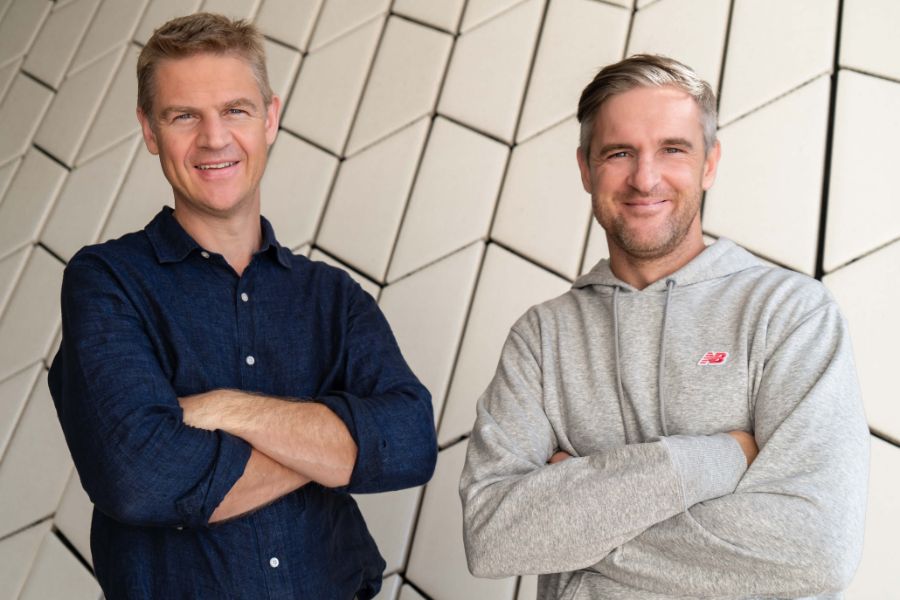
BetHog is closing its crypto casino so the team can focus entirely on its spin-off B2B AI dealer product, Sentient Studios.
BetHog was launched by FanDuel founders Nigel Eccles and Rob Jones in November 2024. The crypto casino has announced its closure to users 20 July, giving existing customers until 31 July to withdraw their funds, the day it shutters.

UK-based Sentient Studios is claimed to be the only company with an operational AI dealer product currently on the market.
Eccles said the company has drawn interest from tier-one operators looking to license the AI dealer, with several expected to go live later this year. He said interest is mainly from regulated markets, particularly Europe and Latin America.
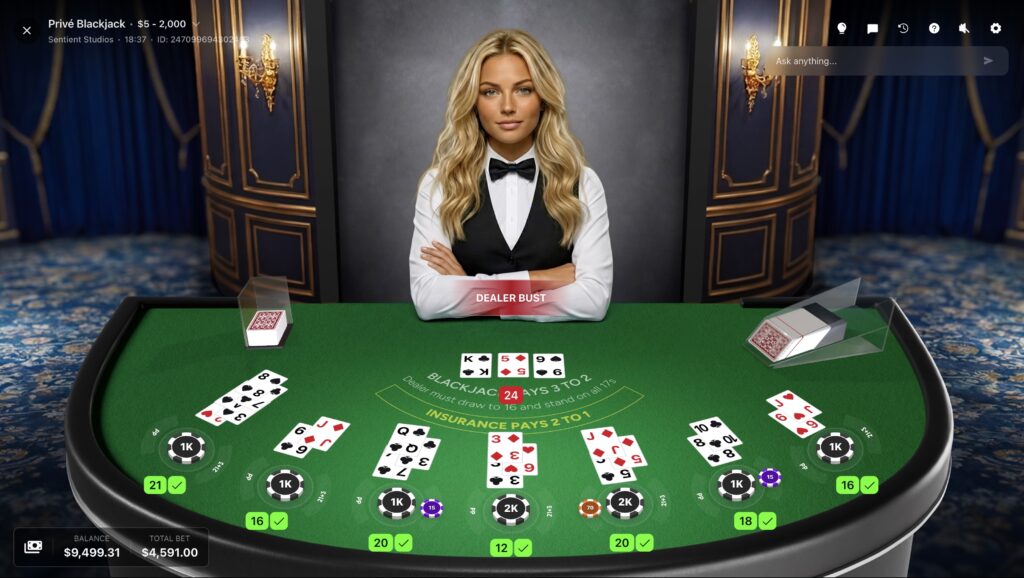
BetHog’s 13-strong engineering team has already shifted focus to the AI dealer, and the underlying technology is being folded into Sentient Studios.

The business currently has a total headcount of around 15 people, after four people were made redundant from the B2C marketing team. There are currently no plans to hire anyone else on the B2B side.
Speaking to Complete iGaming about the pivot, Eccles said, “We are seeing two-fold demand, from players and operators. AI dealer has been live on BetHog since October of last year and it is consistently one of our top games. Players love the speed and engagement the dealer brings to the game. They also like that they can get a prive table at a low price point.
“Operators are really excited about the opportunity to quickly spin up live dealer tables. Instead of taking months, we can spin up a partner branded table in weeks without any up front or monthly minimums.”

Earlier this year, BetHog revealed it had raised US$10 million Series A financing to expand its proprietary AI live casino dealer feature into Sentient Studios as a B2B offering.
“Our core strength was always product development and what we have discovered is the best way to deliver that is through B2B,” Eccles said.

Dig Deeper
Related stories




The Backstory
From crypto casino to supplier strategy
BetHog’s decision to shut its crypto casino and put its resources behind Sentient Studios marks a sharp narrowing of ambition rather than a retreat from online gambling. The company, launched in November 2024 by FanDuel founders Nigel Eccles and Rob Jones, entered the market as an offshore crypto casino built to move faster than regulated operators. Less than a year later, its most defensible asset appears to be the technology it developed inside that casino: an AI-powered live dealer product now being packaged for other gambling companies.
The pivot reflects a broader lesson from BetHog’s short operating history. Its consumer-facing casino gave the team a test bed for new game formats, crypto payments and AI-led live casino experiences. But the company’s clearest commercial traction came from operators interested in licensing the dealer technology, not necessarily from scaling another crypto gambling brand in a crowded and legally complex offshore market. By closing the B2C casino, BetHog is choosing the supplier economics of B2B software over the marketing-heavy race for crypto casino customers.
The FanDuel founders’ next frontier
Eccles’ return to gambling drew attention because of his role in building FanDuel from an online prediction market into one of the biggest daily fantasy sports and sports betting brands in the U.S. That background framed BetHog from the start as another attempt to work at the edge of gambling regulation and consumer behavior. In a February profile, Complete iGaming described BetHog as a crypto gambling frontier play, with Eccles arguing that digital assets could reduce payment costs and speed product development.
That thesis was central to BetHog’s launch. The casino used blockchain-based payments, with Eccles pointing to Solana’s low fees and high transaction capacity as an advantage over traditional gambling payment rails. He contrasted that with regulated operators’ card, banking and wallet costs, arguing that crypto could strip out a major expense line. He also contended that heavy approval processes in regulated markets slowed the release of new casino products and pushed innovation offshore.
Those arguments helped explain why BetHog initially operated outside regulated markets. The company could launch proprietary games quickly, test them with real users and adjust them without the same certification timelines faced by licensed online casinos. That speed was useful for building titles such as Hogger and Jump!, but it also created the conditions for Sunny, the AI blackjack dealer that became the foundation for Sentient Studios.
Sunny becomes the proof point
BetHog’s most important product moment came when it introduced the AI blackjack dealer Sunny. The company positioned the feature as a challenge to the conventional live dealer model, where operators depend on studio capacity, human staffing and third-party suppliers. Sunny was designed to remember player names, maintain conversation, react to game events and support multiple languages. BetHog said the product took six to eight months to develop, requiring large language model training, prompt rules, avatar animation and user testing.
The launch was significant because it shifted BetHog’s innovation story from crypto payments to live casino infrastructure. Live dealer games are among the most expensive and operationally complex verticals in online casino. Suppliers must operate studios, hire and manage dealers, localize products, schedule tables and maintain broadcast operations. Operators often rely on a limited number of providers, which can constrain differentiation and make branded or localized tables expensive.
Sunny gave BetHog a way to argue that AI could change those economics. A software-driven dealer can theoretically be deployed more quickly, run continuously, support more languages and offer a lower-cost private table experience. It also gives operators more control over personas, branding and game presentation. Whether regulators ultimately treat AI dealers like conventional live casino products remains an open question, but BetHog’s internal data gave the company enough confidence to turn the feature into a standalone supplier business.
Funding pushed the B2B case forward
The commercial direction became clearer when BetHog raised $10 million to scale its AI-dealer technology. The Series A round, co-led by Will Ventures and RockawayX, brought total funding to $16 million and was explicitly tied to expanding Sentient Studios as a B2B product. Other backers included PCV, 6MV, Bullpen Capital and Advancit Capital.
At that stage, BetHog was still operating its own crypto casino, but its investor pitch had begun to emphasize the dealer platform’s applicability to global operators. The company said Sentient Studios would use a revenue-share model without setup fees, monthly minimums or fixed-term contracts. That structure was designed to lower the barrier for operators to test AI dealer tables without making the capital commitments typically associated with live casino studios.
The financing also reinforced a strategic split between BetHog’s unregulated roots and Sentient Studios’ likely regulated-market future. Eccles had previously said BetHog might eventually enter regulated markets once the product was more mature. Sentient Studios offers a different path: Instead of seeking consumer gambling licenses in each jurisdiction, the company can sell technology to licensed operators that already have market access. That does not eliminate regulatory scrutiny, especially for AI-generated dealer behavior and responsible gambling controls, but it changes the nature of the challenge.
Regulated markets and LatAm opportunity
The current pivot also aligns with where operator demand appears to be forming. Eccles has said interest in Sentient Studios is strongest from regulated markets, particularly Europe and Latin America. That matters because regulated operators face intense pressure to differentiate while managing cost, compliance and supplier dependence. AI dealer tables could appeal to casinos looking for branded experiences, localized language support or scalable private-table formats without committing to a physical studio buildout.
Latin America is especially relevant. The region has been drawing sustained attention from suppliers, operators and industry events as Brazil, Peru, Caribbean jurisdictions and Andean markets refine licensing and player-protection rules. The emphasis was visible in SBC’s decision to combine its North America and Latinoamérica events into SBC Summit Americas with a dedicated LatAm track. As regulations mature, suppliers that can help operators localize products quickly may find openings across markets that are still shaping their online casino infrastructure.
Europe presents a different but related opportunity. Mature online casino markets are competitive, and live casino has become a key retention product. Operators that already offer standard live blackjack, roulette and baccarat may be interested in lower-cost, branded tables that can be deployed quickly. Sentient Studios’ promise is not merely automation; it is faster experimentation in a category where differentiation is usually expensive.
A wider race to redraw gambling categories
BetHog’s change of course sits within a wider industry pattern: gambling companies are testing adjacent products that challenge old regulatory and operational boundaries. Crypto casinos, AI dealers and prediction markets each sit at different points on that spectrum. DraftKings, for example, has expanded its event-contract ambitions through a Crypto.com partnership for DraftKings Predicts, building distribution for sports-themed contracts through regulated exchanges. That effort is distinct from BetHog’s offshore casino origins, but both show operators and founders looking for growth in products that do not fit neatly into traditional sportsbook or casino categories.
The stakes for BetHog are immediate. Closing the casino removes a direct customer channel and cuts the marketing function that supported it. It also concentrates the company’s future on whether operators will license AI dealer technology at scale and whether regulators will accept it in live casino environments. If Sentient Studios can help operators launch branded tables in weeks, support multiple languages and lower the cost of live casino expansion, BetHog’s short-lived casino may be remembered less as a failed B2C business than as the proving ground for a supplier product.
The risk is that early novelty does not always translate into durable operator adoption. Live casino players value trust, game integrity and human interaction, and regulators may require clear rules around AI conduct, disclosure and responsible gambling interventions. BetHog’s bet is that the same speed that made its crypto casino possible can now be sold, in a more compliant form, to the operators it once contrasted itself against.
