


BETER secures Alberta registration, expands Canadian footprint

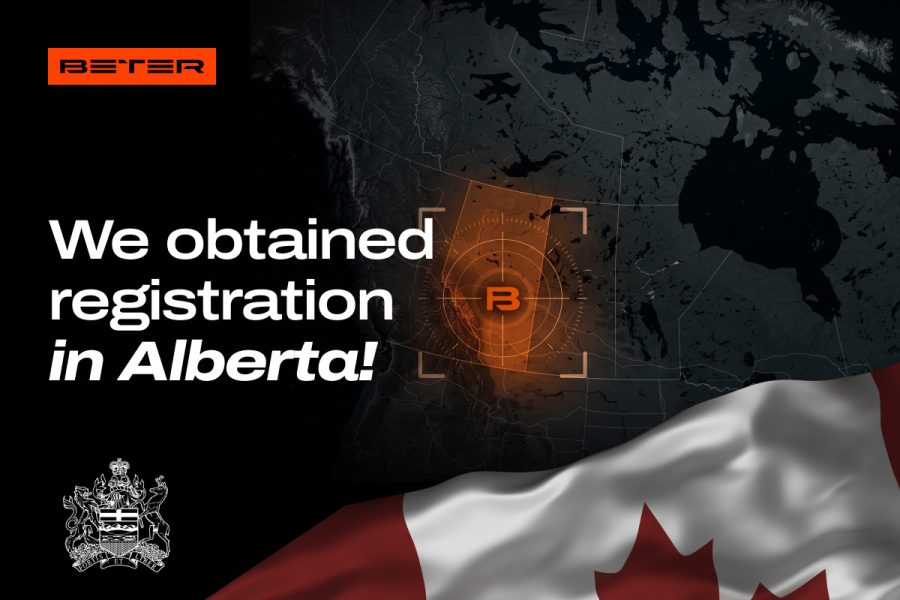
BETER, a provider of live streams, live data and odds for esports and sports, has secured Services Supplier Registration from the Alberta Gaming, Liquor and Cannabis (AGLC), marking its second provincial registration in Canada after Ontario.
The registration allows BETER to supply Alberta-licensed operators with live streams, real-time data and odds across its portfolio of esports and sports content, including its ESportsBattle eLeagues, Setka Cup table tennis series and BSKT Cup basketball league.

The move builds on BETER’s broader North American expansion. The provider already holds ten regulatory approvals across the United States and is pursuing further approvals in other states.
BETER delivers live streaming, real-time data and odds for more than 740,000 events annually, offering up to 50 markets per event. Its esports offering includes eFootball, eBasketball, eHockey and eTennis through ESportsBattle, while its sports portfolio includes the Setka Cup and BSKT Cup.
The company also operates a dedicated Integrity team providing 24/7 monitoring and working with sports integrity organisations, including the International Betting Integrity Association (IBIA) and Esports Integrity Commission (ESIC), as well as sports federations.
Gal Ehrlich, CEO of BETER, said: “Alberta’s regulated market provides new opportunities for operators to access our exclusive products, supported by reliable data, live streams, and odds.”
Valeriia Tarchynska, Chief Legal Officer at BETER, added: “Securing our Alberta registration reflects our continued commitment to meeting the highest regulatory and compliance standards in every market we enter.”

Dig Deeper
Related stories




The Backstory
Canada move follows a U.S. licensing push
BETER’s Alberta registration is the latest step in a North American expansion that has moved from targeted U.S. state approvals into Canada’s provincial sports betting markets. The company, which supplies live streams, real-time data and odds for esports and short-form sports events, is positioning itself as a regulated content provider for operators seeking high-frequency betting products beyond traditional sports schedules.
The Alberta approval came after BETER entered Canada through Ontario, where it secured Gaming-Related Supplier Registration from the Alcohol and Gaming Commission of Ontario. That earlier approval allowed the company to supply Ontario-licensed sportsbooks with content from its ESportsBattle eLeagues, Setka Cup table tennis series and BSKT Cup basketball league. At the time, BETER described Ontario as a foundation for a wider Canadian business, with Alberta identified as the next expected step. The company has now followed through on that plan, giving it access to two of Canada’s most relevant regulated online betting provinces.
The sequence matters because Canada’s regulated online betting market is fragmented by province. Suppliers must navigate separate approval processes, commercial dynamics and operator relationships, much as they do in the U.S. BETER’s two Canadian registrations show a strategy built around incremental compliance rather than a single national launch.
Ontario gave BETER its first Canadian beachhead
The company’s Canadian push began with its Ontario supplier registration, which opened the door to one of North America’s most competitive regulated online gaming markets. Ontario has attracted major global sportsbook brands since opening its private operator market, making it a natural first target for suppliers trying to prove demand, regulatory credibility and operational reliability.
For BETER, Ontario offered more than market size. It provided a regulated environment where the company could demonstrate that its fast-betting products can meet oversight standards while serving licensed operators. The company’s pitch to operators has centered on continuous availability, real-time pricing and proprietary competitions that are not as dependent on mainstream sports calendars.
That approach is reflected in BETER’s product mix. ESportsBattle covers eFootball, eBasketball, eHockey and eTennis. Setka Cup adds a table tennis product built for frequent events and short betting cycles. BSKT Cup gives the company another sports asset designed for high event volume. Together, the products are intended to give sportsbooks round-the-clock content, particularly during off-peak hours or gaps in major sports coverage.
Ontario also carried signaling value. Once registered there, BETER could point to an established Canadian regulatory approval as it pursued Alberta. The Alberta approval therefore looks less like an isolated win and more like the next stage of a compliance-led rollout.
New Jersey set the template for U.S. expansion
BETER’s broader North American strategy began in the U.S., where it first gained vendor registration from the New Jersey Division of Gaming Enforcement. That approval allowed the company to offer real-time data and live streams to licensed operators in the state. Its Setka Cup table tennis tournaments went live on bet365’s New Jersey site, giving BETER an operator-led entry point into the market.
The New Jersey approval was a milestone because it placed BETER inside one of the most scrutinized U.S. betting jurisdictions. New Jersey has long been a reference point for online gambling regulation, and vendor approval there can help suppliers build credibility when approaching other states. For a company selling high-frequency content, that credibility is central: regulators and operators need confidence not only in the data feed but also in event integrity, monitoring and market settlement.
BETER’s initial U.S. product emphasis was the Setka Cup, which the company has described as a global table tennis tournament product with thousands of monthly matches. The product’s appeal is straightforward for sportsbooks: frequent events, multiple markets and short wagering windows. But those same characteristics make oversight more important. A high-volume product can create revenue opportunities while also increasing the need for monitoring, suspicious betting detection and event controls.
The company has sought to address that issue by highlighting its in-house integrity team and its work with outside integrity organizations. That message has become a consistent part of BETER’s North American filings and market announcements.
State-by-state approvals built momentum
After New Jersey, BETER expanded through a series of U.S. state approvals that helped establish a wider regulated footprint. The company later entered Illinois after the Illinois Gaming Board added its Setka Cup table tennis content to the state’s sports wagering catalog. That Illinois entry made the state BETER’s eighth U.S. market, following Florida, New Jersey, Colorado, Arizona, Indiana, Iowa and North Carolina.
Illinois was important because it is one of the largest U.S. sports betting markets by handle and operator activity. BETER’s content went live there through bet365, continuing a pattern in which established operator relationships supported regulatory expansion. Supplier approvals alone do not create distribution; operators must integrate and offer the content. Bet365’s role across multiple BETER launches gave the supplier a pathway to visible market entry after approvals were secured.
The company’s U.S. footprint then reached 10 states when it secured a vendor registration license in Virginia. That Virginia registration allowed BETER to supply live streams and real-time betting data from Setka Cup and ESportsBattle competitions. It followed 2026 launches in North Carolina, Arizona and Illinois, alongside availability in Colorado, Florida, Iowa, Indiana, Kentucky and New Jersey.
By the time BETER began gaining Canadian approvals, it had already built a U.S. record that could be presented to Canadian regulators and operators. The sequence shows how regulated suppliers often compound market access: each approval supports the next application, each operator launch validates commercial demand and each jurisdiction adds pressure to maintain consistent compliance controls.
Fast-betting demand is driving the strategy
BETER’s expansion is tied to a broader shift in sportsbook content strategy. Operators increasingly seek products that generate betting activity outside marquee events and traditional league schedules. Fast-betting content, including esports simulations, table tennis and proprietary basketball competitions, is designed to create constant wagering opportunities with short event cycles and immediate settlement.
The company’s partnership with Meridianbet illustrates that global demand. Under the Meridianbet agreement covering Peru and European markets, BETER integrated ESportsBattle and Setka Cup content into a sportsbook network spanning licensed jurisdictions in Europe, Africa and Latin America. That deal underscored the commercial logic behind BETER’s North American push: operators in multiple regions want differentiated content that can fill the live betting calendar.
North America raises the stakes because regulation is more fragmented and approvals can be resource-intensive. A supplier must persuade regulators that its events, data, streaming infrastructure and integrity systems are reliable. It must also persuade operators that the products can attract engagement without creating reputational risk. BETER’s repeated references to 24/7 monitoring, integrity partnerships and compliance standards reflect those commercial and regulatory pressures.
Alberta now extends that strategy into another Canadian province. The approval gives Alberta-licensed operators access to the same core products already introduced elsewhere and strengthens BETER’s claim to be one of the more widely approved fast-betting content suppliers in North America. The next test will be whether additional Canadian provinces and U.S. states follow, and whether operator adoption keeps pace with the company’s regulatory footprint.
