


Bargaining continues over Australia’s gambling advertising rules

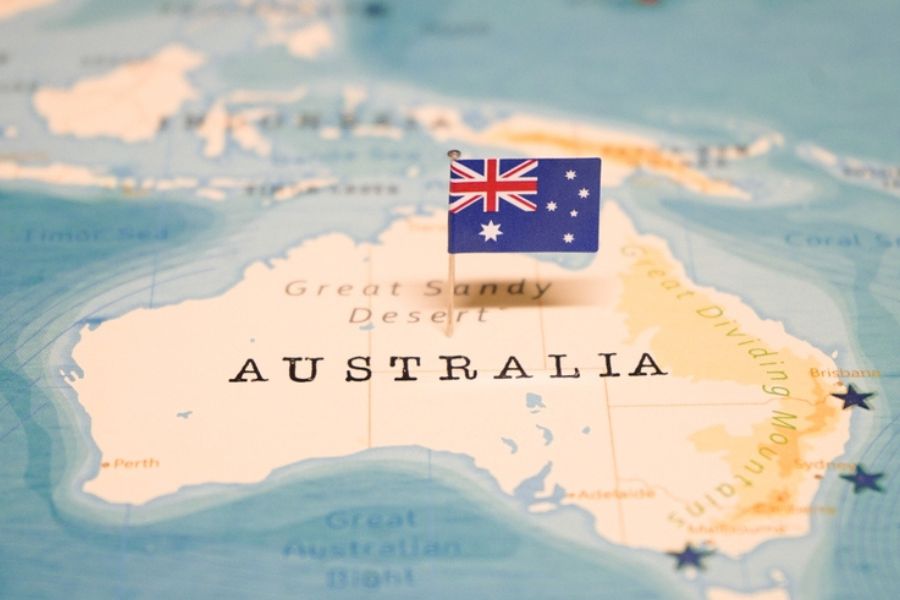
The debate over gambling advertisements in Australia has not relented, with Australian Prime Minister Anthony Albanese meeting with the country’s opposition leader, the Liberal Party’s Angus Taylor, in Canberra to discuss a proposed agreement.
According to the Guardian, the two met to negotiate a proposed deal that would limit incentives provided by gambling operators to encourage people to wager.

More issues discussed in the meeting included a proposed news bargaining incentive, designed to require digital platforms to engage in deals with media organizations that want to use the platform’s content.
It also covered tightening the times during which gambling advertising is permitted, as well as limiting the provision of streaming services.
In a caucus address to the Labor Party, the Australian PM said, “I’m confident that later in the week we will have the legislation in the House of Representatives with some really practical amendments, dealing with the targeting of advertising, dealing with reducing children’s exposure, and dealing with as well, the full suite of measures in a really practical way.”

While Albanese declared that this proposed measure will be “the strongest anti-gambling legislation” his country has ever seen, others criticized that it falls short.
Former prime minister John Howard has also stressed the importance of a self-exclusion system that was previously proposed by the Labor Party, allowing potential viewers to opt out of seeing gambling advertising.
There has been a long-standing debate about gambling legislation. While opponents say it makes gambling more accessible, supporters say that legislation promotes safer, responsible gaming and curbs offshore and illegal gambling activities.

Dig Deeper
Related stories
 2026/07/02: Australia gambling ad reform bill sent to Senate inquiry after backlash
 2025/04/16: Australian politicians gifted AU$245,000 worth of sports tickets while mulling ban on online sports betting ads
 2025/08/29: Australian PM says gambling ad ban would be hard to enforce
2026/04/02: Albanese unveils long-awaited gambling ad reforms
2025/08/29: Australian PM says gambling ad ban would be hard to enforce
2026/04/02: Albanese unveils long-awaited gambling ad reforms
2026/07/02: Australia gambling ad reform bill sent to Senate inquiry after backlash
2025/04/16: Australian politicians gifted AU$245,000 worth of sports tickets while mulling ban on online sports betting ads
2025/08/29: Australian PM says gambling ad ban would be hard to enforce
2026/04/02: Albanese unveils long-awaited gambling ad reforms
The Backstory
Pressure builds after years of stalled reform
Australia’s gambling advertising fight has become a test of how far Prime Minister Anthony Albanese’s government is prepared to go against a sector embedded in sport, broadcasting and digital media. The current negotiations with opposition leader Angus Taylor follow more than two years of warnings from parliamentary inquiries, health advocates and political opponents that existing limits have failed to keep betting promotions away from children and vulnerable consumers.
The government is trying to land a compromise that can pass Parliament while avoiding the economic shock that broadcasters, sports codes and wagering companies say would come from a blanket ban. That balancing act has defined the debate since a parliamentary inquiry led by the late Labor MP Peta Murphy recommended a comprehensive phaseout of online gambling ads in 2023. Albanese has repeatedly framed his approach as practical rather than absolute, arguing that poorly designed restrictions could push customers toward offshore operators beyond Australian rules.
That argument has angered reform advocates who say the government is diluting the central recommendation of the Murphy review. The resulting package now sits between two political pressures: public concern over gambling harm and institutional dependence on betting revenue across major sports and media businesses.
From a proposed ban to a negotiated cap
The government’s latest position did not emerge in isolation. Albanese had already signaled the direction of travel when he said an outright gambling ad ban would be hard to enforce, citing the risk of consumers moving to illegal markets and the potential loss of funding for sports and media. Those comments came as a broader review into violence against women identified links between gambling, domestic and sexual violence, adding social policy urgency to a debate often framed around broadcast economics.
The practical concerns helped push Labor toward a package of limits rather than prohibition. In earlier legislation, the government proposed restricting television gambling ads to three per hour between 6 a.m. and 8:30 p.m., barring ads during live sports in those hours and ending radio promotions during school drop-off times. The bill also targeted underage exposure online and banned athletes and influencers from promoting gambling products.
Those proposals were still attacked as inadequate. Opposition and crossbench lawmakers pushed the bill into a Senate inquiry after arguing Labor had fallen short of Murphy’s recommendations. Greens senator Sarah Hanson-Young said the industry profited from “misery and loss,” reflecting a wider view among public health campaigners that partial advertising limits leave too many loopholes. The referral underscored the central problem for Albanese: incremental reform may be too much for industry and not enough for critics.
Sport exposes the enforcement problem
Major sporting events have shown why lawmakers are struggling to define workable rules. Gambling companies are not just buying conventional commercial breaks. Their brands appear through sponsorships, in-stadium signage, broadcaster partnerships, digital placements and social media content. A reform that limits one channel can leave others untouched.
That weakness was evident when Labor’s earlier bill faced scrutiny during global sporting broadcasts. As reported in coverage of how the reform bill was sent to a Senate inquiry after backlash, betting brands were visible through World Cup-related sponsorship and broadcast arrangements. Those examples complicated calls for simple ad caps because gambling promotion can be embedded in rights deals and international sporting contracts beyond the reach of domestic advertising schedules.
The Australian Football League has become an especially sensitive arena. The AFL Grand Final is one of the country’s largest annual television audiences, making it a high-value platform for wagering companies and a flashpoint for critics who argue children are being normalized into betting culture. Former Tabcorp chief executive Elmer Funke Kupper sharpened that criticism after the Grand Final, saying viewers were confronted with an “invasion” of betting promotions before the game. His comments, reported in criticism from a former Tabcorp executive, were notable because they came from a former industry leader rather than a traditional anti-gambling advocate.
Sportsbet has also drawn scrutiny after reportedly continuing to promote same-game multi-bets on the AFL website even after similar ads were removed from live broadcasts. That kind of platform shift is exactly the enforcement challenge Albanese has cited. If ads move from television to websites, apps or sponsorship surfaces, the political benefit of a broadcast ban may be limited.
Lobbying and gifts sharpen trust concerns
The policy debate has also been shaped by questions about access and influence. Reuters reported that Australian politicians, including Albanese, received about AU$245,000 worth of sports tickets between June 2023 and March 2025 while gambling ad restrictions were under consideration. The figure covered 312 declared free tickets, including AU$29,000 worth for the prime minister.
The disclosures, detailed in reporting on sports tickets gifted to politicians during the advertising debate, gave reform advocates another line of attack. Independent senator David Pocock said the level of soft diplomacy was concerning, particularly because wagering companies and sports bodies have strong financial incentives to resist a full ban.
Responsible Wagering Australia, whose members include major operators such as Bet365 and Sportsbet, has argued that legal gambling products must remain visible so consumers are steered toward regulated providers instead of offshore sites. That position aligns with Albanese’s enforcement concerns but also gives the industry a central role in shaping the limits placed on its own advertising. Reports that Albanese’s staff met with gambling lobbyists added to perceptions that the government was giving industry arguments significant weight.
The optics matter because Labor delayed action after the Murphy review and removed the issue from the legislative agenda in 2024. By the time Albanese returned with a more limited reform package, campaigners had already concluded the government had lost momentum. The longer negotiations continue, the more opponents can argue that the final bill reflects pressure from media, sport and wagering interests rather than the original harm-reduction mandate.
A compromise with high political stakes
Albanese’s broader reform package, described in coverage of his long-awaited gambling advertising reforms, went beyond television ad caps. It included longer blackout periods around live matches, a phased ban on stadium and team jersey advertising, restrictions around school pickup times, no celebrity endorsements and opt-out tools for social media and streaming platforms. The government also pointed to tougher action against offshore platforms and other online gambling products, including keno and apps based on poker machines.
Still, the package stopped short of a total blackout and did not create a national gambling regulator, two measures supported by many reform advocates. Responsible Wagering Australia called the proposals draconian, warning of job losses and disruption to the sports wagering sector. Public health groups, by contrast, said the measures remained too weak to change the volume of gambling promotion children encounter across screens and stadiums.
The current bargaining therefore reflects a search for the minimum package that can satisfy enough lawmakers while surviving industry resistance. If Labor secures opposition support, it can present the bill as bipartisan protection for children and families. If the negotiations collapse or produce rules seen as watered down, the government risks appearing unable to confront a politically connected industry despite years of evidence and public concern.
The stakes extend beyond gambling. The talks overlap with disputes over digital platforms, media funding and news bargaining rules, all part of a broader struggle over who pays for Australian content and who benefits from consumer attention. Gambling ads sit at the center of that economy because they help fund sport and broadcasting while imposing social costs that are harder to quantify. Albanese’s challenge is to prove that a negotiated cap can reduce harm in a market built to route around limits.
