
Wabanaki Nations win exclusive rights to operate igaming in Maine

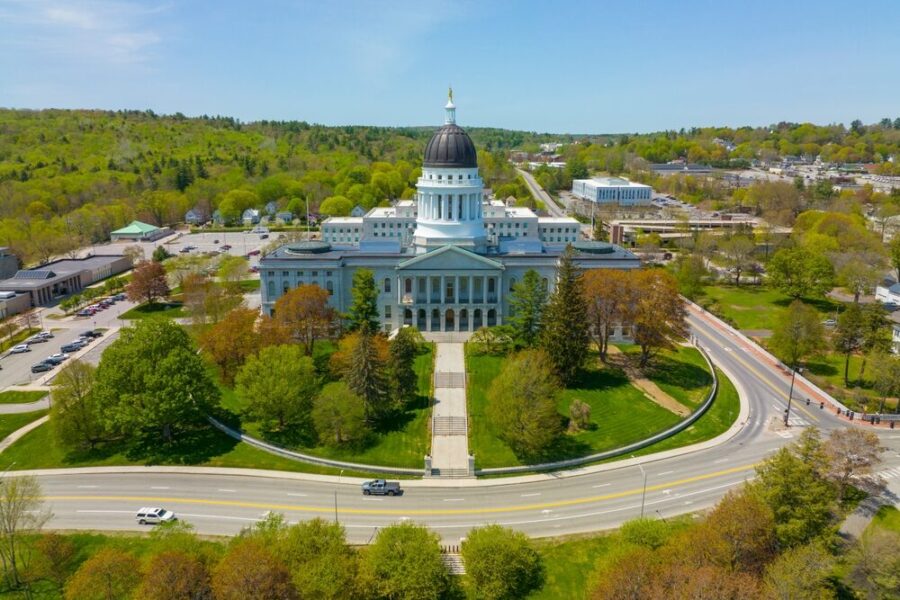
Maine is poised to make a historic shift in its gambling laws by becoming the eighth state in the US to legalize online gambling, despite previous opposition from Gov. Janet Mills’ administration.
Mills announced Thursday that she would allow LD 1164 to become law, meaning that the state’s four Wabanaki Nations; the Passamaquoddy Tribe, the Penobscot Nation, the Mi’kmaq Nation, and the Houlton Band of Maliseet Indians, will now hold exclusive rights to operate online gaming in the state.

LD 1164 passed both chambers last session, but had been met with firm opposition. A recent survey published by the anti-gambling advocacy group, the National Association Against iGaming, claimed that 64% of Maine residents opposed the legalization of online gaming.
Despite this, Maine will now join the likes of New Jersey, Pennsylvania, Michigan, West Virginia, Delaware, Connecticut, and Rhode Island as states that have legalized online casino wagering.
Following her meeting with tribal leaders, Gov. Mills said, “This fall, I met with the five elected Chiefs of the Wabanaki Nations, who each spoke passionately about the importance of this bill in offering life-changing revenue for tribal communities, as well as providing a form of economic sovereignty for their nations.”
The new bill will allow up to four platforms, one per tribe, to operate in the state, using the same model that Maine currently employs with its sportsbook.
Charlotte Capewell brings her passion for storytelling and expertise in writing, researching, and the gambling industry to every article she writes. Her specialties include the US gambling industry, regulator legislation, igaming, and more.

Verticals:
Sectors:
Topics:
Dig Deeper
Related stories
The Backstory
Why this shift in Maine matters now
Maine’s decision to grant its four Wabanaki Nations exclusive rights to operate online casino gaming marks a sharp turn in a slow-moving national map. By adopting a tribal exclusivity model and authorizing up to four platforms, the state is joining a still-small cohort of legal iGaming jurisdictions but doing so with a governance structure aimed at channeling new digital revenue toward tribal communities. It also lands at a moment when the online casino and sports betting ecosystem is accelerating its race for content, technology and market access, even as courts and regulators debate the boundaries of what constitutes a wager.
The timing is consequential. Operators and suppliers are investing to meet surging digital demand, while policymakers try to corral consumer behavior into licensed environments. The stakes for Maine are straightforward: keep play onshore, set guardrails shaped by the state’s unique sovereignty context and tap a new revenue stream that had long been politically out of reach.
Content wars show what a maturing market looks like
One way to see where Maine could be headed is to look at how brand power and entertainment IP have become currency in iGaming. BetMGM’s multiyear deal for exclusive rights to create casino games tied to The Price Is Right and Family Feud signals that operators expect content differentiation to drive engagement and retention. The agreement with Fremantle extends beyond slots into table and nontraditional games and includes integrated TV sponsorships—an indicator that the online casino business is increasingly intertwined with mainstream media and fan communities.
For a small state like Maine, with a limited in-state player base but new digital reach, content that resonates nationally can punch above its weight in customer acquisition. Tribal platforms choosing partners with recognizable game-show franchises, sports tie-ins or innovative formats could see outsized conversion and lower marketing costs. The Wabanaki Nations, acting through up to four platform partnerships, will likely face early choices about whether to license premium IP, build distinctive in-house titles or lean on proven live and RNG libraries to ramp quickly.
Live dealer studios raise the bar for user experience
Live dealer has become a critical engagement lever in mature iGaming states. Consider Caesars Entertainment’s latest move: a dedicated live dealer studio in Pennsylvania operated with Evolution, complete with branded felts, VIP high-limit blackjack and sports co-branded tables. The model blends the familiarity of Las Vegas Strip imagery with the immediacy of real-time play on mobile, offering a product that commands more time on site and potentially higher yields.
While Maine’s market will start smaller than Pennsylvania’s, the template is instructive. If the Wabanaki platforms pursue private-label live dealer environments—either through dedicated tables within shared studios or bespoke studios in neighboring states—they can craft distinct brand identities and tiered experiences. That could matter in a region where New Hampshire and Massachusetts have sports betting but not full iGaming, and where cross-border competition for screen time is fierce. The challenge will be balancing capital intensity and speed to market against the value of premium, controlled experiences.
Regulatory boundaries are still being tested
The legal frontier around what qualifies as a bet versus a financial instrument is not settled, and outcomes elsewhere can reverberate. An analyst note on a New Jersey appeals case suggested the court appeared partly sympathetic to Kalshi’s argument that certain sports contracts could be treated as swaps under federal law, though skeptical on player props. The takeaway, as framed in Jefferies’ analysis of the New Jersey trial, is that any clear resolution—win or loss—reduces uncertainty for incumbents like DraftKings and FanDuel and defines the playing field for “disruptors.”
For Maine’s regulators and tribal partners, clarity elsewhere can help calibrate product menus, particularly on props and novel markets. If courts outline guardrails that restrict financialized sports contracts while allowing traditional wagering, operators can align offerings more confidently. Conversely, prolonged ambiguity can slow product development or invite compliance risk. Maine’s tribal exclusivity may insulate the market from some gray-area entrants, but it does not inoculate it from national legal precedents that shape product design and risk controls.
Demand signals are flashing green for big events
The appetite for high-stakes, short-form events is strong and growing. The 4 Nations ice hockey tournament final between Canada and the United States set records at several U.S. sportsbooks, with handle levels comparable to Sunday NFL games, according to operator disclosures highlighted by ESPN. Wagering patterns skewed heavily toward bettors’ home countries, underscoring how national sentiment and event visibility can turbocharge participation.
For Maine, the lesson is practical. A compact market can still capture outsized activity around marquee events with localized offers and targeted promos, provided the platforms and payments are frictionless. Because tribal exclusivity concentrates market execution among a small set of operators, coordination on responsible marketing and real-time risk management during spikes will be important. It also suggests that cross-promoting event-driven sports betting with online casino content—such as live dealer game shows or branded table games—could extend session length without overreliance on bonusing.
Illicit markets underscore the urgency of controlled rollout
The United Nations recently detailed how industrialized scam centers tied to illegal gambling, fraud and money laundering have reached an estimated value of $40 billion, with operations expanding beyond Southeast Asia into regions like Africa and South America. The UN report on global gambling and fraud networks outlines how enforcement pushes in one jurisdiction can displace activity to another and how cyber-enabled crime adapts quickly to regulatory gaps.
That backdrop puts pressure on newly legal markets to set high standards for KYC, geolocation, payments and anti-money laundering compliance from day one. In a tribal-exclusive framework, where economic development goals are paramount, strong safeguards protect both the brand equity of the Wabanaki Nations and the broader case for iGaming as a channel that can crowd out illegal alternatives. Maine’s ability to demonstrate that legal platforms are safer, more transparent and better at harm minimization than offshore sites will shape public sentiment as the market matures.
The national arc is clear: content and live experiences are getting richer, legal definitions are being stress-tested, event-driven demand is rising and the illicit economy is evolving. Maine’s model adds another variable—a sovereign-centered, limited-license structure that could deliver concentrated benefits if execution is tight. The early choices the Wabanaki Nations and their partners make on content, compliance and customer experience will likely determine whether the state becomes a case study in how smaller markets can scale sustainably—or a reminder that timing alone does not guarantee lift.

