


US State Department concerned over Cambodia scam centers

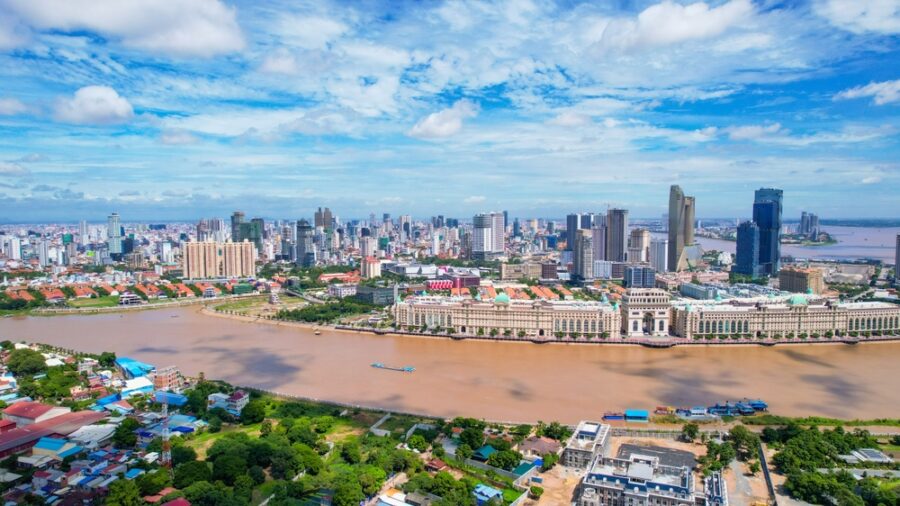
Cambodia has been maintained at Tier 3, the lowest ranking, in the US State Department’s 2026 Trafficking in Persons Report, with the department citing alleged complicity by senior officials in trafficking tied to scam centers.
The State Department claimed that Cambodia does not meet the minimum standards for the elimination of trafficking and is not making significant efforts to do so, despite its recent efforts.

The department flagged within its report that some senior officials, advisors and law enforcement officers profited from victims held in scam centers, while also intervening to protect operations and pressure victims and civil society.
The report further noted that no traffickers linked to scam center activity were prosecuted, claiming tens of thousands of former scam workers held in immigration detention and given little or no screening as potential trafficking victims.
Labor traffickers, it added, were generally handled under labor law rather than the 2008 anti-trafficking law, receiving fines or jail terms of six days to one month.

The US State Department did credit the government with the arrest and deportation of the head of casino operator Prince Group, a move that sparked raids closing hundreds of suspected scam centers and releasing thousands of potential victims.
Despite the crackdown, observers cited in the report said some compounds had cleared out before police arrived, claiming centers connected to powerful elites were not targeted.
The report also pointed out that in January 2026, the government issued licenses to casinos with a history of hosting scam centers.

Prime Minister Hun Manet launched the nationwide scam crackdown last year, which he says has eliminated the compounds in the country.

Dig Deeper
Related stories
 2026/09/23: Cambodia PM links origin of scam problems in country to gaming
 2025/04/09: Philippine lawmaker pushes for Anti-POGO Act; regional cooperation in battling illegal online gaming
 2026/04/23: Philippines enhances inter-agency cooperation in fight against POGOs
 2026/02/04: Eighteen Nepali nationals sentenced for illegal iagming operation
2026/09/23: Cambodia PM links origin of scam problems in country to gaming
2025/04/09: Philippine lawmaker pushes for Anti-POGO Act; regional cooperation in battling illegal online gaming
2026/04/23: Philippines enhances inter-agency cooperation in fight against POGOs
2026/02/04: Eighteen Nepali nationals sentenced for illegal iagming operation
The Backstory
Washington’s scrutiny follows a shifting crackdown
The U.S. State Department’s decision to keep Cambodia at Tier 3 in its 2026 Trafficking in Persons Report lands at a sensitive point for Phnom Penh. The government has spent the past year trying to show that it is dismantling scam compounds, tightening casino oversight and cooperating more closely with foreign law enforcement. Washington’s finding suggests those steps have not yet resolved deeper concerns about enforcement, victim protection and official complicity.
The dispute is rooted in Cambodia’s role in the regional boom in online gambling and technology-enabled fraud. Scam compounds across Southeast Asia have used elements of the casino economy, cross-border labor migration and weak oversight to recruit, confine or coerce workers into online fraud. Cambodia has repeatedly said it is acting against those networks. The U.S. assessment says the campaign has not produced sufficient trafficking prosecutions or safeguards for victims, particularly those treated as immigration offenders after raids.
Online gambling created the opening
Cambodia’s own leadership has acknowledged that the country’s exposure to scam networks was tied to the expansion of online gambling and casino-linked businesses. Prime Minister Hun Manet said at an international conference on online scams that the problem did not originate in Cambodia but that gaming gave it an early foothold. Between about 2015 and 2020, online gambling licenses and related investment reshaped parts of the country, especially Sihanoukville, drawing heavy Chinese capital into casinos, real estate and support businesses.
When crime tied to the sector accelerated, Cambodia banned online gaming from Jan. 1, 2020. The abrupt closure of online operators contributed to a collapse in local real estate markets and left behind half-finished buildings, vacant business sites and networks that had been built around cross-border gambling demand. Those conditions provided space for illicit operators to adapt, particularly during and after the pandemic, when scam centers expanded across parts of Southeast Asia.
Hun Manet has since declared that scam compounds no longer exist in Cambodia, a claim made during the International Conference on Combating Online Scams in Phnom Penh. The event produced calls for coordinated action, including the Phnom Penh Declaration, and drew support from China, Interpol and the United Nations Office on Drugs and Crime. As Cambodia’s prime minister linked the scam problem to the earlier gaming boom, the government sought to frame the issue as regional and transnational rather than uniquely Cambodian.
Casino enforcement becomes a test case
Recent Cambodian enforcement has focused in part on casinos and online gambling services. Authorities confirmed that 24 casinos had ended online gambling operations before a Sept. 30 deadline, with sites in Preah Sihanouk, Banteay Meanchey and Svay Rieng provinces removing equipment used for live-streamed games, online lotteries, football betting and other products. The move came alongside broader restrictions on live-dealer streaming, a format regulators increasingly view as vulnerable to abuse and cross-border evasion.
The enforcement campaign also included license actions. Cambodian authorities reported that 18 casino licenses had been revoked and nine suspended pending investigations, while officials said more than 600 locations linked to technology-enabled scams had been cleared. Those measures marked a more visible regulatory posture and gave Phnom Penh material to point to in its response to international criticism.
Still, the distinction between shutting gambling services and proving trafficking cases remains central. In the case of the 24 Cambodian casinos that stopped online gambling operations, authorities did not allege that the venues were involved in scam activity. That underscores the enforcement challenge: governments can restrict or suspend gambling channels, but trafficking findings turn on whether recruiters, guards, managers, financiers and complicit officials are investigated and prosecuted under the appropriate laws.
Regional pressure rises after the Philippine ban
Cambodia is not facing this issue in isolation. The Philippines has become a key comparison point after President Ferdinand Marcos Jr. moved to eliminate Philippine offshore gaming operators, known as POGOs, following allegations that some operators had become fronts for fraud, money laundering, drugs and human trafficking. The Philippine ban took effect Jan. 1, 2025, after new POGOs were barred from July 22, 2024.
Philippine Sen. Risa Hontiveros has argued that a domestic ban is not enough if criminal groups simply migrate across borders or reappear under new business names. She has pushed for an Anti-POGO Act and urged the Association of Southeast Asian Nations to develop a regional code of conduct against scam hubs. Her position reflects a broader policy shift: offshore gaming is no longer being treated mainly as a licensing issue but as part of a transnational organized-crime problem.
That view was reinforced as Manila built out enforcement procedures for the POGO ban. The government adopted interagency rules combining intelligence gathering, evidence handling, prosecution, asset preservation and victim protection. The Presidential Anti-Organized Crime Commission was assigned a lead coordinating role, while prosecutors, anti-money-laundering officials and corporate regulators were brought in earlier to improve cases and track illicit assets. The Philippines’ push for stronger anti-POGO legislation and its new interagency procedures against offshore gaming operators have raised expectations for other governments confronting similar networks.
Victims are often treated as offenders
One of the most consequential disputes in the trafficking debate is how authorities classify people found inside scam compounds. Governments conducting raids often encounter foreign workers who entered illegally, overstayed visas or participated in online fraud. Rights groups and anti-trafficking specialists warn that many were recruited through false job offers, had passports seized, faced threats or violence and were forced to keep working under debt or confinement.
The U.S. report’s criticism of Cambodia focuses heavily on that gap. It says tens of thousands of former scam workers were held in immigration detention with little or no screening as potential trafficking victims. It also says labor traffickers were often handled through labor law rather than Cambodia’s 2008 anti-trafficking law, resulting in minor penalties that do little to deter organized networks.
Myanmar offers another illustration of the regional dilemma. Authorities there sentenced 18 Nepali nationals to one year in prison for working in illegal online gambling operations in the Myawaddy area near the Thai border. The case, reported by Makalukhabar and covered in the sentencing of 18 Nepali nationals tied to illegal online gambling, was notable because workers in similar situations have often been repatriated rather than jailed. Nepalese officials said many nationals rescued from such centers had been lured by promises of digital marketing or customer service jobs, then had passports confiscated and were held under tight security.
The stakes extend beyond Cambodia’s ranking
Tier 3 is more than a reputational penalty. It signals that Washington believes a government is not meeting minimum anti-trafficking standards and is not making significant efforts to do so. The designation can affect diplomatic standing, development engagement and the way multinational companies, financial institutions and foreign governments assess risk in a country’s gaming, real estate and technology sectors.
For Cambodia, the report challenges the credibility of its declared crackdown. The State Department credited the arrest and deportation of the head of casino operator Prince Group, which it said triggered raids closing hundreds of suspected scam centers and releasing thousands of potential victims. But it also cited claims that some compounds emptied before police arrived and that sites linked to powerful elites were spared. The allegation that new casino licenses were issued in January 2026 to operators with histories of hosting scam centers goes to the heart of the governance question.
The broader lesson from the region is that scam centers thrive where licensing systems, labor migration, financial channels and law enforcement gaps overlap. Closing visible compounds can disrupt operations, but networks can relocate, rebrand or move online if assets are not seized, victims are not protected and officials who enable the trade are not held accountable. That is why the Cambodia finding matters beyond one annual U.S. report: it tests whether Southeast Asia’s crackdown on scam-linked gaming can move from raids and declarations to durable prosecutions and prevention.
