
Uncovered memo reveals MLB warned players against prediction markets

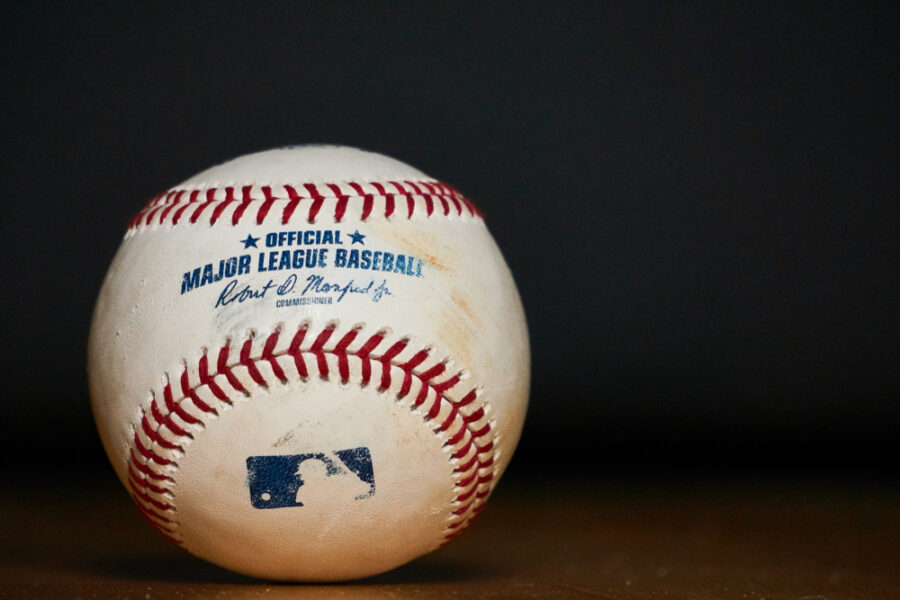
In a memo obtained by Front Office Sports, the MLB reportedly warned its players late in the 2025 season about participating in prediction markets.
The memo, “Re: Baseball Related Prediction Markets,” was issued on August 26 and cautioned players against participating in prediction markets that offer contracts on baseball-related events, saying that wagering on these markets is a violation of the league’s betting ban.
The warning was issued jointly by the MLB Commissioner’s office and the MLB Players Association, specifically mentioning Kalshi, Polymarket, Robinhood, and Crypto.com.
It emphasized that prediction markets fall under the league’s gambling restrictions despite being federally classified as non-gambling financial products.
Several players told Front Office Sports that they had not been informed of the warning or of any disciplinary implications, despite Kalshi’s baseball markets launching in April.

The news of the memo highlights diverging approaches to prediction markets across the US leagues.
The NHL has signed partnerships with Kalshi and Polymarket, while the NFL has raised concerns about insufficient regulation. The NBA is dealing with an ongoing gambling-related integrity scandal and has urged federal regulators to impose clearer oversight.
MLB, which has embraced legalized sports betting in recent years, has previously argued that prediction markets lack the integrity safeguards required to monitor unusual betting activity and protect the sport from manipulation.
Charlotte Capewell brings her passion for storytelling and expertise in writing, researching, and the gambling industry to every article she writes. Her specialties include the US gambling industry, regulator legislation, igaming, and more.

Dig Deeper
Related stories
 2025/11/25: What does the future hold for prediction markets after big players break from AGA?
2025/10/09: Pennsylvania gambling regulator asks lawmakers to act against proliferation of prediction markets
2025/06/02: MLB PropPacks added to BetRivers sportsbook
2025/11/12: MLB and sportsbooks set a nationwide US$200 limit on pitch bets
2025/11/25: What does the future hold for prediction markets after big players break from AGA?
2025/10/09: Pennsylvania gambling regulator asks lawmakers to act against proliferation of prediction markets
2025/06/02: MLB PropPacks added to BetRivers sportsbook
2025/11/12: MLB and sportsbooks set a nationwide US$200 limit on pitch bets
 2025/11/25: What does the future hold for prediction markets after big players break from AGA?
 2025/10/09: Pennsylvania gambling regulator asks lawmakers to act against proliferation of prediction markets
 2025/06/02: MLB PropPacks added to BetRivers sportsbook
 2025/11/12: MLB and sportsbooks set a nationwide US$200 limit on pitch bets
The Backstory
Why MLB’s caution lands now
Major League Baseball’s late-season warning to players about prediction markets did not emerge in a vacuum. It coincides with a year in which sports leagues, state regulators and gambling operators redrew boundaries around fast-growing products that sit between financial derivatives and consumer wagering. As baseball weighed integrity risks from contracts tied to on-field outcomes, other leagues tested the waters and regulators escalated their scrutiny. The memo’s timing reflects a broader realignment: prediction markets are advancing faster than the rules governing them, leaving leagues to set guardrails in real time.
The core tension is jurisdictional. Sportsbooks are licensed and policed state by state, but prediction markets offering event “contracts” argue their products fall under federal commodities oversight. That split has practical consequences. State books face strict responsible-gaming and integrity requirements. Federally overseen venues have a framework built for institutions and hedgers, not fans betting on whether a pitcher reaches a strikeout total or a team clinches a division. MLB’s warning underscores a risk many regulators have voiced: if athletes, team personnel or connected insiders can legally trade sports outcomes on platforms outside state regimes, detection and discipline become harder.
Regulators push back on a federal backdoor
State officials have amplified those concerns. In Pennsylvania, one of the nation’s most mature betting markets, the regulator urged lawmakers to pressure federal commodities overseers to rein in sports-focused prediction venues. In a pointed letter, the Pennsylvania Gaming Control Board warned that futures-style markets “effectively create a backdoor” to sports betting outside state control and lack robust consumer protections and integrity safeguards. The board argued federal rules were designed for institutional derivatives, not mass-market wagering, and highlighted the minimal review for self-certified sports contracts.
The Pennsylvania move follows months of mounting friction. As prediction venues prepare U.S. relaunches and expansion, regulators in multiple states have issued advisories or opened inquiries into how licensed operators interact with federally regulated products. For leagues, the message is clear: anything that looks like betting but evades state oversight raises integrity risk. MLB’s position aligns with that stance even as other leagues have entered sponsorships or data partnerships with prediction platforms. Divergent approaches sharpen the policy debate and increase the odds of a federal-state clash as markets evolve.
Operators pivot toward CFTC-regulated products
The industry’s strategic calculus shifted this year when two of the largest U.S. sportsbooks broke with the dominant trade association over prediction markets. As pressure mounted to find growth beyond saturated sportsbook states, operators explored federally regulated products that could reach consumers in places where sports betting remains illegal. The split, detailed in an analysis of how DraftKings and FanDuel diverged from the American Gaming Association, crystallized a bet on regulatory arbitrage: using national frameworks to side-step state-by-state constraints.
The opportunity is real. Large states such as California and Texas have not legalized online sports betting, capping sportsbook expansion. Prediction markets promise similar engagement with lower barriers to entry and a national footprint, potentially bringing liquidity and sharper pricing. But the risks are material. As the analysis noted, regulators in states where those operators already hold sportsbook licenses are watching closely. Warnings from Massachusetts and others foreshadow potential licensing friction if companies push too far into products perceived as sportsbook substitutes without equivalent oversight. That uncertainty—and the prospect of “bad actor” labels returning—hangs over growth plans.
Consumer risk debate widens, at home and abroad
Beyond integrity, the policy fight centers on consumers. Advocates say prediction venues can offer transparent pricing and fewer restrictions on winning players. Critics counter that looser controls compared with state sportsbooks increase exposure to harm. International debates mirror the U.S. split. In New Zealand, lawmakers weighing a legalization plan for online casinos heard stark warnings about a surge in aggressive promotions, the limits of geo-blocking and inducements that ensnare vulnerable users. The testimony, covered in a briefing on concerns over an onslaught of online casino advertising, highlights the trade-off regulators face: bring operators inside the tent to set rules and raise revenue, or risk fueling a parallel market that is harder to police.
Japan offers another lens on unintended consequences. A support group’s latest data show a sharp increase in families seeking help for gambling addiction, driven in part by online access and financial inducements. The report on rising gambling addiction in Japan ties crime and financial distress to digital wagering habits. While the U.S. regulatory architecture differs, the pattern is familiar: frictionless products can widen participation and deepen harms without commensurate controls. For MLB and other leagues, that risk intersects with integrity. A wider pool of bettors and traders, combined with products built on granular in-game events, requires monitoring tools and rulebooks that many prediction venues do not yet deploy.
Follow the money: affiliates and advertising constraints
Monetization pressures shape these choices. Marketing channels have tightened, customer acquisition costs are high and the macro cycle has turned. Affiliate performance is a useful proxy: a leading public affiliate reported a steep fourth-quarter revenue drop and a slump in North America, even as cost-cutting improved profitability. The latest earnings update on Catena Media’s 35% decline in quarterly revenue underscores the strain on conversion and the need for new growth levers. If sportsbooks are hitting a regulatory ceiling, prediction markets look like an adjacent on-ramp—with different compliance costs and broader geographic reach.
Advertising policy is another constraint. U.S. leagues and broadcasters have already pulled back from wall-to-wall sportsbook promotions amid political and public pushback. New Zealand’s debate shows how quickly that pendulum can swing when lawmakers open the door to new products. Should prediction markets scale nationally, marketing rules—what can be promoted, to whom, with what inducements—will likely become a flashpoint. That dynamic feeds back into league policies like MLB’s: stricter internal bans reduce the risk of player exposure to gray-area products while regulators decide how to treat them.
What to watch next
Three threads will determine where the market lands. First, whether federal commodities regulators impose sharper guardrails on sports-related contracts, narrowing the gap with state sportsbook standards. Pennsylvania’s call to action suggests more states will press Washington for clarity. Second, how sportsbook operators balance prediction-market expansions with the risk to existing licenses in core states. A misstep could jeopardize market access they cannot afford to lose. Third, whether consumer harm indicators rise as prediction venues scale. International experience points to caution; U.S. policymakers will look for early warning signs.
MLB’s memo adds weight to a cautious camp arguing that integrity systems must precede product growth. With leagues split, operators experimenting and regulators circling, the next few months will test whether prediction markets can mature into mainstream, regulated channels—or remain a parallel track that leagues and states seek to fence off.


