UAE’s first licensed sportsbook launches ahead of World Cup
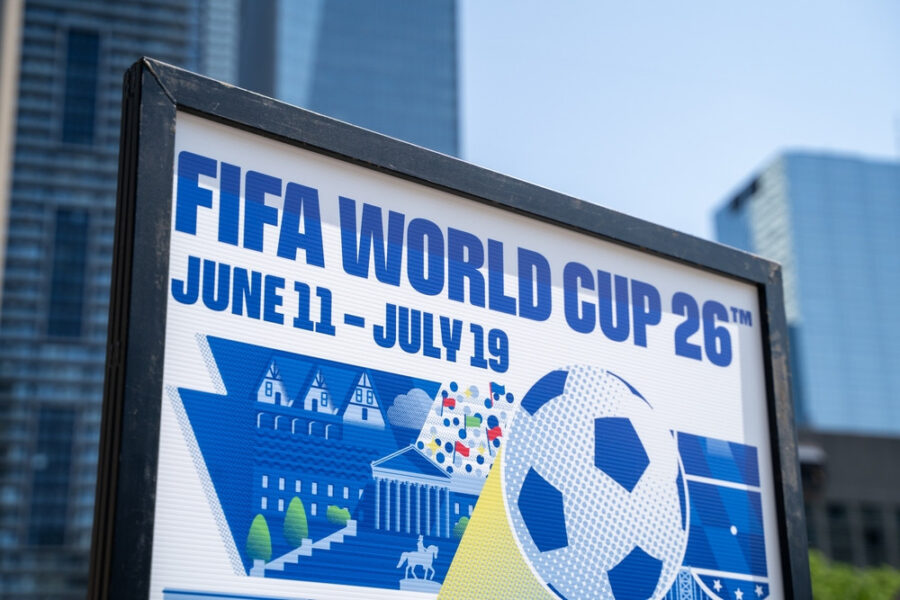
Residents of the United Arab Emirates can place legal wagers on the 2026 FIFA World Cup tournament through the country’s only licensed sports betting platform, Play971.
The operator became UAE’s first licensed sportsbook and igaming website after receiving approval from the General Commercial Gaming Regulatory Authority in November. After a testing phase and soft launch, Play971 has launched its sports betting offering.

Owned by entertainment company Coin Technology Projects LLC, the platform allows users to place wagers on the FIFA World Cup and other domestic and international sporting events. Play971 also offers casino games, including slots and live dealer titles.
“The UAE is home to some of the most passionate and engaged sports fans in the world,” Philippa Bowland, Commercial Director for Igaming at Play971, said in a news release. “For the first time, a locally rooted platform like Play971 adds a new layer to the sports experience – making it possible for fans to play sustainably, rally behind their teams, and enjoy major football moments together.”
The launch marks the first time that UAE residents can legally bet on the FIFA World Cup, but sports betting in the country remains subject to strict controls. Authorities use the country’s national ID system to verify users and enforce eligibility requirements.

Dig Deeper
Related stories
 2026/07/22: UAE’s only licensed online gaming platform Play971 inks content agreements with IGT and Endorphina
 2026/04/07: Fanatics Fest teams up with FIFA ahead of 2026 World Cup
 2026/07/29: Dubai-based airline Emirates launches crypto payment for UAE customers
 2025/10/08: Yolo Group secures two UAE gaming vendor licences
2026/07/22: UAE’s only licensed online gaming platform Play971 inks content agreements with IGT and Endorphina
2026/04/07: Fanatics Fest teams up with FIFA ahead of 2026 World Cup
2026/07/29: Dubai-based airline Emirates launches crypto payment for UAE customers
2025/10/08: Yolo Group secures two UAE gaming vendor licences
The Backstory
A regulated opening in a tightly controlled market
The launch of Play971 as the UAE’s first licensed sportsbook lands at a moment when the 2026 FIFA World Cup is reshaping gambling policy, enforcement and commercial planning across multiple markets. The tournament, scheduled for June 11 to July 19 across the U.S., Canada and Mexico, is already being treated by operators and regulators as a stress test for legal betting frameworks and a catalyst for new products.
For the UAE, the significance is sharper because legal sports betting has not previously been available to residents through a locally licensed channel. Play971’s approval by the General Commercial Gaming Regulatory Authority in November and its subsequent move from testing to live sports betting mark a controlled opening rather than a broad liberalization. The platform combines sportsbook products with casino games, but access is tied to strict eligibility checks through the country’s national ID system.
That model reflects a wider pattern: governments are seeking to capture demand that already exists while limiting exposure to underage gambling, offshore operators and illicit payment flows. The World Cup concentrates those pressures into a short window of unusually high betting volume, especially in football-heavy markets.
World Cup demand is forcing policy choices
Mexico illustrates the regulatory dilemma. The country will co-host the World Cup with the U.S. and Canada, giving its betting sector a rare commercial opportunity and exposing weaknesses in its legal structure. Mexican operators have warned that outdated rules could push growth into unregulated channels unless lawmakers modernize the Federal Gaming and Lottery Law of 1947.
At an industry event in Lisbon, executives argued that the World Cup could compress a year’s worth of betting activity into roughly a month. Codere Chief Executive Aviv Sher said the tournament would likely drive the next increase in gross gaming revenue, particularly in Mexico as a host country. Betcris Chairman JD Duarte said poor regulatory conditions would risk diverting that growth “to the wrong place.”
The concerns outlined in Mexican operators’ call for a gambling law overhaul before the World Cup mirror the UAE’s more centralized approach. Both markets are preparing for the same surge in football betting demand, but from opposite starting points. Mexico has an established industry asking for updated rules, while the UAE is building a legal channel under close state supervision.
The comparison underscores the stakes for regulators. If rules are too restrictive or unclear, offshore operators can absorb demand. If controls are too loose, governments face political and social risks tied to addiction, youth betting and financial crime. The UAE’s licensing structure is designed to minimize those risks from the outset.
Enforcement pressure is rising in unregulated markets
Thailand shows the other side of the World Cup effect: aggressive enforcement where online gambling remains illegal. Police have stepped up action against football wagering websites and gambling-related social media content, citing concerns that World Cup betting will expand rapidly without intervention.
According to the Bangkok Post, authorities have used artificial intelligence to identify betting-related content more quickly and have blocked hundreds of thousands of URLs connected to gambling activity. The crackdown, detailed in Thai authorities’ campaign against gambling websites before the FIFA World Cup, includes inquiries, arrests and website blocking aimed at football betting operators.
Thai officials said they blocked 717,425 URLs tied to betting activity on platforms including Facebook, TikTok and Line from Oct. 1, 2025 to May 20, 2026. They also identified 309 igaming websites as priority enforcement targets during May and June. Police have described alternative payments, including corporate accounts, PayPal services, cross-border intermediaries and cryptocurrencies, as growing tools for operators seeking to avoid detection.
The enforcement push highlights why regulated markets are moving to verified-user systems and licensed operators. Where governments do not offer legal betting channels, demand can migrate to platforms that are harder to monitor. The UAE’s ID-based approach offers a different strategy: allow betting within a narrow framework, then use licensing, user verification and operator obligations to manage the risks.
Suppliers and affiliates are building around the tournament
The World Cup is also driving product and distribution decisions beyond regulated sportsbooks. Betting suppliers are expanding content designed to keep customers engaged between live fixtures, while marketing companies are targeting jurisdictions expected to see rapid growth during the tournament.
Beter has expanded its eFootball content to 4,200 monthly events, including World Cup-themed competitions and additional matches scheduled around peak betting hours. The move, described in Beter’s expansion of World Cup-themed eFootball content, is intended to help operators fill downtime before, during and after major matches. The company said the update gives U.S. bettors access to an additional 140 matches per day across competitions modeled on football leagues and World Cup formats.
That strategy reflects a broader commercial reality. Sportsbooks do not rely only on the 90 minutes of a match. They seek to capture engagement across pregame buildup, in-play markets, postgame reaction and adjacent products. Virtual sports and esports-style events can provide continuous inventory when live games are not being played, smoothing betting activity across the day.
Affiliate and customer acquisition companies are also positioning for the tournament. Media Troopers said it plans to enter Peru with sports betting and prediction market services, citing rapid growth since regulation was introduced in 2024. The company’s move, covered in Media Troopers’ expansion into Peru before the 2026 World Cup, comes as Peru’s market includes more than 60 online operators and 120 licenses issued by Mincetur.
Peru’s regulated gambling sector was valued at about $2.7 billion in 2024, with projected revenue growth to $7.6 billion by 2033. For companies such as Media Troopers, the World Cup is not just a betting event. It is a customer acquisition opportunity in markets where regulation has created clearer operating conditions.
Football is becoming a broader commercial platform
The World Cup’s influence extends beyond gambling operators to fan engagement, media and sports commerce. Fanatics has partnered with FIFA for Fanatics Fest in New York, scheduled for July 16 to July 19 at the Javits Center, coinciding with the final matches of the tournament. The event will include immersive fan experiences, appearances from soccer figures and streaming access to the finals.
The partnership, outlined in Fanatics Fest’s collaboration with FIFA around the 2026 World Cup, shows how the tournament is being packaged as a broader cultural event. FIFA’s involvement in Fanatics Games, including a soccer-themed penalty shoot-out component, is designed to extend engagement beyond the stadium and broadcast audience.
That matters for betting markets because wagering increasingly sits within a larger entertainment ecosystem. Sportsbooks compete not only on odds but also on brand trust, localized content, payments, promotions and fan experiences. In tightly regulated markets such as the UAE, a licensed operator can benefit from that global football attention while presenting itself as a safer alternative to offshore sites.
The risk is that major events also expose weak controls. A spike in betting activity can test know-your-customer systems, responsible gambling tools, payment monitoring and regulator capacity. For Play971, the World Cup will be the first major global tournament under the UAE’s new sportsbook framework, making the launch both a commercial milestone and an early test of the country’s regulatory model.
The stakes for the UAE’s first mover
Play971 enters the market with first-mover status, but that position comes with scrutiny. Its sportsbook launch is likely to be watched by regulators, regional governments and international operators assessing whether the UAE can sustain a tightly controlled gambling market without triggering wider political or social backlash.
The timing gives Play971 a strong customer acquisition opportunity. Football’s global appeal, the expanded 2026 tournament and heavy regional interest in major international sports could generate early traction. But the same forces that make the World Cup attractive for operators also increase the need for visible safeguards.
Across Mexico, Thailand, Peru and supplier markets, the pattern is consistent: the World Cup is accelerating decisions that might otherwise unfold over years. Some governments are updating rules, others are intensifying crackdowns and companies are building products around the event’s betting cycle. The UAE’s approach sits between prohibition and liberalization, allowing legal wagering through a licensed operator while relying on identity verification and strict eligibility controls.
That balance will define the importance of Play971’s debut. If the platform can channel World Cup betting into a compliant environment, it may become a reference point for other tightly controlled jurisdictions. If demand spills into offshore sites or compliance issues emerge, the launch could reinforce caution. Either way, the UAE’s first licensed sportsbook is arriving at the moment global football is placing maximum pressure on gambling policy.